
The global landscape of digital healthcare is undergoing a paradigm shift as designers and developers grapple with a mounting mental health crisis affecting over one billion people worldwide. According to 2025 data from the World Health Organization (WHO), the persistent gaps in access to traditional clinical care have positioned mobile health (mHealth) applications as a vital, though often flawed, frontline for support. However, as the market swells to include more than 20,000 mental health-related applications, industry experts warn that poor user experience (UX) design is no longer just a technical inconvenience; it is a clinical risk. When a user in the throes of an anxiety attack encounters clashing color schemes, punitive "mindfulness streaks," or aggressive paywalls, the resulting "design friction" can exacerbate their condition, eroding the very trust necessary for therapeutic intervention.
In response to these challenges, a new professional standard is emerging: Empathy-Centred UX. This framework moves beyond functional utility to treat a user’s emotional state not as a secondary context, but as the primary environment in which the product operates. By prioritizing vulnerability and psychological safety, developers are beginning to implement frameworks built on three critical pillars: onboarding as conversation, the emotional interface, and the empathetic retention engine.
The Evolution of mHealth Design: A Chronology of Access
The trajectory of mental health technology has moved through distinct phases over the past decade. In the early 2010s, the first wave of mood trackers and meditation apps focused on basic digitization of clinical tools like Cognitive Behavioral Therapy (CBT) worksheets. By 2018, the industry saw an explosion of "gamified" wellness apps, which introduced streaks and leaderboards to drive daily engagement. However, by 2022, research began to surface indicating that these high-pressure mechanics often backfired, causing "engagement guilt" among users with depression or ADHD.
The current era, beginning in 2024 and 2025, is defined by a move toward "low-stimulus" and "evidence-aligned" design. This shift acknowledges that users seeking mental health support often experience reduced cognitive capacity, which affects their attention span and information processing speed. Consequently, the margin for error in design has become negligible, necessitating a framework that builds trust from the first interaction.
Pillar I: Mitigating the Initial Barrier through Therapeutic Onboarding
In the competitive mHealth market, onboarding is often viewed as a hurdle to be cleared as quickly as possible to reach "time to value." For a vulnerable user, however, a clinical or data-heavy checklist can feel dismissive. Empathy-Centred UX reimagines onboarding as a "first date" or the opening of a supportive conversation.
A notable case study in this approach is Teeni, an application designed for parents of teenagers. Product designers identified that their target demographic often arrived at the app feeling like "failures" or overwhelmed by the emotional load of parenting. Rather than starting with a data-collection form, the app utilizes a "recognition and relief" strategy. Through a "city-at-night" visual metaphor, users are presented with optional, animated stories of other parents facing similar struggles. This narrative approach serves to normalize the user’s stress before any data is requested.
Furthermore, the framework utilizes "progressive profiling." Instead of demanding a comprehensive family history upfront, the system collects only the essential data—such as the number of children and their ages—to provide an immediate, relevant feed. More sensitive information regarding specific behavioral challenges is gathered gradually as the user builds a rapport with the interface. This method respects the user’s limited bandwidth during high-stress periods while ensuring the app remains a functional tool.
Pillar II: The Emotional Interface and Low-Arousal Design
The second pillar of the framework addresses the visual and sensory environment of the application. Traditional UX often prioritizes high-saturation palettes and rapid animations to grab attention. In a mental health context, these elements can trigger sensory overload.
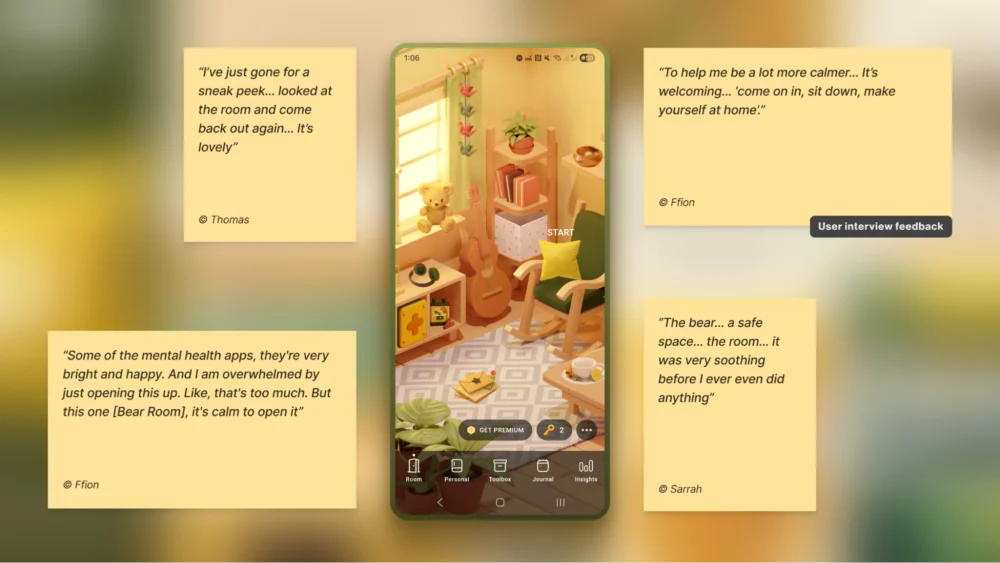
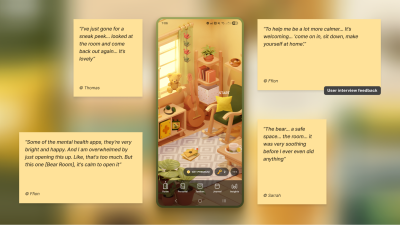
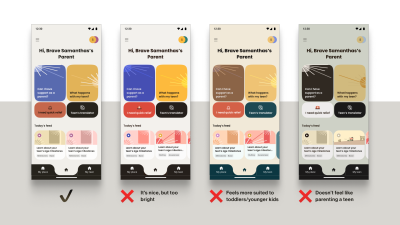
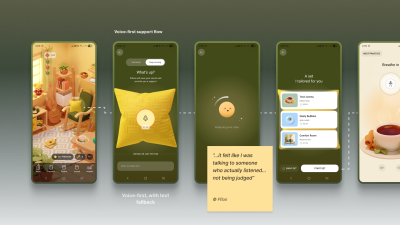
Industry analysis of apps like Bear Room, which focuses on acute stress relief, reveals the efficacy of "low-arousal" design. Following extensive user interviews with individuals suffering from PTSD and depression, designers moved away from the "too bright, too happy" aesthetic common in the wellness industry. Instead, they implemented a "cosy room" metaphor using earthy, non-neon palettes and scannable, divided text.
Key technical requirements for an emotional interface include:
- Adherence to WCAG 2.2: Accessibility is treated as a clinical baseline, ensuring users with various impairments can navigate the app without added stress.
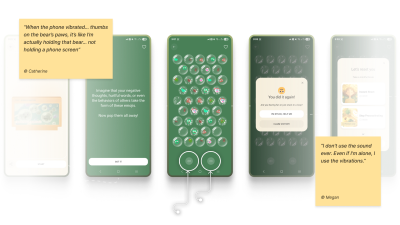
- Sensory Grounding: Subtle, opt-in haptics, such as a "bubble-wrap" popping interaction, provide kinetic relief for users caught in cycles of anxious thoughts.
- Affect Labeling via Voice: Recognizing that typing can be an insurmountable task during a depressive episode, the framework integrates voice-first support. Research suggests that "affect labeling"—the act of putting feelings into words—can reduce emotional intensity. By allowing users to vent via a microphone, apps can use AI to analyze the emotional subtext and suggest immediate calming tools without requiring the user to navigate complex menus.
Pillar III: Reimagining Retention and the Ethics of Engagement
Perhaps the most controversial aspect of mHealth design is the retention engine. Standard Silicon Valley metrics often prioritize "Daily Active Users" (DAU) and time-spent-in-app. For a mental health product, these metrics can be counter-therapeutic if they lead to "perpetual gaming loops."
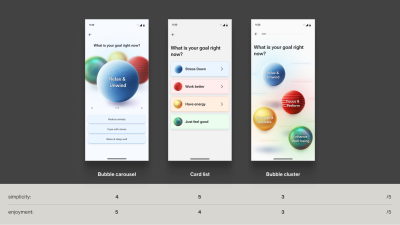
The Empathy-Centred UX Framework replaces punitive gamification with a "supportive rhythm of use." A prime example is the "Key Economy" system. Unlike traditional "streaks" that reset to zero and induce shame if a day is missed, this system rewards users for logging in every third day, acknowledging that the journey of healing is non-linear. These "keys" are used to unlock advanced content or decorative objects in the user’s digital space, but essential SOS tools and coping mechanisms are never gated behind these mechanics.
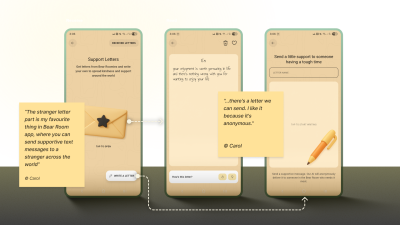
Furthermore, the framework explores "pro-social retention." In the Bear Room "Letter Exchange," users can write anonymous supportive notes to others. This fosters a sense of community and "psychological ownership," drawing on the "IKEA effect"—the phenomenon where individuals value a product more if they have contributed to its creation or the community around it.
Data Privacy and the Trust Deficit
The integration of AI and voice recording in mental health apps brings significant ethical responsibilities. Industry analysts point out that trust is fragile; a single data breach or the perception that sensitive emotional data is being sold to third parties can render an app obsolete.
To maintain the "Empathy-Centred" standard, apps must provide:
- Concise Transparency: GDPR-style consent screens must explain exactly how audio and text are processed and stored.
- Sovereignty: Users must have an obvious "Delete all data" option that is as easy to find as the "Sign Up" button.
- Anonymity by Design: In peer-to-peer exchanges, AI-powered moderation must ensure that radical vulnerability does not lead to a breach of privacy or exposure to harmful content.
Broader Impact and Clinical Implications
The shift toward empathy-centred design has implications that extend beyond the tech industry. As digital interventions become more sophisticated, they are increasingly being integrated into formal healthcare systems as "digital therapeutics" (DTx). For these tools to be prescribed by doctors, they must demonstrate not only clinical efficacy but also high levels of patient adherence, which is directly tied to UX.
Fact-based analysis suggests that when an app acts as a "trusted companion" rather than a "clinical checklist," users are more likely to engage with evidence-based practices like mood logging and mindfulness. This, in turn, provides clinicians with more accurate longitudinal data, leading to better-informed treatment plans.
The Architecture of Trust is not merely a design trend but a necessary evolution in the face of a global health challenge. By meeting users at their lowest cognitive and emotional points with respect, calmness, and agency, product designers are proving that technology can be a humane extension of care. The ultimate success of a mental health app is not measured by the time a user spends on the screen, but by the psychological relief they feel when they finally put the phone down.

