
The rapid integration of generative artificial intelligence into the product design lifecycle has revealed a significant technical hurdle: the "drift" between design intent and AI execution. As organizations increasingly rely on Large Language Models (LLMs) to generate code-ready prototypes, the limitations of traditional design systems have become apparent. These systems, originally built for human interpretation, often contain undocumented decisions, hard-coded values, and inconsistent naming conventions that lead to AI hallucinations and architectural errors. To address these challenges, industry experts, including Hardik Pandya of Atlassian and Vitaly Friedman of Smashing Magazine, have proposed a shift toward "AI-ready" design systems. This methodology prioritizes structured data, explicit documentation, and automated auditing to ensure that AI tools can interpret design intent with the same precision as a human developer.
The Evolution of Design Systems from Human-Centric to Machine-Readable
For the past decade, design systems have evolved from static PDF style guides to sophisticated, interactive libraries hosted in platforms like Figma and Storybook. However, these systems were fundamentally designed for human designers and developers who possess the cognitive ability to fill in gaps using intuition and institutional knowledge. When an LLM is asked to generate a prototype based on a design system, it lacks this "tacit knowledge." If a spacing rule is not explicitly documented or if a component’s accessibility requirements are only implied, the AI is forced to make assumptions. These assumptions are the primary source of design drift.
The current transition in the industry involves transforming design systems into "infrastructure." This means treating design decisions as data points that can be consumed by an LLM’s context window. By documenting every decision—from the prioritization of tasks to the specific logic behind color contrast—organizations are creating a machine-readable roadmap. This evolution is not merely a change in documentation style but a fundamental shift in how design debt and technical debt are managed within a digital product team.
The Three-Layer Framework for AI-Ready Prototyping
The emerging standard for creating AI-compatible design systems rests on a three-layer architectural framework: Spec Files, the Token Layer, and Automated Auditing. Each layer serves a specific function in reducing ambiguity and ensuring that the output generated by an LLM aligns with the organization’s brand and functional standards.
Layer 1: The Implementation of Structured Spec Files
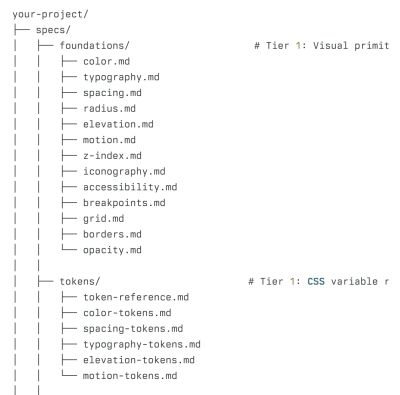
The foundational layer consists of "Spec Files"—structured Markdown documents that house the rules of the design system. Unlike visual mock-ups, which require vision-capable models to interpret pixels (a process prone to error and high computational cost), Markdown is text-based and highly efficient for LLMs to process. These files include:

- Spacing and Grid Rules: Explicit definitions of padding, margin, and layout constraints.
- Component Usage Guidelines: Detailed instructions on when to use a specific button variant versus another.
- Accessibility Standards: Hard-coded requirements for ARIA labels, keyboard navigation, and screen reader compatibility.
- Decision Logic: The "why" behind design choices, which helps the AI maintain context during complex prototype generation.
Research into LLM performance suggests that providing text-based guidelines is significantly more cost-effective and accurate than relying on the AI to decode patterns from visual screenshots alone. By using these files, designers provide a "source of truth" that the AI can reference in every prompt.
Layer 2: The Standardization of the Token Layer
Design tokens serve as the "atoms" of the system, representing variables such as hex codes, font sizes, and animation speeds. In an AI-ready system, the token layer must be strictly maintained and updated. When an LLM has access to a closed set of named variables (e.g., token-color-primary-active instead of #0052CC), it is prevented from inventing "plausible" but incorrect values. This layer ensures that the generated code is not only visually correct but also fits seamlessly into the existing production codebase.
Layer 3: Automated Auditing and the Role of FigmaLint
The final layer involves a feedback loop facilitated by auditing tools. One such tool, FigmaLint—a free plugin for the Figma community—has become a cornerstone for teams preparing their libraries for AI consumption. FigmaLint performs several critical functions:

- Detecting Detached Instances: Identifying components that have been broken away from the master library, which often confuses AI interpretation.
- Identifying Hard-Coded Values: Flagging instances where a designer manually entered a value instead of using a token.
- Missing Interactive States: Ensuring that hover, active, and disabled states are present and documented.
- Accessibility Audits: Checking for missing labels or insufficient contrast ratios before the design is handed off to an AI for code generation.
Context Engineering: The Five Levels of Machine Understanding
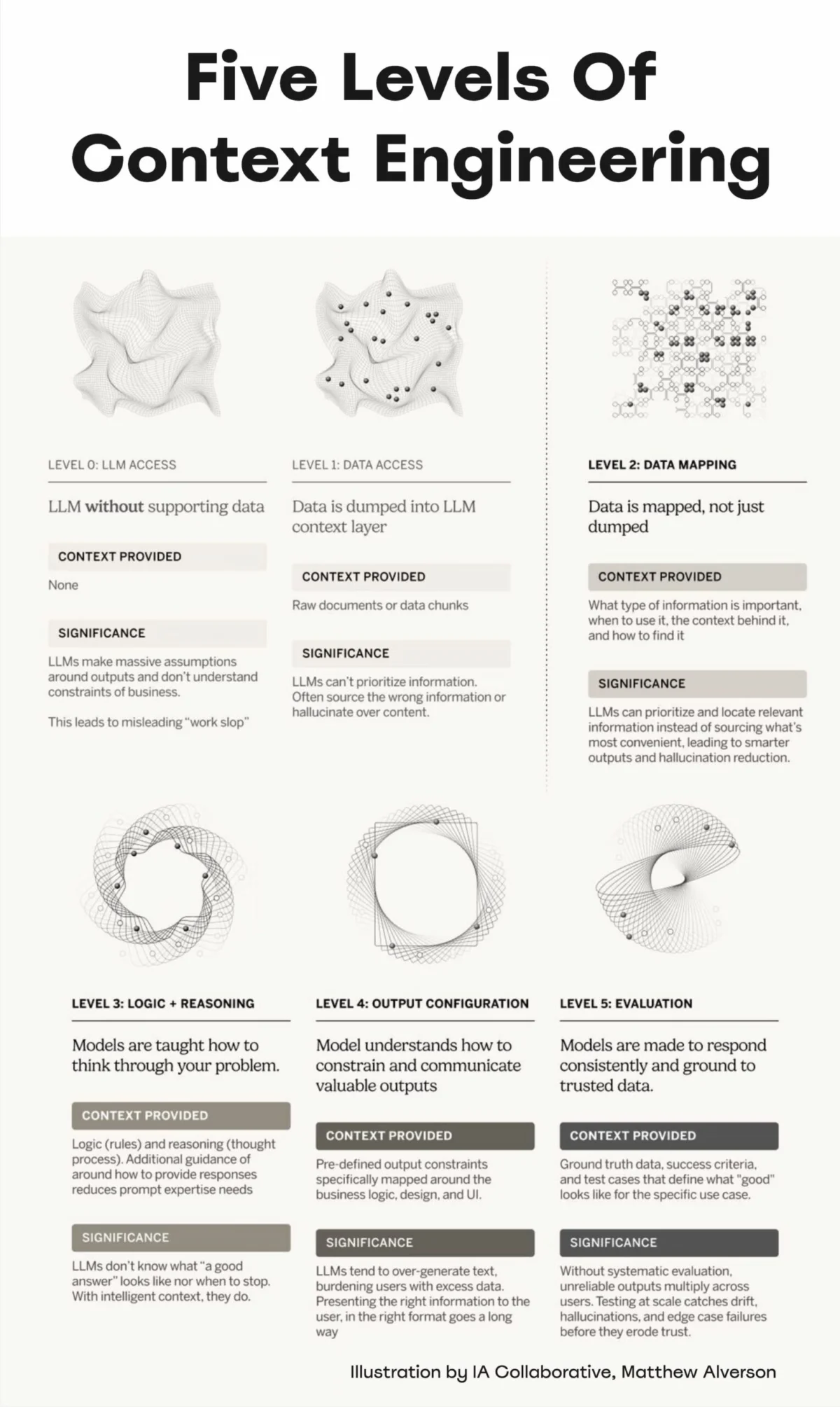
A critical component of the movement toward AI-ready systems is "Context Engineering." This concept, popularized by designers like Matthew Alverson and shared by tech leaders like Addy Osmani, suggests that the quality of AI output is directly proportional to the depth of context provided. There are five recognized levels of context that must be engineered into a design system:
- Self-Knowledge: The AI must understand its own role and limitations within the design process.
- Local Context: Information regarding the specific component or page being worked on.
- Global Context: Knowledge of the entire design system, brand identity, and overarching product goals.
- User Context: Data regarding the end-user’s needs, preferences, and accessibility requirements.
- Situational Context: The specific constraints of the project, such as platform (iOS vs. Web) or technical limitations of the stack.
By organizing documentation to address these five levels, designers can move from simple "prompting" to sophisticated "orchestration," where the AI acts as a highly informed assistant rather than a blind generator.
Chronology of the Transition to AI-Driven Design
The shift toward this new methodology has followed a distinct timeline as the design community grappled with the limitations of early generative AI tools:
- Late 2022 – Early 2023: Designers began experimenting with LLMs like GPT-3.5 and GPT-4 to generate HTML/CSS from text prompts. Results were often "hallucinated" and ignored existing brand guidelines.
- Mid-2023: The rise of "Design-to-Code" plugins. While more accurate, these tools still struggled with complex logic and state management.
- Late 2023: Industry leaders at Atlassian and other major tech firms began documenting the "drift" problem. Hardik Pandya’s research highlighted that AI prototypes often failed because the design systems themselves were "noisy" or lacked explicit documentation.
- Early 2024: The release of specialized auditing tools like FigmaLint. The focus shifted from "how to prompt" to "how to clean the data" (the design system).
- Present: The emergence of specialized educational courses, such as Vitaly Friedman’s "Design Patterns For AI Interfaces," which teach designers how to treat design as infrastructure and manage the three-layer framework.
Analysis of Implications for the Design Profession
The requirement for AI-ready design systems is fundamentally changing the role of the product designer. The profession is moving away from the manual creation of static mock-ups toward the management of complex data systems. This transition carries several implications for the industry:
Reduction of Technical Debt: By forcing designers to clean up their Figma libraries and document decisions in Markdown, organizations are inadvertently solving long-standing issues with design debt. The "clean-up" required for AI also makes the system more usable for human developers.
Economic Efficiency: Generating prototypes via AI using text-based spec files is significantly cheaper than human-led prototyping. It allows for rapid iteration and "fail-fast" testing of user flows before a single line of production code is written.

The Shift to Orchestration: Designers are becoming "context engineers." Their value no longer lies in their ability to move pixels but in their ability to define the rules, logic, and principles that guide the AI. This requires a deeper understanding of front-end architecture and data structure than was previously required for UI design.
The Vendor Challenge: For companies that work with third-party vendors, the AI-ready requirement adds a new layer of complexity. Vendors must now deliver design systems that are not only visually complete but also machine-readable and audited via tools like FigmaLint to ensure they can be integrated into the client’s AI-driven workflows.
Official Responses and Industry Sentiment
The response from the design community has been one of cautious optimism. While there is a learning curve associated with managing Markdown-based spec files and automated linting, the benefits of consistency are widely recognized. Atlassian’s Hardik Pandya has emphasized that AI cannot "magically resolve" technical debt. His guide serves as a call to action for designers to take ownership of the data that feeds these models.

Similarly, Vitaly Friedman’s focus on design patterns for AI interfaces highlights a growing consensus: the future of UX design is not just about the interface the user sees, but the interface the AI uses to build that experience. The "Design Patterns For AI Interfaces" initiative aims to provide a standardized set of guidelines that can be applied across industries, further reducing the ambiguity that currently plagues AI-generated prototypes.
Future Outlook
As LLMs continue to evolve, the need for structured guidance will likely increase rather than decrease. Future design systems may incorporate "live" spec files that update automatically as design tokens change, creating a real-time synchronization between the designer’s intent and the AI’s execution. The ultimate goal is a seamless "design-to-prototype" pipeline where the AI functions as a perfect mirror of the design system, producing high-fidelity, accessible, and code-compliant results with minimal human intervention. Until then, the burden remains on human designers to build the infrastructure necessary for machines to succeed. The mantra for the next era of design is clear: better AI prototypes require better human guidance.

