
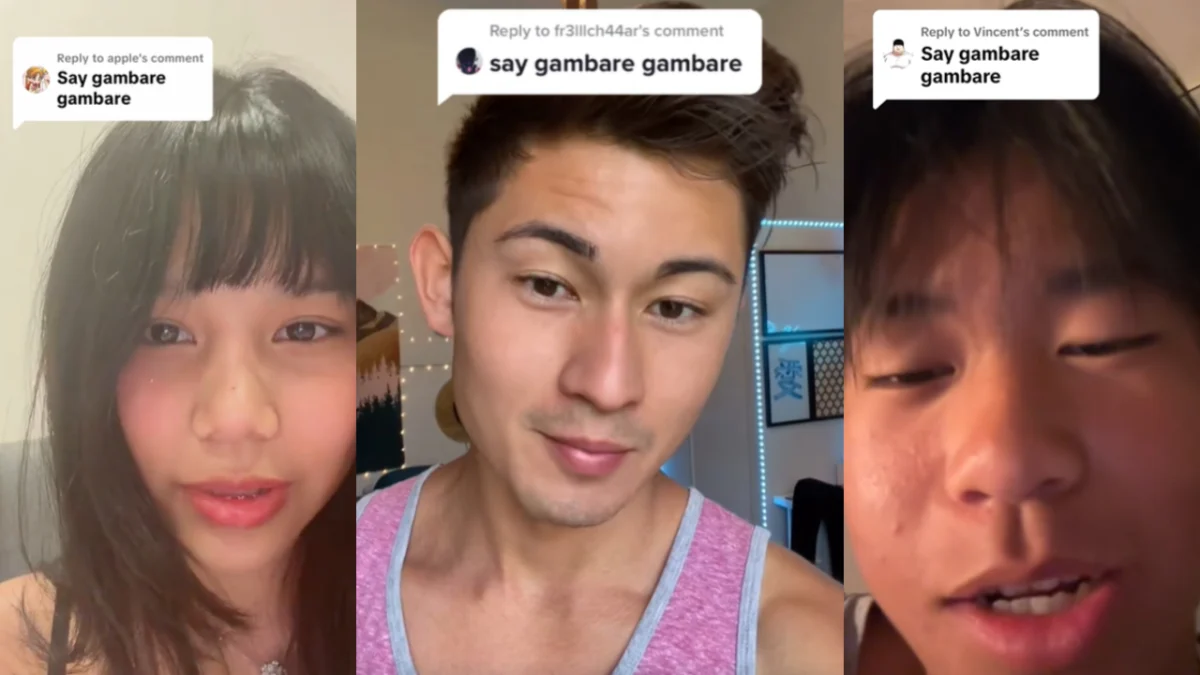
The digital landscape is often defined by its cyclical nature, where content once relegated to the archives of internet history finds new life through the evolving lenses of irony and subcultural reinterpretation. In March 2026, the "Say Gambare Gambare" viral video, featuring prominent content creator Ian Boggs, underwent a massive resurgence, transforming from a sincere 2021 interaction into a cornerstone of contemporary "brainrot" and "sigma" meme culture. This phenomenon highlights the shifting standards of online engagement, where the "cringe" of the past becomes the satirical gold of the present.
Historical Origin and the 2021 Anime Boom
To understand the 2026 explosion of the "Gambare Gambare" meme, one must look back to the cultural climate of mid-2021. On May 31, 2021, Ian Boggs, a creator known for his high-production cinematic shorts and anime-themed content, responded to a fan’s request on TikTok. The viewer had asked Boggs to say "gambare gambare," a phonetic misspelling of the Japanese phrase "ganbare ganbare" (頑張れ), which translates to "do your best" or "keep at it."
The phrase gained international notoriety through the anime series Jujutsu Kaisen (JJK), specifically delivered by the antagonist Ryomen Sukuna. In the series, Sukuna uses the phrase not as an encouragement, but as a condescending taunt toward his opponents. At the time of Boggs’ original post, Jujutsu Kaisen was at the height of its global popularity, fueling a massive wave of "anime-style" content on short-form video platforms.
In his original response, Boggs took a pedagogical approach before performing the line. He corrected the viewer’s spelling, noting, "it’s actually ‘ganbare ganbare’ with two N’s." He further contextualized his performance by explaining that he had recorded the clip immediately upon waking up to utilize his "morning voice," aiming for a deeper, more gravelly tone that mirrored Sukuna’s voice actor. Boggs himself acknowledged the potential awkwardness of the attempt, labeling the clip as "cringe" within the video’s own captions. Despite this self-awareness, the video initially garnered a respectable 1.1 million views over the following years, serving as a relic of the "E-boy" and anime-cosplay era of TikTok.
Linguistic Context: The Ganbare vs. Gambare Debate
The correction offered by Boggs in 2021 touches on a nuanced aspect of Japanese romanization that often confuses Western audiences. In the Hepburn romanization system, the syllabic "n" (ん) is written as "n." However, when "n" precedes labial consonants like "b," "p," or "m," it is often pronounced similarly to an "m" sound. This lead to the common phonetic misspelling "gambare."
While Boggs’ correction was technically accurate according to standard romanization, the earnestness with which he delivered the correction became a focal point for later parodies. In the hyper-fast environment of social media, the transition from a helpful linguistic tip to a "memeable" moment is often dictated by the perceived sincerity of the creator. Boggs’ attempt to bridge the gap between a fan request and authentic voice acting provided the perfect raw material for the transformative memes that would emerge five years later.
The 2026 Resurgence: Brainrot and the Aesthetic of Irony
The transition of the "Say Gambare Gambare" video from a sincere fan interaction to a viral meme powerhouse occurred in March 2026. This resurgence was driven by a specific genre of internet humor known as "brainrot." Brainrot content typically involves heavy editing, high-contrast visuals, nonsensical sound effects, and a layering of multiple, often conflicting, internet subcultures.
On March 16, 2026, TikTok user @lu.h67 uploaded a transformative edit of Boggs’ 2021 video. The edit featured "laser eyes" superimposed on Boggs and was followed by a series of aggressive reaction memes intended to emphasize the "cringe" factor of the original performance. This single video acted as a catalyst, amassing 1.1 million views in a mere four days. The success of this edit signaled a shift in how the audience viewed Boggs’ older content; it was no longer a simple anime tribute, but a template for post-ironic commentary.
Following this, on March 19, 2026, the creator @your.average.sigm integrated the clip into the "Sigma Male" meme ecosystem. This subculture, which often uses figures like Patrick Bateman from American Psycho or the Joker to represent a stoic, hyper-masculine, and often nihilistic archetype, used Boggs’ "ganbare" delivery as a juxtaposition. By pairing Boggs’ earnest anime impression with the dark, gritty imagery of Sigma culture, memers created a jarring comedic effect that resonated with the platform’s algorithm, garnering over 353,000 views within 24 hours.
Accuracy Reenactments: The Ritual of Duplication
Perhaps the most unique development in the 2026 trend was the rise of "Accuracy Reenactments." On March 19, 2026, TikToker @dragoonooner posted a video where he meticulously recreated Boggs’ original 2021 post. This included mimicking the lighting, the specific phrasing of the correction, and the "morning voice" delivery of the Sukuna line.
Accuracy Reenactments represent a form of digital performance art where the humor is derived from the precision of the imitation. By treating the original "cringe" video as a historical text to be faithfully reproduced, creators like @dragoonooner amplified the absurdity of the original moment. This specific reenactment outperformed many of the edits, gaining 1.2 million views in a single day. This suggests that the audience’s interest lay not just in mocking the content, but in participating in a collective, ritualized acknowledgment of a specific era of internet culture.
Statistical Analysis and Platform Dynamics
The metrics surrounding the "Say Gambare Gambare" trend provide insight into the power of the TikTok algorithm to revive dormant content.
- Original Video (2021): 1.1 million views over 5 years.
- Initial Brainrot Edit (March 16, 2026): 1.1 million views in 4 days.
- Accuracy Reenactment (March 19, 2026): 1.2 million views in 24 hours.
The data indicates an exponential growth in engagement when content is repurposed through a contemporary lens. The "Search Interest" for terms like "Ian Boggs Gambare," "Sukuna Ganbare," and "Brainrot Ian Boggs" saw a vertical spike in mid-March 2026. This surge was likely bolstered by TikTok’s "For You" page (FYP), which prioritizes high-retention, high-engagement edits. As users interacted with one version of the meme, the algorithm fed them increasingly distorted or "meta" versions, creating a self-sustaining feedback loop of content.
Broader Impact and Implications for Content Creators
The resurgence of the "Gambare Gambare" video serves as a case study for the "permanent record" nature of the internet. For content creators like Ian Boggs, who have evolved their style and production value over the years, the sudden return of older, less polished content can be a double-edged sword. While it brings a renewed wave of followers and relevance, it also subjects past work to the scrutiny of a new generation’s humor, which is often rooted in deconstruction and mockery.
However, Boggs’ original inclusion of the "cringe" warning in 2021 suggests an early understanding of his audience. By labeling his own work as potentially embarrassing, he effectively "meme-proofed" himself to some degree, acknowledging the performative nature of the content. This self-awareness is a common trait among successful long-term creators who recognize that today’s sincere post is tomorrow’s ironic punchline.
Furthermore, the trend illustrates the narrowing gap between different internet subcultures. The fusion of anime fandom, linguistic pedantry, Sigma male imagery, and "brainrot" editing techniques shows that modern memes are increasingly "intertextual." To fully understand a 2026 "Gambare Gambare" edit, a user must have a working knowledge of 2021 anime trends, 2023 Sigma memes, and 2025 brainrot aesthetics.
Conclusion: The Lifecycle of the Digital Artifact
The "Say Gambare Gambare" phenomenon is a testament to the longevity and malleability of digital artifacts. What began as a simple interaction between a creator and a fan has morphed into a complex cultural touchstone that reflects the evolution of humor over half a decade. As the internet continues to age, the revival of "classic" TikToks through new editing styles and ironic frameworks will likely become a standard feature of the digital economy.
In the end, Ian Boggs’ 2021 correction—"it’s actually ‘ganbare ganbare’ with two N’s"—remains a factual constant in a sea of chaotic, ever-changing memes. Whether viewed as a sincere anime tribute or a pillar of 2026 brainrot, the video has secured its place in the annals of viral history, proving that in the world of social media, nothing is ever truly forgotten; it is simply waiting for the right filter to become relevant again.

