
The landscape of web development is undergoing a fundamental shift as the gap between third-party library functionality and native browser capabilities continues to close. For over a decade, the standard operating procedure for front-end engineers has involved the heavy use of the npm ecosystem to fill perceived gaps in the web platform. However, recent advancements in browser engines—driven by the WebDX Community Group and the "Baseline" initiative—have rendered a significant portion of common dependencies redundant. Current industry analysis suggests that a typical mid-sized JavaScript application may be carrying between 60KB and 90KB of unnecessary gzipped code, representing a substantial overhead in terms of parsing time, data usage, and maintenance complexity.
The Rise of the Baseline Standard and the WebDX Initiative
The movement toward dependency reduction is centered on "Baseline," a collaborative project established by the WebDX Community Group, which includes representatives from Google, Microsoft, Apple, and Mozilla. The initiative was created to provide developers with clear, cross-browser compatibility information, moving beyond the fragmented "Can I Use" data of previous years.
Baseline categorizes web features into three distinct stages:
- Limited Availability: Features that are newly implemented in some but not all major engines.
- Newly Available: Features that have reached "interop" status, meaning they are supported by the current versions of Chrome, Edge, Firefox, and Safari.
- Widely Available: Features that have been supported by all major engines for at least 30 months, making them safe for use without polyfills in the vast majority of production environments.
This standardization has created a chronological roadmap for developers to audit their package.json files. The shift is not merely about aesthetic code but about the "cost of JavaScript." Research into web performance indicates that JavaScript is the most expensive resource on the web; unlike images, which only require decoding, JavaScript must be downloaded, parsed, compiled, and executed. By shifting logic to the browser’s native C++ or Rust-based implementations, developers can significantly reduce the execution thread’s burden.

Chronology of Native Feature Integration (2022–2026)
The timeline of the web platform’s expansion highlights how rapidly the "need" for libraries has evaporated.
- 2022: The
<dialog>element reached wide availability, offering a native solution for modals and focus trapping. - 2023:
structuredClonebecame a standard for deep-copying objects, and theIntl(Internationalization) API expanded to include relative time and list formatting. - 2024:
Object.groupByandMap.groupBylanded in all major engines, addressing one of the most common use cases for utility libraries like Lodash. - 2025: The Popover API reached "Newly Available" status, providing a zero-JavaScript way to handle tooltips and menus.
- 2026: CSS Anchor Positioning and the Temporal API (the long-awaited replacement for the
Dateobject) began their rollout into stable browser releases, signaling the final stages of major platform gaps being filled.
Analysis of Key Dependency Clusters
To understand the impact of these changes, it is necessary to examine the specific clusters of libraries that are now ripe for removal.
1. Internationalization and Formatting
Historically, developers relied on packages like numeral, timeago.js, and pluralize to handle localized strings. The Intl namespace now provides robust, native alternatives. For instance, Intl.RelativeTimeFormat handles the conversion of timestamps into human-readable strings like "2 days ago," while Intl.NumberFormat manages currency, percentages, and compact notations (e.g., "1.2M" instead of "1,200,000").
Data suggests that replacing these specific utilities can save approximately 14KB gzipped. Furthermore, because these are built into the browser, they have access to the operating system’s locale data, ensuring higher accuracy and better performance than a JavaScript-based polyfill.
2. UI Primitives and Accessibility
One of the most complex tasks in front-end development is managing accessible UI components. Libraries like a11y-dialog, tippy.js, and focus-trap were essential for ensuring that modals and tooltips met WCAG standards. The native <dialog> element now handles focus trapping, "Escape" key dismissal, and "top layer" rendering automatically.

The recent introduction of the Popover API and CSS Anchor Positioning further eliminates the need for positioning engines like Popper.js. These native features are not only lighter but more resilient. A native popover remains functional even if the main JavaScript thread is busy, providing a smoother user experience on lower-end devices.
3. Data Transformation and Utility Libraries
Lodash and Underscore.js once dominated the landscape. However, modern ECMAScript standards have integrated their most popular functions. Object.groupBy replaces _.groupBy, and Array.prototype.flat() replaces _.flatten. For deep cloning, structuredClone is now the recommended approach, supporting circular references and complex data types like Date, Map, and Set—areas where older JSON-based hacks failed.
The Economic and Performance Impact
The shift toward native features has direct implications for business metrics. According to Google’s "Core Web Vitals" data, a reduction in JavaScript bundle size correlates directly with improvements in Interaction to Next Paint (INP) and Total Blocking Time (TBT).
For e-commerce platforms, where a 100ms delay in load time can result in a 7% drop in conversions, the removal of 90KB of gzipped JavaScript can be the difference between a "passing" and "failing" performance score. Furthermore, reducing dependencies mitigates the risk of supply-chain attacks. Every third-party package in a package.json file represents a potential security vulnerability; by moving to the web platform, developers shrink their attack surface.
Industry Responses and the "Wait and See" Approach
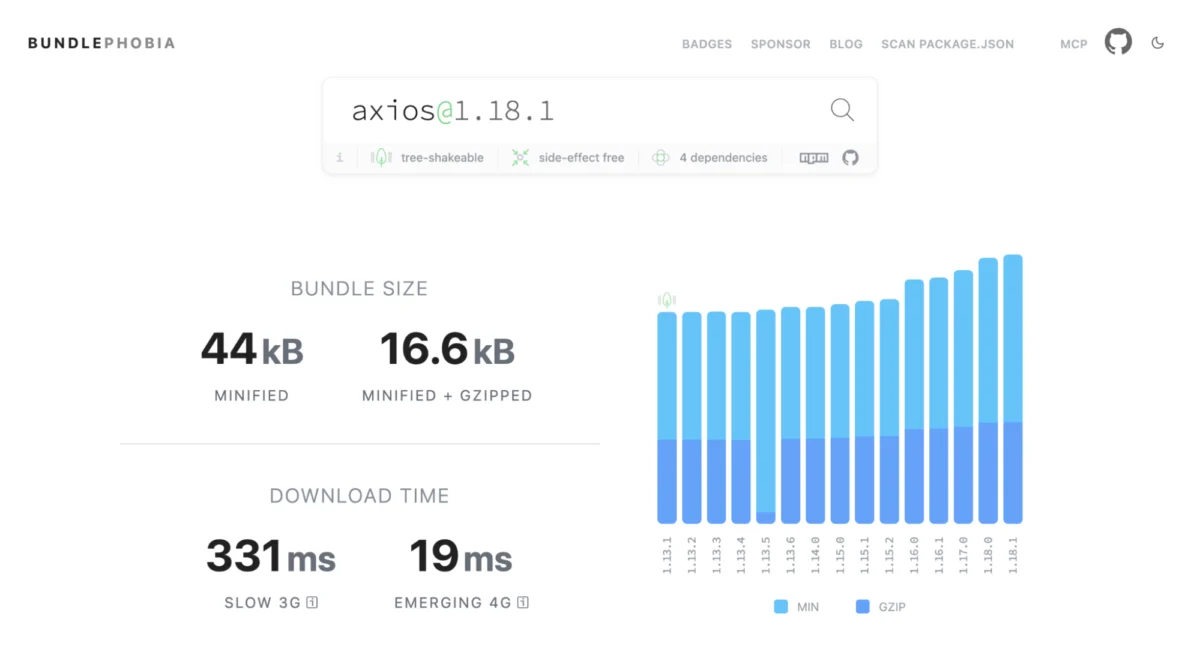
While the trend is toward removal, industry experts caution against blind "find-and-replace" operations. Representatives from major framework teams have noted that libraries like axios still provide value through interceptors and automatic retry logic that the native fetch API does not yet offer natively.

A notable case study in caution is the Temporal API. Although it is the superior way to handle dates, it has not yet reached "Widely Available" status across all browsers. The official polyfill for Temporal is roughly 44KB gzipped, which is significantly larger than lightweight libraries like dayjs (2KB). In this instance, the "platform-first" approach actually penalizes the user’s bundle size. Developers are encouraged to use a decision framework—evaluating audience browser share and polyfill costs—before migrating to the newest platform features.
A Framework for Dependency Auditing
To maintain a lean application, engineering teams are increasingly adopting a quarterly audit process. This involves:
- Inventory: Using tools like
npm ls --omit=devto identify production dependencies. - Cost Analysis: Utilizing
Bundlephobiaorsource-map-explorerto determine the weight of each package. - Baseline Verification: Checking
webstatus.devto see if a native equivalent has reached "Widely Available" status. - Functional Gap Analysis: Determining if the library provides "extra" features (like Axios interceptors) that are critical to the business logic.
Broader Implications for the Future of Web Development
The long-term trajectory of the web platform suggests a "return to the center." The era of "JavaScript-first" development, where every problem was solved with a new npm package, is being replaced by a "Platform-first" mindset. This evolution benefits the entire ecosystem: users enjoy faster, more accessible sites; developers manage less code; and the web remains a viable, high-performance alternative to native mobile applications.
As browser vendors continue to collaborate through the WebDX Community Group, the velocity of feature shipping is expected to increase. The responsibility now lies with development teams to ensure their tech stacks do not become "locked in" to the solutions of the past, but rather evolve alongside the browsers that serve their users. The mandate for 2025 and beyond is clear: audit, simplify, and hand the heavy lifting back to the platform.

