
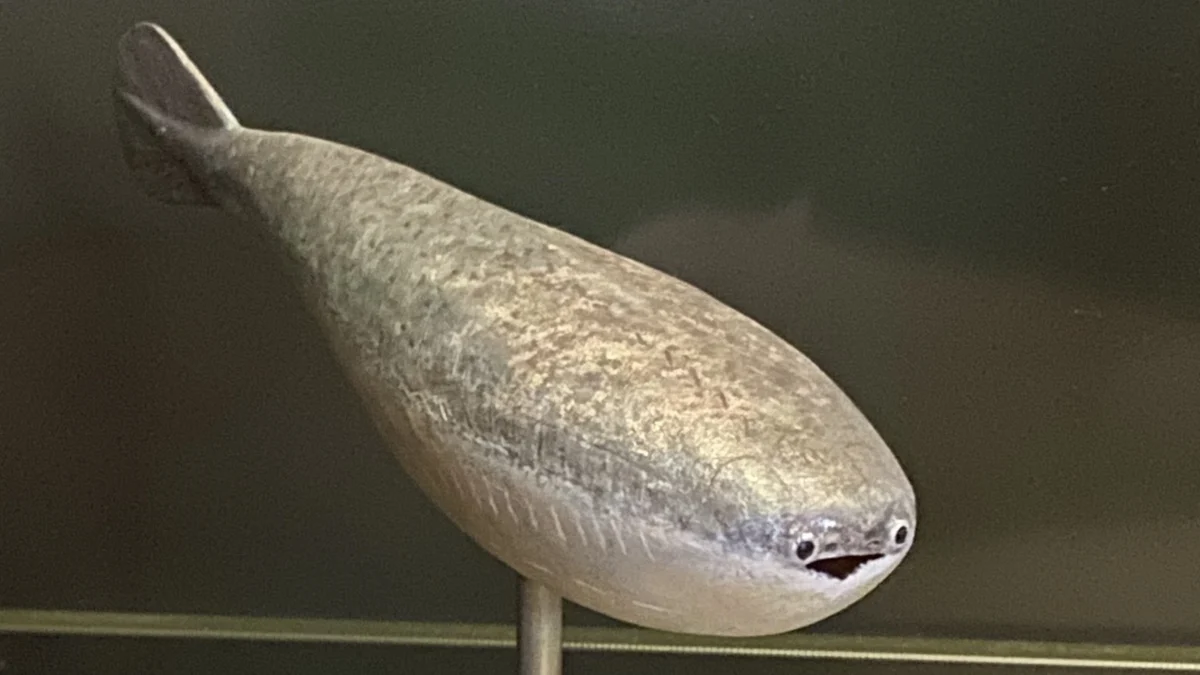
The intersection of ancient paleontology and contemporary internet culture has produced an unlikely global celebrity: the Sacabambaspis, a jawless fish that swam in the oceans approximately 450 million years ago. While the species has been known to the scientific community since the mid-20th century, it recently experienced a profound cultural renaissance. This resurgence was not triggered by a new fossil discovery or a breakthrough in evolutionary biology, but rather by a specific, stylistically questionable museum reconstruction housed in Finland. The journey of Sacabambaspis from the silts of the Ordovician period to the forefront of Japanese and Western social media provides a fascinating case study in how public perception, artistic interpretation, and digital virality can reshape the legacy of extinct life.
The Biological Origins of Sacabambaspis janvieri
To understand the humor and charm that propelled the Sacabambaspis to fame, one must first understand the creature’s actual place in natural history. Sacabambaspis janvieri was an early vertebrate that lived during the Ordovician period. Fossils were first discovered in the Anzaldo Formation of Bolivia, near the town of Sacabamba, from which the genus derives its name.
As an arandaspidid agnathan, the Sacabambaspis was jawless and lacked the complex fins seen in modern fish. Measuring approximately 25 centimeters in length, its body was shaped somewhat like a large tadpole. The most distinctive feature of the species was its head shield, composed of large dorsal and ventral plates made of aspidin—a precursor to bone. Its eyes were positioned at the very front of its head, resembling twin headlights, a feature that contributes significantly to the "startled" or "derpy" appearance of modern reconstructions. Scientifically, the Sacabambaspis is significant because it represents a critical stage in the evolution of vertebrates, offering clues into how early armor-plated fish navigated ancient marine ecosystems before the advent of jaws.
The Helsinki Reconstruction and the Catalyst of Virality
The modern saga of the Sacabambaspis began not in a fossil bed, but at the Natural History Museum of Helsinki (Luomus), part of the University of Helsinki in Finland. The museum’s exhibition features a physical reconstruction of the fish intended to educate the public on early marine life. However, the model’s execution—characterized by a flat, wide-open mouth and forward-facing, unblinking eyes—struck many observers as unintentionally comical.
The catalyst for the fish’s internet fame occurred on August 30, 2022, when Twitter user Kat Turk (@kat_scans), a researcher specializing in the Ediacaran period, posted a series of photographs of the Helsinki model. Turk’s caption expressed a sense of amused disbelief at the reconstruction’s quality. The tweet resonated with the "paleoart" community and general observers alike, garnering over 111,000 likes and 18,000 retweets. For several months, the image remained a niche curiosity within Western scientific circles, but its most significant cultural impact was yet to come.
The Japanese Internet and the "Kawaii" Transformation
In the spring of 2023, the Helsinki Sacabambaspis model crossed over into the Japanese digital landscape, where it found an exceptionally receptive audience. Users on imageboards like Futaba Channel (2chan) began to circulate the image, drawn to its "yuru-chara" (relaxed character) aesthetic. In Japan, there is a long-standing cultural appreciation for characters that are "heta-uma"—a term meaning "bad-good," or something that is technically unrefined yet possesses a compelling, soulful charm.
By March 2023, the momentum began to manifest in physical goods. The doujin circle Suehirogari, known for creating merchandise based on internet trends, released a small figure of the Helsinki model. The trend reached a fever pitch in May 2023 during the Futaba School Festival, an annual community convention. Participants engaged in "Sacabambaspis cosplay" and filled message boards with hand-drawn illustrations of the fish.
The commercialization of the meme followed quickly. On May 9, 2023, an online artist known as Basupisu (@baspis_snt) released a set of digital stickers for the LINE messaging app. By June, Basupisu had expanded into a full range of "Life with Sacabambaspis" merchandise on the e-commerce platform SUZURI, including T-shirts, smartphone cases, and acrylic keychains. This transition from a "poor" museum model to a marketable lifestyle brand solidified the fish’s status as a cultural icon in Japan.

Global Escalation and Media Recognition
The phenomenon reached its zenith in June 2023. On June 8, the Japanese natural science blog Epinesis shared the story of the Helsinki model, describing it as a "hot topic" due to its "miserable" yet adorable appearance. This single post acted as a secondary booster for the meme, earning over 300,000 likes and 83,000 retweets within a week.
The surge in interest prompted a "reverse import" of the meme back to Western social media. On June 13, 2023, Western users began integrating the Sacabambaspis into established meme formats. One notable example featured the fish with the caption "unbothered. moisturized. happy. in my lane. focused. flourishing," a humorous juxtaposition of the ancient fish’s static expression with modern self-care vernacular.
The mainstream media soon took notice. Major Japanese outlets such as ITmedia Netlab and KAI-YOU published features analyzing the trend, interviewing artists, and exploring why a 450-million-year-old fish had captured the public imagination. The consensus among analysts was that the fish provided a sense of "iyashi" (healing) and "nukegake" (a sense of being pleasantly out of place) in an increasingly stressful digital environment.
Scientific and Artistic Implications
The viral success of the Sacabambaspis raises important questions regarding the role of reconstruction in paleontology. Reconstructing extinct animals is a blend of rigorous science and artistic speculation. Because soft tissues rarely fossilize, artists must make educated guesses about an animal’s musculature, skin texture, and facial features.
The Helsinki model, while criticized for its "poor quality" by internet users, actually adheres to some known anatomical truths of the species, such as the position of the eyes. However, its exaggerated, permanent "O" shaped mouth was likely a simplification for the sake of the physical model’s durability or clarity. The irony of the situation is that the "inaccuracy" of the model—or at least its lack of aesthetic polish—is precisely what made it successful. It transformed a distant, alien organism into something relatable and human-like.
Furthermore, the meme has had a positive, if unintended, educational impact. Thousands of people who might otherwise never have heard of the Ordovician period or jawless fish have now engaged with the term "Sacabambaspis." Museums and educational institutions are increasingly finding that "meme-able" content is one of the most effective ways to drive engagement with natural history.
Chronology of Key Events
- 450 Million BCE: Sacabambaspis janvieri thrives in the Ordovician seas.
- 1986: Formal description of the genus following fossil discoveries in Bolivia.
- August 30, 2022: Kat Turk tweets photos of the Helsinki museum model, initiating the first wave of interest.
- March 2023: First physical figures produced by the Japanese doujin circle Suehirogari.
- May 2023: Sacabambaspis becomes a central theme at the Futaba School Festival; LINE stickers are released.
- June 8, 2023: Epinesis blog post triggers a massive viral explosion in Japan.
- June 11-12, 2023: Major Japanese media outlets cover the phenomenon; Togetter curates thousands of fan art submissions.
- Mid-June 2023: The meme returns to the Western internet, becoming a staple of "wholesome" and "absurdist" humor.
Conclusion and Cultural Legacy
The story of the Sacabambaspis is a testament to the unpredictable nature of the digital age. It represents a rare moment where the ancient past and the digital present collide to create something entirely new. While the actual Sacabambaspis janvieri was a simple, jawless filter-feeder trying to survive in a world of trilobites and cephalopods, its digital ghost has become a symbol of resilience, simplicity, and unintentional humor.
As of late 2023, the "Sacabambaspis" hashtag continues to host a steady stream of fan art, 3D animations, and even musical tributes. The Natural History Museum of Helsinki has seen an uptick in international recognition, highlighting how a single exhibit can gain global fame overnight. Ultimately, the Sacabambaspis phenomenon proves that even the most "miserable" reconstruction can find a home in the hearts of millions, provided it has the right look at the right time. The fish that could not bite has, in its own way, left an indelible mark on the modern world.

