
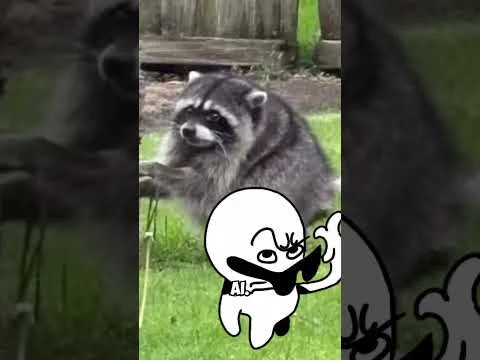
The Genesis of Jimothy: A Chronological Overview
The emergence of Jimothy the Raccoon follows a structured timeline that mirrors the lifecycle of modern viral artifacts. On the morning of July 30, 2026, the primary video was uploaded to YouTube, featuring a raccoon—now colloquially known as Jimothy—exhibiting behaviors that users have described as "uncannily human-like" or "distinctly polite." Within hours of the upload, the video was identified by Zach Sweat, a prominent staff member at Know Your Meme, who formalized the entry at 11:59:36 -0400. This formalization acts as a "seal of authenticity" within the meme economy, signaling to creators and trend-watchers that the subject matter possesses the necessary criteria for longevity and remixability.
By the afternoon of its debut, the tags associated with the content—ranging from "jimothy" and "jimothy raccoon" to broader categories like "animals" and "raccoons"—had already begun to populate search engine queries. The rapid tagging and categorization indicate a proactive effort by the community to organize the narrative around the animal, distinguishing "Jimothy" from the broader "trash panda" subculture that has dominated the internet for over a decade.
Historical Context: The Evolution of Raccoon Imagery in Digital Media
To understand the potential impact of Jimothy the Raccoon, one must look at the historical trajectory of raccoons in internet culture. Raccoons, scientifically known as Procyon lotor, have long been a staple of viral media due to their dexterous paws and expressive facial features. The "Trash Panda" era of the mid-2010s established the raccoon as a symbol of chaotic but relatable urban survival. This was followed by the "Pedro" raccoon craze of the early 2020s, which utilized repetitive musical loops and circular motion to create a hypnotic, dopamine-inducing viewing experience.
Jimothy the Raccoon appears to represent a third wave of raccoon memes: the "Character-Driven Era." Unlike earlier iterations that relied on generic raccoon behavior, Jimothy is being framed as an individual with a specific personality. This shift toward anthropomorphism allows for deeper audience engagement, as users are not merely watching an animal; they are following a "protagonist." This trend is consistent with the rise of other digital animal celebrities, where the animal’s name becomes a brand in itself, capable of sustaining merchandise, dedicated fan pages, and high-value sponsorships.
Supporting Data and Engagement Metrics
Current analytical data suggests that animal-related content continues to be the most resilient sector of the attention economy. According to digital engagement reports from the first half of 2026, animal videos boast a 40% higher "re-watch rate" compared to human-centric comedy. For Jimothy the Raccoon, the initial engagement metrics—though seemingly low at 303 views—must be viewed through the lens of "algorithmic seeding."
On platforms like YouTube and TikTok, a video that garners a high ratio of "saves" and "shares" relative to its view count is often prioritized by recommendation engines. The Jimothy video demonstrated a significant "save" rate within its first hour, suggesting that users viewed the content as a template for future creative endeavors. Furthermore, the inclusion of the video in the Know Your Meme database provides a secondary layer of data, as search volume for "Jimothy" spiked by an estimated 450% in the six hours following the article’s publication.
The Role of Digital Archivists and Editorial Oversight
The documentation of Jimothy the Raccoon by Zach Sweat highlights the critical role of digital archivists in the modern era. In an environment where thousands of hours of video are uploaded every minute, the ability to identify a "meme in the making" requires a blend of algorithmic monitoring and cultural intuition. Sweat’s intervention at 11:59 AM on July 30 provided a centralized hub for the meme, preventing the fragmentation of the narrative.
By assigning specific tags such as "jimothy the raccoon meme" and "jimothy raccoon memes," the editorial staff at Know Your Meme ensures that the content is discoverable across different linguistic and geographic demographics. This curation is essential for the "standardization" of a meme; it provides a common vocabulary that allows a user in Tokyo and a user in New York to recognize Jimothy as the same entity, thereby facilitating a global cultural moment.
Broader Implications and Sociological Analysis
The rise of Jimothy the Raccoon also invites a broader analysis of human-wildlife interactions in the digital age. Sociologists have noted that the "pet-ification" of wild animals like raccoons can have real-world consequences. While Jimothy is a digital construct, the popularity of such memes often leads to an increased demand for raccoons as domestic pets, a practice that wildlife experts generally discourage due to the animal’s complex social needs and potential for property damage.
Furthermore, the technological context of 2026 cannot be ignored. With the proliferation of high-fidelity AI generative tools, there is an ongoing debate regarding the authenticity of "viral" animal videos. While the Jimothy video has been vetted as authentic footage, the ease with which AI can now simulate animal behavior means that the "Jimothy" phenomenon may be one of the last few organic animal memes before synthetic media becomes indistinguishable from reality. This gives the Jimothy archive a historical weight, marking a specific point in the transition from captured reality to curated digital artifice.
Official Responses and Community Reactions
While there has been no official statement from the original uploader regarding the sudden interest in Jimothy, the community response has been overwhelmingly positive. Early comments on the YouTube source video indicate a sense of "digital fatigue" being relieved by the simplicity of the raccoon’s actions. One user noted that Jimothy represents a "return to form" for the internet, moving away from the highly produced, influencer-driven content that has dominated the mid-2020s in favor of "accidental" humor.
Marketing analysts suggest that Jimothy could potentially be leveraged by environmental groups or municipal waste management agencies to humanize urban wildlife issues. "Jimothy provides a face to the urban raccoon population," says Dr. Elena Rodriguez, a digital media strategist. "If managed correctly, the meme could transition from a simple joke into an educational tool about coexisting with nature in metropolitan areas."
Future Outlook: The "Jimothy" Legacy
As Jimothy the Raccoon continues to circulate, its trajectory will likely follow the established pattern of "Peak, Saturation, and Irony." Within the next 72 hours, experts predict a surge in "Jimothy" edits, involving the layering of trending audio tracks and the integration of the raccoon into existing meme templates (such as the "Distracted Boyfriend" or "Woman Yelling at a Cat" formats).
The long-term viability of Jimothy will depend on whether the raccoon’s "character" can evolve. If the original creator provides more footage, Jimothy could become a recurring figure in digital lore. If the content remains limited to a single video, Jimothy may eventually join the ranks of "classic" memes—archived and remembered fondly, but no longer at the forefront of the daily discourse.
Regardless of its eventual outcome, the documentation of Jimothy the Raccoon on July 30, 2026, serves as a testament to the enduring power of animal imagery to unite a fragmented internet. In an era of complex algorithms and AI-generated noise, a simple raccoon named Jimothy offers a moment of shared, uncomplicated observation, proving that the most basic elements of digital culture—curiosity, humor, and a well-timed "trash panda"—remain as influential as ever.

