
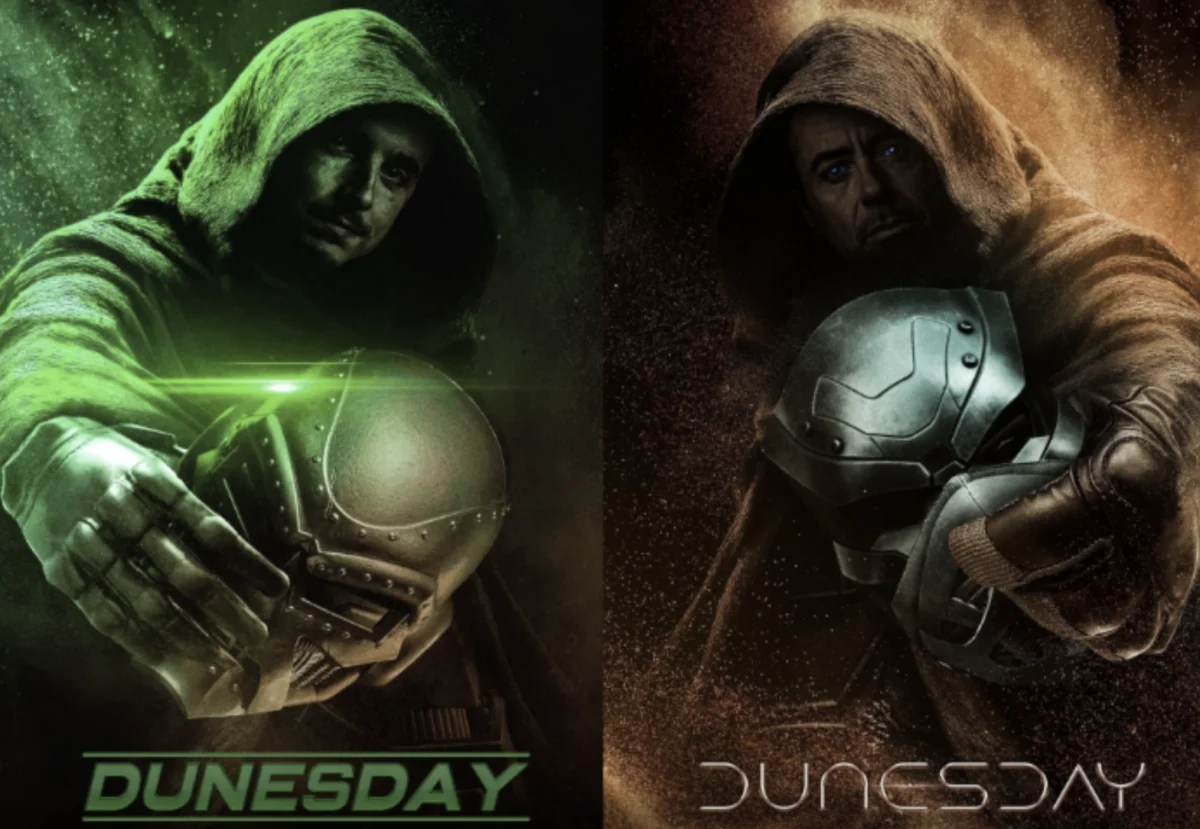
The global film industry is bracing for a historic box office confrontation on December 18, 2026, a date now widely recognized by the portmanteau Dunesday. This cultural phenomenon refers to the simultaneous theatrical release of two of the decade’s most anticipated blockbusters: Marvel Studios’ Avengers: Doomsday and Warner Bros. Pictures’ Dune: Part Three. The convergence of these two intellectual properties has sparked a level of public discourse and marketing synergy not seen since the Barbenheimer event of 2023, which paired the releases of Barbie and Oppenheimer. However, industry analysts note that Dunesday presents a unique set of circumstances, as it pits two massive science-fiction and fantasy epics against one another during the lucrative holiday corridor, rather than contrasting two tonally opposite films.
The term Dunesday began as a grassroots social media movement before being formally acknowledged by the films’ lead actors. The scheduling conflict involves Disney’s Marvel Cinematic Universe (MCU) attempting a high-stakes creative pivot and Legendary Entertainment’s conclusion to Denis Villeneuve’s celebrated adaptation of Frank Herbert’s literary cycle. As the industry looks toward late 2026, the collision of these two titans is expected to test the limits of theatrical capacity and consumer spending during the most competitive window of the cinematic calendar.
The Origins and Coining of a Cultural Phenomenon
While the scheduling of major blockbusters is often subject to change, the specific alignment of Avengers: Doomsday and Dune: Part Three became a point of public fascination in late 2025. Initial speculation regarding the shared date began circulating on platforms such as Reddit and X (formerly Twitter) as fans tracked production schedules and studio announcements. The first significant viral engagement occurred on December 29, 2025, when TikTok user @jesus_delacruzz posted a video highlighting the double-feature potential of the date. The content quickly garnered nearly half a million views, signaling a burgeoning appetite for a coordinated viewing event.
The phenomenon moved from fan speculation to official industry terminology on January 15, 2026. During a Q&A session for the film Marty Supreme, featuring actors Timothée Chalamet and Robert Downey Jr., the topic of their competing 2026 releases was addressed. Downey Jr., who is set to return to the MCU as the antagonist Victor von Doom in Avengers: Doomsday, and Chalamet, who portrays Paul Atreides in the Dune franchise, engaged in a publicized exchange regarding the box office clash.
"I’m officially kicking off my Avengers campaign," Downey remarked during the event. "We decided because we both have films opening on December 18th, and we decided to coin it… We’re thinking ‘Dunesday.’" The moment was captured and distributed by Fandango’s official social media channels, effectively legitimizing the term and encouraging the "double-feature" narrative that studios often find beneficial for driving overall ticket sales.
Comparative Analysis: The Barbenheimer Precedent
The immediate comparison for Dunesday is the Barbenheimer phenomenon of July 2023. In that instance, the simultaneous release of Greta Gerwig’s Barbie and Christopher Nolan’s Oppenheimer resulted in a "rising tide lifts all boats" effect, where the two films combined for a domestic opening weekend of over $235 million. However, market analysts suggest that Dunesday operates under a different set of commercial mechanics.
Barbenheimer thrived on "counterprogramming"—the idea that two films with vastly different target demographics and tones can coexist because they are not directly competing for the same audience. Barbie offered a vibrant, comedic exploration of gender and consumerism, while Oppenheimer was a somber, three-hour biographical drama about the atomic bomb. In contrast, Dunesday features two films that occupy similar genres. Both Avengers: Doomsday and Dune: Part Three are high-concept, visual-effects-heavy spectacles with overlapping fanbases.
Furthermore, the 2026 event takes place during the December holiday window, a period historically dominated by a single "tentpole" film, such as Avatar: The Way of Water or Star Wars: The Force Awakens. The presence of two such massive productions suggests a high level of confidence from both Disney and Warner Bros., but it also creates a logistical challenge for premium large-format (PLF) screens, such as IMAX and Dolby Cinema, which both franchises heavily rely upon for revenue.

Franchise Context: Marvel’s Strategic Pivot
For Marvel Studios, Avengers: Doomsday represents more than just a sequel; it is a critical attempt to regain the commercial and cultural dominance the franchise enjoyed during the 2010s. Following a period of mixed critical reception and fluctuating box office returns for its Phase 4 and Phase 5 projects, Marvel opted for a drastic course correction.
The studio announced the return of Anthony and Joe Russo—the directors behind Avengers: Infinity War and Avengers: Endgame—to helm the project. Most notably, the casting of Robert Downey Jr. as Doctor Doom marked a pivotal shift in the franchise’s direction, moving away from the previously planned Kang the Conqueror storyline. The film is expected to serve as the first half of a two-part finale for the "Multiverse Saga," making its success essential for the studio’s long-term health. Given that Avengers: Endgame remains the second-highest-grossing film of all time, the expectations for Doomsday are immense, with internal projections likely targeting the $1.5 billion to $2 billion range.
Franchise Context: The Evolution of Dune
On the other side of the Dunesday equation, Dune: Part Three (widely expected to be titled Dune: Messiah) represents the culmination of Denis Villeneuve’s vision for the Arrakis saga. The first two installments of the series were critical darlings, with Dune: Part Two (2024) earning over $700 million globally and solidifying Timothée Chalamet and Zendaya as top-tier box office draws.
Unlike the ensemble-driven, interconnected nature of the MCU, the Dune franchise has been marketed as a prestige cinematic event, emphasizing auteur-driven direction and philosophical depth. Villeneuve has frequently stated that Dune: Messiah will serve as the conclusion to Paul Atreides’ story, adapting Herbert’s second novel to provide a cautionary tale about the dangers of messianic figures. The film’s release on December 18, 2026, positions it as the "prestige" alternative to the more populist Marvel entry, though both films are expected to compete fiercely for the same adult and teenage demographics.
Economic Implications and Theater Logistics
The simultaneous release of two billion-dollar contenders poses significant questions for theatrical exhibitors. National chains such as AMC Theatres, Cinemark, and Regal Cinemas must navigate the allocation of screens during a week when demand is expected to reach an all-time high.
- IMAX and Premium Large Format (PLF) Constraints: Both the MCU and the Dune series are synonymous with the IMAX brand. Historically, IMAX grants exclusivity to one major film for a two-to-three-week window. With both films opening the same day, a "split-screen" arrangement may be necessary, or one studio may have secured a prior contractual advantage.
- The "Barbenheimer Effect" on Attendance: Data from 2023 showed that many viewers who saw one film were motivated to see the other as part of a "challenge" or cultural trend. If the Dunesday meme continues to gain traction, it could lead to an unprecedented number of "double-feature" ticket sales, potentially pushing the total weekend box office to record-breaking levels.
- Global Market Impact: While the domestic market (United States and Canada) is the primary focus of the Dunesday narrative, the international performance will be the deciding factor in which film "wins" the weekend. Marvel typically has a stronger foothold in Asian markets, while Dune has shown exceptional strength in European territories.
Social Media Sentiment and Fandom Reactions
The reception of Dunesday on social media has been polarized between organic excitement and accusations of corporate manufacturing. Following the January 2026 Q&A with Downey Jr. and Chalamet, fan-made content exploded. On March 17, 2026, prominent film commentator Matt Ramos (@therealsupes) posted a side-by-side image of the movie posters, declaring it "the greatest movie event of all-time." The post garnered over 4.7 million views within days.
However, a vocal segment of the online community has expressed skepticism. Some users have argued that the Dunesday term feels "forced" by marketing departments and Marvel fan accounts eager to replicate the success of Barbenheimer. On X, user @indiehamlet noted, "the mcu pages being the only ones trying to force this dunesday bs lowkey frying me," a sentiment that received thousands of likes and sparked a debate about the authenticity of modern viral marketing.
Despite these criticisms, the engagement metrics suggest that the term has successfully permeated the public consciousness. TikTok edits, "fancams," and speculative theories regarding the plot of both films continue to dominate entertainment feeds, ensuring that the December 2026 date remains a focal point for the global audience.
Chronology of Key Events Leading to Dunesday
- Mid-2025: Disney and Warner Bros. finalize their holiday 2026 release calendars, placing Avengers: Doomsday and Dune: Part Three on the same Friday.
- December 29, 2025: The first major viral mention of the "double feature" appears on TikTok, initiating the grassroots "Dunesday" movement.
- January 15, 2026: Robert Downey Jr. and Timothée Chalamet officially endorse the name "Dunesday" during a high-profile industry event.
- March 2026: Major social media accounts and news outlets begin tracking the "Dunesday" trend as a successor to "Barbenheimer."
- December 18, 2026: Scheduled worldwide theatrical release of both films.
Conclusion: A Defining Moment for Modern Cinema
As the countdown to December 18, 2026, continues, Dunesday stands as a testament to the power of communal cinema and the evolving nature of film marketing. Whether the two films will truly complement each other at the box office or cannibalize each other’s earnings remains a subject of intense industry debate. What is certain is that the event will serve as a referendum on the state of the blockbuster. If both films succeed, it will prove that the theatrical experience remains the pinnacle of entertainment, capable of supporting two massive epics simultaneously. If one falters, it may signal a shift in how studios approach release windows and the limits of consumer attention in an increasingly crowded media landscape. For now, the film world remains focused on a single date, preparing for a cinematic event that promises to be, quite literally, Doomsday at the Dunes.

