

As the technology sector navigates the complexities of 2026, a fundamental shift in user experience (UX) design has emerged, moving the industry away from aesthetic maximalism toward a philosophy of digital sobriety. Known as Sustainable UX, this movement redefines high-quality design not by the complexity of its features, but by the efficiency of its footprint. In an era where every high-resolution hero image, autoplaying video, and intricate JavaScript animation carries a measurable carbon cost, designers are increasingly being held accountable for the energy consumption of their digital products.
For decades, the digital landscape was treated as an ethereal, weightless environment. The transition from physical paper to digital interfaces was initially framed as a purely "green" evolution. However, current data suggests that the physical infrastructure supporting the internet—a vast network of data centers, undersea cables, and cooling systems—now rivals traditional heavy industries in energy demand. According to the International Energy Agency (IEA), power consumption from data centers, particularly those optimized for artificial intelligence, now matches the energy requirements of massive aluminum smelters. This geographic density of power demand has created localized environmental strains, prompting the design community to pivot toward "design for efficiency" as a core professional standard.
A Chronology of UX Evolution: From Tables to Sustainability
The trajectory of web design has undergone several distinct eras, each defined by the hardware and bandwidth constraints of its time. Understanding the current shift toward Sustainable UX requires a look at the technological milestones of the last quarter-century.

- The Early 2000s (The Skeuomorphic Era): Early layouts were heavily dependent on table-based structures and white backgrounds that mimicked the familiarity of physical paper. Energy consumption was low primarily because bandwidth was limited, restricting the use of heavy assets.
- The 2010s (The Responsive Revolution): The launch of the iPhone and the subsequent explosion of mobile internet access forced a pivot to responsive design. While this improved accessibility, the era also saw the rise of the "attention economy," where websites began competing for engagement through increasingly heavy visual content and tracking scripts.
- The 2020-2024 Period (The Era of Digital Bloat): With the rollout of 5G and high-speed fiber optics, designers largely abandoned file size constraints. Data from the HTTP Archive indicates that the average mobile page weight increased by over 500% during this decade, driven by unoptimized 4K imagery and background video loops.
- 2025-2026 (The Sustainable Pivot): As the environmental impact of AI and massive data processing became impossible to ignore, Sustainable UX emerged. The industry moved past "design at any cost" to embrace a "carbon-aware" methodology, where performance is viewed as a social and environmental responsibility.
The Technical Foundations of Sustainable Design
The shift toward sustainable digital products is grounded in the physics of modern hardware, specifically the evolution of display technology and data transmission.
The OLED Revolution and Dark-First Mentality
A primary pillar of Sustainable UX is the transition to "Dark-First" design. This is not merely an aesthetic preference but a direct response to the mechanics of Organic Light Emitting Diode (OLED) screens, which have become the standard for mobile devices and high-end monitors. Unlike traditional LCD screens that require a constant backlight, OLED screens illuminate each pixel individually. When an interface displays "true black" (#000000), the corresponding diodes are turned off completely, drawing zero power.
Supporting data from a landmark study by Purdue University reveals the impact of this hardware-software synergy. At 100% brightness, switching an application from light mode to dark mode can save between 39% and 47% of battery power. On a global scale, if major platforms defaulted to dark mode, the cumulative reduction in grid demand would be substantial, extending device hardware lifespans and reducing the frequency of charging cycles.
Combatting Digital Fat through Asset Optimization
The "digital fat" of a website—consisting of massive unoptimized images and video—is currently the single largest contributor to page-load energy consumption. Every megabyte transferred from a server to a client requires electricity for transmission, server processing, and client-side rendering.

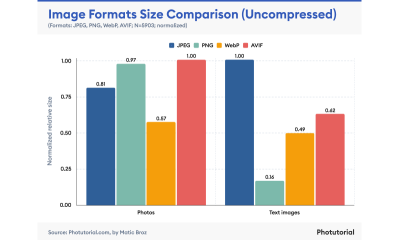
Recent industry audits show that transitioning from legacy formats like JPEG or PNG to modern formats such as AVIF and WebP can reduce image weight by up to 50% without perceptible loss in quality. Furthermore, the use of Scalable Vector Graphics (SVG) and CSS-based gradients is replacing traditional photography in many corporate redesigns. For instance, a 2025 redesign of a major cybersecurity platform saw its homepage load drop from 5.5MB to 1.2MB—a 78% reduction in energy load—by replacing high-resolution photography with code-based art.
The Impact of Animation and JavaScript on Power Consumption
Beyond static assets, the "Meaningful Motion" movement seeks to eliminate "loud" or unnecessary animations that strain a device’s Graphics Processing Unit (GPU). Complex 3D parallax effects and "scroll-jacking" are increasingly viewed as ecological liabilities.
When a browser renders complex JavaScript-driven animations, the CPU and GPU temperatures rise, often triggering cooling fans in laptops and rapidly draining mobile batteries. Industry standards now favor hardware-accelerated CSS transitions over heavy JavaScript libraries like GSAP or Lottie. The guiding principle for 2026 is that if an animation does not assist a user in completing a task or understanding a hierarchy, it is considered digital waste.
The Implementation of Data Budgets
To formalize these efficiency goals, leading tech firms have begun implementing "Data Budgets" for every digital project. Much like a financial budget, a data budget sets a hard cap on the total size of a page (e.g., a limit of 1MB for a landing page).
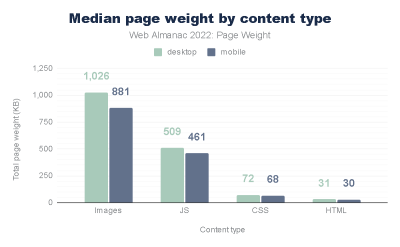
This constraint forces design teams to make intentional choices. If a team wishes to add a new tracking script or a high-weight custom font, they must optimize or remove an existing asset to stay within the budget. This prevents "feature creep" from evolving into "carbon creep." The Sustainable Web Design model, pioneered by organizations like Wholegrain Digital, provides the formula for these budgets, noting that the average website produces approximately 0.5 grams of CO2 per view. For a site with one million monthly views, this totals six metric tons of CO2 annually—equivalent to the emissions of a car driven 15,000 miles.
Industry Reactions and the Business Case for Sustainability
The move toward Sustainable UX has met with widespread support from both environmental groups and business analysts, though for different reasons.
The W3C and Regulatory Bodies:
While not yet mandated by law, the World Wide Web Consortium (W3C) has begun integrating sustainability guidelines into its core recommendations. Analysts suggest that future digital accessibility laws may eventually include energy efficiency as a requirement for public-sector websites.
Economic Advantages:
Business leaders have noted that Sustainable UX is, in essence, performance design. Faster-loading sites directly correlate with improved Core Web Vitals, which in turn boosts Search Engine Optimization (SEO) rankings. Furthermore, lean design reduces hosting costs and improves conversion rates by providing a smoother experience for users on older devices or slower data plans.
Inclusive Design:
Social advocacy groups have praised the movement as a win for inclusivity. By reducing the data requirements of digital products, companies ensure that their services are accessible to users in emerging markets where data costs are high and high-speed infrastructure is limited.
Broader Implications: The Future of "Clean" Digital Architecture
As the industry moves deeper into 2026, the definition of a "sophisticated" designer has shifted. The focus is no longer on who can create the most visually stunning, resource-heavy interface, but on who can deliver the most value with the fewest bytes.
Sustainable UX represents the first time the design community has had to reckon with the physical consequences of digital work. It marks the end of the era of "unlimited pixels" and the beginning of a more permanent, respectful digital architecture. By cutting digital fat, the industry is moving toward a "win-win-win" scenario: reducing energy consumption for the planet, improving speed and battery life for the user, and lowering costs while increasing reach for businesses.
The call to action for the coming year is a widespread audit of the "invisible waste" in the digital ecosystem. As industry experts conclude, the most elegant solution in the modern age is no longer the one that adds the most features, but the one that leaves the smallest footprint. Through the adoption of the Sustainable UX Checklist—prioritizing SVGs, implementing dark-first defaults, and adhering to strict data budgets—the design community is positioning itself as a guardian of both the user experience and the global environment.

