
A decade after the initial surge of interest in persuasive design, the field of User Experience (UX) has undergone a fundamental transformation, moving away from isolated psychological "hacks" toward a holistic discipline now widely recognized as behavioral design. In 2015, the conversation in the design community focused largely on moving beyond basic usability—removing friction and improving interface clarity—to actively guiding users toward specific outcomes. However, as the digital landscape has matured, product teams have discovered that simple nudges and surface-level gamification are often insufficient to sustain long-term engagement or address deep-seated retention issues.
The Historical Context: From Frictionless to Persuasive
In the mid-2010s, practitioners like Anders Toxboe began advocating for a shift in how designers viewed their role. The prevailing wisdom at the time was that "good design is invisible" and that the primary goal of UX was to make tasks as easy as possible. While usability remains a cornerstone of digital product development, it rarely addresses the "behavioral gap"—the space between a user’s intention to do something and their actual follow-through.
By 2015, the industry began adopting "persuasive patterns," leveraging psychological principles to influence user behavior. This era was characterized by the rapid adoption of social proof, scarcity cues, and the Fogg Behavior Model. However, the implementation of these patterns often remained tactical rather than strategic. Product teams frequently applied these techniques as "growth hacks" to boost immediate conversion rates, often overlooking the long-term impact on user trust and retention.
The Plateau of Superficial Gamification
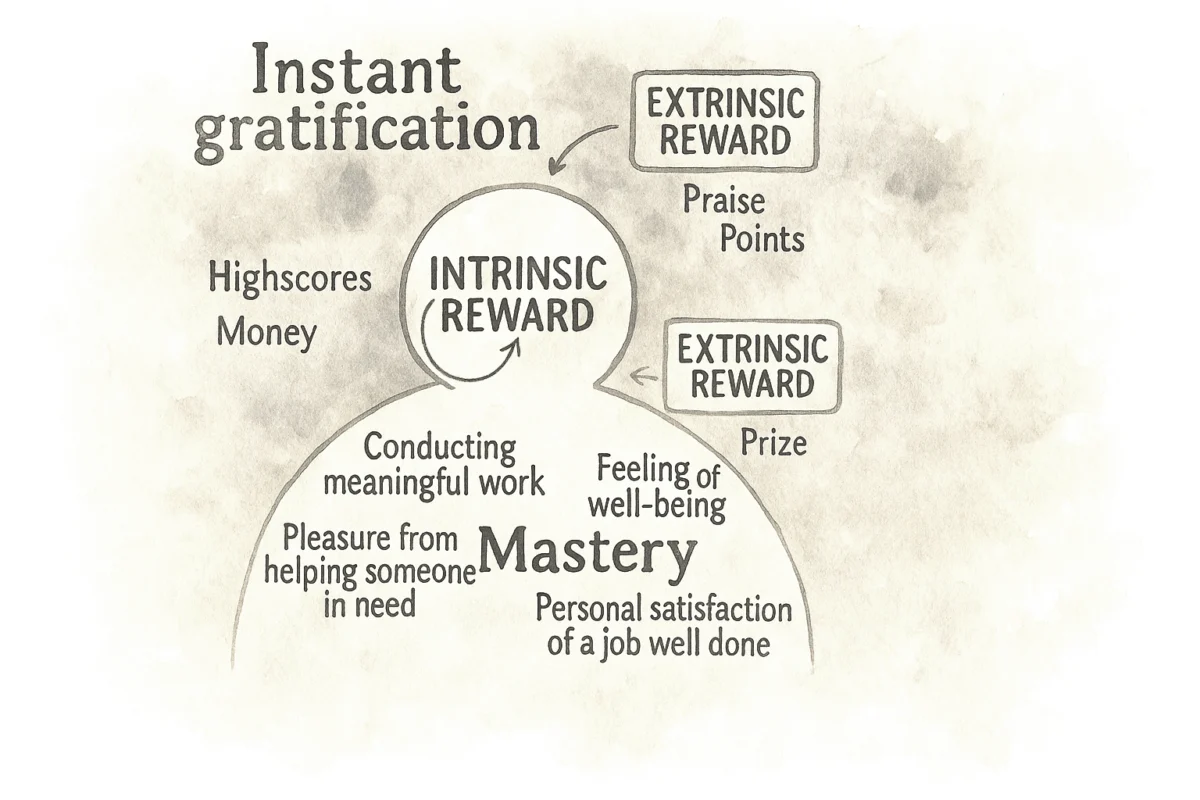
A significant lesson learned over the last ten years is the inherent limitation of extrinsic motivators. During the early 2010s, gamification became synonymous with persuasive design. Companies across sectors—from fintech to healthcare—integrated points, badges, and leaderboards into their interfaces.
Data from the last decade suggests that while these mechanics can drive short-term "spikes" in activity, they often lead to a "novelty effect" that quickly plateaus. According to Self-Determination Theory, extrinsic rewards can sometimes undermine intrinsic motivation—a phenomenon known as the overjustification effect. When users feel they are performing a task only to maintain a "streak" or earn a digital badge, rather than for the inherent value of the activity, their engagement becomes brittle. As soon as the reward is removed or the novelty fades, the behavior ceases.

Modern behavioral design has shifted its focus toward supporting intrinsic drivers: autonomy (feeling in control), competence (feeling capable), and relatedness (feeling connected to others). For instance, a language-learning app that uses streaks to visualize a user’s growing mastery is more effective than one that uses streaks merely as a high-pressure tactic to prevent churn.
The Shift in Frameworks: From Fogg to COM-B
The evolution of the field is perhaps best illustrated by the shift in the theoretical frameworks used by product teams. For years, the Fogg Behavior Model (B=MAP) was the standard, positing that behavior occurs when Motivation, Ability, and a Prompt converge at the same moment. While still relevant, many sophisticated teams have transitioned to the COM-B model, which originated in clinical psychology and public health.
The COM-B model identifies three essential components for any behavior:

- Capability: Does the user have the physical and psychological skills to perform the behavior?
- Opportunity: Does the social and physical environment allow the behavior to happen?
- Motivation: Does the user have the conscious and unconscious desire to perform the behavior?
This framework is considered more robust for modern UX because it accounts for the user’s environment and external context, not just their interaction with a single screen. It encourages teams to ask whether a drop-off in a sign-up funnel is due to a lack of skill (Capability), a lack of time or the wrong device (Opportunity), or a lack of perceived value (Motivation).
Behavioral Discovery: Decoding the Gap Between Word and Action
One of the most significant advancements in the discipline is the integration of psychology into the discovery phase of product development. Traditional user research often relies on what users say they want, which is notoriously unreliable due to cognitive biases like the social desirability bias or the "say-do" gap.
Behavioral discovery focuses on what users actually do. By applying the COM-B model to qualitative interviews and quantitative data, teams can diagnose the specific barriers preventing a target behavior. For example, if data shows a high bounce rate on a complex financial setup page, a behavioral audit might reveal that the barrier is not "motivation" (the user wants the account) but "psychological capability" (the user feels overwhelmed by the jargon).

Industry analysts note that companies utilizing behavioral discovery often see more sustainable growth because they are solving for the root cause of user friction rather than just treating the symptoms with UI tweaks.
The Ethical Mandate: Persuasion vs. Deception
As the tools of behavioral design have become more powerful, the industry has faced a reckoning regarding "deceptive patterns" (formerly known as dark patterns). The distinction between ethical persuasion and manipulation lies in the intention of the designer and the ultimate benefit to the user.
Ethical behavioral design seeks to align business goals (retention, conversion) with user goals (achieving a task, gaining a skill). Manipulation, by contrast, uses psychological vulnerabilities to drive actions that benefit the business at the expense of the user—such as making it intentionally difficult to cancel a subscription or using "confirmshaming" to prevent a user from opting out of a newsletter.

The "Dark Reality" exercise has emerged as a standard ethical check in modern product workflows. This process requires teams to imagine the worst-case scenario of their design: What happens if this feature works too well? Could it lead to addiction, financial strain, or social isolation for the user? This proactive approach to ethics is becoming a requirement for brands that wish to maintain long-term consumer trust in an increasingly scrutinized digital economy.
A Strategic Framework for Implementation
To move behavioral design from theory to practice, leading product organizations have adopted a structured, workshop-based approach. This methodology ensures that psychological insights are applied systematically rather than haphazardly.
1. Behavioral Empathy Mapping
Teams begin by mapping the psychological state of the user. Unlike traditional empathy maps, this version focuses on behavioral signals: what the user avoids, what they misunderstand, and where they feel uncertain. This helps identify the "behavioral enablers" and "barriers" present in the current experience.

2. Behavioral Journey Mapping
The team then overlays these psychological forces onto the user journey. This visualization highlights specific "moments of truth" where the product is asking too much of the user’s capability or failing to provide the necessary opportunity or motivation.
3. Behavior Scoring and Prioritization
Not all behaviors are equally valuable. Teams use a scoring matrix to evaluate potential target behaviors based on three criteria:
- Impact: How much will this behavior change help reach the business goal?
- Ease of Change: How difficult is it to influence this behavior through design?
- Ease of Measurement: Can we accurately track this behavior in our data?
4. Hypothesis-Driven Ideation
Instead of brainstorming random features, teams generate "behavioral hypotheses" using a specific template: "We believe that by [doing X], we will move users from [current behavior] to [target behavior] because it addresses [barrier Y]." This ensures every design decision is grounded in a specific psychological rationale.

The Broader Impact on Cross-Functional Teams
The professionalization of behavioral design has changed the way cross-functional teams operate. It provides a shared language for product managers, designers, and engineers. When a team discusses a "motivation issue" or a "capability gap," they are using a standardized vocabulary that reduces ambiguity and aligns efforts.
Furthermore, this approach allows for more sophisticated experimentation. Rather than simply A/B testing two button colors, teams can test two different psychological principles—such as "social proof" versus "loss aversion"—to see which resonates more deeply with their specific audience.
Conclusion: The Future of Digital Influence
The evolution of persuasive design into a strategic behavioral discipline represents a maturing of the UX profession. The lessons of the past decade are clear: "hacks" are temporary, but a deep understanding of human psychology is a foundational competitive advantage.

As we look toward the next decade, the integration of Artificial Intelligence and personalized experiences will only increase the potency of behavioral design. The challenge for the industry will be to wield this influence responsibly, ensuring that the digital products of the future are not just easy to use, but are genuinely supportive of the human goals they were built to serve. By focusing on intrinsic motivation, systemic thinking, and ethical accountability, product teams can move beyond shallow engagement toward creating lasting, meaningful value for both users and businesses alike.

