
Water damage rarely announces itself with a dramatic flourish. Instead, it often begins with an insidious trickle – a perished washing machine hose, a pinhole leak lurking behind kitchen cabinets, or a faulty pipe joint in a forgotten corner of the home. These seemingly minor issues can fester for days, even weeks, allowing moisture to seep into walls, floors, and electrical systems before a tell-tale stain or a musty odor finally alerts homeowners to the escalating crisis. By that point, the damage is often extensive and costly to repair. In the United Kingdom alone, the financial toll of such incidents is staggering, with insurers paying out an estimated £1.8 million every single day on escape of water claims, according to the Association of British Insurers (ABI). This persistent financial drain underscores a critical vulnerability in many homes and highlights the growing need for proactive solutions.
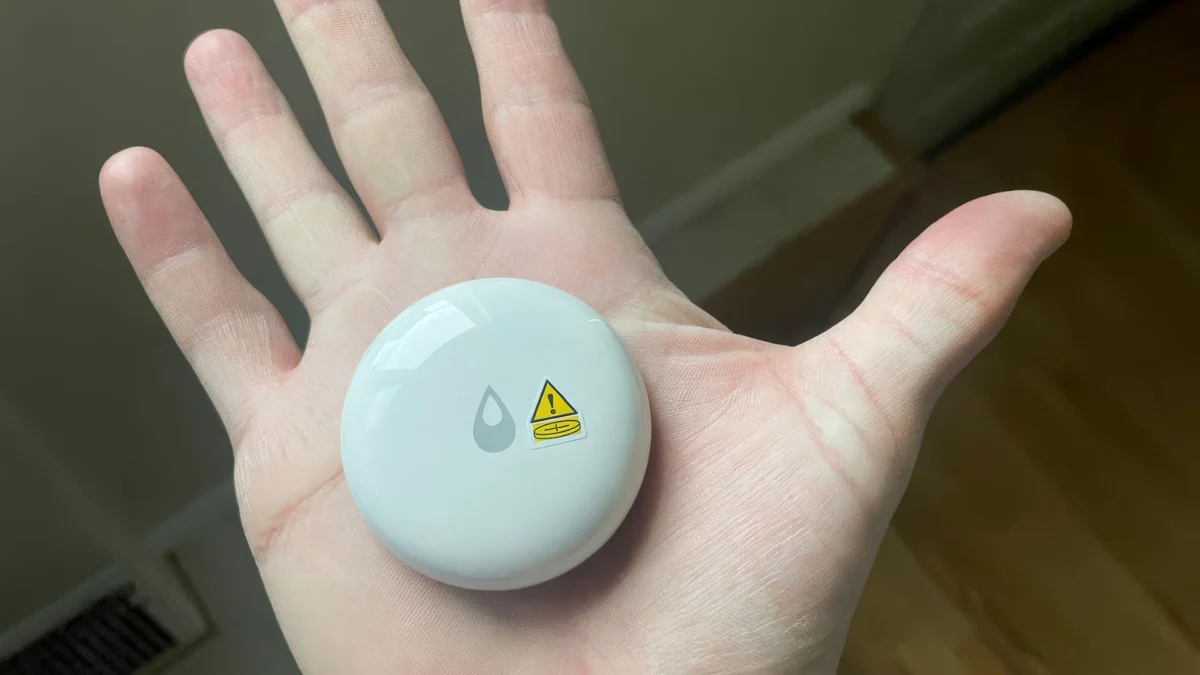
The advent of smart home technology has introduced a powerful new weapon in the fight against water damage: the smart water leak sensor, also known as a smart water leak detector depending on the manufacturer. These compact, typically battery-powered devices are designed to be strategically placed in areas prone to leaks. The moment they detect moisture, they spring into action, sending an immediate alert to a connected smartphone, sounding an audible siren, or, in more sophisticated setups, even triggering an automatic shut-off of the main water supply. Their affordability places them among the most accessible smart home devices, often on par with the cost of basic smart motion sensors, making them a practical investment for a wide range of homeowners.
At the core of nearly all consumer-grade leak sensors lies a remarkably simple yet effective principle: water conducts electricity. These devices are equipped with two or more small metal probes on their underside. When water bridges these contacts, it completes a low-voltage electrical circuit, signaling to the sensor that it is submerged. This fundamental simplicity is the key to their cost-effectiveness, reliability, and longevity. Because the detection mechanism is passive, most sensors are inherently reusable. After a false alarm or a genuine leak event, simply drying the probes allows the device to return to its monitoring state. However, occasional wiping of the contacts is recommended to prevent dust and mineral deposits, such as limescale, from dulling their sensitivity over time.
Some models enhance this basic functionality. Many incorporate a second set of contacts on the top surface, enabling them to detect drips from above, such as those originating from a leaking ceiling or a faulty fixture, in addition to pooling water below. Others come bundled with extension cables or flexible rope-style probes. These accessories allow a single sensor to effectively monitor a prolonged stretch of skirting board or the entire width of an appliance bay, extending their protective reach.
A more comprehensive approach is offered by whole-home flow monitoring systems. Brands like Moen’s Flo and Phyn, which have a stronger presence in the US market than in the UK, install directly onto the main water line entering the property. These systems continuously monitor water flow, pressure, and usage patterns throughout the entire house. Instead of waiting for water to physically contact a sensor probe, they analyze the subtle signatures of leaks anywhere within the plumbing network, from a persistently running toilet to an undetectable pinhole leak within a wall. The primary trade-offs for this advanced protection are cost and installation complexity. These are plumbed-in devices that often necessitate professional fitting. LeakBot, a system popular in the UK and frequently partnered with insurance companies, offers a middle ground. It attaches to a pipe and utilizes temperature sensing to identify a constant flow of cold water, indicative of a leak, without requiring significant plumbing modifications.
Freeze Warnings: Preempting the Burst Before it Happens
A significant proportion of water damage incidents do not begin with a visible leak but rather with the insidious effects of freezing temperatures. When water freezes, it expands, exerting immense pressure from within pipes. This expansion can lead to cracks and splits in the pipework. The actual flood then occurs not during the freeze, but when the ice melts, often weeks after the initial cold snap. This temporal disconnect explains why many households discover catastrophic damage long after the temperature has returned to normal.
This phenomenon highlights the value of sensors that can monitor both temperature and moisture. Systems like Moen Flo and Phyn are equipped to issue a freeze alert when ambient temperatures approach critical levels, typically around 45°F (7°C). Many simpler, more affordable "puck" style sensors now also incorporate this vital temperature warning feature. This early warning provides homeowners with crucial time to take preventative action, such as leaving a tap running, insulating exposed pipes, or draining sections of the system, thereby averting a potential pipe burst. Homeowners should prioritize placing these freeze-aware sensors in known cold spots, including attics, garages, unheated utility rooms, and any pipe runs located against external walls.
Connectivity Protocols: Wi-Fi, Zigbee, and Z-Wave Explained
The choice of connectivity protocol for a smart water leak sensor is a decision with more significance than for many other smart home devices. A leak sensor’s primary function is to operate reliably and unobtrusively for extended periods, often months or years after it has been installed and largely forgotten. Its ability to communicate effectively, especially during an emergency, is paramount.
Wi-Fi Water Leak Detectors: These offer the simplest setup process. They connect directly to a home’s existing Wi-Fi router, eliminating the need for a separate hub. Alerts are transmitted through the manufacturer’s dedicated app, providing remote notification capabilities. However, the convenience of Wi-Fi comes at a cost to power consumption. Wi-Fi is a relatively power-hungry protocol, meaning battery life for these sensors is typically measured in months rather than years. A sensor with a depleted battery becomes effectively useless, a mere plastic disc offering no protection. Wi-Fi sensors are a suitable choice for individuals who require only one or two devices and do not possess or intend to acquire a smart home hub.
Zigbee and Z-Wave Water Leak Sensors: In contrast, Zigbee and Z-Wave are low-energy mesh networking protocols specifically designed for small, power-efficient devices. This efficiency translates into significantly extended battery life, with sensors often lasting two, three, or even up to five years on a single coin cell battery or a pair of AA batteries. The trade-off for this power efficiency is the requirement of a compatible smart home hub. For Zigbee, this might be an Aqara hub, a Samsung SmartThings station, or a Home Assistant setup. For Z-Wave, a dedicated Z-Wave controller such as an Aeotec or Hubitat device is necessary. For those already invested in a hub-based smart home ecosystem, Zigbee or Z-Wave sensors generally represent a superior long-term investment. Furthermore, these local network protocols ensure that the sensors continue to function even when the home’s internet connection is disrupted, a critical advantage during a potential emergency.
Emerging Connectivity Options: Beyond the established protocols, some manufacturers are exploring alternative, long-range wireless technologies. YoLink, a rapidly growing brand in the US market, utilizes long-range LoRa radio through its proprietary hub to extend connectivity to remote locations like basements, garages, and outbuildings, areas that can often challenge conventional wireless signals. Meross employs a similar strategy with its MS405 model, using sub-GHz 433MHz radio and boasting a claimed range of up to 100 meters.
Regardless of the chosen protocol, it is crucial to verify the sensor’s compatibility with other smart home platforms. An alert is only truly effective if it reaches the user in a timely and actionable manner. Sensors that integrate with popular ecosystems like SmartThings, Home Assistant, Apple Home, Amazon Alexa, or Google Home can trigger a wider range of responses. These can include audible announcements from smart speakers, visual cues like flashing lights, or the execution of automated routines. Conversely, devices locked into a single manufacturer’s app may offer only a basic phone notification, which can be easily missed, particularly during the critical overnight hours.
The Rise of Matter: Unifying the Smart Home Landscape
The emerging Matter standard is poised to dissolve the traditional barriers between disparate smart home ecosystems. Water leak sensors have been officially designated as a supported device type in Matter 1.3, and hardware manufacturers are rapidly adapting. For instance, IKEA’s Dirigera smart home hub now supports Matter 1.3, enabling the affordable IKEA hub to receive leak alerts from third-party Matter-certified sensors, rather than being limited to a single brand’s proprietary kit. Sensor manufacturers are also bridging their existing technologies to Matter. Meross’s MSH450 hub, for example, exposes its 433MHz sensors to the Matter standard. For consumers purchasing devices today, ensuring Matter compatibility represents a significant step towards future-proofing their smart home investment.
Strategic Placement: Maximizing Sensor Effectiveness
A leak sensor’s effectiveness is directly proportional to its placement. A device can only protect the limited floor area it physically occupies. Therefore, strategic positioning is as critical as the hardware itself. Fortunately, domestic water leaks tend to follow predictable patterns, with a handful of locations accounting for the vast majority of incidents.
The initial focus should be on appliances that move water under pressure. This includes the floor area beneath and behind washing machines and dishwashers, as well as any plumbed-in refrigerator or freezer. Supply hoses and door seals on these appliances are common failure points. Next, attention should turn to areas where plumbing is most concentrated. Underneath kitchen sinks, beneath bathroom basins, behind toilets, and at the base of bathtubs or shower enclosures are prime locations. Failed silicone sealant around these areas can allow water to seep unnoticed for extended periods.
Beyond these common points of failure, consider high-risk, high-impact scenarios. The base of boilers or hot water cylinders warrants a sensor due to the potential for significant damage should a leak occur. Similarly, any loft space housing cold water tanks or exposed pipe runs should be equipped with a sensor. A leak originating at an elevated height can cascade through multiple floors, causing widespread destruction. In basements or cellars, sensors should be placed at the lowest points, near foundation walls or adjacent to sump pumps, as these areas tend to collect water migrating from anywhere within the house.
A crucial practical consideration before committing to sensor placement is to verify that the chosen connectivity protocol (Wi-Fi, Zigbee, Z-Wave, etc.) has adequate signal strength in the intended location. Attics and basements, in particular, are notorious for poor wireless reception, and a sensor that cannot communicate its alert is rendered ineffective.
Smart Leak Sensors vs. Automatic Shutoff Valves: A Synergistic Solution
While smart water leak sensors excel at detecting and alerting users to the presence of water, they inherently rely on human intervention to mitigate the damage. This assumption is adequate for minor leaks occurring when someone is home, but it is entirely insufficient for major pipe bursts that occur while a property is unoccupied for an extended period, such as during a holiday.
This is where automatic shutoff valves become indispensable. Devices like the Aqara Valve Controller T1 can be retrofitted onto existing stopcock or lever valves, transforming them into remotely controllable smart devices. When paired with a leak sensor within the same smart home ecosystem, a powerful automation can be created: water detected, valve automatically closed, notification sent, all within seconds, even if no one is present. During testing, the Aqara T1 proved to be a valuable upgrade, though its physical size necessitates checking clearance around the stopcock before installation.
Whole-home systems such as Moen Flo and Phyn Plus integrate the shutoff valve functionality directly into the main monitoring unit, automatically closing the water line upon detecting abnormal flow patterns. For homeowners opting for a more modular approach, leak sensors should be prioritized first, with the addition of a shutoff valve considered a subsequent enhancement. A basic sensor, costing between £15 and £40, strategically placed in high-risk areas, provides the core early-warning benefit. A shutoff valve can then be added as a secondary layer of protection. For individuals who travel frequently or leave their properties vacant for extended periods, a shutoff valve transitions from a desirable feature to an essential component of home protection.
Battery Life and Reliability: Realistic Expectations
Given that a leak sensor spends the vast majority of its operational life in a dormant state, its battery performance is primarily a measure of standby power consumption. Homeowners can realistically expect several months of battery life from Wi-Fi sensors, typically one to two years from more basic Zigbee models, and three to five years from the most power-efficient Zigbee, Z-Wave, and sub-GHz devices. It is important to note that manufacturer claims are often based on ideal laboratory conditions; actual battery life in real-world environments, especially in colder locations like attics or garages, may be reduced.
Consistent testing is the most critical habit for ensuring the ongoing reliability of these devices. Every few months, a simple test involving touching a wet cloth to the sensor probes should be conducted to confirm that the alert is received on the smartphone, the siren activates, and any automated shutoff sequences function correctly. Simultaneously, check the battery status indicator and enable low-battery notifications if the smart home platform supports them. The most common reason for smart leak detector failure is not a faulty device, but rather a dead battery that has gone unnoticed, leaving the home vulnerable.
Insurance Implications: Potential for Savings
The financial incentives for installing smart water leak sensors are becoming increasingly compelling, although the specific mechanisms vary between the UK and the US. In the UK, the Association of British Insurers (ABI) actively recommends the installation of leak detection devices. Some insurers are beginning to offer assistance with installation costs and factor the presence of such technology into their policy pricing. Hiscox, for example, provides its buildings insurance customers with a complimentary LeakBot device, valued at £149, which includes an annual engineer visit if any issues are detected. Numerous other UK insurers have similar partnerships in place, making it worthwhile for homeowners to inquire about potential benefits at policy renewal, even if discounts are not explicitly advertised.
In the United States, insurers like Travelers are proactively promoting leak detectors, water monitors, and smart shutoff valves as essential preventative measures. Many carriers offer premium discounts for homeowners who install whole-home monitoring systems or subscribe to professionally monitored services. Even in the absence of a formal discount, the economic argument for investing in a sensor is strong. The cost of a single avoided insurance claim—which can protect a no-claims bonus and prevent future premium increases—often far outweighs the initial hardware expense.
The Verdict: An Indispensable Smart Home Investment
For the investment involved, few smart home devices offer a better return in terms of potential cost savings and peace of mind than smart water leak sensors. A basic sensor can be purchased for less than the cost of a single meal out, installs in mere seconds, and provides years of vigilant protection against a category of domestic damage that costs UK insurers an astonishing £1.8 million every single day.
The recommended approach for homeowners is to begin by strategically placing sensors in the most common leak-prone areas: under sinks, behind washing machines, and beside boilers. For locations exposed to freezing temperatures, prioritize sensors with freeze detection capabilities. If a smart home hub is already in use, opting for Zigbee or Z-Wave sensors offers superior battery life and local network reliability. For those without a hub, Wi-Fi sensors provide a convenient and accessible entry point. Once these foundational protections are in place, consider the addition of an automatic shutoff valve for enhanced security, especially for frequent travelers or those who leave their properties unoccupied for extended periods. For those ready to make a purchase, a comprehensive guide to the best smart water leak sensors can provide further assistance in selecting the ideal device for individual needs.

