
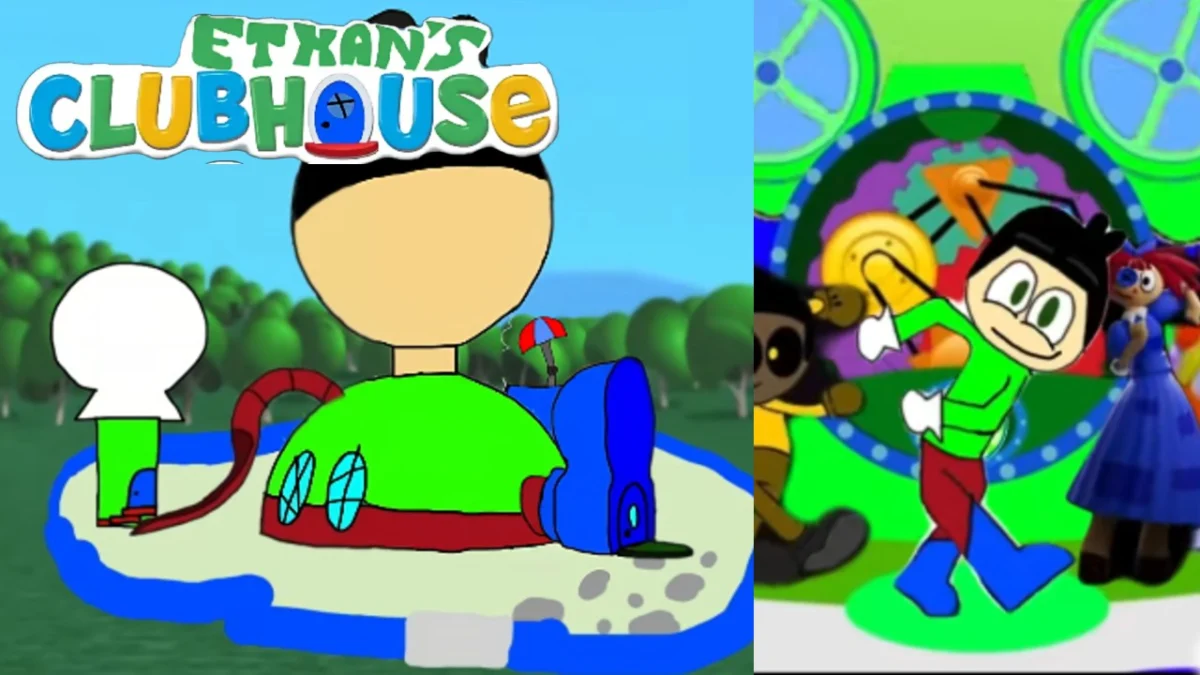
The digital landscape of late 2026 has been marked by an unexpected cultural phenomenon: the meteoric rise of a grassroots web series titled Ethan’s Clubhouse. Emerging from the creative mind of a young developer known simply as Ethan, the project has transcended its origins as a niche creative outlet to become a significant touchstone for TikTok’s aesthetic and social discourse. By blending the structured nostalgia of legacy children’s programming with the chaotic energy of modern indie horror and digital animation, the series has carved out a unique space in the "indie animation" subculture, garnering millions of cumulative views and sparking a widespread movement centered on the celebration of authentic, amateur art.
The Genesis and Creative Framework of Ethans Clubhouse
Ethan’s Clubhouse first appeared on the social media horizon in early September 2026. The project’s primary headquarters are the @ethansclubhouse accounts on TikTok and YouTube, where the creator began sharing static concept art and character designs. The series is explicitly modeled after the Disney Junior staple Mickey Mouse Clubhouse, adopting its interactive format, bright color palettes, and repetitive, educational structure. However, the "clubhouse" in this iteration is populated not by traditional Disney mascots, but by a surreal assembly of characters sourced from disparate corners of internet lore and mid-century television.
Central to the series’ identity is its use of intellectual property from The Amazing Digital Circus (TADC), the viral psychological horror-comedy produced by Glitch Productions, and The Banana Splits, the 1968 Hanna-Barbera variety show that saw a resurgence in the late 2010s as a cult horror property. By placing characters like Ragatha and Pomni from TADC alongside the anthropomorphic costumed figures of The Banana Splits, Ethan created a crossover environment that appealed to multiple generations of internet users. The aesthetic is defined by what critics call "DIY Digitalism"—a style characterized by hand-drawn lines, non-standard proportions, and a rejection of the high-gloss, AI-assisted rendering that has become prevalent in mainstream 2026 content.
A Chronological Timeline of Viral Progression
The trajectory of Ethan’s Clubhouse from a personal project to a viral sensation followed a distinct four-week pattern of escalation.
Phase One: The Conceptual Soft Launch (September 1–7, 2026)
The initial posts on @ethansclubhouse consisted of character "reveal" sheets. These posts introduced the roster of the clubhouse, often featuring the creator’s own persona alongside established characters. Early engagement was driven by the "crossover" tag, as fans of The Amazing Digital Circus discovered the account through hashtag searches.
Phase Two: The Intro Drop and Soundbite Dominance (September 14–20, 2026)
The turning point for the series occurred in mid-September with the release of the official opening sequence. The intro featured a unique audio mashup that overlaid the iconic Mickey Mouse Clubhouse theme with the "Tra La La" chorus of The Banana Splits song. The audio’s hypnotic, repetitive nature made it an ideal "sound" for TikTok’s algorithm. Within 72 hours of the upload, the video surpassed 500,000 views, and the audio was being utilized in hundreds of secondary "fan-edit" videos.
Phase Three: The Rise of "Protective Fandom" (September 21–30, 2026)
As the series reached a broader audience, it initially faced scrutiny from users accustomed to professional-grade animation. However, this sparked a counter-movement. High-profile TikTok creators began defending the series, praising its "soul" and "authenticity." This phase saw the emergence of the "Ethan’s Clubhouse Hype" meme, where users posted videos expressing genuine or exaggerated excitement for upcoming episodes, often using the series’ art style as a template for their own "original characters" (OCs).
Phase Four: Mainstream Recognition and Cultural Analysis (October 2026–Present)
By early October, Ethan’s Clubhouse had moved beyond TikTok, with discussions appearing on Reddit, X (formerly Twitter), and dedicated wiki pages. The series is currently viewed as a primary example of "New Sincerity" in digital art—a movement that rejects irony in favor of earnest, personal expression.
Supporting Data and Engagement Metrics
Data gathered from social media analytics platforms indicates that Ethan’s Clubhouse has achieved engagement rates significantly higher than the average for independent animation accounts. As of October 8, 2026, the official TikTok account boasts an engagement rate of 18.4%, compared to the platform average of 4.5% for similar-sized accounts.
The "Intro" video, which serves as the project’s flagship content, has maintained a high retention rate, with 65% of viewers watching the full 45-second clip. Furthermore, the demographic breakdown of the audience shows a surprising duality: 40% of the audience falls within the 13–18 age bracket, drawn to the TADC characters, while 30% falls within the 25–34 bracket, likely influenced by the nostalgic Mickey Mouse and Banana Splits references.
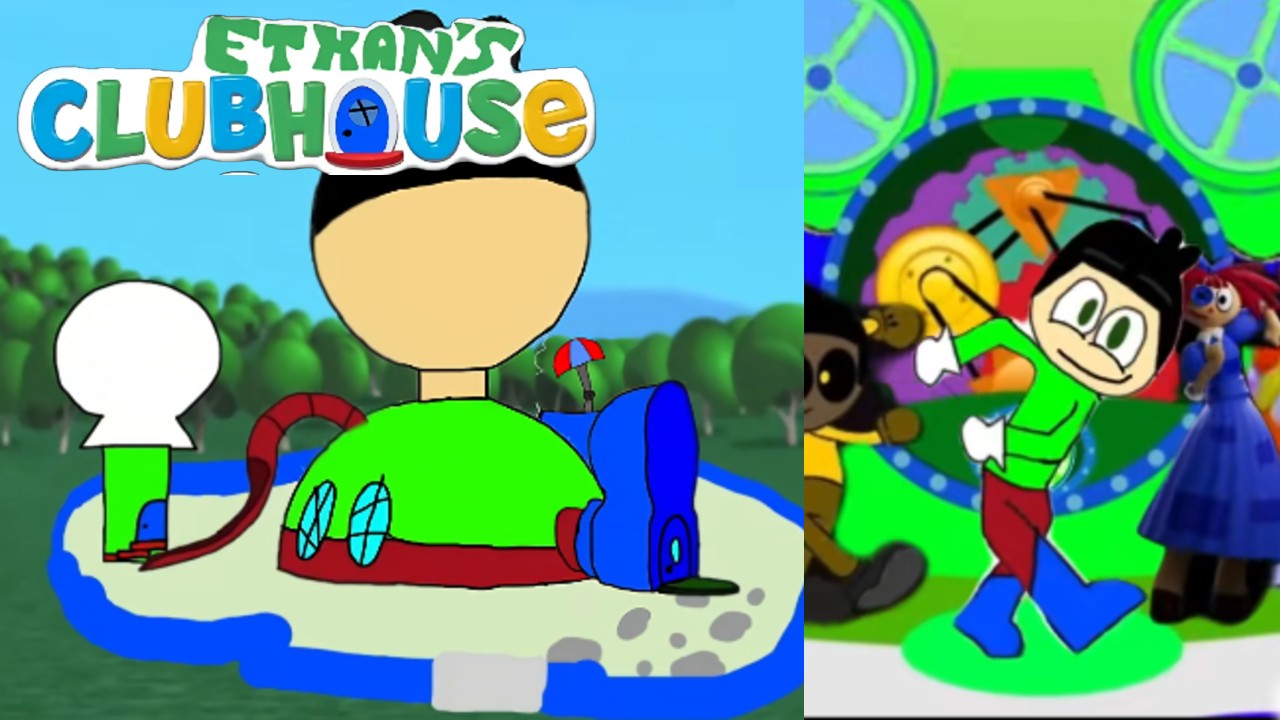
Geographically, the series has seen its strongest performance in North America and Western Europe, though a burgeoning fan community in Southeast Asia has begun translating the "Tra La La" mashup into local languages, indicating the series’ potential for global cross-pollination.
Aesthetic Context: The DeviantArt Connection
A recurring theme in the discourse surrounding Ethan’s Clubhouse is its stylistic debt to the "Golden Age of DeviantArt" (circa 2005–2012). During this era, young artists frequently created "fusions" or "crossover" comics that ignored corporate boundaries, focusing instead on personal narrative and character shipping.
Art historians and digital culture analysts have noted that Ethan’s work mirrors this era’s "unfiltered creativity." In a landscape where digital art is increasingly polished by software and filters, the raw, amateurish charm of Ethan’s Clubhouse is seen as a rebellious act. The character designs, which often feature vibrant colors and exaggerated features, are being celebrated as "authentic outsider art"—a term used to describe creators who operate outside the traditional art establishment and formal training.
The Role of Neurodiversity and Community Reaction
A significant portion of the conversation surrounding Ethan’s Clubhouse has focused on the perceived neurodiversity of the creator. While the creator has not issued a formal medical statement, many members of the autistic and neurodivergent communities on TikTok have claimed the series as a representative work. They point to several hallmarks of "autistic art" present in the series: the intense focus on specific interests (Special Interests), the repetitive musical structures, and the systematic categorization of characters from different universes.
The community reaction has been overwhelmingly supportive. Unlike many viral trends that are built on mockery, the Ethan’s Clubhouse meme is rooted in a "protective" stance. Fans frequently moderate the comment sections of the videos to remove derogatory remarks about the animation quality, instead fostering an environment of encouragement. This shift in internet behavior—from "cringe culture" to "support culture"—is a notable development in the social dynamics of 2026.
Official Responses and Cross-Platform Impact
While the corporate owners of the properties featured in the series—Disney, Glitch Productions, and Warner Bros. (which owns Hanna-Barbera)—have not issued formal legal statements, the series continues to operate under the umbrella of "transformative fan art." Independent creators, however, have been more vocal.
Several prominent indie animators have cited Ethan’s Clubhouse as an inspiration for "just starting" on a project regardless of technical skill. "The series proves that narrative and character resonance are more important than frame rates or shading," noted one animator in a viral commentary video.
The impact has also reached the music industry, where DIY producers have begun creating extended remixes of the "Ethan’s Clubhouse Theme." These tracks have found their way into "corecore" and "slop" style video edits, further cementing the series’ place in the broader internet aesthetic.
Broader Implications and Future Outlook
The rise of Ethan’s Clubhouse serves as a case study for the future of independent content creation. It highlights a growing fatigue among digital audiences toward "perfect" content. As AI-generated imagery becomes indistinguishable from reality, human-centric "imperfections" are becoming a premium commodity.
Furthermore, the series demonstrates the power of TikTok as a distribution network for long-form storytelling. By releasing a series in "bitesized" concept clips and intro sequences, Ethan has successfully built a massive audience before a single full-length episode has even debuted. This "pre-hype" model is likely to be emulated by other independent creators in the coming years.
As of this writing, the community continues to wait for the first official "episode" of the series. Regardless of the technical execution of the final product, the cultural footprint of Ethan’s Clubhouse is already firmly established. It stands as a testament to the democratization of media, where a single individual with a vision and a smartphone can disrupt the attention economy by simply sharing their clubhouse with the world. The series has not only provided a new set of memes but has also challenged the internet to reconsider its definition of "great art," proving that sincerity and passion remain the most potent tools in a creator’s arsenal.

