
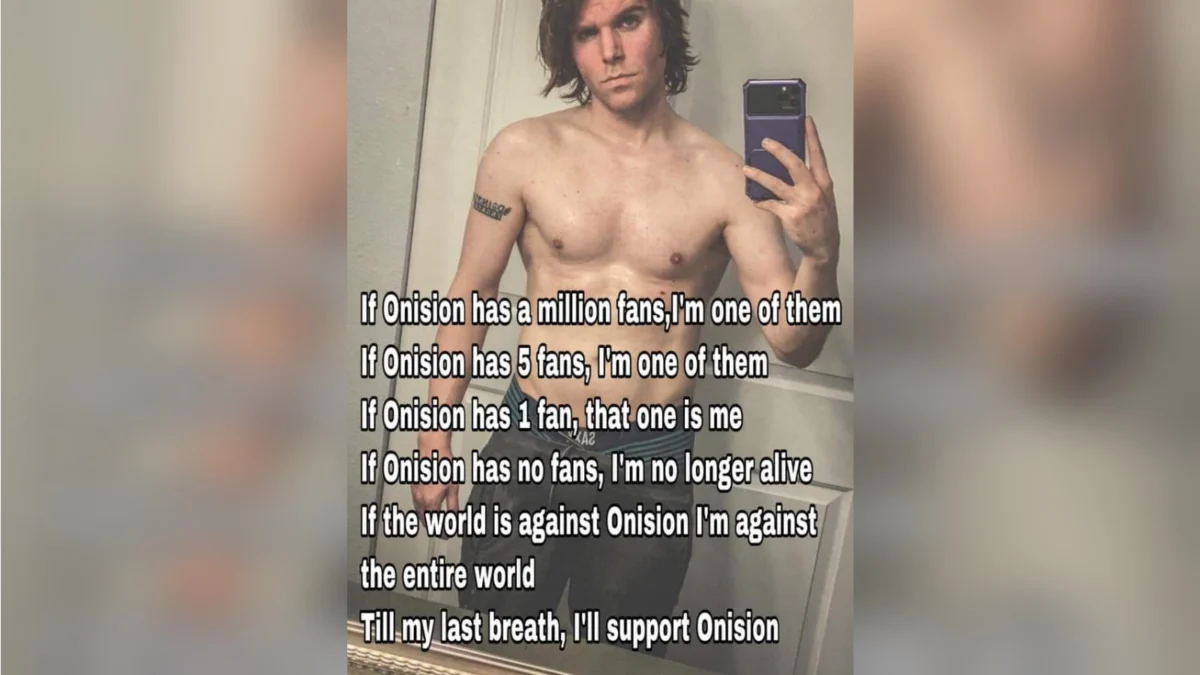
This phrase represents a ubiquitous copypasta and phrasal template that has come to define the extremes of digital loyalty and parasocial interaction. Over the course of more than a decade, the text has transitioned from an earnest expression of sports fandom into a versatile tool for irony, marketing, and even literary misattribution. The template follows a specific rhetorical escalation, typically beginning with a declaration of being one among millions of supporters and ending with the dramatic assertion that if the subject has no fans remaining, the narrator must be deceased. This structure has allowed the meme to permeate various corners of the internet, from professional sports forums to niche gaming communities and avant-garde music circles.
The Genesis of Digital Loyalty: 2013 Origins
The origins of the template are rooted in the highly competitive and often volatile world of international football fandom. On July 18, 2013, the Facebook page "Real Madrid: Trolling Clubs Since 1902" published a text post dedicated to the Portuguese superstar Cristiano Ronaldo. The content was originally attributed to another page, "Countdown to Kickoff." The post was a quintessential example of "stan" culture—a term derived from Eminem’s song of the same name, describing an overzealous or obsessive fan.
The original text read: "If Cristiano has million fans, then I’m one of them. If Cristiano has one fan, then I’m THAT ONE. If Cristiano has no fans, that means I’m dead. Win or lose. 0 goals or 10 goals. Good form or bad form. I will always love and support you! Even if the whole world stands against you. !! ¡VIVA CRISTIANO!"
At the time of its posting, the sentiment was received with significant engagement, garnering hundreds of reactions and shares. This period in social media history was characterized by the rise of "fan pages" that utilized hyperbolic language to signal virtue and loyalty to specific athletes or celebrities. The post established the core linguistic framework that would later be adapted by millions of users: the use of numerical scaling to demonstrate an unbreakable bond between the fan and the idol.
Linguistic Structure and Rhetorical Appeal
The success of the "If X Has a Million Fans" template lies in its rhythmic, repetitive structure, which mirrors traditional liturgical or poetic forms. It utilizes a logical progression—decreasing the number of fans while increasing the intensity of the commitment—to create a sense of inevitable devotion.
- The Majority Phase: "If X has a million fans, I am one of them." (Establishing belonging).
- The Minority Phase: "If X has ten fans, I am one of them." (Establishing resilience).
- The Singular Phase: "If X has only one fan, that is me." (Establishing uniqueness).
- The Ultimate Sacrifice: "If X has no fans, that means I am no more on the earth." (Establishing total identity fusion).
This escalation serves as a rhetorical "siege mentality" defense mechanism. By asserting that the fan will remain even when the "whole world" is against the subject, the template provides a ready-made script for defending controversial figures or underperforming teams.
Proliferation Through Sports and Twitch Culture
By 2016, the copypasta had become a staple of football commentary sections. Following Cristiano Ronaldo’s victory in the Euro 2016 championship, a version of the text posted on his official Facebook page reportedly received over 7,000 likes. The rivalry between Ronaldo and Lionel Messi fueled the spread further, as fans of the Argentine forward adapted the text to create a counter-narrative of loyalty.
The transition from earnest sports fandom to the broader internet lexicon occurred largely through Reddit and Twitch. In July 2016, the text was archived on the /r/copypasta subreddit, a community dedicated to the preservation and dissemination of "blocks of text that get copied and pasted around the internet." This formal archival marked the beginning of the template’s life as a "phrasal template," where the subject "X" could be replaced by any entity.
In 2018, the format found a new home in Twitch chat spam. Twitch, a live-streaming platform primarily for gamers, has a unique culture where viewers "spam" repetitive text to interact with the streamer or influence the "vibe" of the broadcast. A notable version featuring the Hearthstone streamer Kripparrian emerged during this time. The adoption by the gaming community introduced a layer of semi-irony to the text; while some used it to show genuine support, others used it to mock the perceived obsession of a streamer’s fanbase.
The Ironic Pivot: The Onision Controversy
A significant turning point in the meme’s evolution occurred in late 2019. This era saw the template move from a tool of genuine (or semi-ironic) support to a weapon of pure satire. This shift was catalyzed by an image macro featuring the YouTuber Gregory Jackson, known online as Onision.

At the time, Jackson was embroiled in severe public controversy involving various allegations. An unknown user created a visual version of the copypasta, superimposed over a photo of a somber-looking Jackson. The text read: "If Onision has a million fans, I’m one of them… If the world is against Onision I’m against the entire world."
When this image was reposted to the /r/Cringetopia subreddit in October 2019, it gained nearly 20,000 upvotes. The community recognized the inherent absurdity of using a loyalty-based template to support a figure who was being widely condemned. This "recaptioning" transformed the meme into a commentary on "blind loyalty." It became a way to mock the idea that someone would support a person regardless of their actions or the evidence against them.
The Recaption Era and Visual Evolution
Following the Onision post, the meme entered its "image macro" phase. Users began taking the visual layout of the Onision meme—often with its specific font and low-resolution aesthetic—and replacing the central figure with increasingly absurd subjects.
In late 2019 and throughout 2020, the template was applied to diverse subjects such as the experimental pop duo 100 Gecs, the fast-food chain Taco Bell, and even mythical figures like Santa Claus. The "Taco Bell" iteration, posted on iFunny in 2021, received over 13,000 "smiles," demonstrating that the template had moved beyond people and was now being used to express hyperbolic "brand loyalty" or affection for inanimate objects and concepts.
This period solidified the meme as a "snowclone"—a type of formulaic joke where certain words are replaced to fit a new context while maintaining the original structure. The humor derived from the contrast between the life-and-death stakes of the text ("I’m no longer alive") and the often trivial nature of the subject being defended.
The Franz Kafka Misattribution
One of the most curious chapters in the history of this copypasta is its 2021 transformation into a "literary quote." Around August 2021, an Instagram and Tumblr blog titled "ethereal-muses" posted a version of the quote attributed to the 20th-century novelist Franz Kafka. The post claimed the lines were from Letters to Milena, a collection of Kafka’s passionate correspondence with Milena Jesenská.
The misattributed quote read: "Milena, if a million loved you, I am one of them, and if one loved you, it was me, if no one loved you then know that I am dead."
Despite the fact that these lines do not appear in any published English or German edition of Letters to Milena, the post went viral. It was shared by "dark academia" and literary-themed accounts that found the sentiment consistent with Kafka’s famously tortured and intense romantic prose. This phenomenon highlights a unique aspect of modern internet culture: the desire to "elevate" low-brow memes into high-brow art. The "If X Has a Million Fans" template was so effective at communicating intense devotion that users found it entirely plausible as the work of a literary giant.
Sociological Analysis: Parasociality and Tribalism
The longevity of "If X Has a Million Fans, I’m One of Them" can be attributed to its resonance with the psychological concept of parasocial relationships. In an age where social media allows followers to feel a one-sided intimacy with celebrities, the template provides a linguistic outlet for that perceived closeness.
Furthermore, the meme reflects the increasing tribalism of the digital age. The line "If the world is against X, I am against the world" encapsulates the "us versus them" mentality prevalent in modern online discourse. Whether used earnestly by a sports fan or ironically by a "shitposter," the template touches on a fundamental human desire for unwavering belonging and the romanticization of being the "last defender" of a cause.
Chronological Summary of Key Events
- July 2013: Original text appears on Facebook regarding Cristiano Ronaldo.
- July 2016: The copypasta reaches peak popularity in football circles during Euro 2016.
- August 2016: First notable variations (e.g., Lionel Messi version) appear on Reddit.
- March 2018: The format enters Twitch chat culture via streamers like Kripparrian.
- October 2019: The Onision image macro marks the shift toward ironic and satirical usage.
- Late 2019 – 2021: The "Recaption Era" sees the template applied to brands, musicians, and fictional characters.
- August 2021: The template is falsely attributed to Franz Kafka, gaining a new life in literary circles.
- 2022 – Present: The phrase remains a standard response in social media comments to signal extreme (often humorous) support for a person or idea.
Conclusion
If X Has a Million Fans, I’m One of Them has transcended its humble beginnings as a Facebook status update to become a permanent fixture of the digital lexicon. Its journey from the stadiums of Europe to the forums of Reddit and the "dark academia" blogs of Tumblr illustrates the fluid nature of internet culture. By providing a simple yet powerful framework for expressing absolute loyalty, the template allows users to navigate the complexities of modern fandom, irony, and identity. Whether it is being used to defend a football legend, mock a disgraced influencer, or misquote a dead novelist, the phrase remains a testament to the power of repetition and the enduring appeal of the "loyalist" narrative in the 21st century.

