
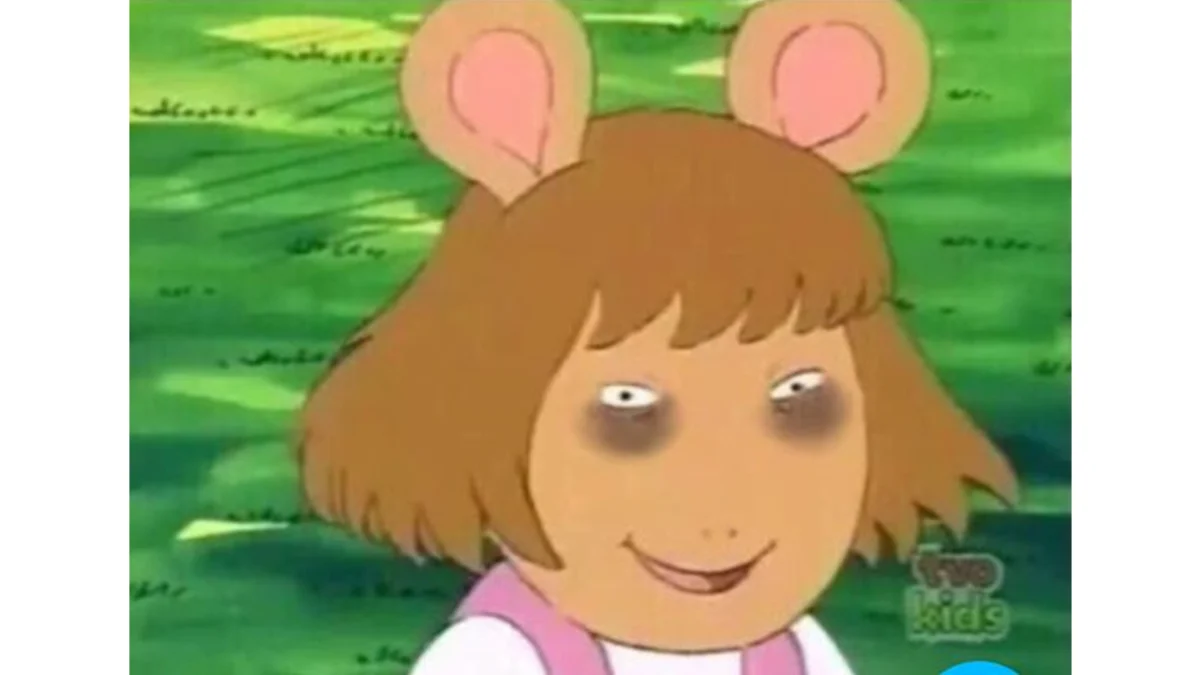
The Genesis of the D.W. Image Macro
The lineage of the Tired D.W. meme can be traced back to 2014, a period during which the Arthur television series underwent a massive resurgence in digital spaces. On April 27, 2014, a Tumblr user known as tomhardest published a photoshopped version of D.W. that featured her eyes significantly lowered and separated. This initial manipulation was paired with an image of the titular character, Arthur, in a compromising or absurd situation. The original intent of this specific edit was grounded in "shock humor" and suggestive themes, characterizing the expression as one of post-coital or intoxicated stupor.
While the 2014 version of the image gained moderate traction, its utility was initially limited to niche communities on Tumblr and Reddit. On June 3, 2014, a Redditor identified as JamesonBeer shared the image on the /r/funny subreddit, accompanied by a caption suggesting the character was under the influence of illicit substances. This post garnered approximately 2,500 upvotes over the ensuing years, signaling the image’s potential as a versatile reaction tool. By July 2016, the Twitter account @arthurtbh began pivoting the context of the image toward the theme of sleep deprivation, asking followers about their sleeping schedules. This marked a significant shift in the meme’s trajectory, moving away from adult-oriented humor toward the broader, more relatable theme of chronic fatigue.
The 2018 Redesign and Global Viral Expansion
The most recognizable version of the meme—featuring the distinct dark circles under D.W.’s eyes—did not emerge until 2018. On July 19, 2018, Twitter user @tristehomo posted a new iteration of the photoshopped image. Unlike the 2014 version, which separated and lowered the eyes, this version retained the character’s original eye placement but added heavy, dark shadows beneath them. The caption accompanying the post read, "’you always look tired’ BECAUSE I AM TIRED BITCH."
The resonance of this specific post was immediate and immense. Within two years, the tweet accumulated over 185,000 likes and nearly 100,000 retweets. The timing of the post coincided with a growing cultural discourse surrounding "burnout," a term popularized by journalists and sociologists to describe the state of emotional and physical exhaustion resulting from the "always-on" nature of modern digital life. The image of a childhood character—traditionally a symbol of innocence and energy—exhibiting signs of severe sleep deprivation struck a chord with a generation of users who felt similarly overextended.
The momentum continued into August 2018 when Twitter user @ThomasAbowd applied the image to the context of over-scheduling. The caption "Yeah, I can fit it in my schedule" paired with the exhausted D.W. image highlighted the irony of agreeing to new obligations while already at a breaking point. This specific iteration received over 210,000 likes, further cementing the "Tired D.W." as a premier reaction image for the professional and academic spheres.
Chronology of Platform Migration
The lifecycle of the Tired D.W. meme illustrates the typical path of viral content in the 21st century, moving through distinct phases of adoption across different social media platforms:
- 2014–2015 (The Tumblr Phase): Early experimentation with the Arthur character model. The humor is largely surreal, subversive, or "edgy."
- 2016–2017 (The Twitter Transition): Users begin to identify the character’s expression with everyday struggles, such as poor sleep hygiene.
- 2018 (The Viral Peak): The "Black Eyes" edit is created. The meme enters the mainstream, featured in collections by major media outlets like BuzzFeed.
- 2019–2021 (The Institutionalization Phase): The meme is added to major image-generation sites like Imgflip, allowing for rapid-fire creation of variants. It becomes a "template" rather than just a single viral post.
- 2020–Present (The Pandemic and Beyond): The meme found renewed relevance during the COVID-19 pandemic, as users utilized it to describe "Zoom fatigue" and the blurring of boundaries between work and home life.
In late 2021, the meme saw a resurgence on Reddit’s /r/me_irl, a subreddit dedicated to relatable self-deprecating humor. A post by user ParadoxPoco on December 10, 2021, which joked about the immediate desire to return to bed upon waking, gained over 7,700 upvotes, proving the image’s lasting power as a cultural shorthand.

Socio-Cultural Analysis: Why D.W.?
The selection of D.W. Read as the face of modern exhaustion is not incidental. The Arthur series, based on the books by Marc Brown, has been a staple of public broadcasting since 1996. For Millennials and Gen Z, D.W. represents a specific archetype: the precocious, often demanding, and fiercely independent younger sibling. Using a character from a children’s show to express adult anxieties creates a form of "nostalgic juxtaposition."
Furthermore, the Arthur series has a unique history in internet culture. It is part of a "meme ecosystem" that includes other famous images such as "Arthur’s Fist" (symbolizing repressed anger) and "D.W. Behind the Fence" (symbolizing exclusion or longing). The art style of the show, characterized by clear lines and expressive (yet simple) facial features, makes the characters ideal candidates for digital manipulation. The "Tired D.W." meme benefits from this established visual language, allowing users to convey complex emotional states—such as "functional exhaustion"—with a single glance.
The Role of Visual Manipulation in Digital Communication
Technically, the Tired D.W. meme is a product of "low-fidelity" photoshopping. The dark circles are often applied with a soft brush tool, creating a look that is intentionally unpolished. This aesthetic, often referred to as "shitposting" style, prioritizes the speed of communication and the rawness of the message over artistic perfection.
From a linguistic perspective, the image functions as an ideogram. In a digital environment where text can often fail to capture nuance, the Tired D.W. image provides a multi-layered response. It communicates:
- Physical state: I have not slept.
- Mental state: I am overwhelmed.
- Social commentary: I am participating in a society that demands too much of my time.
- Resignation: I am aware of my situation, but I am continuing to smile/function regardless.
Broader Impact and Industry Implications
The ubiquity of the Tired D.W. meme has had tangible impacts on digital marketing and media consumption. Social media managers for major brands have occasionally utilized the template to humanize their corporate presence, tapping into the "relatability" factor to engage younger demographics. However, the meme’s primary home remains in the personal feeds of individuals using it as a coping mechanism.
The meme also reflects a broader trend in how mental health and wellness are discussed online. By "memeing" exhaustion, users are able to find community and validation in their struggles without the heavy formality of traditional discourse. The image serves as a signal to others that the user is "in the weeds," fostering a sense of solidarity among those who are also "tired but trying."
As digital trends continue to evolve, the Tired D.W. image remains a persistent figure in the lexicon of internet reactions. Its transition from a 2014 Tumblr edit to a 2024 universal symbol of the human condition highlights the unpredictable and often profound nature of internet folklore. While the specific platforms and captions may change, the core sentiment of the "Tired D.W."—a weary smile in the face of mounting exhaustion—continues to resonate with a global audience navigating an increasingly demanding world.

