
The Psychology of Trust in Financial User Experience
The necessity for high-fidelity prototyping in the FinTech sector is driven by a unique psychological profile among users. Unlike social media or entertainment applications, financial platforms require a high degree of cognitive load and emotional investment. Users are trained to look for discrepancies—a balance that does not update, a field that accepts invalid characters, or a biometric prompt that feels sluggish. When these elements are "faked" in a prototype, participants often shift from a natural usage mode to a "demonstration" mode. They stop acting as users and start acting as critics, focusing on the limitations of the tool rather than the utility of the features being tested.
Industry data supports the transition toward higher fidelity. According to research from the Nielsen Norman Group, users are significantly more likely to identify logic-based errors when the prototype behaves like a finished product. Furthermore, a 2023 study on digital banking trends indicated that 68% of users cite "perceived security" as their primary reason for choosing a mobile banking provider. If a prototype fails to simulate the security rituals of a real app—such as masked passwords and biometric authentication—researchers lose the ability to measure the most critical metric in FinTech: user confidence.
A Chronological Shift: From Static Screens to Logic-Based Prototyping
The evolution of prototyping tools has followed a distinct timeline, moving from visual representation to functional simulation. In the early 2010s, tools like Adobe Photoshop and later Sketch focused on the visual "look and feel." By the mid-2010s, InVision and Figma introduced "hotspot" prototyping, allowing for basic navigation. However, the current era, defined by tools like ProtoPie, marks the rise of logic-based prototyping. This transition allows designers to incorporate variables, conditional logic, and sensor integration (such as Face ID and accelerometers) without writing production code.
This technological shift has enabled the creation of "digital twins" of applications. In the context of the "Pie Bank" mobile banking prototype, the development process no longer ends at the design of the interface. Instead, it involves a multi-step engineering workflow within the design phase to ensure that every interaction—from the input of a username to the millisecond-perfect timing of a Face ID animation—mirrors the final production environment.
Technical Implementation: Building the Authenticity Layer
The process of constructing a high-fidelity FinTech login flow involves several sophisticated steps that move beyond simple visual design. The methodology begins with the transition from design software to interaction software.
1. Preserving Hierarchy through Scene Importation
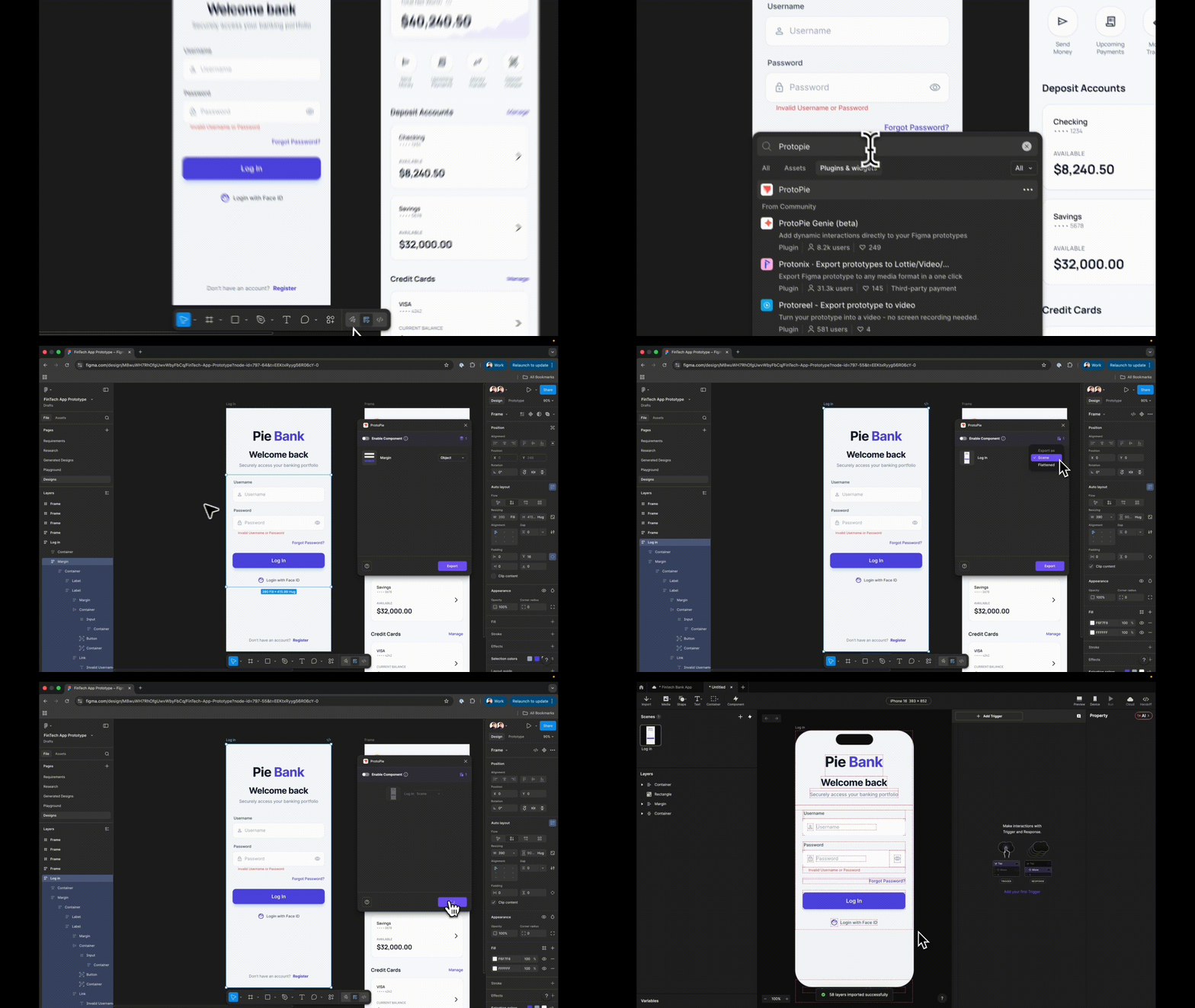
The first technical hurdle is the migration of assets. When exporting from Figma to ProtoPie, the industry standard has shifted from "flattened" exports to "Scene" exports. Flattening a design collapses layers into a single image, which is sufficient for visual reviews but useless for functional testing. By importing the design as a Scene, every element—from the "Log In" button to individual text fields—remains a targetable layer. This allows for granular control over the object’s properties, such as its opacity, position, and response to user input.
2. Functional Input and Data Masking
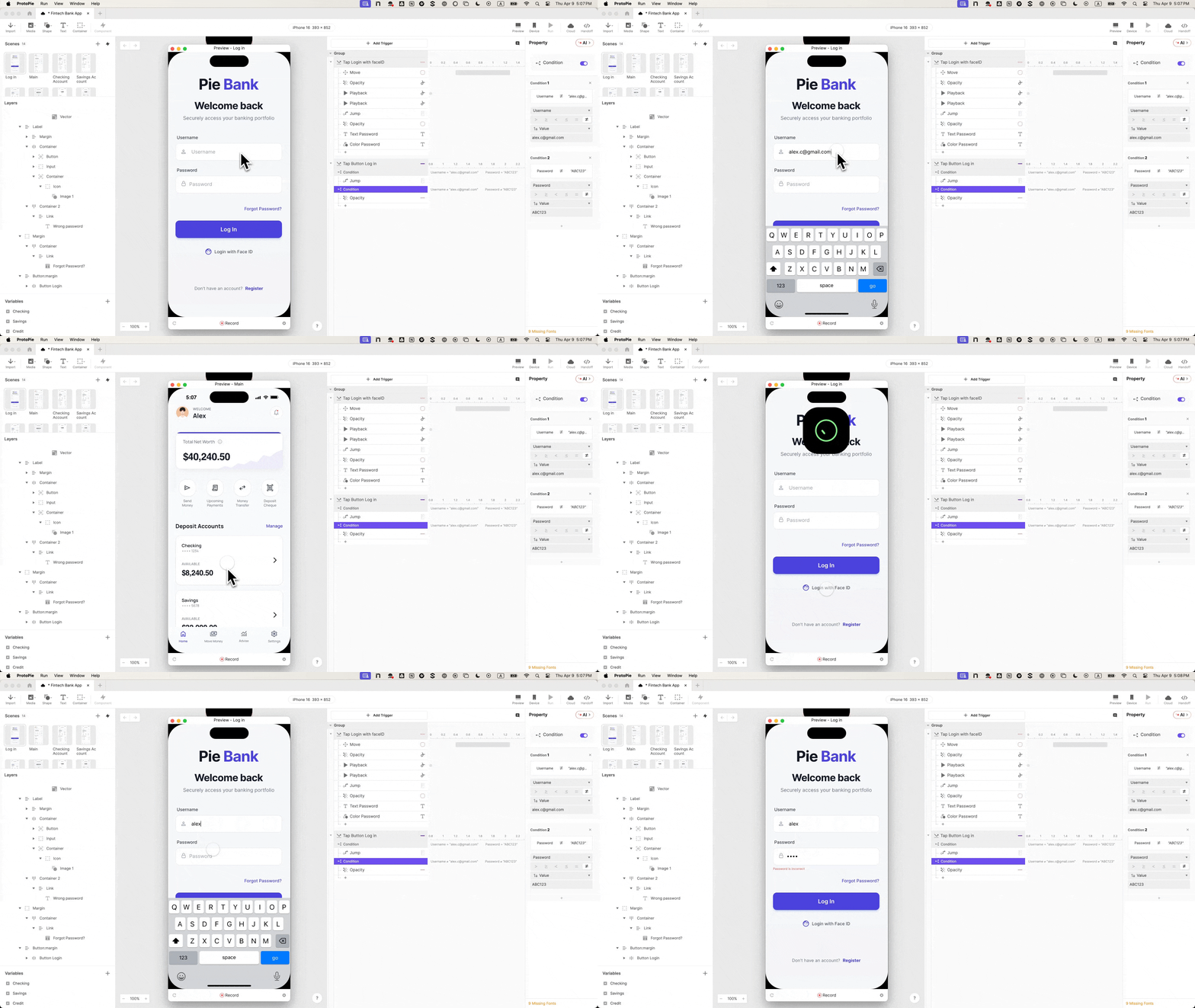
A primary failure point in low-fidelity prototypes is the "static input." In a real app, users expect to see their keyboard appear and their characters register. By replacing static text layers with native Input layers, designers allow participants to use their actual credentials. In FinTech, this is paired with the "Text Password" property, which automatically masks the input. This is not merely a visual flourish; it reinforces the security mental model of the user, making the prototype feel like a "safe" environment.
3. State Management and Conditional Logic
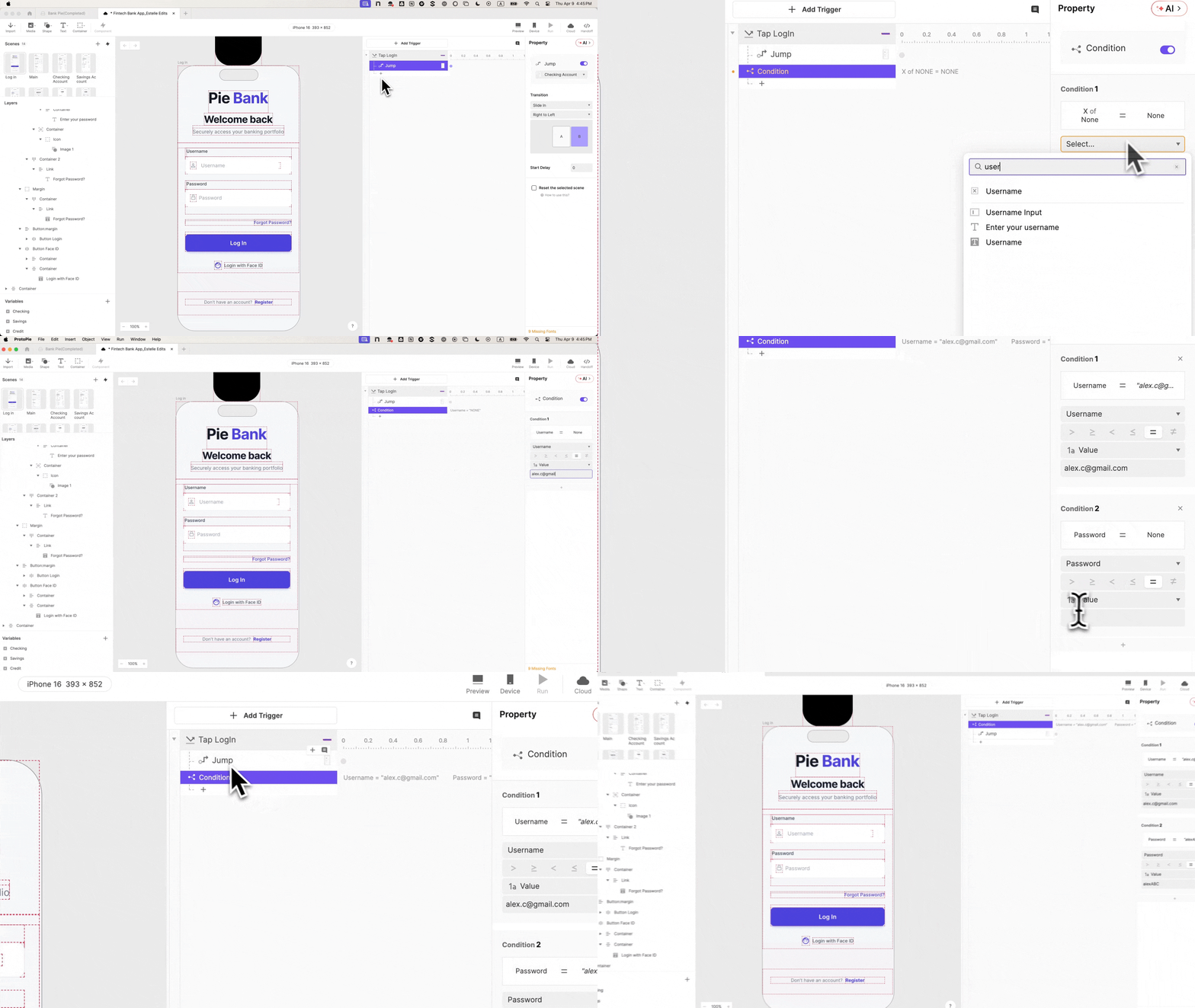
The most significant advancement in prototyping is the use of variables. By binding a text variable to an input field, the prototype "remembers" what the user has typed. This allows for the implementation of conditional logic: if the username and password match a specific string, the app proceeds to the dashboard; if not, it triggers an error state.
This creates a "branching" experience. In a standard usability test, a user who makes a typo on a static prototype is often met with a broken link or a manual override from the moderator. In a logic-based prototype, the user is met with a functional error message. This allows researchers to observe "recovery behavior"—how the user reacts to failure, whether they read the error text, and how they attempt to resolve the issue.
The Role of Biometric Simulation in User Retention
Perhaps the most complex element to prototype is the biometric authentication flow. On modern iOS and Android devices, Face ID and Fingerprint scanning are seamless, highly animated sequences. If a prototype simply "jumps" from a login screen to a dashboard, it skips a vital part of the user’s ritual.
Integrating Lottie animations—a JSON-based animation format—allows designers to drop native-feeling Face ID sequences into the prototype. By staggering the timing of these animations (e.g., a 0.5s delay for the animation to play followed by a 1s transition to the next scene), the prototype achieves a level of "native feel" that is indistinguishable from a shipped product. This detail is often the tipping point that convinces stakeholders of a design’s viability.

Industry Reactions and Expert Perspectives
Design leaders in the financial sector have noted that high-fidelity prototyping is no longer an optional luxury but a requirement for engineering handoff. "When we provide engineers with a prototype that contains conditional logic and variable bindings, we are removing the ‘interpretation’ phase of development," says one senior UX lead at a major European neo-bank. "The prototype serves as the functional specification. The engineers can see exactly how the error states should trigger and how the transitions should be timed."
Furthermore, the "Prototyping-to-Production" gap is narrowing. By using tools that mimic code logic, designers are forced to think like developers. They must consider what happens if a field is left blank or if a user attempts to bypass a security step. This "logical design" approach leads to more robust products and fewer expensive revisions during the late stages of development.
Broader Implications for the FinTech Ecosystem
The shift toward high-fidelity prototyping has broad implications for the industry, particularly in the realms of accessibility and internationalization.
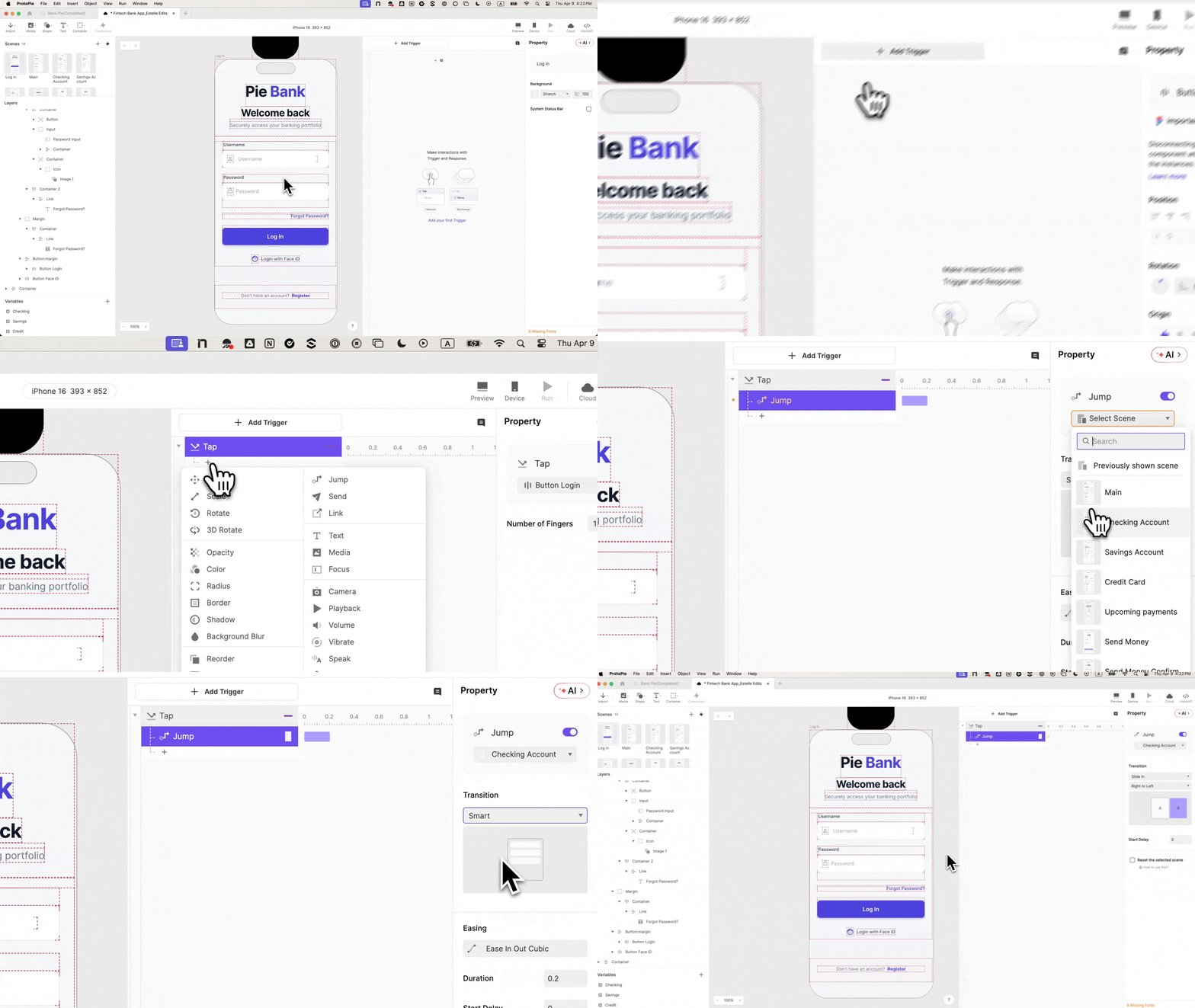
1. Accessibility Validation: Functional prototypes allow for better testing with assistive technologies. If an input field is "real," a screen reader can interact with it, allowing designers to test the accessibility of a banking app long before a single line of production code is written.
2. Stakeholder Alignment: In the corporate world of banking, securing budget for new features requires "buy-in." A functional, high-fidelity prototype is a powerful sales tool. It allows executives to "feel" the product, reducing the perceived risk of the investment.
3. Reduced Development Costs: According to a report by IEEE, the cost of fixing an error after a product has been released is 40 to 100 times higher than fixing it during the design phase. By uncovering logic flaws through high-fidelity testing, FinTech companies can save millions in post-launch patches and customer support costs.

Conclusion: The Future of Interaction Design
As the digital landscape becomes increasingly crowded, the differentiator for financial products will be the quality of the user experience. The "Pie Bank" tutorial series and the rise of tools like ProtoPie highlight a fundamental truth in modern design: the interface is not the product; the interaction is.
By investing in login fidelity—even when the login isn’t the primary feature being tested—FinTech teams establish a foundation of trust. This trust ensures that the data collected during user research is clean, that the feedback from stakeholders is relevant, and that the final product resonates with a user base that demands nothing less than perfection. High-fidelity prototyping is not just about making things look real; it is about making them work real, ensuring that the next generation of financial tools is as reliable as the institutions they represent.

