
Technical Mechanics and Execution
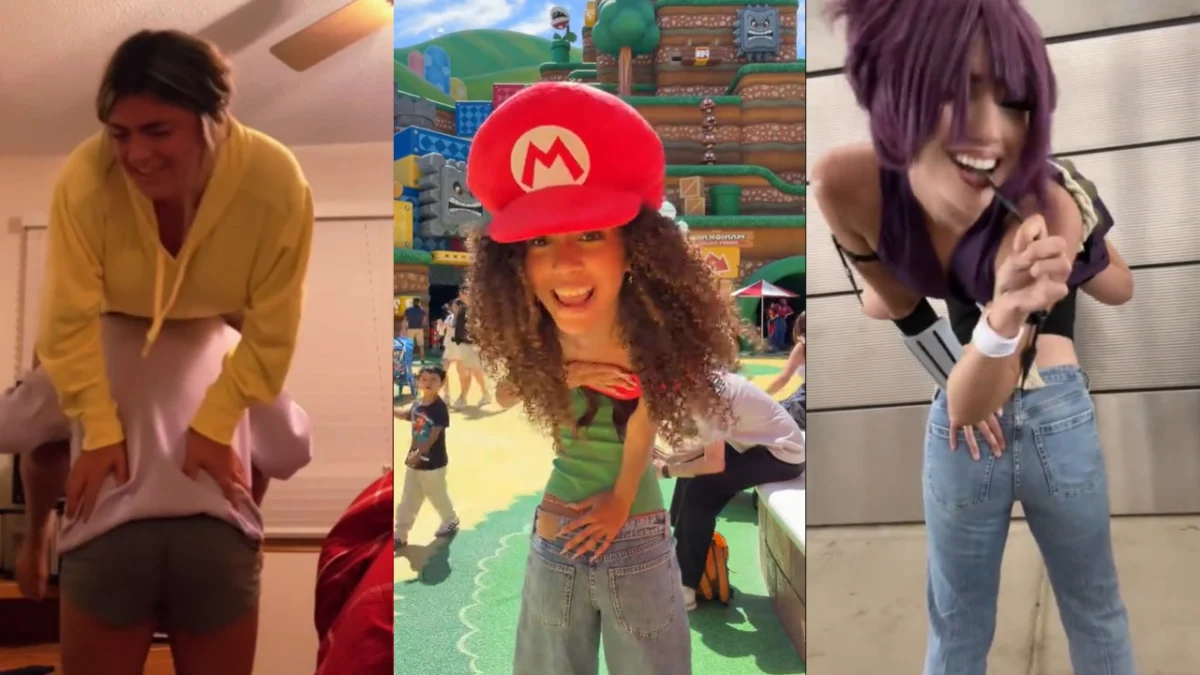
The "No Type" challenge is characterized by its specific choreography, which requires a degree of physical strength and trust between participants. In the standard iteration of the video, the "base" participant stands with their back to the camera, supporting a "flyer" who is positioned vertically and inverted—head toward the floor and legs toward the ceiling.
The audio typically cuts into the hook of the song, where the lyrics "I ain’t got no type / Bad bitches is the only thing that I like" provide the rhythmic framework. The base participant performs the first half of the lip-sync while looking over their shoulder or into a mirror. At a pivotal beat drop or lyrical transition, the base turns their body 180 degrees, bringing the inverted partner into the primary focus of the camera to deliver the concluding lines. The visual appeal of the challenge lies in the contrast between the casual nature of the lip-syncing and the strenuous, often awkward physical position of the participants.
Chronological Development: 2021 to 2026
The origins of the "No Type" challenge can be traced back to the summer of 2021. On July 5, 2021, TikTok creator @iamkelianne posted what is widely considered the foundational example of the trend. In her video, she supported fellow creator Chase Mattson on her back in the inverted position. The video, captioned "The struggle," resonated with audiences due to the visible physical effort involved in maintaining the pose while attempting to remain "on-brand" with the song’s cool, detached aesthetic. This initial post garnered over 627,000 likes and sparked a wave of imitations across the platform.
Following its initial burst of popularity in late 2021, the challenge entered a period of steady but lower-intensity participation. However, in 2026, the trend experienced a massive resurgence, driven by new iterations and creative sub-genres of the original format.
In May 2026, the trend saw a notable evolution when creator @sarkoco integrated digital animation into the challenge. By pretending to perform the maneuver with the character Judy Hopps from the Disney film Zootopia, the creator tapped into the "fandom" and "waifu" subcultures of the internet. This specific video earned more than 434,000 likes within four months, signaling that the "No Type" challenge had moved beyond simple physical feats into the realm of digital editing and meme-heavy content.

By August 2026, the trend had shifted toward group participation and high-production-value captures. On August 30, 2026, TikToker @tjtdanii uploaded a compilation of several groups attempting the challenge in various environments, which quickly amassed 380,000 likes. This "second wave" of popularity in 2026 highlights the cyclical nature of internet trends, where older formats are rediscovered by new cohorts of users or reimagined through different lens.
Musical Context and Catalog Longevity
The success of the "No Type" challenge is inextricably linked to the song itself. Released in September 2014 as the second single from Rae Sremmurd’s debut album, SremmLife, "No Type" was produced by Mike Will Made-It and reached number 16 on the US Billboard Hot 100.
The track’s minimalist production and catchy, repetitive hook make it ideal for TikTok’s format. Industry analysts note that challenges like these contribute significantly to the "long-tail" revenue of music catalogs. When a song from 2014 goes viral in 2021 and again in 2026, it generates millions of additional streams on platforms like Spotify and Apple Music, often leading to the track re-entering regional charts. For Rae Sremmurd, the "No Type" challenge has ensured that their early work remains culturally relevant to a generation of listeners who may have been toddlers when the song was originally released.
Quantitative Impact and Community Engagement
Data from digital culture archives indicates that the "No Type" challenge has generated over 1,300 unique high-engagement entries on major meme-tracking databases. The total view count across the "No Type" hashtag is estimated to be in the hundreds of millions.
The engagement metrics reveal a diverse demographic of participants:
- Athletes and Gym Enthusiasts: Many videos feature individuals showcasing their core strength and stability, turning the challenge into a fitness flex.
- Couples and Siblings: The challenge is frequently used as a "bonding" activity, emphasizing the trust required to hold someone upside down.
- CGI and Animators: As seen in the 2026 resurgence, the challenge has become a canvas for visual effects artists to showcase their ability to track 3D models onto real-world movements.
Analysis of Social Media Trends
The longevity of the "No Type" challenge provides a case study in the "Resurgence Theory" of social media. Unlike many trends that vanish after a few weeks, "No Type" possesses three key elements of a "sticky" trend:

- Low Barrier to Entry, High Ceiling for Mastery: While anyone can try to hold a friend upside down, doing it gracefully and with perfect lip-syncing requires skill.
- Audio Recognition: The first three notes of "No Type" are instantly recognizable, providing an immediate "hook" that prevents users from scrolling past.
- Visual Irony: The juxtaposition of a high-energy hip-hop track with the often-ridiculous sight of someone dangling upside down creates a natural comedic "beat" that encourages sharing.
Furthermore, the trend reflects the platform’s shift toward "partnered content." In the early days of TikTok, solo dances dominated the feed. The "No Type" challenge, however, necessitates a second person, thereby doubling the potential reach of each video as it is shared across two different networks of followers.
Safety and Community Guidelines
As with any trend involving physical stunts, the "No Type" challenge has not been without its risks. The "inverted" nature of the flyer puts significant strain on the base’s lower back and neck. Additionally, the risk of the flyer falling head-first onto the floor is a concern that has prompted some creators to include "blooper" reels at the end of their videos, showing failed attempts.
While TikTok’s moderation teams generally allow the content as it does not fall under "dangerous acts" for most healthy adults, the platform has occasionally attached warning labels to videos performed in precarious environments, such as near pools or on uneven outdoor terrain.
Broader Cultural Implications
The "No Type" challenge is more than a simple dance craze; it is a manifestation of how digital communities archive and reuse cultural artifacts. By taking a song from the mid-2010s and applying a 2020s physical comedy trope to it, users are engaging in a form of digital "remixing."
This trend also underscores the importance of "physicality" in the age of AI and digital filters. In an era where much of what is seen online can be faked or enhanced, the raw physical effort seen in the "No Type" challenge—the shaking muscles of the base, the reddening face of the inverted flyer—provides a sense of authenticity that continues to draw in viewers.
As the trend continues to evolve through the latter half of 2026, it serves as a reminder that the most successful social media challenges are those that combine a great soundtrack with a simple, repeatable, and visually striking human action. Whether through celebrity participation or further technological "Judy Hopps-style" iterations, the "No Type" challenge remains a definitive example of the modern internet’s ability to turn a decade-old song into a perennial viral sensation.

