
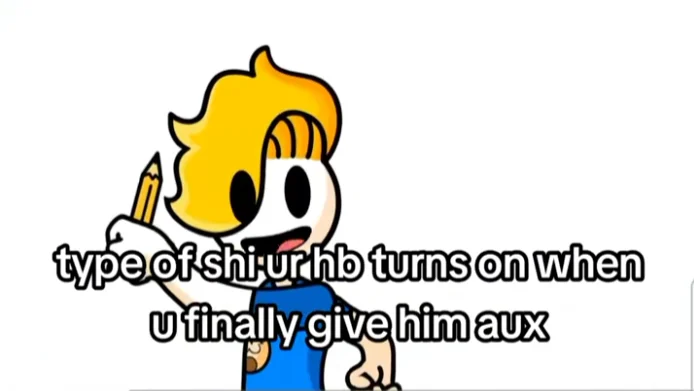
The landscape of social media is frequently defined by its cyclical nature, where content from previous eras is unearthed, recontextualized, and subjected to the scrutiny of a new generation of users. In September 2026, this phenomenon manifested in the viral resurgence of Haminations, a prominent YouTube animation channel. The trend, colloquially known as the Haminations Cringe meme or the "Who I Am" meme, centers on the perceived awkwardness of older content produced by the channel’s creator, Bryson Julian Rasmussen. By repurposing clips from a 2019 musical introduction, TikTok users have sparked a broader conversation regarding the evolution of digital personas, the "cringe" aesthetic, and the complex relationship between Gen Z and their childhood media consumption.
The Genesis of Haminations and the Storytime Animation Genre
To understand the 2026 resurgence of the "Who I Am" meme, one must first examine the origin of the Haminations channel and its place within the digital creator economy. Founded on February 20, 2017, by Bryson Julian Rasmussen—who was 16 years old at the time—Haminations became a staple of the "storytime animation" genre. This movement, led by creators such as TheOdd1sOut and Jaiden Animations, dominated YouTube in the late 2010s by utilizing simplified, expressive character designs to narrate personal anecdotes and life experiences.
Rasmussen’s channel grew rapidly, characterized by its relatable humor and family-friendly tone. By September 2026, Haminations had amassed approximately 9 million subscribers and exceeded 2 billion total views. However, as the audience that grew up watching Rasmussen entered adulthood, their perception of his earlier work began to shift. The sincerity and earnestness that once appealed to younger viewers became, in the eyes of a more cynical 2026 digital audience, a source of "cringe"—a term used to describe the visceral discomfort felt when witnessing social awkwardness or over-earnestness.
The "Who I Am" Music Video: A Cultural Artifact Re-Examined
The primary source of the 2026 meme is a video titled "Who I Am (Official Music Video)," uploaded by Haminations on December 21, 2019. In the video, Rasmussen performs a song that serves as a formal introduction to his personality, his channel, and his hobbies. At the time of its release, the video was a standard milestone for high-profile YouTubers, intended to foster a deeper connection with their fanbase. By September 10, 2026, the original video had garnered over 14 million views.
The lyrics and vocal delivery of "Who I Am" are emblematic of a specific era of YouTube culture—one defined by high-energy enthusiasm and a lack of irony. For the TikTok users of 2026, these qualities became the perfect fodder for parody. The trend involves taking clips of Rasmussen singing and using them to soundtrack videos that mock various social situations, particularly those involving self-introduction or the public display of niche interests.
Chronology of the September 2026 Viral Explosion
The transition of the "Who I Am" video from a nostalgic artifact to a viral meme occurred rapidly over the first week of September 2026. The following timeline outlines the key milestones in the trend’s spread:
- September 7, 2026: The trend gained significant momentum when TikTok user @exolindoessomethingidk posted a compilation of clips from the Haminations video. The post acted as a catalyst, generating over 746,500 views and 77,200 likes within three days. This video established the template for the meme: using the song to represent a specific type of social "over-sharing."
- September 7, 2026 (Late): Simultaneously, user @morgopegger shared a clip with a caption comparing the song’s lyrics to the detailed, often performative descriptions found in Discord profile "About Me" sections. This iteration resonated deeply with the platform’s user base, accruing 732,400 views and 134,200 likes.
- September 8, 2026: The meme began to intersect with broader pop culture commentary. User @witeral posted a variation that compared the earnestness of the Haminations song to how mainstream artists, specifically rapper Travis Scott, are perceived by listeners as they age out of their pre-teen years. This post received 621,900 views.
- September 9, 2026: The trend shifted toward relatable educational humor. TikToker @scratchmypony used the clips to parody the high expectations of English teachers during "get to know you" assignments. The video, which received 526,400 views, highlighted the inherent awkwardness of forced self-introduction in academic settings.
- September 9, 2026 (Late): Recognizing the speed of the trend, user @eggheehee posted a video commenting on the rapid turnover of TikTok memes, noting that missing a single day on the app could leave a user entirely out of the loop regarding the Haminations resurgence.
Psychological and Social Drivers of the "Cringe" Trend
The popularity of the Haminations Cringe meme is not merely an indictment of Rasmussen’s creative choices in 2019; rather, it is a reflection of the audience’s own discomfort with their past selves. Psychologists and digital culture analysts often point to "cringe" as a protective mechanism. By labeling their former interests as embarrassing, users distance themselves from their younger, more vulnerable identities.
In the case of Haminations, many TikTok participants were children or young teenagers when the "Who I Am" video was originally released. In 2026, these individuals are now in their late teens or early twenties. Using the song to mock their own childhood enthusiasm allows them to participate in a shared generational catharsis. The meme serves as a digital "rite of passage," where the rejection of childhood sincerity signals the adoption of adult irony.
Furthermore, the meme highlights a specific digital archetype: the "over-enthusiastic creator." In the late 2010s, YouTubers were encouraged to be "authentic" and "energetic" to satisfy algorithm requirements. By 2026, social media aesthetics have moved toward a more "low-fidelity" or "post-ironic" style. The Haminations video stands in stark contrast to these contemporary norms, making its earnestness feel out of place and, consequently, humorous.
Statistical Context and Platform Dynamics
The scale of the Haminations trend is supported by significant engagement metrics across both YouTube and TikTok. As of early September 2026:
- YouTube Reach: The Haminations channel maintains a massive footprint with over 2 billion views. The "Who I Am" video’s 14 million views represent a significant portion of the channel’s high-performing "special" content.
- TikTok Engagement: The top five videos associated with the trend in its first 72 hours collectively reached over 3 million views.
- Search Interest: Data suggests a sharp spike in queries for "Haminations song," "Who I Am meme," and "Bryson Rasmussen" during the second week of September, indicating that the TikTok trend drove significant traffic back to the original source material.
The mechanics of TikTok’s "Sound" feature played a crucial role in this spread. By isolating specific audio stems from Rasmussen’s singing, users were able to create a "sound bite" that functioned independently of the original context. This allowed the audio to be applied to a diverse range of scenarios, from "LARP" (Live Action Role Play) jokes to parodies of "burger music"—a niche internet term for overly commercialized or generic indie-pop.
Official Responses and Creator Impact
While Bryson Rasmussen has not issued a formal press release regarding the 2026 meme, the reaction within the animation community has been a mix of defense and self-deprecation. Fellow animators have noted that the "cringe" associated with early work is an inevitable part of a long-term creative career. On TikTok, even those participating in the trend often include disclaimers, such as user @eggheehee’s "no hate to haminations," suggesting that the mockery is directed more at the concept of the video than at Rasmussen himself.
The impact on the Haminations brand remains multifaceted. While the "cringe" label can be perceived as negative, the surge in visibility has reintroduced the channel to millions of former viewers. In the attention economy of 2026, a "cringe" meme often functions as a powerful form of "nostalgia bait," driving legacy views and potentially revitalizing a creator’s current projects.
Broader Implications for Digital Archives
The Haminations Cringe meme underscores a growing challenge for the "digital native" generation: the permanence of the digital footprint. Unlike previous generations, whose awkward adolescent phases were captured in physical photo albums or home movies, the growth of creators like Rasmussen is archived publicly on platforms with global reach.
As more creators who started their careers as minors reach adulthood, the internet will likely see an increase in these types of "retrospective memes." The Haminations trend serves as a case study for how a creator’s early attempts at branding and self-expression can be repurposed by the very audience they were intended for. It raises questions about the "right to be forgotten" and how public figures must navigate the evolution of their online identity when their past is only a search query away.
Conclusion: The Cycle of Irony and Earnestness
The Haminations Cringe meme of September 2026 is a testament to the power of TikTok to reshape cultural narratives. By taking a seven-year-old music video and transforming it into a vehicle for social commentary on awkwardness and nostalgia, users have highlighted the shifting boundaries of what is considered "cool" in the digital age. While the trend may be rooted in mockery, it ultimately reinforces the lasting impact of the storytime animation era and the enduring presence of Bryson Rasmussen in the collective memory of a generation. As digital trends continue to move with unprecedented speed, the Haminations meme stands as a reminder that in the world of social media, nothing is ever truly buried, and every "cringe" moment is a potential viral hit of the future.

