
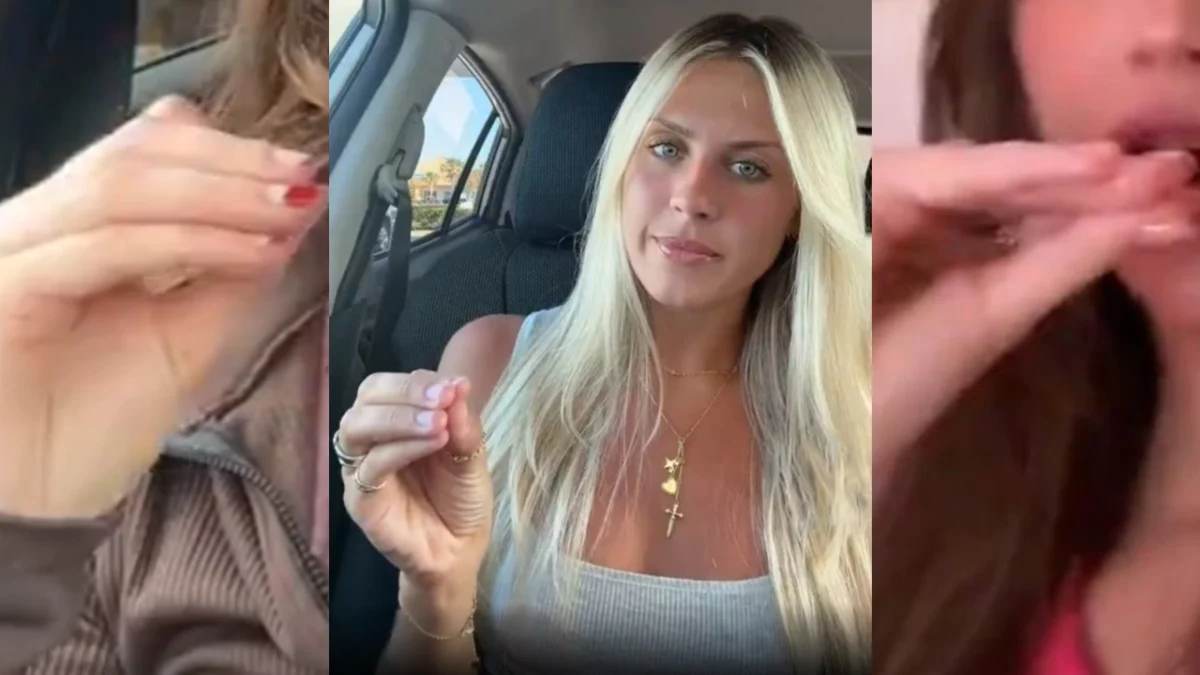
The phenomenon known as "bird hands," a specific hand gesture characterized by pinching the fingers together at the tips to resemble a bird’s beak, has emerged as a significant flashpoint in the ongoing cultural dialogue surrounding non-verbal communication, gender dynamics, and digital behavioral profiling. What began as an isolated observation on social media in early 2025 has evolved into a widely debated "red flag" within certain online subcultures, while simultaneously being defended by others as a tool for rhetorical emphasis and self-expression. This transition from a simple physical movement to a loaded symbol of psychological assessment highlights the increasing scrutiny applied to digital content and the rapid evolution of modern slang.
The Anatomy and Mechanics of the Gesture
Physically, the "bird hands" gesture involves the speaker bringing the thumb and all four fingers together at a single point, often pointing the resulting "beak" toward the camera or an interlocutor. While the movement bears a structural resemblance to the traditional "pinched fingers" or "Italian hands" gesture—which typically denotes inquiry, frustration, or a request for clarification—the context of bird hands is distinct. In the digital landscape of 2025 and 2026, the gesture is predominantly observed in short-form videos where the speaker is delivering a passionate argument, often regarding relationship standards, social grievances, or political viewpoints.
Critics of the gesture, primarily located within the "manosphere"—a collection of websites, blogs, and online forums promoting masculinity and often critical of modern feminism—argue that the movement is a telltale sign of a "high-conflict" personality. According to these commentators, the gesture is frequently paired with a condescending tone and is used to dominate a conversation or manipulate the listener. Conversely, proponents and those who frequently use the gesture argue that it serves a purely functional purpose: to provide visual punctuation to spoken words, especially in an environment where the speaker feels unheard or dismissed.
Chronological Evolution of the Phenomenon
The trajectory of the bird hands discourse can be traced back to the first quarter of 2025, when digital observers began to identify a recurring pattern in the hand movements of female content creators on platforms like TikTok and X (formerly Twitter).
Early Observations: March – May 2025
On March 18, 2025, the social media account for the Whatever Podcast, a prominent platform in the relationship-discourse space, posted a screenshot of a TikToker utilizing the gesture. The caption, "WHY DO THEY ALL DO THE THING WITH THEIR HAND?!", served as one of the earliest recorded instances of the gesture being singled out for public scrutiny. Between March and June, the account continued to highlight similar examples, consistently sourcing them from videos where women discussed traits they found unattractive in men. These early posts established the initial association between the gesture and "passionate" or "aggressive" female rhetoric.
Coining the Term: June 2025
The term "bird hands" was solidified in the public lexicon in June 2025. On June 10, U.S. Senator Cory Booker shared a video featuring an activist named Viv, who spoke against mass deportation and in favor of immigration reform. The following day, the content creator known as @ItIsHoeMath, a figure associated with dating analysis and manosphere-related commentary, quote-tweeted the video. In his response, he used the phrase "bird hands" to describe Viv’s gesturing, labeling it as part of a "loud bitch" archetype and using it to dismiss the political content of the video. This post, which garnered over 3,100 likes, is credited with providing the phenomenon its definitive name and linking it to a broader critique of liberal political expression.
Mass Proliferation and Video Analysis: June 2025 – Late 2026
Following the coining of the term, the discourse moved from brief social media posts to long-form analysis. On June 21, 2025, the YouTuber hoe_math released a video essay dedicated to the "bird hands" phenomenon. The video, which explored the psychological implications the creator attributed to the gesture, amassed over 1.1 million views within a year. This was followed by other creators, such as The Dadvocate, who in September 2025 explored the concept for an audience of over 177,000 viewers. By 2026, the term had become a staple of digital behavioral analysis, with users sharing compilations of the gesture under titles like "Learn the signs of crazy."
The Gendered Counter-Narrative and Defense
As the "red flag" narrative gained momentum, it met with significant pushback from women and communication experts who sought to recontextualize the gesture. In March 2026, TikTok creator @frigidbarrell posted a video that challenged the manosphere’s interpretation. She argued that the gesture was not a sign of mental instability but rather a common way for women to display their manicures while speaking. Her video suggested that the "bird hands" were often directed at a female audience who appreciated the aesthetic of the nails as much as the content of the speech. This video reached 1.8 million views, signaling a shift in the conversation.

In June 2026, another creator, @bee_genevieve, provided a more sociological defense. She posited that men’s aversion to the gesture was not actually about the hand movement itself, but about the assertiveness it represented. "I think what men really hate is when women are trying to make a point because then they actually have to listen to them," she stated in a video that gained 2.1 million views. This perspective framed the "bird hands" debate as a proxy for larger conflicts over female authority and the right to speak with conviction.
Behavioral Analysis and Sociological Implications
The bird hands phenomenon is a modern example of "thin-slicing"—a term used in psychology to describe the ability to find patterns in events based only on "thin slices," or narrow windows, of experience. In the digital age, thin-slicing has become an automated part of the scrolling experience. Users often look for micro-expressions or gestures to quickly categorize a creator as "trustworthy," "unstable," "attractive," or "repulsive."
From a linguistic and semiotic standpoint, the bird hands gesture functions as a "baton"—a type of gesticulation used to beat out the rhythm of a person’s speech. Batons are generally used to emphasize important points. The fact that this specific baton has been gendered and pathologized suggests a cultural tension regarding how women express intensity. When a gesture is labeled a "red flag," it moves from the realm of body language into the realm of character judgment.
Data from search engines and social media analytics indicate that interest in "bird hands" peaked during periods of high-profile gender discourse. The spike in searches in mid-2025 and again in late 2026 suggests that the term has been integrated into the broader "dating lexicon," similar to terms like "gaslighting," "love bombing," or "main character energy."
Impact on Digital Communication and Political Discourse
The involvement of political figures, such as Senator Cory Booker, in the bird hands timeline illustrates how micro-trends can bleed into serious political discussion. By focusing on a speaker’s hand gestures rather than their policy arguments, critics utilize "ad hominem" visual attacks to discredit political opponents. This tactic—reducing a complex argument to a perceived personality flaw based on a physical habit—has become increasingly common in an era where video clips are often consumed without sound or out of context.
The "bird hands" saga also reflects the power of the manosphere in shaping online terminology. By creating a name for a previously unnoted behavior, these creators have effectively established a new metric by which women are judged in the digital "mating market." This has led to a feedback loop where women may become more self-conscious of their movements, or conversely, use the gesture more defiantly as a sign of resistance against such profiling.
Conclusion
The evolution of "bird hands" from a TikTok observation to a categorized "behavioral red flag" serves as a case study in the power of digital semiotics. It demonstrates how a neutral physical movement can be co-opted, named, and weaponized within the span of a few months. While the manosphere continues to view the gesture as a diagnostic tool for identifying "dominant" or "unstable" personalities, the counter-movement has successfully reframed it as a symbol of expressive clarity and manicured confidence.
As digital platforms continue to prioritize short-form video content, the scrutiny of non-verbal cues is likely to intensify. The bird hands phenomenon suggests that in the future, it will not just be what a person says that determines their digital reputation, but the very shape of their hands as they say it. Whether seen as a sign of "crazy" or a sign of "conviction," bird hands have firmly perched themselves in the lexicon of 21st-century social interaction.

