
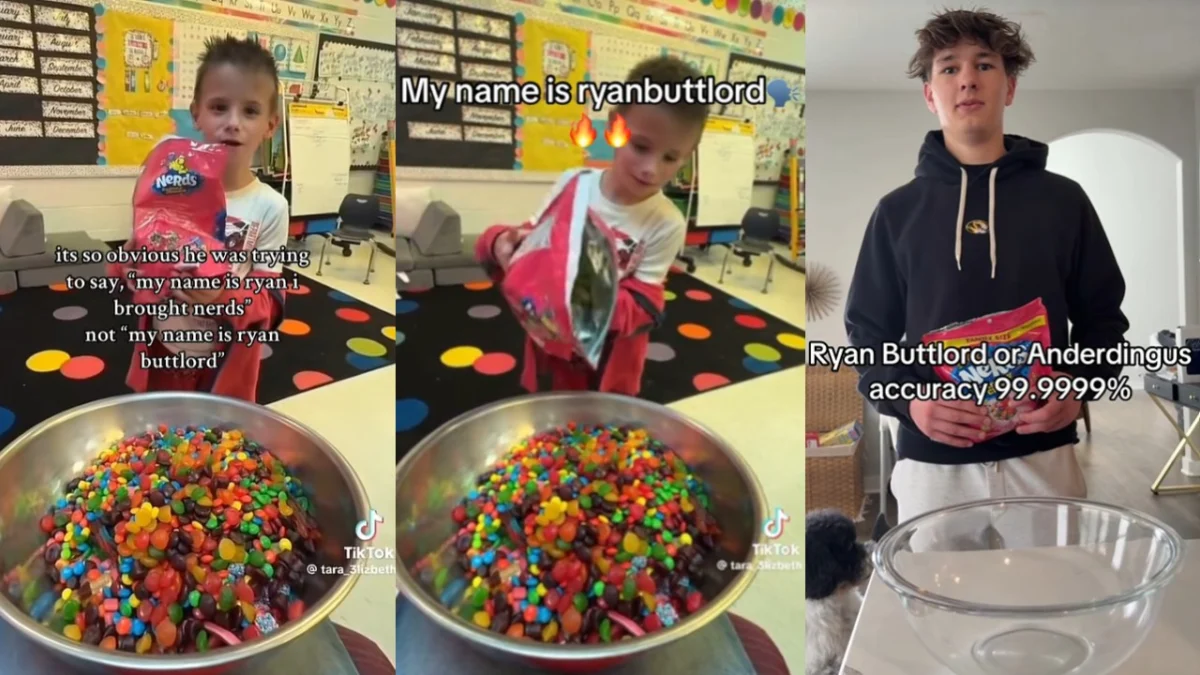
Ryan Buttlord and the Viral Evolution of the Candy Salad Meme Phenomenon represents a significant case study in the rapid transformation of innocent digital content into complex, multi-layered internet lore. Originating from a benign classroom activity shared on social media, the "Ryan Buttlord" persona emerged as a result of auditory pareidolia—the tendency of the human brain to perceive meaningful sounds in random or ambiguous patterns. What began as a 2024 video documenting a kindergarten "candy salad" event evolved by early 2026 into a cornerstone of "brainrot" culture, a subgenre of internet humor characterized by surrealism, repetitive motifs, and hyper-specific terminology.
The Genesis: The 2024 Candy Salad Trend
The foundations of the meme were laid on May 11, 2024, when a TikTok creator and educator, known by the handle @tara_3lizbeth, uploaded a video featuring her kindergarten class. The video depicted a "candy salad" activity, a popular social media trend where participants contribute various types of confectionery into a communal bowl. In the footage, students would approach the camera, state their names, announce the candy they brought, and pour the contents into a large plastic container.
Among the students was a young boy who approached the bowl to contribute Nerds Gummy Clusters. In a soft, youthful voice, he stated, "My name is Ryan, I brought Nerds." However, due to the acoustic environment of the classroom and the child’s specific inflection, a significant portion of the digital audience misheard the introduction as "My name’s Ryan Buttlord." This phonetic ambiguity became the catalyst for a digital phenomenon that would span several years.
Chronology of Viral Resurgence
The trajectory of the "Ryan Buttlord" meme followed a pattern of initial discovery, a period of latent growth, and a massive secondary surge.
- Initial Mishearing (May 2024): The original video gained moderate traction primarily due to another student in the same clip, a boy named Zander whose name was misheard as "Anderdingus." This led to the birth of the "Anderdingus" meme, which initially overshadowed Ryan.
- The Re-contextualization (June 30, 2024): TikTok user @bcoldrodrr65 isolated the segment featuring Ryan and added a caption explicitly labeling him as "ryanbuttlord." This re-upload served to cement the misheard name in the minds of viewers, garnering over 270,000 views and establishing a standalone identity for the clip.
- The 2026 Peak (January–March 2026): After a period of relative dormancy, the meme experienced a massive resurgence in early 2026. This era saw the meme transition from a simple joke about a name to a complex "character" within TikTok’s editing community.
- The Rise of Accuracy Reenactments (January 20, 2026): Influencer @mattrayshow posted a high-production "accuracy reenactment" of the candy salad video. This video, which parodied the mannerisms of the children, acted as a force multiplier for the meme’s reach, securing over 2.1 million views in just two months.
The "Anderdingus" Rivalry and Powerscaling
A unique aspect of the Ryan Buttlord phenomenon is its symbiotic relationship with the "Anderdingus" meme. In the internal logic of the internet’s "brainrot" subculture, the two children from the original video were reimagined as rivals or legendary figures with varying levels of "aura"—a slang term used to describe a person’s perceived coolness or commanding presence.
By March 2026, the meme had entered the "powerscaling" phase. Powerscaling is a digital subculture, typically reserved for anime or comic book characters, where fans debate and compare the hypothetical combat or social strength of various figures. On March 23, 2026, the TikTok account @brainrot_steals.n.trader posted a sophisticated edit pitting Ryan Buttlord against Anderdingus in a simulated battle of "aura" and "strength." This video alone garnered 2.4 million views in three days, illustrating the shift from simple humor to elaborate digital storytelling.
Digital Pranks and Soundboard Integration
The auditory nature of the Ryan Buttlord clip made it a prime candidate for soundboard usage. In February 2026, the meme crossed over into the gaming community, specifically within Fortnite. TikToker @.blitzerzz utilized the audio clip to prank other players. By asking a player for their name and then playing the "Ryan Buttlord" audio, the creator created a scenario where it appeared the other player was identifying themselves by the meme name. This video achieved 1.6 million views, demonstrating the meme’s versatility across different digital platforms and interactive media.
Statistical Reach and Engagement Data
The data surrounding the Ryan Buttlord meme indicates a high level of engagement across diverse demographics. As of the first quarter of 2026, the cumulative views for the top five most prominent "Ryan Buttlord" related videos exceeded 7.5 million.
- @bcoldrodrr65 (Original Re-upload): 270,000+ views.
- @mattrayshow (Reenactment): 2.1 million+ views.
- @.blitzerzz (Gaming Prank): 1.6 million+ views.
- @999abyss.999 (GOAT Edit): 1.4 million+ views.
- @brainrot_steals.n.trader (Powerscaling): 2.4 million+ views.
Search interest for the term "Ryan Buttlord" saw a sharp vertical spike in late February 2026, correlating with the "Anderdingus" rivalry edits.
Ethical Considerations and Official Responses
The rapid viralization of a minor’s image and voice raises significant questions regarding digital privacy and the ethics of meme culture. The original uploader, the kindergarten teacher @tara_3lizbeth, eventually deleted the source video following the initial wave of virality in 2024.
The teacher later released a statement addressing the situation, expressing concern over the negative comments directed at the children and the attempts by some internet users to identify her school. She clarified that the video was intended to be a lighthearted classroom memory and denied allegations that she had posted the footage without appropriate permissions. The subsequent removal of the video, however, did little to halt the meme’s progression, as digital archives and screen recordings had already decentralized the content.
The case of Ryan Buttlord highlights the "persistence of the digital footprint," where a moment captured in a controlled environment (a classroom) can be stripped of its context and repurposed by global audiences in ways the original creator never intended.
Impact on Internet Linguistics and "Brainrot" Culture
The Ryan Buttlord meme is emblematic of the "Gen Alpha" linguistic shift. The meme frequently utilizes terms such as "aura," "GOAT" (Greatest of All Time), and "skit." On March 18, 2026, the creator @999abyss.999 published an edit comparing Ryan to Anna Frey (another viral figure), utilizing high-speed transitions and bass-boosted audio. This style of editing is a hallmark of "brainrot" content, designed to maximize sensory input and retention.
Furthermore, the meme serves as a prime example of "ironic positivity." Many of the edits prop Ryan up as a heroic figure, a "legendary pourer" of candy, using dramatic music and visual effects usually reserved for professional athletes or movie stars. This juxtaposition between the mundane act of pouring Nerds into a bowl and the epic presentation of the edit is the primary driver of its comedic value.
Conclusion and Future Outlook
The evolution of Ryan Buttlord from a misheard sentence to a multi-million-view digital icon underscores the unpredictable nature of the modern attention economy. It demonstrates how the TikTok algorithm can breathe new life into years-old content, transforming a simple misunderstanding into a cornerstone of contemporary internet folklore.
While the meme continues to provide entertainment to millions, it also serves as a reminder of the complexities surrounding the viralization of children in the digital age. As the "powerscaling" and "aura" trends eventually fade, the legacy of Ryan Buttlord will likely remain a cited example of how phonetic ambiguity can spark a global cultural moment. For now, Ryan remains the "GOAT" of the candy salad, an accidental legend in an era where anyone—even a child bringing Nerds to school—can become a household name through the power of a misheard phrase.

