
The digital landscape is currently undergoing its most significant architectural transformation since the commercialization of the Graphical User Interface (GUI) in the early 1980s. For over four decades, the fundamental contract between humans and computers has been defined by point-and-click interactions, a paradigm established by the Xerox Star and popularized by the original Apple Macintosh. Today, that contract is being rewritten. As artificial intelligence and large language models (LLMs) achieve higher levels of reasoning, the web is evolving away from menus, forms, and endless clicks toward experiences shaped entirely around human intent. This shift, known as Intent-Driven Design, marks the transition from software as a passive tool to software as an active, goal-oriented agent.
The Historical Context of the Interaction Labyrinth
To understand the magnitude of this shift, one must analyze the friction that has been accepted as the industry standard for decades. Since the 1984 debut of the Macintosh, user experience (UX) design has focused on "affordances"—visual cues like buttons, sliders, and tabs that tell a user how to interact with a system. While these tools democratized computing, they also created a "management tax." Users have become accustomed to spending a significant portion of their digital lives managing software rather than achieving goals.

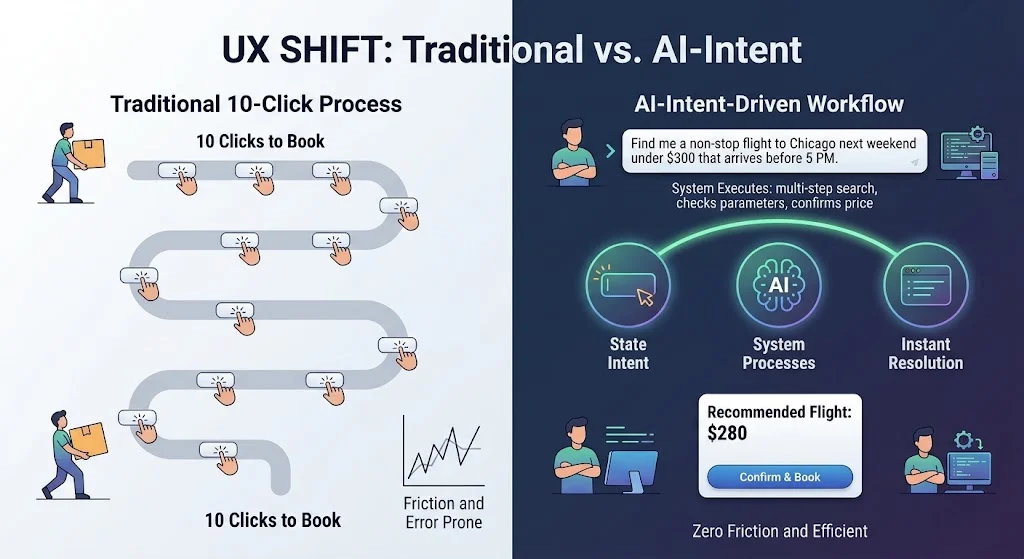
The traditional workflow for booking a flight serves as a prime example of this "interaction friction." Under the GUI paradigm, a user must navigate a multi-step labyrinth: entering a URL, selecting dates from a calendar widget, filtering by airline, scrolling through dozens of options, declining upsells for insurance or seat upgrades, and finally filling out extensive payment forms. In this model, the computer is a passive container of data, and the human is the orchestrator, manually executing every micro-step.
Intent-driven design proposes a radical alternative. Instead of forcing the user to learn the mechanical steps of a website’s "sales funnel," the interface captures a high-level goal—such as "Find me a non-stop flight to Chicago next Friday for under $300"—and executes the background work autonomously. This vision aligns with the "No Interface" philosophy championed by designer Golden Krishna and the human-centered principles of Don Norman, suggesting that the ultimate goal of design is not to build better buttons, but to eliminate the need for the button entirely.
A Chronology of the Interface Evolution
The journey toward intent-driven systems has moved through several distinct phases:
- The CLI Era (1960s–1970s): Interaction was limited to text-based commands. It was intent-driven but required high technical literacy.
- The GUI Revolution (1981–2010): The introduction of the WIMP (Windows, Icons, Menus, Pointers) paradigm. This made computing visual and accessible but introduced the "click-heavy" workflows we see today.
- The Mobile & App Phase (2007–2020): Interaction became touch-based. Interfaces became more streamlined, but the reliance on rigid forms and siloed applications persisted.
- The Generative AI Era (2022–Present): The release of ChatGPT and subsequent LLMs introduced natural language as a viable interface. For the first time, software could "understand" intent without requiring specific UI triggers.
Market Leaders in the Intent-Driven Pivot
Several platforms are currently serving as the vanguard for this transition, demonstrating how intent-driven systems outperform traditional GUIs in efficiency and user satisfaction.
Perplexity AI and the Decline of the Search Tab
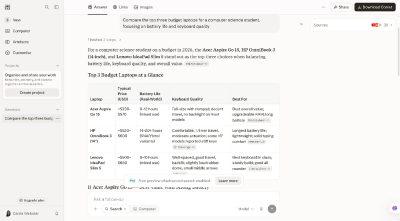
Traditional search engines like Google were designed as directories, providing a list of "blue links" that required the user to open multiple tabs, skim articles, and synthesize their own answers. Perplexity AI represents a shift toward "synthesized search." By interpreting the user’s intent, it executes the search, reads the sources, and presents a comprehensive answer in a single interface. Industry data suggests that this reduces the "time-to-answer" by up to 70% compared to traditional multi-tab browsing.
Vercel v0 and Generative UI
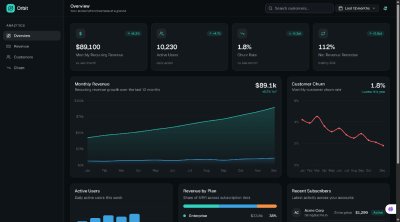
In the realm of software development and design, tools like Vercel v0 are replacing manual "drag-and-drop" editors. Instead of a designer manually adjusting CSS padding or hexadecimal codes, they describe the desired outcome: "Create a SaaS dashboard with a dark mode toggle and a real-time revenue chart." The system generates the functional code and layout on the fly. This moves the designer’s role from "pixel pusher" to "intent curator."
Goblin.tools and Cognitive Accessibility
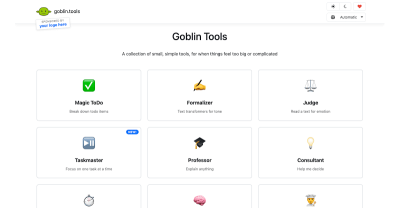
Accessibility is a major driver of intent-driven design. Goblin.tools, a suite of AI-powered micro-tools, is designed for neurodivergent individuals who may find complex task management overwhelming. By taking a single "intent" (e.g., "Clean the kitchen") and automatically breaking it down into manageable micro-tasks, the software removes the cognitive load of planning, which is a significant barrier in traditional productivity apps.
The Three Pillars of Intent-Driven UX
Designers and engineers are beginning to formalize the pillars of this new paradigm to ensure consistency and usability:
- Pillar 1: High-Level Goal Capture: Rather than tracking clicks, systems are being designed to understand context. This includes leveraging environmental metadata—such as location, time of day, and past habits—to anticipate needs. For instance, a "Smart Home" interface should not require a button to turn on lights; it should infer the intent based on the user’s presence and the ambient light levels.
- Pillar 2: Generative UI: Traditional web design relies on static layouts. Intent-driven design utilizes Generative UI, where the interface is rendered dynamically based on the specific task. If a user expresses a need to compare financial data, the UI might generate a custom table and chart that disappears once the task is complete.
- Pillar 3: Autonomous Execution via Agents: The most advanced stage of this shift involves AI agents that perform actions on behalf of the user. This moves the UX focus from "prevention" (e.g., "Are you sure?") to "reversibility." In an agent-driven world, a prominent "Undo" button and transparent audit logs become more important than confirmation modals.
Technical Implications and Data Trends
The shift toward intent-driven design is supported by emerging data regarding user behavior. According to research by the Nielsen Norman Group, AI-assisted task completion can improve user productivity by an average of 66%. Furthermore, as mobile usage continues to dominate, the "friction" of small-screen menus is becoming a primary pain point.
Data from the 2024 "State of AI in UX" reports indicates that 42% of enterprise software companies are currently integrating "command-bar" or "natural language" interfaces to bypass traditional navigation trees. Gartner predicts that by 2026, 30% of new app interfaces will be generated in real-time based on user behavior and intent, rather than being hard-coded by developers.
Industry Reactions and Ethical Considerations
While the promise of "invisible" software is significant, industry experts have voiced concerns regarding the "Black Box Problem." When an interface disappears and an AI makes decisions based on inferred intent, the user can lose the ability to diagnose errors.
The Stanford Human-Computer Interaction (HCI) Group has emphasized the need for "clear boundaries" in automation. "Automation must not be synonymous with a loss of agency," states a recent analysis on AI-driven interfaces. Designers are cautioned that removing the interface entirely can lead to a "patronizing" user experience where the software makes incorrect assumptions without a clear path for correction.
Furthermore, the Center for Humane Technology has warned that intent-driven design must be guarded against "manipulative defaults." If a system is designed to "anticipate" a user’s needs, there is a risk that it will prioritize the platform’s business goals (e.g., upselling a premium service) over the user’s actual intent.
The Evolving Role of the UX Designer
For the design profession, this transition necessitates a fundamental re-evaluation of skills. The era of designing static buttons, rigid forms, and "pixel-perfect" layouts is nearing its end. Designers must now transition into "Intent Architects."
This new role involves:
- Mapping Intent Flows: Understanding the various ways a user might express a goal and ensuring the AI interprets those nuances correctly.
- Designing Feedback Loops: Creating transparent status indicators that show what the AI is doing in the background, thereby building trust.
- Curating Generative Systems: Setting the "design tokens" and rules that govern how a generative UI looks, ensuring that even if a layout is created on the fly, it remains accessible and brand-aligned.
Conclusion: From Engagement to Completion
The digital industry has long measured success through engagement metrics: time spent on site, click-through rates, and pages per session. However, intent-driven design turns these metrics on their head. In the new paradigm, the most successful software is the one that is used the least to achieve the most.
As we move toward an era of seamless, invisible completion, the web will no longer be a place where users go to "manage software." Instead, it will be a utility that understands human goals and executes them with minimal intervention. The "death of the button" is not merely a change in aesthetics; it is the final step in making technology truly subservient to human needs. The future of design is not more interaction—it is the elimination of the interface in favor of the outcome.

