
The precision of language in digital product development has moved from a matter of stylistic preference to a foundational requirement for organizational scalability. As software ecosystems grow in complexity, the "naming problem"—historically cited by computer scientist Phil Karlton as one of the two hardest challenges in the field—has expanded beyond the realm of backend variables into the visible layers of user interface (UI) design and design systems. The current industry landscape reveals that the names assigned to colors, components, and design tokens directly influence the speed of development, the accuracy of handovers between designers and engineers, and the eventual adoption rates of new features by end-users.

In the modern enterprise environment, a single UI element may be referenced by a designer in Figma, a developer in React, a product manager in documentation, and a user in a support ticket. When these stakeholders use disparate terminologies—what industry experts call "naming fragmentation"—the result is a significant increase in cognitive load and technical debt. To address this, a new generation of methodologies and specialized tools has emerged, aimed at creating a unified, semantic language for digital construction.
The Evolution of Semantic Standards in Digital Design
The history of naming in digital environments has transitioned through several distinct eras. In the early days of web development, naming was often presentational (e.g., .red-button or .left-sidebar). However, as responsive design and multi-theming became standard, these names became liabilities. If a brand changed its primary color from red to blue, a class named .red-button became semantically incorrect, leading to confusion.

The industry moved toward functional naming conventions, such as Block Element Modifier (BEM), which provided a structured way to describe the relationship between components. Today, the focus has shifted further toward "Design Tokens"—agnostic variables that store visual design attributes. According to recent industry surveys on design systems, over 70% of high-performing product teams now utilize some form of token-based taxonomy to manage styles across different platforms (iOS, Android, Web).
This evolution reflects a broader shift toward "Atomic Design" principles, where the focus is on building a system of parts rather than a collection of pages. Within this framework, naming serves as the glue that holds the system together.

Methodologies for UI Component and Layer Organization
Effective naming in a professional design environment requires a balance between generic utility and specific clarity. Research by design strategist Javier Cuello indicates that high-quality naming conventions must be logical, concise, and divorced from visual properties. A "good" name focuses on the "what" and the "why" rather than the "how it looks."
For instance, naming a layer "Success_Icon" is superior to "Green_Checkmark," as the latter becomes obsolete if the brand’s success state changes to a different color or symbol. Cuello’s guidelines emphasize that consistency across layers, groups, and components is the primary driver of efficiency during the design-to-code handover. When a developer can predict the name of a component based on established logic, the need for synchronous communication decreases, allowing for faster sprint cycles.

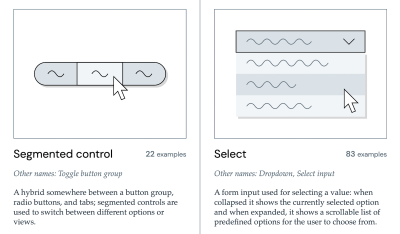
The industry has seen the rise of specialized repositories to aid this process. Tools like the Component Gallery, curated by Iain Bean, provide an exhaustive inventory of how real-world design systems—such as those from Shopify, Carbon, and Atlassian—name their UI elements. By analyzing over 50 different component types, from accordions to "visually hidden" wrappers, teams can align their internal language with industry standards, reducing the learning curve for new hires.
Case Studies in Enterprise-Scale Taxonomies: Intuit and Vodafone
The challenge of naming scales exponentially with the size of the organization. At Intuit, the parent company of Mailchimp and QuickBooks, the design team faced the task of creating a flexible design token taxonomy that could serve multiple distinct brands. Nate Baldwin, a lead architect on the project, documented the transition from a rigid, brand-specific system to a multi-tiered taxonomy.

The Intuit model categorizes tokens into a hierarchy: global primitives (the base values), semantic tokens (the intent or use case), and component-specific tokens. This structure allows the system to remain robust even as individual brands within the portfolio evolve. For example, a semantic token named color.background.primary might resolve to white for QuickBooks but a soft grey for Mailchimp.
Similarly, the Vodafone UK Design System team developed a "Variables Taxonomy Map" to manage a complex, multi-themed environment. Their system utilizes four distinct collections—brand, primitives, semantics, and pages—to create a map of how data flows through the design. This orchestration ensures that a change at the "brand" level cascades correctly down to the "page" level, with the token name itself providing a clear audit trail of the element’s purpose and origin.
The Psychological Impact of Feature Naming and Discovery
Naming extends beyond internal systems and into the user-facing product experience. Poorly named features are one of the primary drivers of low adoption rates. As UX researcher Erin Gannon notes, feature adoption follows a specific chronology: discovery, understanding, trial, and finally, integration into the user’s workflow. If a feature is named using internal jargon rather than the user’s own language, the process stalls at the "understanding" phase.
Gannon suggests that the most effective feature names are those that describe the "job-to-be-done" or the desired outcome. For example, a feature named "SyncPro" tells the user nothing about its value, whereas "Real-Time Backup" communicates immediate utility. The strategy involves interviewing users to hear how they describe their problems and then using those exact terms in the UI. This user-centric nomenclature reduces the "interaction cost" and makes the interface feel more intuitive.

Data-Driven Tools and Resource Inventories
To support the rigorous demands of modern naming, a suite of open-source tools has entered the market. These resources act as cognitive scaffolding for designers and engineers:
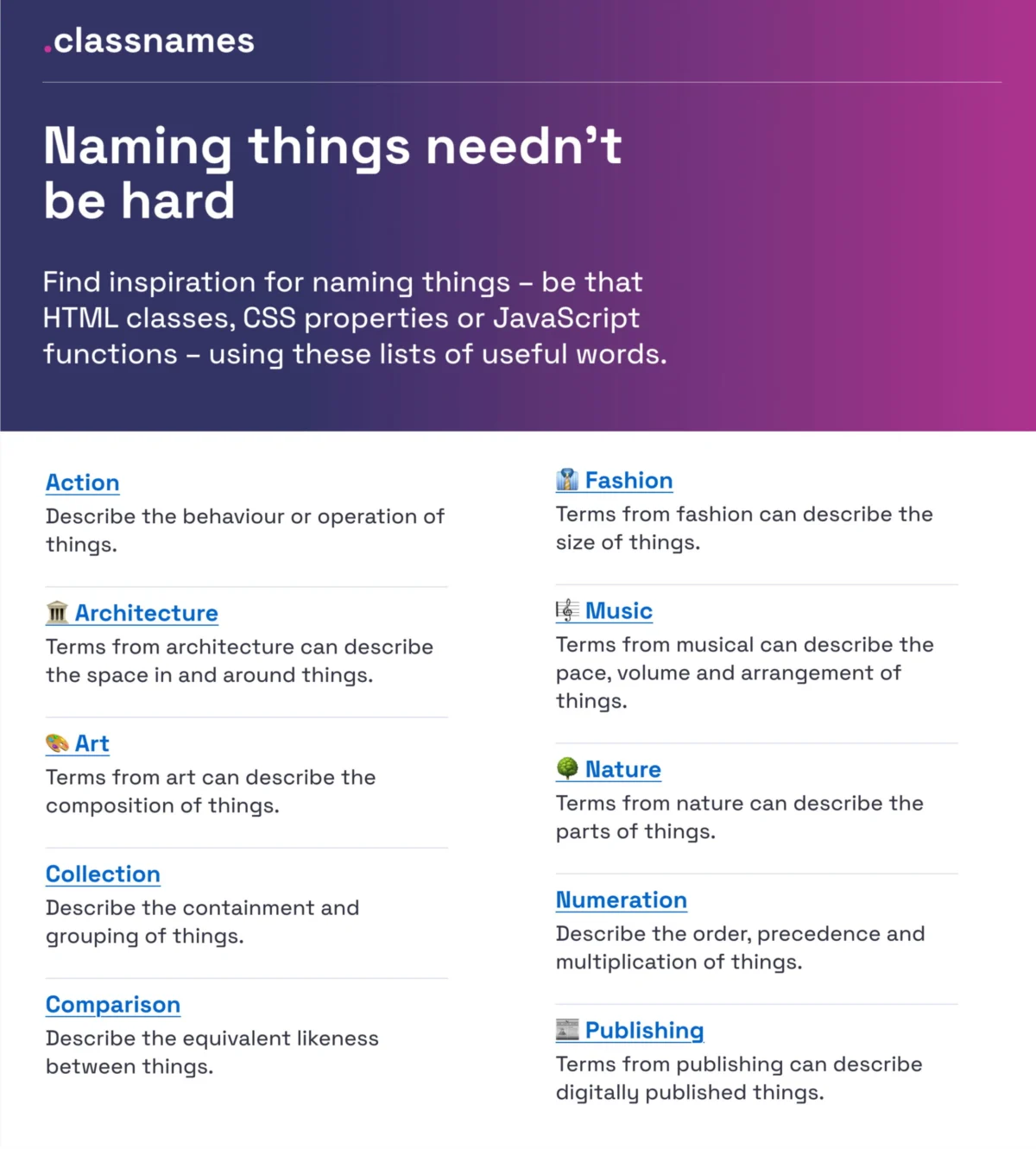
- Semantic Inspiration: The "Classnames" resource provides thematically grouped lists of words from diverse fields such as architecture, music, and fashion. This helps teams move away from repetitive terms like "wrapper" or "container" toward more descriptive alternatives like "frame," "envelope," or "stage."
- Color Standardization: With over 30,000 unique color names, David Aerne’s "Color Names" repository and the "Color Parrot" tool provide a standardized way to reference hex codes. This prevents the "color name collision" where two designers might call different shades of blue "Sky Blue."
- Product Branding: The "Onym" repository serves as a comprehensive guide for naming products and services, offering etymologies, brainstorming prompts, and legal vetting resources.
- Token Management: Romina Kavcic’s "Design Token Naming Guide" and "Inventory Spreadsheet" provide interactive builders that allow teams to configure naming structures by category, state, and role before a single line of code is written.
Broader Implications: The Future of Design Systems and AI
The move toward standardized naming conventions is not merely an exercise in organization; it is a prerequisite for the next generation of design automation. As Artificial Intelligence (AI) and Machine Learning (ML) become more integrated into the design process, the clarity of the underlying data becomes paramount.

AI models trained on design systems require consistent, semantic labeling to accurately generate code from visual mockups. If a design system uses a chaotic naming convention, the AI’s ability to map visual elements to code components is severely diminished. Therefore, the work currently being done by design system architects to refine their taxonomies is effectively "future-proofing" their organizations for an AI-driven workflow.
Furthermore, a well-named system fosters a culture of inclusivity and accessibility. Semantic HTML and well-named ARIA labels are essential for screen readers and other assistive technologies. When a team prioritizes clear naming, they are inherently making their product more accessible to a wider range of users, including those with visual or cognitive impairments.

Conclusion: Naming as a Competitive Advantage
The evidence from industry leaders and specialized research suggests that naming is a strategic asset. A clear, shared language reduces the "translation tax" that organizations pay every time a project moves between departments. By investing in robust taxonomies, utilizing community-vetted tools like the Component Gallery, and adopting user-centric naming strategies, companies can significantly reduce friction in their development pipelines.
In the final analysis, the right name is the one that requires the least explanation. When the designer, the developer, and the end-user all speak the same dialect, the software ceases to be a collection of abstract parts and becomes a cohesive, functional tool. As digital products continue to permeate every aspect of modern life, the rigor applied to their nomenclature will remain a defining factor in their success and longevity.

