
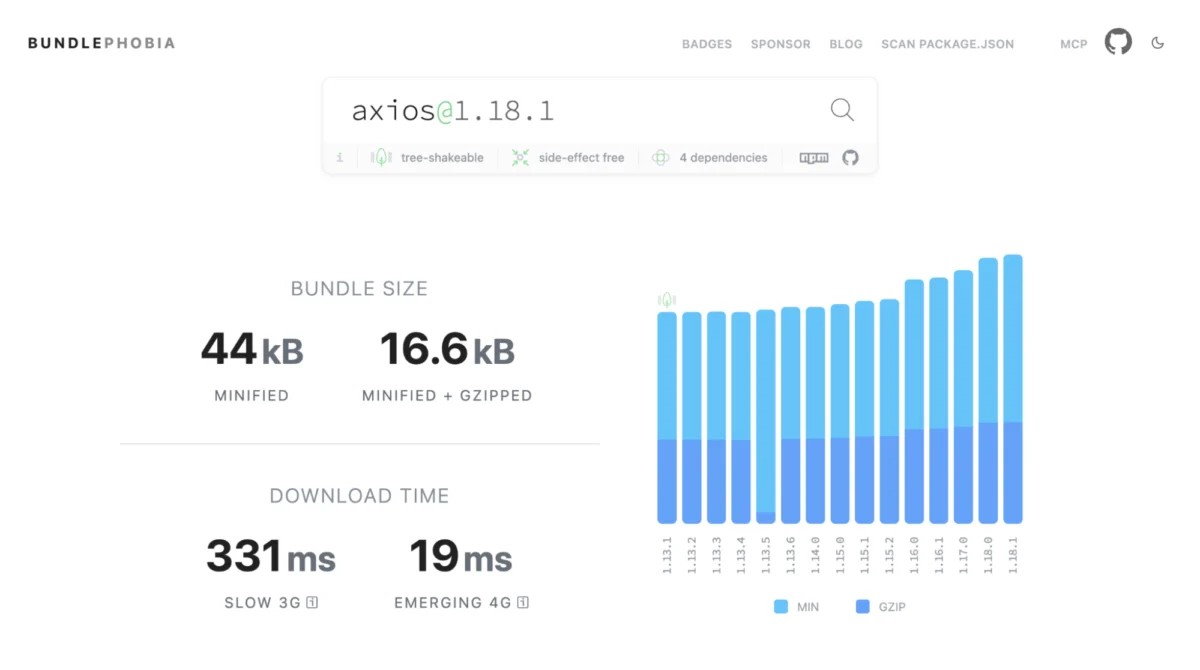
The modern web development landscape is undergoing a silent but significant transformation as the gap between "you need a library for this" and "the browser does this natively" continues to close at an unprecedented rate. For years, developers have relied on a sprawling ecosystem of npm packages to fill functional voids in the web platform, but as browser engines converge on shared standards, many of these dependencies have become redundant. Recent data suggests that a typical mid-sized JavaScript application may carry between 60KB and 90KB of minified and gzipped code for tasks that the browser can now execute natively. This shift is being spearheaded by "Baseline," a standardized classification system that provides developers with clear signals on when a web feature is safe to use across all major engines.
The Genesis of the Baseline Standard
The Baseline initiative emerged from the WebDX Community Group, a collaborative effort involving major stakeholders including Google, Mozilla, Apple, and Microsoft. The primary objective was to resolve the long-standing ambiguity regarding browser support. Historically, developers relied on fragmented resources like "Can I Use" or MDN compatibility tables, which, while detailed, often lacked a high-level "safety" signal for production environments.
Baseline categorizes web features into three distinct stages:
- Limited Availability: The feature is supported in some, but not all, major browsers.
- Newly Available: The feature has reached support across the "Big Four" engines (Chrome, Edge, Firefox, and Safari) within the last 30 months.
- Widely Available: The feature has been supported across all major engines for more than 30 months and is considered safe for almost all production use cases.
This standardization allows engineering teams to move away from the "install first" mentality and instead adopt a "platform first" approach to architecture. By auditing a project’s package.json against these Baseline signals, organizations can significantly reduce their bundle sizes, leading to faster load times and improved Core Web Vitals.
A Chronology of Platform Convergence (2022–2026)
To understand the current state of the web, it is essential to trace the timeline of major feature releases that have reached Baseline status:
- March 2022: The
<dialog>element reaches wide support, providing a native way to handle modals and focus management. - Early 2023:
structuredClone()becomes Widely Available, offering a native, robust method for deep-cloning objects without the overhead of utility libraries. - March 2024:
Object.groupByandMap.groupByreach Newly Available status, providing native array grouping capabilities. - January 2025: The Popover API reaches broad support, allowing for tooltips and menus without complex positioning libraries.
- March 2025:
Intl.DurationFormatenters the Newly Available stage, completing the suite of internationalization tools. - January 2026: CSS Anchor Positioning reaches Baseline Newly Available status, potentially displacing long-standing positioning libraries like Popper.js.
The Economic and Performance Cost of Dependency Inertia
The reason many redundant libraries persist in modern codebases is rarely due to technical necessity; rather, it is a byproduct of "dependency inertia." Once a library is integrated into a project and passes its initial test suite, it is seldom re-evaluated for its continued relevance. While security audits via npm audit are common, functional audits—asking if the browser has rendered the library obsolete—are rare.
The performance implications of this inertia are measurable. Large JavaScript bundles delay the "Time to Interactive" (TTI) and "Total Blocking Time" (TBT) metrics. By shipping 90KB of unnecessary JavaScript, developers are essentially taxing their users’ CPU and battery life, particularly on low-end mobile devices where script execution is a primary bottleneck.
Strategic Cluster Auditing: A Decision Framework
To systematically reduce bundle sizes, developers are encouraged to audit their dependencies in functional "clusters." This approach acknowledges that platform wins often come in groups. Before removing a library, the following three-question framework should be applied:
- Audience Safety: Is the native replacement Baseline-safe for the specific user base? While a B2B application might target modern browsers, a public-facing utility site might require 30 months of "Widely Available" stability.
- The Polyfill Cost: Does the replacement require a polyfill that is heavier than the library being removed? If a native feature requires a 40KB polyfill to support older browsers, the swap is counterproductive unless the polyfill is loaded conditionally.
- Functional Parity: Does the platform feature cover the specific use case? Libraries like Axios provide interceptors and request cancellation out of the box; while
fetchcan replicate these, the implementation effort must be weighed against the bundle savings.
Deep Dive: The Internationalization and UI Clusters
The Internationalization (I18n) cluster currently represents the most significant opportunity for bundle reduction. The Intl namespace in modern browsers provides a suite of tools that replace libraries such as numeral.js, timeago.js, and humanize-duration.

For instance, Intl.RelativeTimeFormat handles localized strings like "3 hours ago" natively. While a library like timeago.js might be 2KB gzipped, the native API is already resident in the browser memory. Similarly, Intl.NumberFormat handles currency, percentages, and compact notation (e.g., "1.2M") with a level of precision and localization that few libraries can match.
The UI Primitives cluster offers similar gains. For years, developers used libraries like a11y-dialog or focus-trap to manage modal accessibility. The native <dialog> element now handles focus trapping, "Escape" key dismissal, and "Top Layer" rendering (solving the infamous z-index wars) automatically. When combined with the Popover API and CSS Anchor Positioning, developers can eliminate upwards of 25KB of JavaScript previously dedicated to positioning and managing floating elements.
The Utility Evolution: Lodash and Modern JavaScript
The ubiquity of Lodash is also being challenged by native methods. The introduction of structuredClone() has effectively replaced lodash.clonedeep for the vast majority of data-cloning needs. Native Set methods—such as union, intersection, and difference—now exist directly on the Set object as of 2024, rendering specific utility helpers unnecessary.
However, the transition is not always immediate. A prominent case study is the Temporal API, the proposed successor to the flawed Date object. While Temporal offers a vastly superior developer experience, it has not yet reached Baseline status as of early 2026. Because the current polyfills for Temporal are significantly larger than lightweight libraries like dayjs, the framework suggests that developers should wait for broader native support before making the switch.
Broader Industry Implications and Expert Perspectives
Industry analysts suggest that the rise of Baseline will lead to a "Standard-First" era of web development. "We are seeing a shift where the browser is no longer just a document viewer, but a robust operating system for applications," says one senior web architect. "The need for ‘glue code’ is evaporating."

Furthermore, this shift has profound implications for accessibility. Native elements like <dialog> and popover are built with accessibility as a core requirement, ensuring that keyboard navigation and screen reader support are handled by the browser engine itself. This reduces the risk of developers shipping "accessible" UI libraries that contain subtle bugs or performance regressions.
Conclusion: Establishing a Quarterly Audit Cycle
The web platform’s rapid evolution necessitates a change in how developers maintain their projects. Instead of a "set and forget" approach to dependencies, teams are encouraged to implement a quarterly audit cycle. This process involves:
- Listing all production dependencies.
- Measuring their "real-world" cost using tools like Bundlephobia or Vite-bundle-visualizer.
- Cross-referencing functionalities with the latest Baseline updates on MDN or webstatus.dev.
- Phasing out redundant code through progressive enhancement or direct replacement.
By handing responsibility back to the browser, developers can focus on building unique product features rather than reimplementing core platform capabilities. As the Baseline project continues to mature, the definition of a "modern web app" will increasingly be defined not by the libraries it includes, but by the efficiency with which it utilizes the native power of the browser.

