
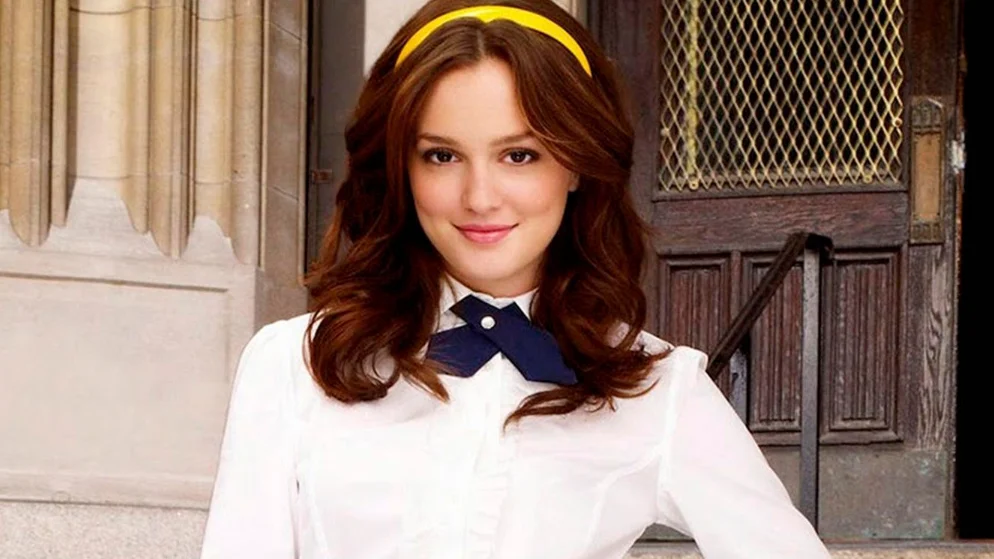
The digital landscape of the early 2020s was marked by a peculiar brand of surrealist humor, often born from the collective isolation of global lockdowns. Among the most enduring artifacts of this era is the Gossip Girl Title Remixes, a viral phenomenon colloquially known as the Go Piss Girl meme. This two-panel image macro utilizes the visual identity of the iconic CW teen drama Gossip Girl to create absurdist wordplay, deconstructing the show’s title card into increasingly nonsensical and humorous phrases. What began as a niche joke in a Facebook group quickly evolved into a mainstream cultural touchstone, eventually garnering attention from the show’s original cast and resurfacing during major global events years later.
Conceptual Framework and Visual Structure
The Gossip Girl Title Remixes follow a rigid and recognizable template. The top panel typically features a still of Serena van der Woodsen (portrayed by Blake Lively), often from a scene where she appears to be making an announcement or posing a question. The bottom panel features her foil and best friend, Blair Waldorf (portrayed by Leighton Meester), looking stern or reactive. Superimposed over these images is a manipulated version of the Gossip Girl title logo.
The humor is derived from a linguistic process known as "anagrammatic slicing" or "lexical deconstruction." By removing, rearranging, or duplicating letters from the original "Gossip Girl" title card, creators generate a response to Serena’s prompt. The most famous iteration, which gave the meme its secondary name, features Serena saying "I have to pee," to which Blair responds with a title card edited to read "Go Piss Girl." This juxtaposition of the show’s high-fashion, elite Manhattan setting with crude or mundane dialogue creates a comedic friction that fueled the meme’s virality.
Chronological Origin and Initial Viral Trajectory
The genesis of the Gossip Girl Title Remix can be traced to April 10, 2020. During the height of the initial COVID-19 stay-at-home orders, a user named Tyler Wood posted the first known version of the meme to the Facebook group "Useless, Unsuccessful, and/or Unpopular Memes." The original post featured the "Go Piss Girl" punchline and resonated immediately with an audience primed for absurdist content. Within six days, the post had garnered over 4,500 reactions, signaling its potential for broader reach.
By April 13, 2020, the format migrated to Twitter, where its modular nature allowed for rapid iteration. Twitter user @koostzu adapted the format to reference the popular children’s character Peppa Pig, with the title card edited to read "Peppa Pig Girl." Simultaneously, user @Depresseddbicth introduced the "Go Rip Girl" variant, referencing flatulence. These early adaptations demonstrated the versatility of the template; it could be used for everything from bathroom humor to surreal pop culture crossovers.
The meme reached a critical mass on Twitter when user @aashnaaaugh compiled several variations in a single thread, stating, "I think about these gossip girl memes 15 times a day at least." This compilation served as a catalyst, earning over 16,000 likes and 4,000 retweets in less than 24 hours. The surge in engagement prompted digital culture outlets like StayHipp to document the trend, cementing its status as a "peak pandemic" meme.
Celebrity Recognition and Mainstream Integration
A defining moment in the lifecycle of any internet meme is its acknowledgment by the subject of the parody. On April 16, 2020, Blake Lively, the actress who played Serena van der Woodsen, shared a version of the meme on her Instagram Stories. Lively’s version leaned into the contemporary reality of the pandemic, featuring Serena asking, "What should I wear to the supermarket?" and Blair responding with a title card edited to read "Gloves Girl."
Lively’s participation was significant for several reasons. First, it provided a sense of "canonical" approval that often accelerates a meme’s decay or, conversely, preserves it as a classic. Second, it demonstrated the actress’s awareness of her character’s enduring legacy in the digital age. By using the meme to comment on social distancing and PPE (Personal Protective Equipment), Lively bridged the gap between the fictional world of the Upper East Side and the sobering reality of 2020.
The 2022 Resurgence: A Tool for Cultural Commentary
While many memes from the early pandemic era faded into obscurity, the Gossip Girl Title Remixes proved to have remarkable staying power. In September 2022, the format experienced a significant resurgence, driven by two major global events: the chaotic press tour for the film Don’t Worry Darling and the death of Queen Elizabeth II.

During the Venice Film Festival, rumors of a rift between director Olivia Wilde and actress Florence Pugh, combined with the "Spitgate" incident involving Harry Styles and Chris Pine, provided fertile ground for the meme. Comedian Nicole Boyce posted a version where Serena asks "What did he do?" and Blair responds with "Spit Girl." This post alone received over 157,000 likes, proving that the format remained a potent tool for summarizing complex celebrity drama in a single, punchy image. The media outlet Vulture also utilized the format, further validating its utility in modern digital journalism and social media management.
Just days later, the meme was adapted to address the death of Queen Elizabeth II. A version posted by user @whysangel featured the title card edited to read "RIP Girl." While some viewed this as a irreverent, it highlighted the meme’s evolution into a shorthand for reacting to any major news event, regardless of its gravity. The "RIP Girl" post garnered over 89,000 likes, illustrating the meme’s transition from a silly wordplay exercise to a ubiquitous social commentary template.
Linguistic and Psychological Analysis
The success of the Gossip Girl Title Remixes can be attributed to several psychological and linguistic factors. From a design perspective, the Gossip Girl title card is highly legible and iconic. The serif font and the specific spacing of the letters "G-O-S-S-I-P G-I-R-L" allow for easy manipulation. Because the human brain is adept at pattern recognition, viewers can quickly fill in the gaps when letters are missing or moved, making the "remix" easy to read despite the visual distortion.
Linguistically, the meme functions as a form of "constrained writing." Much like a lipogram or a palindrome, the creator is limited by the letters available in the original title. This constraint often leads to more creative and unexpected results. The "Go Piss Girl" iteration is particularly effective because it uses almost all the original letters while completely subverting the glamorous tone of the source material.
Furthermore, the meme taps into a deep-seated nostalgia for the late 2000s and early 2010s. For Gen Z and Millennial users, Gossip Girl represents a specific era of television history. By remixing it, they are both honoring and lampooning their own cultural history. The contrast between the "Queen Bee" personas of Serena and Blair and the absurd phrases they are forced to utter in the memes creates a sense of "low-stakes" irony that is highly valued in internet discourse.
Statistical Impact and Search Interest
Data from Google Trends and Twitter analytics confirm the cyclical nature of the meme’s popularity. The initial spike in April 2020 saw search interest for "Gossip Girl meme" reach its highest point since the show’s original run ended in 2012. The September 2022 resurgence saw a similar, though slightly smaller, peak, driven primarily by the "Spitgate" and "Queen Elizabeth" variations.
Engagement metrics on Twitter indicate that the meme has a high "shareability" factor. Unlike long-form video memes or complex Twitter threads, the Gossip Girl Remix is a static image that can be understood in seconds. This makes it an ideal format for the fast-paced environment of social media feeds. According to social listening tools, the phrase "Go Piss Girl" has become a part of the online vernacular, often used as a standalone comment even without the accompanying image.
Implications for Digital Marketing and Content Creation
The longevity of the Gossip Girl Title Remixes offers valuable lessons for digital marketers and content creators. It demonstrates the power of "remix culture"—the idea that existing intellectual property can be given a second life through user-generated content. For brands, the meme serves as a reminder that highly polished, professional imagery is often less effective than lo-fi, authentic-feeling content that invites participation.
Moreover, the meme’s ability to adapt to current events (from COVID-19 to the Venice Film Festival) showcases the importance of "evergreen templates." A successful meme template is one that is flexible enough to accommodate new contexts while remaining recognizable enough to maintain its identity. The Gossip Girl Remix achieved this balance, allowing it to remain relevant across different years and cultural climates.
Conclusion
The Gossip Girl Title Remixes, or the "Go Piss Girl" meme, stands as a testament to the creativity of internet subcultures. By taking a piece of high-budget television history and subjecting it to the irreverent logic of the 21st-century web, users created a format that is as durable as it is absurd. From its humble origins in a Facebook group to its adoption by A-list celebrities and its role in commenting on historical events, the meme has transcended its status as a simple joke to become a significant cultural artifact. It reflects a world where the lines between high art and low humor are permanently blurred, and where a gold-clad socialite from the Upper East Side can become the face of a million different punchlines.

