
Google Analytics 4 (GA4) has rolled out a significant new feature, the "AI Assistant" channel, launched in May, to provide businesses with granular insights into traffic originating from generative AI platforms. This development marks a crucial step in understanding the evolving digital landscape as artificial intelligence continues to integrate into user search and discovery behaviors. The new channel aims to segment and analyze user interactions driven by chatbots like ChatGPT, Gemini, and Claude, offering marketers and analysts a clearer picture of this emerging traffic source.
Background and Context: The Rise of Generative AI in User Behavior
The introduction of the AI Assistant channel comes at a time when generative AI tools are rapidly becoming mainstream. Initially a niche technology, platforms such as OpenAI’s ChatGPT, Google’s Gemini, and Anthropic’s Claude have seen exponential user adoption. These tools are not only being used for content creation and problem-solving but are increasingly becoming a conduit for information discovery, effectively acting as alternative search engines for a growing segment of the online population.
This shift in user behavior presented a challenge for traditional web analytics platforms. Traffic generated through these AI interfaces was often miscategorized or blended with other channels, making it difficult for website owners to accurately assess its performance and impact. The launch of the AI Assistant channel directly addresses this gap, offering a dedicated dimension for tracking and analyzing these interactions.
Key Features and Functionality of the AI Assistant Channel
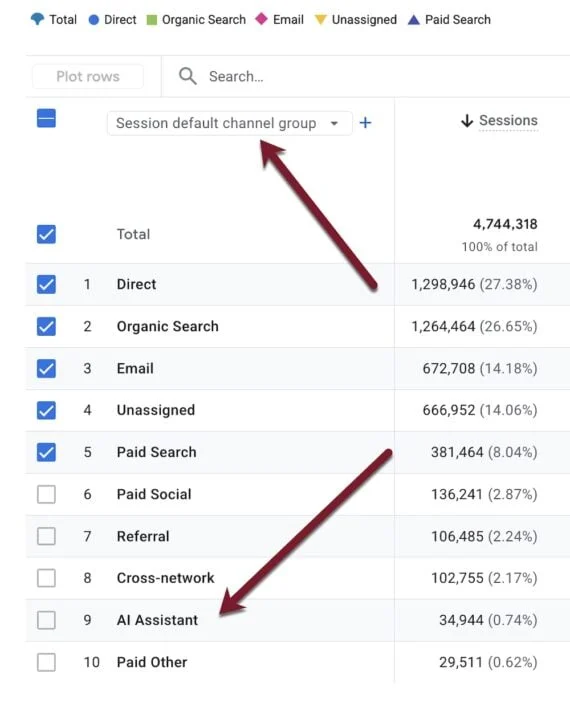
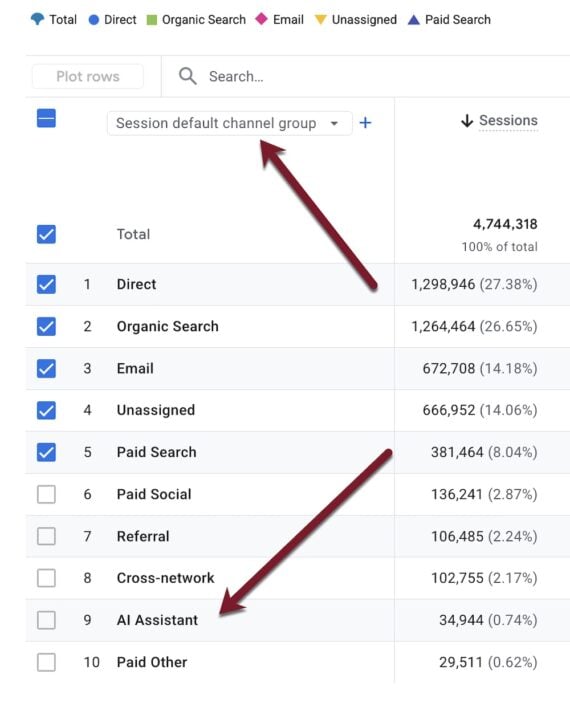
The primary function of the AI Assistant channel is to measure and analyze traffic originating from generative AI platforms. According to Google’s "Analytics Help" portal, this includes traffic from chatbots such as ChatGPT, Gemini, and Claude. It is important to note, however, that Google’s classification excludes certain AI-driven features. Specifically, traffic from AI Overviews and Google’s experimental "AI Mode" is currently reported under the "Organic Search" channel, indicating a nuanced approach to categorizing AI-influenced user journeys.
To access this new data, users can navigate to the "Reports" section within Google Analytics 4, then proceed to "Acquisition" and subsequently "Traffic acquisition." Within this report, the "AI Assistant" can be selected as a dimension under the "Session Channel Group." This allows users to view performance metrics specifically for AI-assisted traffic, including crucial data points such as engagement rates, events per session, and average session duration.
Analyzing AI-Assisted Traffic Performance
The AI Assistant channel provides a wealth of data for performance analysis. Website owners can delve into metrics that offer insights into how users arriving from AI platforms engage with their content. This includes:
- Engagement Metrics: Understanding how long users stay on the site, their interaction with elements, and overall engagement duration.
- Events per Session: Tracking the number of specific actions (e.g., form submissions, downloads, video plays) users complete during their visit.
- Time per Session: Analyzing the average duration of user sessions originating from AI sources.
These metrics are vital for evaluating the quality of traffic and the effectiveness of content in resonating with an AI-driven audience.
Identifying Landing Pages Driven by AI
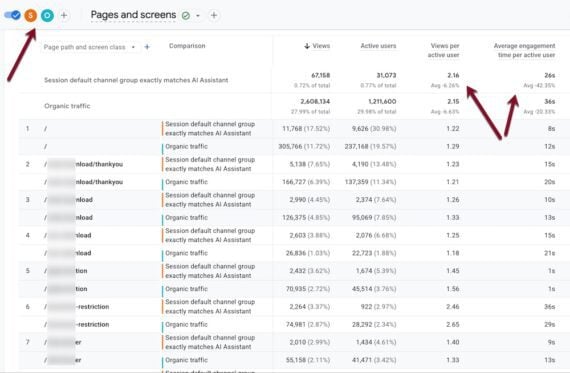
Beyond overall traffic analysis, the AI Assistant channel offers valuable insights into which specific landing pages are being cited and driving clicks from AI answers. This capability is particularly significant for content optimization and SEO strategies. To identify these pages, users can navigate to the "Reports" section, select "Engagement," and then "Pages and screens."
Within the "Pages and screens" report, a filter can be applied. By choosing the "Session default channel group" as the dimension and "AI Assistant" as the value, users can isolate and view their site’s highest-traffic pages that are receiving clicks from AI platforms. This feature allows businesses to pinpoint which content is being surfaced and leveraged by AI tools, providing a data-driven basis for content creation and refinement.
Comparing AI Traffic to Other Sources
A key advantage of the new GA4 feature is its ability to facilitate direct comparisons between AI-assisted traffic and other acquisition channels. This comparison is crucial for understanding the relative performance and characteristics of AI-driven users versus those from more established sources like organic search, paid advertising, or direct traffic.
To perform these comparisons, users can utilize the "Add comparison" button within the "Pages and screens" report. By creating a new comparison and selecting "AI Assistant" as a dimension, alongside other channels such as "Organic Search" or "All Users," a side-by-side analysis can be generated. This report will highlight how engagement metrics, such as views, active users, and engagement time, differ across these various traffic sources on a page-by-page basis.
For instance, a business might discover that while AI-assisted traffic to a particular blog post is lower in volume than organic search traffic, the engagement time per session from AI users is significantly higher, suggesting a more deeply interested audience. Conversely, they might find that AI traffic is more exploratory, with lower conversion rates but a broader reach.
Utilizing Regular Expressions for Granular Tracking
While the AI Assistant default channel offers a broad categorization, some users may require more granular tracking of specific AI platforms. For this purpose, Google Analytics allows the use of regular expressions (regex) to define custom dimensions and track traffic from individual AI sources.
By navigating to "Admin" > "Custom Definitions" > "Create custom dimension," users can set up a new dimension. For the "Scope," "Event" is typically chosen. For the "Dimension name," a descriptive title like "AI Source" can be used. The "Event parameter" would be set to "ga_source."
To populate this dimension, a regex can be applied to filter traffic. A comprehensive regex provided by some analytics experts for tracking various AI platforms includes:
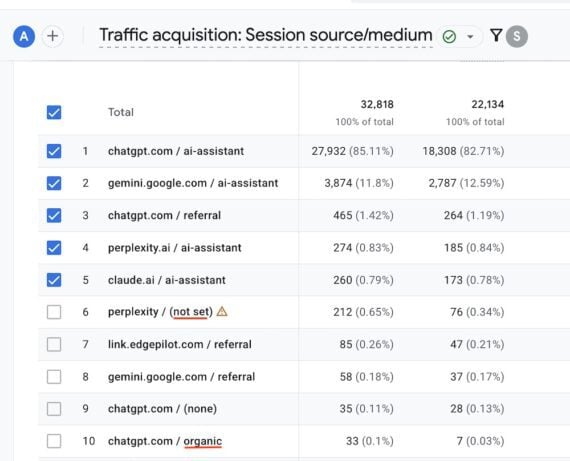
.*chatgpt.com.*|.*perplexity.*|.*edgepilot.*|.*copilot.microsoft.com.*|.*openai.com.*|.*gemini.google.com.*|.*claude.ai.*|.*grok.x.ai.*
This regex would capture traffic from platforms like ChatGPT, Perplexity AI, Microsoft Copilot, Gemini, Claude, and Grok. By applying this, users can create reports that break down AI traffic by the specific platform that generated it, offering an even deeper level of analysis. It is worth noting that during such granular analysis, minor data inconsistencies may arise, where some traffic that appears in the AI Assistant channel might not be captured by the regex, and vice versa. This highlights the ongoing refinement of AI traffic attribution.
Implications for Businesses and Marketers
The introduction of the AI Assistant channel has several significant implications for businesses and their digital marketing strategies:
- Enhanced Audience Understanding: The ability to segment and analyze AI-driven traffic allows for a more nuanced understanding of how different user segments interact with online content. This can inform content strategy, personalization efforts, and user experience design.
- Content Optimization for AI: Understanding which landing pages are being surfaced and clicked from AI platforms is crucial for optimizing content for AI discoverability. This may involve refining content to be more factual, comprehensive, and easily digestible by AI models. It also highlights the importance of structured data and clear topic organization.
- SEO Evolution: As AI models become more sophisticated in synthesizing information, the lines between traditional SEO and AI content optimization may continue to blur. The AI Assistant channel provides data that can inform how to adapt SEO strategies to be more effective in an AI-augmented search environment.
- Performance Benchmarking: By comparing AI traffic performance to other channels, businesses can establish benchmarks and allocate marketing resources more effectively. This data will be invaluable in understanding the ROI of efforts aimed at AI visibility.
- Strategic Planning: The insights gained from this channel can inform long-term strategic planning, helping businesses anticipate and adapt to the evolving ways users discover information and interact with brands online.
Future Outlook and Challenges
The AI Assistant channel is a dynamic feature, and its capabilities are likely to evolve as generative AI technologies and their integration into search and discovery mechanisms continue to mature. Challenges remain, including the accurate attribution of all AI-generated traffic and the potential for AI models to evolve their referral patterns.
However, the introduction of this dedicated channel represents a proactive step by Google Analytics to equip users with the tools necessary to navigate this transformative period in digital interaction. As AI plays an increasingly central role in how users find information and make decisions, understanding the traffic it generates will be paramount for any organization seeking to maintain a strong and effective online presence. The data provided by the AI Assistant channel will undoubtedly become a critical component of comprehensive digital analytics strategies in the coming years.

