
The Mammotion Luba 3 AWD emerges as a formidable robotic lawn mower, specifically engineered to conquer the most demanding outdoor spaces. With models catering to lawn sizes ranging from 1500m² to a substantial 5000m², this all-wheel-drive powerhouse is designed to navigate and maintain terrains previously considered unsuitable for automated lawn care. Its robust build and advanced all-wheel-drive system enable it to tackle rough ground, persistent muddy patches, and significant inclines with impressive capability. However, users should exercise caution on exceptionally soft ground, where its powerful traction could inadvertently churn up turf. While its cutting performance is generally strong, the integrated AI obstacle detection occasionally misidentifies tall grass as an obstruction, leading to localized untended areas. Despite these minor caveats, the Luba 3 AWD stands out as a highly capable solution for those grappling with challenging landscapes and expansive gardens.

Genesis of the Luba 3 AWD: Addressing the Untamed Lawn
The traditional perception of robotic lawn mowers often conjures images of meticulously manicured, flat surfaces. Yet, a significant portion of residential and commercial properties present a far more rugged reality: undulating terrain, steep gradients, natural divots, and uneven ground. Recognizing this gap in the market, Mammotion has developed the Luba 3 AWD, a machine explicitly engineered to extend the benefits of automated lawn care to these less conventional environments. The introduction of this model, building upon the foundation of its predecessor, the Luba 2 AWD, signifies a strategic push towards inclusivity in smart gardening technology. The Luba 3 AWD is not merely an incremental upgrade; it represents a deliberate design philosophy focused on power, resilience, and adaptability for larger, wilder outdoor spaces.
Design and Engineering: A Fusion of Power and Precision
Available in three distinct configurations – the Luba 3 AWD 1500, 3000, and 5000 – the model designation directly corresponds to the maximum lawn area it is designed to manage. The fundamental operational capabilities remain consistent across these variants, with the primary differentiator being the battery capacity, tailored to meet the energy demands of larger operational zones. This tiered approach ensures that users can select the most appropriate model for their specific garden size, optimizing performance and efficiency.

The review unit, the Luba 3 AWD 5000, was deployed in a test environment characterized by a diverse mix of lawn, pasture, and challenging topographical features, providing an ideal proving ground for its advanced capabilities. Visually, the Luba 3 AWD retains a substantial and purposeful aesthetic, reminiscent of a robust, high-performance vehicle adapted for horticultural duties. Its construction exudes a sense of durability and solid engineering, suggesting it is built to withstand the rigors of demanding outdoor use.
Assembly, while generally straightforward, requires some attention to detail. The process involves several components, with the bumper attachment proving to be a slightly intricate step. This minor complexity was noted by the accompanying application, which prompted a confirmation of correct bumper installation, underscoring the manufacturer’s emphasis on critical structural integrity.

At its core, the Luba 3 AWD shares a strong visual lineage with the Luba 2 AWD, featuring four robust wheels and an inherent all-wheel-drive architecture. A closer inspection reveals a significant enhancement in its cutting system: dual cutting decks, each equipped with six pivoting razor blades. This represents an increase of two blades per deck compared to the Luba 2, contributing to a broader cutting width of 400mm. This wider cutting deck allows the Luba 3 AWD to cover substantial ground more efficiently in a single pass, a crucial factor for managing larger areas.
Navigational Advancements: RTK and Integrated Connectivity
A pivotal evolution in the Luba 3 AWD is its navigation system. Departing from the previous reliance on a dedicated reference station, the Luba 3 integrates Network Real-Time Kinematic (RTK) technology. This advanced system receives precise positioning data via the internet, eliminating the need for an external base station and simplifying the initial setup process.

Given the considerable lawn sizes the Luba 3 AWD is designed to service, the inclusion of integrated 4G connectivity is a highly practical feature, mirroring advancements seen in other premium robotic mowers such as the Husqvarna AutoMower 430X NERA. Mammotion provides an initial three-year subscription to this 4G service at no extra cost, after which a nominal annual fee of $49.90/£49.90 applies. This ensures continuous and reliable connectivity for positioning and operational commands, even in areas with intermittent Wi-Fi coverage.
Complementing the RTK system are integrated cameras and 360° LiDAR sensors. These components are instrumental in the mower’s obstacle detection and avoidance capabilities. The LiDAR system, in particular, allows the mower to maintain its operational trajectory and awareness even during temporary GPS signal disruptions, akin to how a robotic vacuum navigates complex indoor environments.

The installation process is designed for user accessibility. The docking station requires unobstructed access to the sky for optimal GPS signal reception and proximity to a power source. Following the physical setup, the Luba 3 AWD is connected to the Mammotion application. The mower offers multiple connectivity options, including Bluetooth, Wi-Fi, and 4G, ensuring flexibility in integration with a home network.
As with most sophisticated robot mowers, the Luba 3 AWD requires the creation of a garden map before commencing its autonomous operation. This is achieved by manually guiding the mower around the perimeter of the lawn using the application’s intuitive controls. While this initial mapping phase can be slightly demanding, the application provides functionality to rectify any mapping errors by undoing individual points, facilitating a precise boundary definition. The software further enables the creation of multiple distinct zones within the garden, linked by defined pathways, allowing the mower to navigate between these areas with precision.

The user interface, accessed via the Mammotion application, is user-friendly. Setting mowing schedules for individual zones is straightforward, and deeper settings allow for granular control over cutting height. The cutting deck is electronically adjustable, offering a range from 25mm to 70mm. This versatility allows users to maintain anything from a closely cropped, bowling-green-like finish to a longer, more natural grass length, adapting to different aesthetic preferences or seasonal requirements.
Performance Under Pressure: Tackling the Toughest Terrain
The true test of the Luba 3 AWD’s capabilities began on wet and muddy ground, conditions that often challenge conventional robotic mowers. In these demanding scenarios, the all-wheel-drive system proved its mettle, effortlessly traversing wet grass and fallen leaves without significant disruption. Even when its front omnidirectional wheels became caked with mud, the mower maintained its progress. The only instance of it becoming immobilized occurred on a particularly steep, muddy incline, a testament to the challenging nature of the test site.

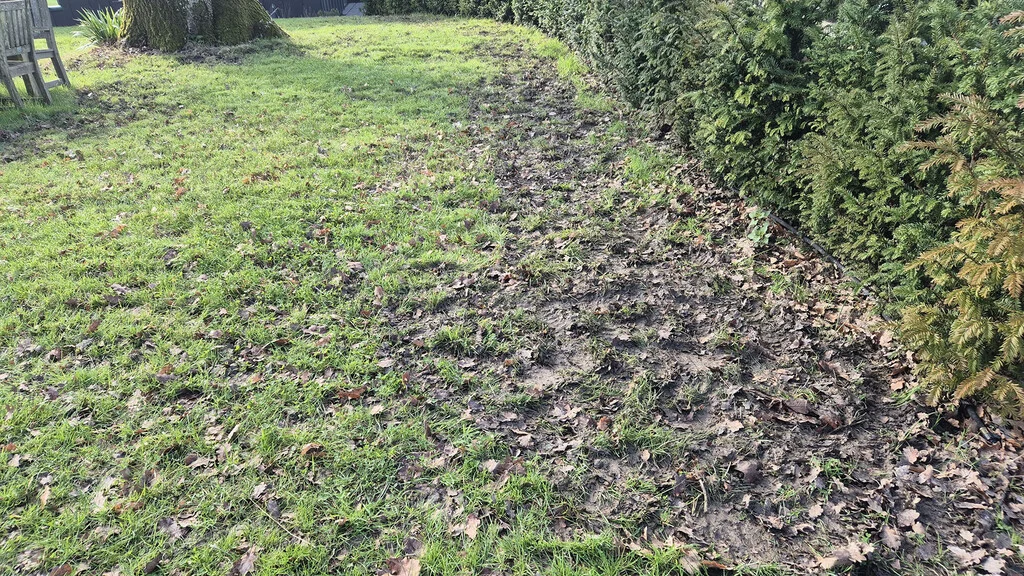
During these initial trials on soft ground, some minor turf disturbance was observed during 180-degree turns. This was attributed more to the mower’s powerful traction on saturated soil than a fundamental design flaw. The straightforward solution involved defining "avoid" areas within the app for the softest patches until the ground naturally dried, a strategy that proved effective in preserving the turf.
As drier weather prevailed, the Luba 3 AWD demonstrated its full potential. The test lawn, characterized by its uneven surface and steep gradients, presented a rigorous challenge for any all-wheel-drive robotic mower. The mower only became ensnared when it grounded itself in a significant hole, a hazard that would pose a risk to any object, rather than a failure of the mower itself. This incident highlighted the importance of basic garden maintenance in conjunction with advanced robotic solutions.

The mower’s performance on slopes is particularly noteworthy. Mammotion claims an impressive ability to handle inclines of up to 80%, a figure that appears credible given its demonstrated capabilities. A minor observed weakness emerged during turns on steep slopes, where the mower exhibited a slight downward drift. If an obstacle, such as a gravel bed or retaining wall, is situated at the bottom of a slope, this drift could potentially lead to the mower becoming stuck. The recommended mitigation strategy involves establishing a generous buffer zone between the edge of the mowing area and any downward-sloping features or obstacles.
The AI Obstacle Detection system on the Luba 3 AWD functions effectively, even in its standard setting, with a more sensitive mode also available. During testing, no instances occurred where the mower drove over unintended objects. However, a tendency towards over-cautiousness was noted around trees and at the interface between the manicured lawn and uncultivated meadow grass. This cautiousness can lead to longer grass accumulating in these areas. Subsequently, the mower may interpret this taller grass as an obstacle, leading to a gradual expansion of the uncut zone. This phenomenon also occurs at lawn edges bordering wilder grass, where the perceived boundary can effectively creep inward.

One potential workaround involves deactivating the AI Obstacle Detection feature. However, the application advises that this should only be done under constant supervision, which is not a practical solution for autonomous operation. It is therefore prudent to utilize no-go zones within the app to delineate areas the mower should strictly avoid. A balanced approach involves keeping obstacle detection active for general operation and periodically disabling it to address any accumulated untended patches.
The overall cut quality produced by the Luba 3 AWD is very good. However, for particularly thick or weed-prone grass, a second pass may be necessary to achieve a perfectly tidy finish. The test lawn’s condition, with its regular influx of weed and pasture grass seeds, necessitated this consideration. Once the lawn reaches an optimal height, the Luba 3 AWD can maintain it effectively with regular mowing, typically twice a week under typical UK summer conditions.

In areas with rough, lumpy grass and occasional twigs, the blades did show signs of dulling over time. However, each blade is designed with four cutting edges, and reversing them is a simple procedure that effectively extends their lifespan. This thoughtful design element contributes to the mower’s long-term usability and cost-effectiveness.
Conclusion: A Powerful Solution for Challenging Landscapes
The Mammotion Luba 3 AWD’s primary limitation lies in its occasional avoidance of longer grass around obstacles or at lawn boundaries, potentially allowing these areas to grow unchecked. A simple manual trim with a strimmer or a temporary deactivation of obstacle detection can rectify these localized issues. Nevertheless, for users requiring a substantial and highly capable mower that can adeptly handle extremely rough terrain, the Luba 3 AWD presents a compelling and arguably the optimal solution currently available. For those with smaller or more conventionally manicured lawns, exploring other options within the broader robot lawn mower market would be more appropriate.

Testing Methodology: A Commitment to Long-Term Evaluation
The reviews published by this outlet are the result of extensive, long-term "living with" evaluations. Robotic lawn mowers, like other smart home devices, are designed to operate within integrated ecosystems and offer a range of functionalities. Therefore, a comprehensive assessment cannot be completed within a few weeks. Our testing protocols involve deploying devices for extended periods to understand their performance, reliability, and user experience across various conditions and operational cycles.
Our team’s constant engagement with smart home technology allows us to critically evaluate how a particular product performs in comparison to its contemporaries and alternatives available to consumers. Our reviews are designed to be thorough, objective, and fair, with no direct financial incentives influencing the editorial content.

Frequently Asked Questions
Does the Mammotion Luba 3 AWD require a reference station?
No, the Mammotion Luba 3 AWD utilizes Network RTK technology for positioning, receiving data wirelessly via Wi-Fi or its integrated 4G connection, thus eliminating the need for a separate reference station.
Comprehensive Product Specifications
| Feature | Specification |
|---|---|
| Model Variants | 1500m², 3000m², 5000m² Lawn Capacity |
| UK RRP | £2099 |
| US RRP | $2399 |
| Dimensions (LxWxH) | 690mm x 533mm x 279mm |
| Weight | 19kg |
| Release Year | 2026 (Projected) |
| Cutting Width | 400mm |
| Cutting Height | Adjustable from 25mm to 70mm |
| Drive System | All-Wheel Drive (AWD) |
| Navigation | Network RTK, LiDAR, Cameras |
| Connectivity | Wi-Fi, Bluetooth, 4G (3-year service included) |
| Blade Configuration | Dual cutting decks, 6 pivoting blades per deck |
| Max Incline | Claimed 80% |
Overall Score: [Insert Score Here – This would typically be a numerical or star rating based on the full review criteria, which are not provided in the original article.]

