
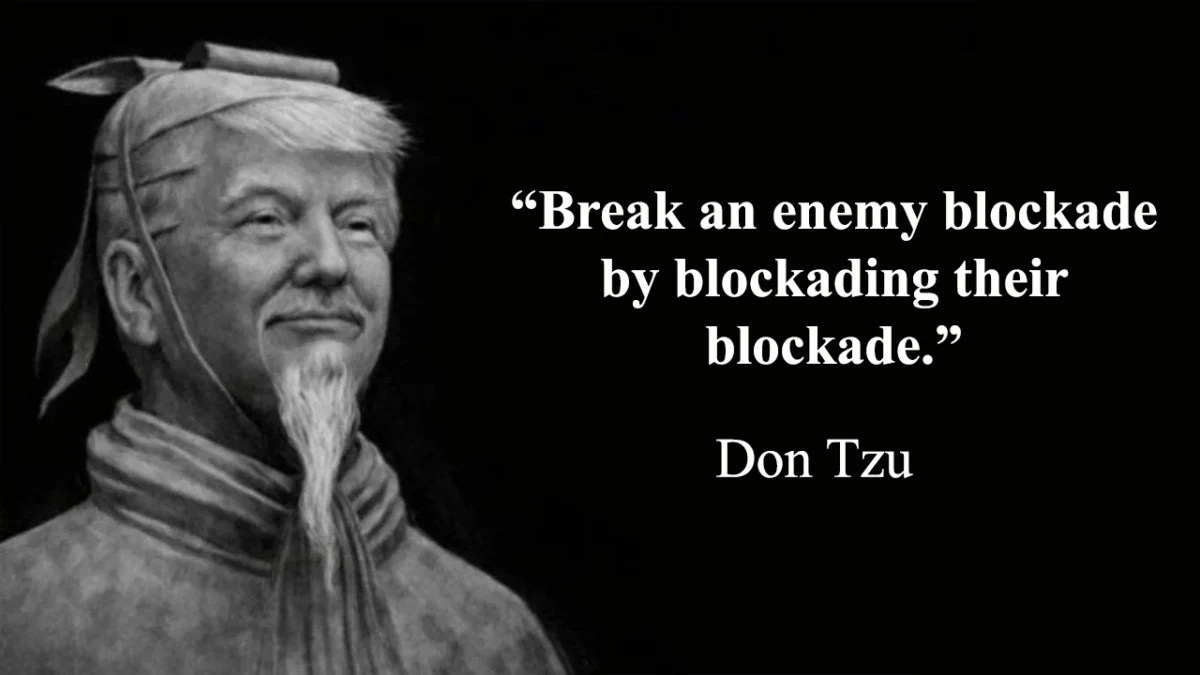
The digital landscape of political commentary has undergone a significant transformation with the emergence of Don Tzu, a pervasive image macro series that synthesizes the persona of former U.S. President Donald Trump with the ancient wisdom of Chinese general and philosopher Sun Tzu. Known alternatively as Donny Tzu or Donald Trump Sun Tzu Quotes, the meme format functions as a sophisticated vehicle for both political support and scathing satire. By transposing Trump’s likeness into the aesthetic framework of The Art of War, creators have developed a versatile template used to analyze, mock, or celebrate the complex and often controversial strategic decisions associated with his political career.
The core of the Don Tzu phenomenon lies in its visual and linguistic juxtaposition. Typically featuring a high-contrast, grayscale image of Trump—often modified with traditional Chinese military regalia or set against a stark black background—the memes present "quotes" that mimic the aphoristic style of Sun Tzu. These quotes range from actual Trump statements to fabricated absurdist directives, all intended to frame his actions as part of a grand, if occasionally incomprehensible, master plan.
Historical Foundations and Early Development
The conceptual roots of Don Tzu can be traced back to the early years of Donald Trump’s first term in office. The earliest documented use of the moniker appeared on June 29, 2017, when a social media user on the platform then known as Twitter attributed a cynical strategic maxim to "The Art of the War – Don Tzu." This initial iteration focused on the tactical use of public offense as a means of distraction, a theme that would remain central to the meme’s longevity.
During the late 2010s, the nickname existed primarily as a textual reference, often invoked by political commentators to describe Trump’s unconventional approach to diplomacy and media relations. It wasn’t until the mid-2020s that the concept solidified into the recognizable image macro format prevalent today. A pivotal moment occurred in June 2023, when visual renderings began to circulate, pairing the "Don Tzu" name with specific instructions on digital warfare, such as the directive to "meme them until they cry." This period marked the transition of Don Tzu from a clever nickname into a standardized "exploitable" template, allowing users to rapidly generate content in response to breaking news cycles.
The 2026 Viral Explosion and Geopolitical Context
The Don Tzu meme reached its cultural zenith in early 2026, driven by a series of high-stakes geopolitical events that provided fertile ground for strategic parody. The timeline of this surge corresponds with a period of significant international tension, specifically involving American-Iranian relations and the subsequent blockade of the Strait of Hormuz.
In March 2026, the meme format transitioned from a niche political joke to a mainstream cultural touchstone. On March 10, a variation depicting Trump in an ancient Chinese military helmet went viral, featuring the caption: "If you don’t know what you are doing, neither does your enemy!" This specific iteration resonated deeply with both critics and supporters, as it encapsulated the "unpredictability" that defined the era’s foreign policy. Within five months, this single post garnered over 677,000 views and 18,000 likes, signaling a shift in how the public consumed political critique.
As the conflict in the Middle East intensified, the memes became increasingly specific. By mid-March 2026, engagement numbers skyrocketed, with some variations reaching over 1.3 million views. These memes often utilized a "logic of absurdity," suggesting that tactical failures were, in fact, intentional strategic maneuvers. For instance, quotes such as "You can’t lose if you don’t have a goal" became shorthand for describing perceived aimlessness in military objectives during the 2026 Iran conflict.
Visual Language and Technical Specifications
The Don Tzu meme is characterized by a specific set of visual conventions that distinguish it from standard political cartoons. The primary template utilizes a "Troll Quote" philosophy—attributing a statement to a figure who did not say it, or whose actions contradict the sentiment.
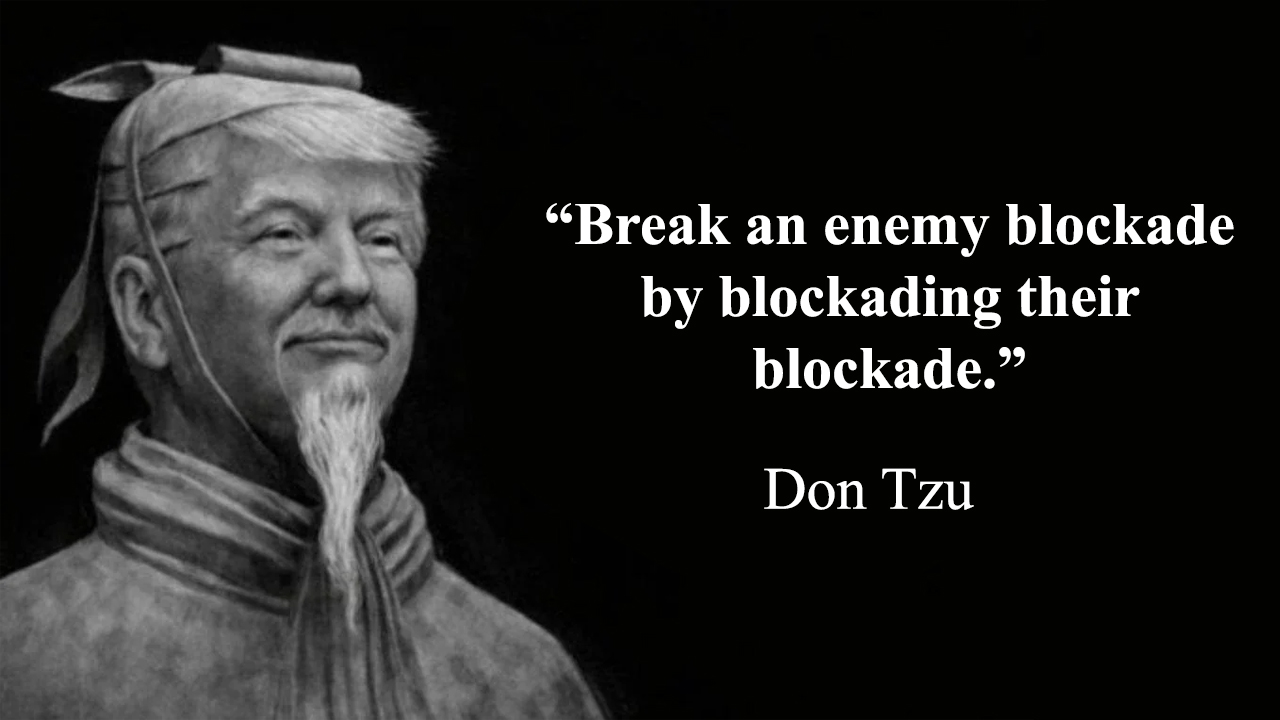
- The Monochrome Aesthetic: Most Don Tzu macros use a "noir" palette. The use of grayscale on a black background mimics the serious, scholarly tone of historical documentaries or philosophical texts.
- Typography: The use of bold, white, all-caps sans-serif or serif fonts is standard. This provides high legibility and replicates the "inspirational quote" format common on professional networking sites and self-help social media accounts.
- Iconography: Advanced variations utilize AI-generated imagery or sophisticated photo manipulation to place Trump in traditional Han dynasty armor or alongside terracotta warriors. This elevates the parody from a simple photo-and-text combination to a more complex visual commentary on the "Great Man" theory of history.
Analyzing the "Art of the Meme War"
The proliferation of Don Tzu content on platforms like Reddit and 4chan has led to the creation of extensive "wisdom" lists. In April 2026, a notable "Greentext" surfaced on the /r/greentext subreddit, compiling several "Don Tzu" maxims that critiqued the administration’s handling of international alliances and domestic promises. These compilations serve as a form of crowdsourced satire, where users contribute "rules" that reflect the current political climate.
Common themes in these lists include:
- The Paradox of Victory: Maxims that suggest losing a conflict is a form of winning if one simply "announces victory" loudly enough.
- Strategic Alienation: Instructions on threatening allies to ensure they "remain on their toes."
- Resource Mismanagement: Satirical advice on spending large sums of money on military deployments only to withdraw before objectives are met.
This style of humor relies on the concept of "4D Chess," a term frequently used by Trump supporters to describe his unconventional methods. The Don Tzu meme adopts this terminology and pushes it to a logical extreme, where every perceived error is reframed as a brilliant, hidden tactic.
Public Reception and Sociopolitical Impact
The reception of Don Tzu memes is uniquely bifurcated along ideological lines. For supporters, the memes often serve as "ironic praise." By portraying Trump as a legendary strategist, they lean into the "strongman" archetype while maintaining a layer of meme-culture irony that makes the support feel modern and "in the know."
Conversely, for critics, the memes are a potent tool of deconstruction. By applying the dignified framework of Sun Tzu to what they perceive as erratic behavior, critics highlight the dissonance between the office of the presidency and the actions of the incumbent. The meme allows for a sophisticated critique of policy without the need for long-form essays; the humor lies in the gap between the ancient wisdom of the original Art of War and the modern "Mean Tweets" rhetoric of the 2020s.
Data from search engines and social media analytics indicate that "Don Tzu" search interest peaks during moments of diplomatic friction. For example, during the August 2026 Strait of Hormuz bypass discussions, the meme format saw a 400% increase in usage on the /r/dankmemes subreddit. This suggests that the public uses the format as a primary tool for processing complex international news.
Implications for Digital Political Communication
The longevity of the Don Tzu meme highlights a broader trend in political discourse: the "memification" of policy. As traditional news outlets compete with social media for the public’s attention, the Don Tzu format provides a shorthand for understanding—or at least laughing at—global events.
The fact that the meme has persisted from 2017 through the hypothetical conflicts of 2026 demonstrates its adaptability. It is no longer just a joke about a single politician but a framework for discussing the "unconventional" in politics. The "Don Tzu" persona has become a digital ghost, a satirical lens through which the "Art of the Deal" meets the "Art of War."
In conclusion, Don Tzu represents a significant evolution in the exploitable image macro. It is a testament to the power of cross-cultural parody, blending ancient Eastern philosophy with modern Western populism to create a narrative that is as confusing as it is captivating. As the 2020s progress, the "Wisdom of Don Tzu" remains a definitive, if entirely fabricated, chronicle of a turbulent era in American and global history. Through the simple mechanism of a black background and a white font, the internet has created a lasting monument to the intersection of power, strategy, and digital absurdity.

