

The field of User Experience (UX) research is undergoing a significant shift as new data suggests that including participants with cognitive disabilities is not merely a matter of compliance, but a strategic advantage for product development. A comprehensive study conducted in late 2024 and early 2025 by Fable, a leading accessibility testing platform, in collaboration with researchers from the University of California, Irvine, has revealed that testers with cognitive disabilities identify nearly double the amount of usability issues compared to general population participants. This exploratory research underscores a growing necessity for inclusive design as cognitive disabilities become the most prevalent disability demographic in the United States.
The Landscape of Cognitive Disability and Digital Access
Cognitive disability serves as an umbrella term encompassing a wide range of conditions that affect how individuals process information, specifically impacting memory, focus, and learning. This includes neurodivergent conditions such as ADHD, Autism, and Dyslexia, as well as cognitive decline associated with aging. According to data from the Centers for Disease Control and Prevention (CDC), cognitive disability affects approximately 13.9% of the U.S. population, making it the most common disability type in the nation. Furthermore, a recent Yale University study indicates that the number of adults reporting cognitive limitations is increasing rapidly, driven in part by long-term health trends and an aging demographic.
The research initiative led by Kate Kalcevich, VP of Innovation at Fable, was born out of a summer 2024 working group. The group’s objective was to establish standardized best practices for performing accessibility testing with this specific audience. The initiative sought to create a scalable framework for recruitment, interview facilitation, and quantitative analysis of user experiences among those who self-identify as having challenges with memory and focus.
Chronology of the Research Initiative
The project progressed through several distinct phases between mid-2024 and the release of the final study results. The timeline began with the formation of an expert working group tasked with reviewing existing literature on cognitive accessibility. This review informed the creation of a specialized participant screener designed to identify individuals with specific cognitive profiles.
Following the initial planning, a pilot study was conducted with 25 testers. This phase was critical for fine-tuning the research methodology, ensuring that the interview environment was conducive to the needs of neurodivergent participants. By iteratively adjusting the approach, the team developed a guide for running user interviews and a survey model based on the Accessible Usability Scale (AUS)—a 10-question metric used to evaluate digital product usability.
In the final phase, the core study was launched in partnership with Syed Fatiul Huq of UC Irvine, alongside Fable researchers Pranav Pidathala, Ali Brown, and Michael Fagan. This study utilized three distinct AI-generated website prototypes to test various user goals and design aesthetics, providing a controlled environment to compare the insights of cognitive testers against a general population (gen pop) control group.
Methodology and Website Prototypes
The study involved 30 facilitated user interviews, with 10 sessions dedicated to each of the three test websites. Each website featured a 50/50 split between cognitive and general population participants. The websites were designed to represent different industries and interaction patterns:
- Strong Snacks: A high-protein recipe site utilizing a "brutalist" design style with bright colors and heavy imagery. The primary tasks involved filtering recipes by category and newsletter subscription.
- Turning Pages: A sophisticated bookstore interface with complex filtering, a "book swiping" profile builder, and a full checkout flow. This site represented high-functionality e-commerce.
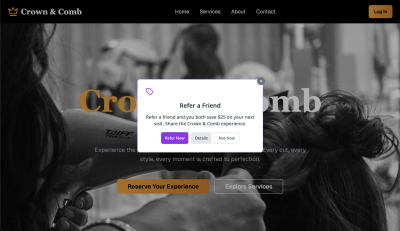
- Crown & Comb: A luxury hair salon site with a clean, high-contrast aesthetic. It featured appointment booking and a VIP membership program. One specific task—finding a hidden bridal package—was intentionally designed to be difficult to test the limits of user persistence and navigation logic.
Researchers monitored every session to record concerns, questions, navigation difficulties, and missed cues. Every suggestion for improvement was also cataloged, providing a rich dataset of both qualitative and quantitative feedback.
Quantitative Findings: The 1.8x Multiplier
The data analysis yielded a clear and significant trend: participants with cognitive disabilities identified 1.8 times more usability issues and provided 1.8 times more suggestions for improvement than the general population group. Across the three websites, the cognitive group identified 197 unique issues, while the general population group identified 113.

On the "Strong Snacks" website, which featured the simplest design, cognitive participants found an average of 9.8 issues compared to 6.4 in the control group. On "Turning Pages," the most complex site, the gap widened, with cognitive testers finding 17 issues on average against the control group’s 11.
Interestingly, the Accessible Usability Scale (AUS) scores revealed a divergence in perception. For the "Crown & Comb" website, which was designed to be intentionally complex, cognitive participants actually gave a higher median AUS score (68.0) than the general population participants (35.0). Researchers hypothesize that this may be due to different expectations regarding site complexity; while general population users felt frustrated by the lack of immediate engagement, cognitive users focused more on the clarity of visual elements, even if the overall task was difficult.
Qualitative Analysis of User Experience
Beyond the numbers, the study highlighted a profound difference in how users experienced digital friction. General population participants tended to describe their difficulties in terms of "frustration" or "lack of engagement." In contrast, cognitive participants reported feeling "drained" and "less able to focus."
One cognitive participant noted that excessive options, pop-ups, and repetitive interactions felt like a drain on "mental energy." This feedback suggests that for neurodivergent users, poor UX is not just an inconvenience—it is a cognitive barrier that can lead to total task abandonment.
When categorized by issue type, cognitive participants surfaced significantly more problems related to:

- Content Clarity: Confusing terminology or poorly structured information.
- Affordances: Buttons and links that did not clearly look or act like interactive elements.
- Visual Distractions: Continuous animations or cluttered layouts that impeded focus.
- Media Interaction: Difficulties with video or audio controls.
Notably, both groups were nearly equal in identifying navigation-level issues, suggesting that while basic site structure is a universal concern, the "micro-interactions" and content-level details are where cognitive inclusion provides the most significant boost in insight.
Broader Implications for Business and Industry
The findings of this study suggest that cognitive inclusion is a "force multiplier" for UX teams. By designing for the most sensitive users, companies create products that are inherently easier for everyone to use. This concept, often referred to as the "curb-cut effect," posits that accessibility features—like sidewalk ramps—end up benefiting the entire population.
In the context of digital products, addressing the concerns of cognitive testers can lead to:
- Increased Trust: Clearer content and predictable interactions build user confidence.
- Higher Conversion Rates: Simplifying the "mental energy" required for a checkout flow reduces cart abandonment.
- Future-Proofing: As the population ages, the prevalence of cognitive decline will increase. The U.S. Census Bureau projects that by 2060, one in four Americans will be aged 65 or older. Building for cognitive accessibility now prepares companies for this massive demographic shift.
Industry experts have already begun to recognize this value. A UX Manager at Bell Media commented on the efficiency of this research approach, stating, "Two sessions with cognitive users feel like 200 because of the volume of insights we get."
Study Limitations and Concluding Remarks
While the study provides compelling evidence for cognitive inclusion, researchers acknowledged certain limitations. The sample size of 30 participants, while standard for qualitative UX research, is relatively small for broad statistical validation. Additionally, the testing utilized two different platforms—Fable Engage for the cognitive group and UserFeel for the general population—which could introduce variables related to participant panel quality and familiarity with research tools.
Despite these limitations, the consistency of the findings across three different website types and multiple researchers suggests a robust trend. Cognitive accessibility is increasingly viewed as an "on-ramp" for broader accessibility efforts. By focusing on clarity, predictability, and reduced cognitive load, UX teams can establish a foundation of usability that makes subsequent testing for screen readers and other assistive technologies more effective.
As digital environments become more complex and AI-driven, the human element of cognitive processing remains a critical bottleneck. The Fable and UC Irvine study serves as a data-backed reminder that inclusive research is not just an ethical choice, but a practical methodology for shipping superior, more resilient products in a competitive global market.

