
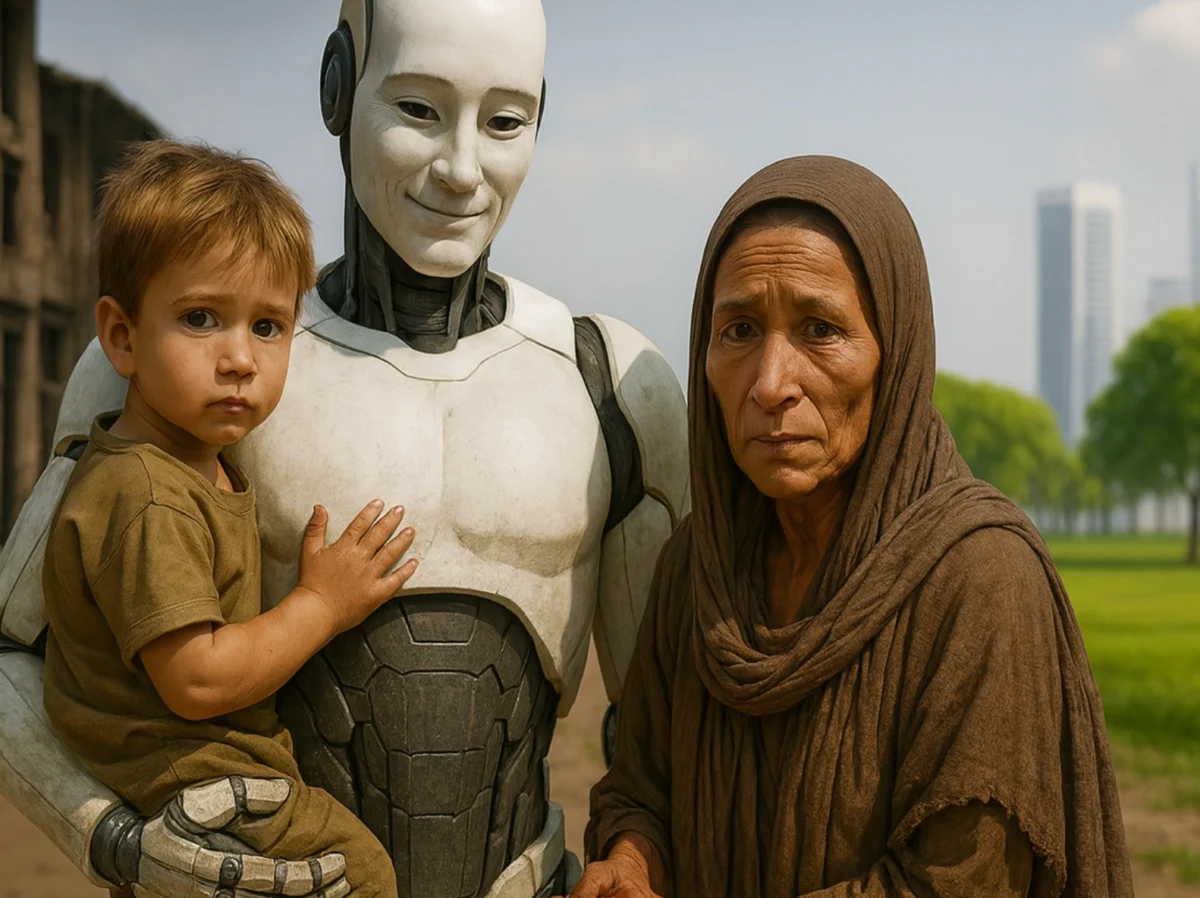
The transition of humanoid robots from laboratory curiosities to functional members of the workforce marks a pivotal moment in the history of technology, signaling the end of an era where such machines were viewed primarily as public relations stunts. As these entities become increasingly indistinguishable from humans in both appearance and behavior, global society is approaching a threshold that will necessitate a profound reevaluation of social, psychological, and ethical norms. The rapid integration of advanced artificial intelligence (AI) with sophisticated electromechanical engineering is currently blurring the boundary between biological life and synthetic machinery, forcing a confrontation with an impending economic and existential shift that was, until recently, relegated to the realm of science fiction.
The Evolution of the Humanoid: From ASIMO to Figure 02
The trajectory of humanoid robotics has undergone a radical transformation over the last quarter-century. In November 2000, Honda introduced ASIMO (Advanced Step in Innovative Mobility), a robot that became a global icon for its ability to walk on two legs and climb stairs. While ASIMO represented a breakthrough in balance and mobility, its capabilities were largely scripted and required immense computational resources for basic tasks. For nearly two decades, the field remained in this "demonstration phase," where robots were celebrated for simply maintaining upright posture in controlled environments.
The current decade, however, has seen a convergence of technologies that has accelerated development beyond earlier projections. The shift from rigid, pre-programmed instructions to "end-to-end" neural networks has allowed robots to learn through observation and simulation. This evolution is exemplified by the recent deployment of Figure 02, a humanoid developed by Figure AI. Unlike its predecessors, Figure 02 has moved beyond the laboratory and onto the production floor of BMW’s Spartanburg plant. During a multi-month pilot program, the robot successfully handled complex sheet metal components, contributing to the assembly of vehicles by performing tasks that required both precision and physical adaptability.

Simultaneously, Tesla has integrated its "Optimus" humanoid into its Gigafactories. These machines are not merely being tested for mobility but are being trained to perform autonomous tasks alongside human workers. According to industry reports, Tesla aims to have thousands of these robots operational by 2026, targeting a price point that could eventually rival the cost of a small passenger vehicle.
The Technological Engine: AI Brains and Synthetic Biology
What distinguishes modern humanoids from the automatons of the past is the sophistication of their "digital brains." Modern systems are powered by platforms such as NVIDIA’s GR00T and Figure AI’s Helix, which utilize large-scale multimodal models. These "brains" allow robots to process visual data and natural language in real-time, enabling them to understand context. For instance, a robot can now watch a human perform a task—such as folding laundry or sorting industrial parts—and replicate the motion while accounting for variables in the environment.

However, the physical hardware is also undergoing a revolution. To overcome the "Uncanny Valley"—the psychological discomfort humans feel when a robot looks nearly, but not perfectly, human—engineers are turning to synthetic biology and advanced materials science. Research is currently focused on:
- Artificial Integumentary Systems: Scientists are developing silicone-based "skin" that mimics the elasticity, warmth, and tactile sensitivity of human flesh. This allows for more natural interactions in caregiving or retail settings.
- Micro-Actuation: Traditional motors are being replaced by silent micro-actuators and artificial muscle systems. These allow for subtle facial expressions, such as a furrowed brow or a slight smile, which are essential for non-verbal communication.
- Biomimetic Movement: To avoid the mechanical "jerkiness" associated with older robots, AI is now used to simulate human-like imperfections, such as random blinking, breathing motions, and the subtle shifting of weight while standing.
Despite these advancements, significant hurdles remain. Current battery technology limits most humanoid robots to between two and five hours of high-intensity operation. Furthermore, navigating "unstructured environments"—such as a cluttered family home or a crowded public sidewalk—remains exponentially more difficult than operating on a flat, controlled factory floor.

Economic and Social Impact: The "3D" Jobs and Beyond
The primary economic argument for the mass adoption of humanoids is their ability to perform what engineers call the "3D" jobs: Dull, Dirty, and Dangerous. By deploying robots into deep-sea mining, toxic waste management, and high-risk construction, proponents argue that human life can be preserved and workplace injuries significantly reduced.
Furthermore, humanoid robots are increasingly viewed as a solution to the global demographic crisis. Nations like Japan, South Korea, and Germany are facing rapidly aging populations and shrinking workforces. Lifelike humanoids could fill the "care gap," providing both physical assistance and companionship to the elderly. In healthcare settings, robots can monitor vital signs, assist with mobility, and perform routine sanitary tasks, allowing human nurses to focus on complex medical decision-making.

From a macroeconomic perspective, some analysts suggest that widespread robot labor could lead to a "post-scarcity" economy. If the cost of labor for manufacturing, agriculture, and construction drops toward the cost of electricity and maintenance, the price of essential goods could plummet. However, this vision is met with skepticism by economists who warn of a "displacement shock." The World Economic Forum has previously noted that while automation creates new roles, the speed of the humanoid revolution may outpace the ability of the workforce to retrain, potentially leading to unprecedented levels of structural unemployment.
The Darker Side: Psychological Isolation and Security Risks
The integration of hyper-realistic robots into private life carries significant psychological risks. Experts in Human-Robot Interaction (HRI) have raised concerns regarding "synthetic empathy." If a robot is programmed to be a perfect, agreeable companion, individuals may begin to prefer these interactions over the complexities of human relationships. This could lead to a "crisis of loneliness" where social withdrawal becomes a common choice, potentially eroding the social fabric of communities.

The security implications are equally concerning. An indistinguishable android could serve as the ultimate tool for identity theft or corporate espionage. A humanoid designed to mimic a specific individual could gain unauthorized access to secure facilities or deceive family members and colleagues. On a state level, there is the risk of "robotic subversion," where humanoids could be used for mass surveillance or to influence public opinion through physical presence in social spaces.
Regulatory Responses and Ethical Guardrails
As the technology approaches maturity, international bodies are beginning to discuss the necessity of a "Global Humanoid Accord." To mitigate the risks of misuse and social disruption, three primary guardrails have been proposed by ethicists and policy makers:

- Mandatory Disclosure Laws: Legislation that requires any humanoid robot to be clearly identifiable as a machine, regardless of how lifelike it appears. This could include a digital "watermark" or a physical indicator that cannot be obscured.
- The "Kill Switch" Mandate: A requirement that all autonomous humanoids be equipped with a hardware-level emergency stop that is independent of the robot’s software, ensuring that humans retain ultimate control.
- Labor Transition Funds: Taxes on "robotic hours" that are used to fund universal basic income (UBI) or massive retraining programs for workers displaced by humanoid deployment.
Conclusion: A Mirror for Humanity
The arrival of lifelike humanoid robots functions as a mirror for the human species. As machines become capable of mimicking our speech, our appearance, and our labor, they force a redefinition of what it means to be human. If humanity is defined solely by the ability to perform tasks or process information, then the distinction between man and machine may indeed vanish.
However, proponents of the technology argue that by delegating the mundane and the dangerous to synthetic counterparts, humans will be granted the freedom to pursue higher callings in art, philosophy, and genuine connection. The goal of the humanoid revolution, if managed with ethical rigor, is not to replace the human experience but to liberate it. The coming decades will determine whether this technology serves as a catalyst for a new era of human flourishing or as a source of terminal social fragmentation. The responsibility lies with current policymakers and engineers to ensure that as robots become more like us, we do not become more like them.

