

A landmark exploratory user research study conducted by the accessibility platform Fable, in collaboration with researchers from the University of California, Irvine, has revealed that including participants with cognitive disabilities in usability testing yields significantly higher volumes of actionable insights compared to general population samples. The study, led by Fable’s Vice President of Innovation and a team of academic researchers including Syed Fatiul Huq, Pranav Pidathala, Ali Brown, and Michael Fagan, found that cognitive participants identified 1.8 times more usability issues and offered 1.8 times more suggestions for improvement than their neurotypical counterparts. These findings suggest that designing for cognitive accessibility does not merely serve a niche demographic but acts as a "stress test" for digital products that enhances the experience for all users.
Chronology of the Research Initiative
The study represents the culmination of a multi-phase effort that began in the summer of 2024. At that time, an expert working group was established to standardize protocols for accessibility testing specifically tailored to individuals with cognitive disabilities. Cognitive disability is an umbrella term encompassing conditions that affect memory, focus, and learning, including neurodivergent profiles such as ADHD, Dyslexia, and Autism.
Following the formation of the working group, researchers conducted a comprehensive review of existing literature to identify best practices for engaging with cognitive testers. This was followed by a pilot study involving 25 participants, which allowed the team to fine-tune their interview guides and survey methodologies iteratively. By early 2025, the team moved into the validation phase, launching a joint study with the University of California, Irvine, to test the hypothesis that cognitive participants provide superior depth in usability feedback.
Methodological Framework and Study Design
To ensure a controlled environment, the research team utilized an AI prototyping tool to generate three distinct websites, each featuring different design aesthetics, content types, and functional goals.
- Strong Snacks: A "brutalist" and bright website focused on high-protein recipes. Key tasks included filtering by category and locating specific ingredient information.
- Turning Pages: A classic, "moody" e-commerce bookstore. This site featured complex functionality, including a book-matching algorithm, curated lists, and a multi-step checkout process.
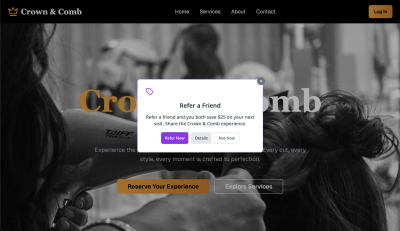
- Crown & Comb: A bold, clean hair salon website designed for service booking. It included a VIP program and complex "bridal package" information intended to test high-difficulty navigation.
The study involved 30 facilitated user interviews, with 10 sessions dedicated to each website. The participant pool was evenly split between a "general population" (gen pop) group and a "cognitive" group, the latter comprising individuals who self-identified as having challenges related to memory, focus, and learning. All participants completed the Accessible Usability Scale (AUS) survey—a 10-question standardized metric—following their sessions to quantify the user experience.
Quantitative Analysis: The 1.8x Multiplier
The data collected across all three websites confirmed the researchers’ initial hypothesis. In total, participants with cognitive disabilities identified 197 usability issues, compared to 113 issues identified by the general population group. Similarly, the cognitive group provided 93 suggestions for improvement, while the gen pop group provided 54.
Website Performance Breakdown
The "Strong Snacks" website, characterized by its simple design, saw the highest overall usability scores. However, even on this streamlined site, cognitive participants identified an average of 9.8 issues, significantly higher than the 6.4 average from the general population. The AUS scores reflected this disparity, with cognitive users rating the experience 13.7 points lower than the gen pop group.
The "Turning Pages" bookstore, the most functionally complex of the three, generated the highest volume of feedback. Cognitive participants identified an average of 17 issues per session, compared to 11 for the general population. The cognitive group’s average AUS score was 60.8, whereas the gen pop group rated it at 78.0, indicating that complex e-commerce interactions pose a much steeper barrier for users with cognitive challenges.
The "Crown & Comb" salon site provided a unique data point. While it was designed to be intentionally difficult, the cognitive group actually rated the experience higher (AUS 63.8) than the gen pop group (AUS 49.5). Researchers noted that while cognitive users found more individual issues (12 vs. 5), they may have perceived the visual clarity of the site more favorably than the general population, who expressed intense frustration with the circular navigation required to book a service.

Qualitative Findings and Categorization of Barriers
The research team categorized the identified issues into five primary areas: Content, Navigation, Buttons and Links (Affordances), Icons and Visual Elements, and Media.
The cognitive group surfaced significantly more issues in the "Content" and "Icons/Visuals" categories. They frequently noted that continuous animations or lack of clear headings made it difficult to skim for information. For example, on the "Strong Snacks" site, cognitive participants highlighted that the lack of clear labeling for high-protein content and the presence of distracting auto-playing media created unnecessary cognitive load.
In the "Turning Pages" study, cognitive participants were more likely to be confused by unpredictable interactions, such as an "Add to Book Bag" button that did not provide immediate, clear feedback. This lack of predictability often led to a decrease in user trust. One cognitive participant remarked that the "mental energy" required to filter through pop-ups, cookie banners, and excessive options left them feeling "drained and less able to focus." In contrast, general population participants described their frustrations in terms of "engagement" and "efficiency," rather than psychological exhaustion.
Broader Implications for the Tech Industry
The findings of this study arrive at a critical demographic juncture. According to the Centers for Disease Control and Prevention (CDC), cognitive disability is currently the most prevalent disability in the United States, affecting approximately 13.9% of the population. Furthermore, Yale University research indicates these numbers are rising rapidly.
The U.S. Census Bureau projects that by 2060, one in four Americans will be aged 65 or older. This "silver tsunami" suggests a massive increase in the number of users experiencing age-related cognitive decline. For businesses, this means that cognitive accessibility is no longer a matter of compliance or corporate social responsibility; it is a fundamental requirement for market retention.

The "On-Ramp" Effect
Researchers involved in the study argue that cognitive accessibility serves as an ideal "on-ramp" for companies beginning their inclusive design journey. Unlike testing with specialized assistive technologies like screen readers or refreshable Braille displays—which require specific expertise—testing for cognitive load relies on the same qualitative interview techniques already familiar to most UX teams.
By addressing the needs of cognitive users, designers naturally implement best practices that benefit the wider population. This includes:
- Clarity of Content: Using plain language and clear hierarchies.
- Predictable Navigation: Ensuring buttons and links behave as expected.
- Reduced Distractions: Minimizing auto-playing media and intrusive pop-ups.
- Visual Affordance: Making interactive elements clearly distinguishable from static ones.
Industry Reactions and Expert Analysis
Industry experts have reacted to the study by emphasizing the efficiency of inclusive research. A UX Manager at Bell Media noted that "two sessions with cognitive users feel like 200 because of the volume of insights we get." This sentiment reflects a growing realization in the tech sector that diverse participant pools can streamline the development cycle by identifying "deal-breaker" issues earlier in the prototyping phase.
The study’s findings also suggest a shift in how "usability" should be defined. When a usability issue becomes so burdensome that it prevents a user from completing a task due to mental exhaustion, it ceases to be a mere inconvenience and becomes an accessibility barrier. This distinction is vital for legal and ethical compliance in digital spaces.
Conclusion and Future Outlook
While the study acknowledged certain limitations—such as a relatively small sample size of 30 and the use of different recruitment platforms—the consistency of the 1.8x multiplier across three different website archetypes provides a compelling case for cognitive inclusion.
As digital products become increasingly integrated into daily life—from healthcare booking to financial services—the cost of "cognitive friction" will only grow. The Fable and UC Irvine study demonstrates that the path to a superior product for the general population runs directly through the lived experiences of those with cognitive disabilities. By building for the most sensitive users, developers create more resilient, trustworthy, and efficient products for everyone. The data suggests that for forward-thinking UX teams, the question is no longer whether to include cognitive participants, but how quickly they can integrate these high-yield insights into their standard operating procedures.

