
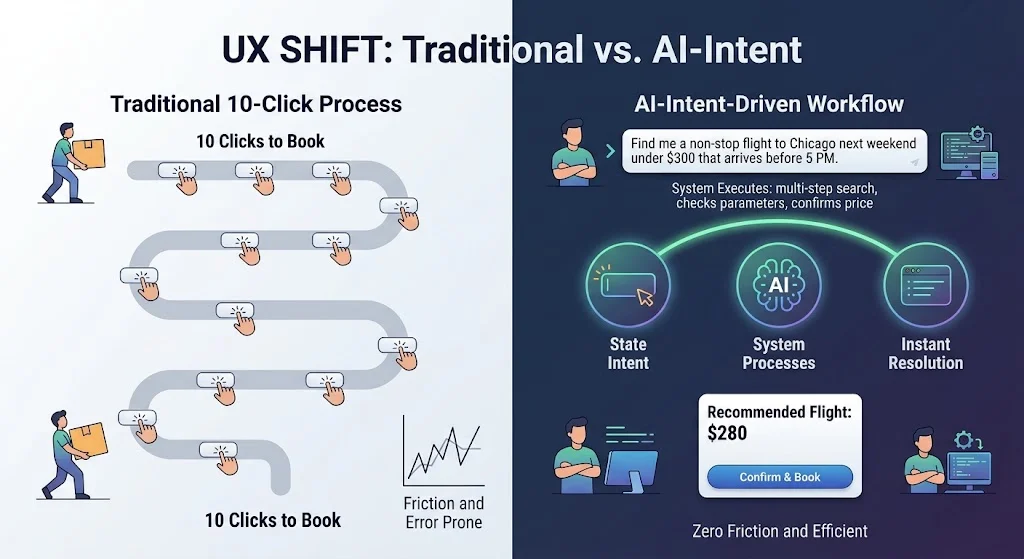
The digital landscape is currently undergoing its most significant architectural shift since the introduction of the mouse. For more than four decades, the primary method of human-computer interaction has been defined by the Graphical User Interface (GUI)—a system of menus, forms, and buttons that requires users to learn the internal logic of software to achieve their goals. However, a new paradigm known as Intent-Driven Design is rapidly gaining traction, propelled by breakthroughs in large language models (LLMs) and autonomous AI agents. This transition marks a move away from visible, high-friction interfaces toward transparent experiences where software anticipates and executes tasks based on high-level human intent.
The Evolution of Interaction From Commands to Intent
The history of computing is a history of reducing abstraction. In the 1970s, users interacted with machines via Command Line Interfaces (CLIs), which required the memorization of specific syntax. The 1981 release of the Xerox Star and the subsequent 1984 launch of the Apple Macintosh revolutionized this by introducing the WIMP paradigm (Windows, Icons, Menus, Pointers). This made computing accessible but created a new burden: the "10-click process."

In a traditional GUI, a user wishing to book a flight must navigate a labyrinth of range sliders, date pickers, and multi-step forms. The human acts as the orchestrator, manually inputting parameters and cross-referencing data across dozens of browser tabs. Industry data suggests that the average consumer spends significantly more time "managing the software" than actually consuming the service. Intent-Driven Design aims to collapse this workflow. By replacing mechanical steps with natural language or contextual awareness, the software moves from being a passive container of data to an active agent of resolution.
The Three Pillars of the New UX Paradigm
The shift toward an "invisible" interface is supported by three technical and philosophical pillars that redefine how digital products are built and consumed.
1. High-Level Goal Capture
Traditional UX relies on micro-actions—individual clicks and toggles that build toward a result. Intent-driven systems instead focus on high-level goals. According to Apple’s Human Interface Guidelines on Contextual and Ambient Design, modern systems are increasingly leveraging environmental metadata, such as device state, physical location, and historical interaction patterns. For instance, a smart home system no longer requires a user to open an app and find a "Sleep" button; instead, it recognizes the intent when the user sets their phone on a bedside charger and dims the lights automatically.
2. Generative User Interfaces
In the legacy web model, every user sees a static layout. An e-commerce site looks the same for a first-time browser as it does for a returning customer looking for a refund. Generative UI, a concept championed by the Nielsen Norman Group, allows interfaces to be rendered dynamically on the fly. If a user expresses a need to compare three different products, the AI does not send them to three different pages; it generates a custom comparison table in real-time, which disappears once the task is complete. This ensures the interface only exists when it is strictly necessary.
3. Autonomous Execution via AI Agents
The final pillar is the transition from "prevention" to "reversibility." Traditional software is filled with "Are you sure?" confirmation modals designed to prevent user error. Intent-driven interfaces utilize autonomous agents that execute tasks in the background. To maintain safety, these systems prioritize frictionless rollback mechanisms. Instead of stopping the user before an action, they provide a prominent "Undo" feature and transparent audit logs, aligning with Jakob Nielsen’s 10 Usability Heuristics regarding user control and freedom.
Market Leaders and the Death of the Search Tab
Several platforms are already demonstrating the efficacy of intent-driven systems, effectively rendering traditional navigation obsolete.
Perplexity AI and the Synthesis Model
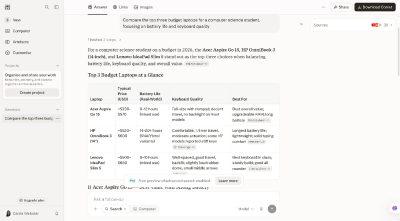
Traditional search engines like Google were built as directories, providing a list of "ten blue links" that required the user to perform the manual labor of synthesis. Perplexity AI represents a shift toward the "Answer Engine" model. By capturing the user’s intent to learn rather than just search, the platform skims sources, dodges advertisements, and assembles a cohesive response. This removes the need for multiple open tabs, reducing the cognitive load on the user.
Vercel v0 and Generative Engineering
In the realm of software development and design, tools like Vercel v0 are bypassing the drag-and-drop editors that have dominated the industry for twenty years. Rather than manually adjusting padding or picking hexadecimal codes, designers describe their intent in natural language. The system then generates functional code components instantly. This represents a fundamental change in the "how" of creation, moving the focus from pixel-pushing to high-level architectural intent.
Goblin.tools and Neuro-Inclusive Design
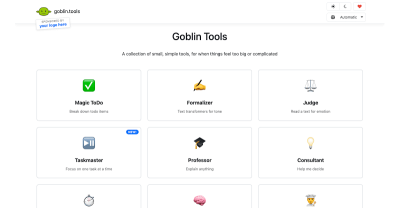
Productivity tools have historically been rigid, requiring users to conform to Kanban boards or complex task hierarchies. Goblin.tools utilizes AI to break down overwhelming tasks into manageable steps based on a single prompt. This is particularly significant for neurodivergent users, proving that intent-driven design is not just a matter of convenience, but an essential advancement in digital accessibility.
Chronology of the Interface Revolution
The path to the "no-interface" future has been marked by several key milestones:
- 1984: Apple Macintosh popularizes the GUI, setting the standard for the next 40 years.
- 2007: The iPhone introduces multi-touch, moving the interface from the mouse to the finger.
- 2015: Golden Krishna publishes The Best Interface Is No Interface, arguing that screen-based solutions are often the result of lazy design.
- 2022: The launch of ChatGPT marks the beginning of the Large Language Model (LLM) era, providing the technical engine for intent-based interaction.
- 2024: The rise of "Agentic AI" begins, where software is no longer just a chatbot but a system capable of taking actions on behalf of the user.
Technical Challenges and the Black Box Problem
Despite the efficiency gains, the removal of visual controls introduces significant risks. When software acts on inferred intent, it can create a "Black Box" problem. If a user receives an unexpected result, they may lack the diagnostic tools to understand why the system made a specific decision.
The Google PAIR (People + AI Research) Guidebook emphasizes the need for transparent feedback loops. To maintain trust, systems must explicitly state their interpretation of user intent (e.g., "I am searching for non-stop flights under $300 because you mentioned a budget…"). Without this transparency, automation can feel patronizing or invasive. Furthermore, ethical frameworks from the Center for Humane Technology warn against "manipulative defaults," where AI agents might prioritize corporate profit over user intent in an invisible interface.
The Changing Role of the UX Professional
The shift toward intent-driven design necessitates a re-evaluation of the UX designer’s role. For decades, the metric of success was engagement: time spent in-app, click-through rates, and page views. In the new paradigm, these metrics are inverted. The ultimate test of a digital product is how quickly it can solve a problem and "get out of the user’s way."
Designers are moving from being "architects of screens" to "curators of intent." This involves:
- Mapping Intent: Understanding the various ways a user might express a goal.
- Designing Feedback Loops: Creating subtle, ambient indicators that show the AI is working without cluttering the experience.
- Ethical Oversight: Ensuring that autonomous agents act within the boundaries of human-centered design principles.
Broader Impact and Industry Implications
The move toward invisible interfaces will have profound implications for the global economy. As friction is removed from digital transactions, the velocity of commerce is expected to increase. However, it also poses a threat to the current ad-supported model of the internet. If users no longer visit websites or click through "sales funnels" because an AI agent is handling the transaction in the background, the fundamental business model of the web will require a total overhaul.
Industry analysts predict that by 2030, the majority of web interactions will be mediated by personal AI agents. This "Screenless Web" will rely on a combination of voice, gesture, and contextual automation. The companies that succeed in this era will not be those with the prettiest buttons, but those with the most reliable execution of human intent.
In conclusion, the death of the button does not signify the end of design; it signifies the maturation of it. As software becomes more sophisticated, it finally has the capacity to speak our language rather than forcing us to speak its. The future of the web is not more interaction—it is seamless, invisible completion. The ultimate goal of modern design is no longer to build better interfaces, but to render the interface entirely unnecessary.

