
In the current global digital landscape, the distinction between aesthetic design and core business strategy has effectively vanished, as enterprises increasingly recognize that user experience (UX) serves as the primary determinant of financial performance and long-term sustainability. New industry analysis and longitudinal data indicate that the cost of friction-heavy interfaces is no longer measured merely in lost clicks, but in millions of dollars of wasted engineering expenditure and diminished enterprise value. As digital products move into a more sophisticated era of hyper-personalization, the role of the UX designer has transitioned from a visual specialist to a research-driven strategist whose decisions are dictated by hard data rather than subjective preference.
The economic stakes are historically high. Research from the IBM Systems Institute and various technology consultancies suggests that the financial repercussions of poor design are systemic, affecting everything from developer productivity to customer acquisition costs. By treating UX as a non-negotiable requirement for a healthy bottom line, organizations are beginning to dismantle the long-standing myth that design is a "cosmetic preference." Instead, it is being reframed as a clinical, data-backed pillar for growth in a saturated market where every tenth of a second in load time correlates directly to revenue fluctuations.

The Engineering Insurance Policy: The 1:100 Rule
One of the most compelling financial arguments for robust UX investment is the "1:100 rule." Data from the IBM Systems Institute indicates that the cost of fixing an error after a product has been fully developed and launched can be up to 100 times more expensive than addressing the same issue during the initial design and prototyping phase. This phenomenon establishes UX as a form of "engineering insurance."
When a flaw in navigation or user flow is discovered post-launch, the organization incurs multiple layers of debt. This includes the direct cost of the fix, the technical debt accrued by patching live code, the opportunity cost of lost developer time that could have been spent on new features, and the immediate revenue loss as users struggle with a broken interface. Industry benchmarks suggest that by the time a developer begins writing production code, every interaction should have been validated through rigorous prototyping. This preemptive approach ensures that engineering resources are allocated to building functional solutions rather than correcting avoidable design oversights.
Chronology of the Experience Economy
The transition to a design-led business model has followed a distinct chronological evolution over the last three decades. In the 1990s and early 2000s, digital design was largely viewed through the lens of "usability," focusing primarily on whether a user could complete a task. The mid-2000s ushered in the "Mobile-First" era, pioneered by the launch of the iPhone, which forced companies to prioritize essential content over peripheral features.

By 2015, the industry entered the "Experience Economy" phase, where the quality of the interaction became as important as the product itself. In 2024 and 2025, this has evolved into the "Predictive UX" era, where data and artificial intelligence are used to eliminate friction before the user even encounters it. This timeline demonstrates a shift from reactive fixes to proactive strategy. Organizations that failed to adapt during these transitions—relying on visual updates rather than structural UX improvements—have consistently seen lower total returns to shareholders compared to design-mature firms.
Performance as a Revenue Lever
Current performance metrics underscore that speed is a fundamental component of the user experience. Market data reveals that 47% of users expect a web page to load in two seconds or less. Missing this window is described by analysts as a financial catastrophe; a single-second delay can result in a 20% reduction in conversions and a 16% decrease in customer satisfaction. On a macro level, retail businesses are estimated to lose approximately $2.6 billion annually due to slow load times.
The volatility of user behavior is particularly evident in the mobile sector. When load times increase from one to three seconds, the probability of a bounce increases by 32%. Conversely, microscopic improvements yield significant gains. A 0.1-second improvement in site speed has been shown to lift retail conversions by 8.4% and travel site conversions by over 10%. Furthermore, achieving benchmarks in Largest Contentful Paint (LCP) can drive a direct 8% increase in sales. These figures suggest that in the modern economy, if a digital interface is not instantaneous, it effectively ceases to exist in the mind of the consumer.

The Psychology of First Impressions and Cognitive Load
Human psychology remains the constant variable in the digital equation. Research indicates that users form a definitive opinion about a website’s visual appeal and trustworthiness in approximately 50 milliseconds. This visceral reaction dictates whether a user will engage with the content or exit the site. Approximately 94% of these first impressions are strictly design-related, meaning that even high-quality content cannot overcome the barrier of a dated or confusing interface.
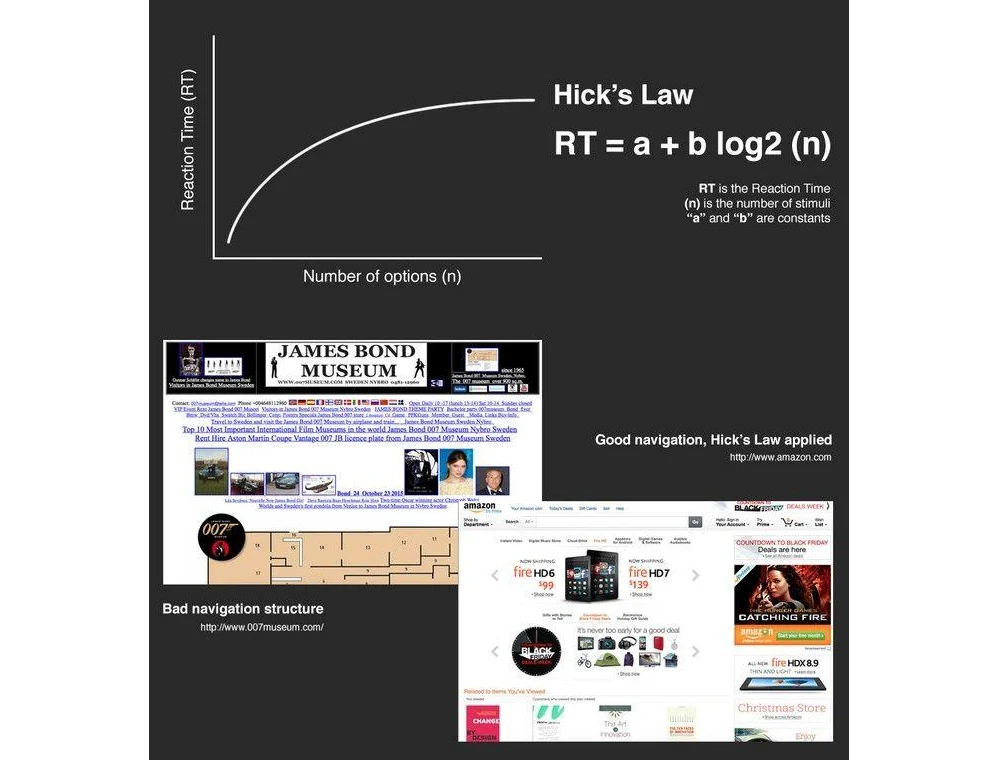
Once a user decides to stay, the challenge shifts to managing "cognitive load." Hick’s Law—a psychological principle stating that the time it takes to make a decision increases with the number of options available—is frequently cited by UX strategists to combat the "more is more" fallacy held by many stakeholders. Every unnecessary menu item or form field acts as a tax on the user’s mental resources. Top-performing digital platforms now achieve conversion rates exceeding 11% by simplifying the experience, whereas average performers struggle below 3% due to cluttered interfaces.
The Strategic Use of White Space and Readability
A common point of contention between designers and business executives is the use of "white space." While non-designers often view empty space as wasted real estate, data suggests it is a critical tool for comprehension. Strategic white space can increase a user’s content comprehension by up to 20%. By providing visual "rest stops," designers can guide users toward high-value actions, such as "Buy" or "Sign Up" buttons.

Similarly, legibility serves as a conversion tool. Proper typography, including optimal line spacing (typically 1.5x the font size) and paragraph width, can improve reading speed and information processing by 20%. Given that modern users only read between 20% and 28% of the text on a page—preferring to scan in F-patterns—designing for readability is no longer about aesthetics; it is about ensuring the value proposition is actually perceived by the customer.
User Testing: The Rule of Five
A significant portion of UX budgets is often misallocated toward massive user studies. However, mathematical models from the Nielsen Norman Group have consistently shown that testing with just five users typically uncovers 85% of usability problems. This "magic number" represents the point of diminishing returns, where testing additional users yields fewer new insights while significantly increasing costs.
The most successful firms have adopted a model of "small and frequent" testing. By testing with five people, iterating on the design, and testing with five more, companies can build bulletproof products with a fraction of the budget required for traditional large-scale market research. This agile approach to usability ensures that the product evolves in alignment with actual user behavior rather than executive assumptions.

The Experience Gap and Corporate Misalignment
Despite the overwhelming evidence supporting UX investment, a profound "experience gap" persists in the corporate world. A landmark study by Bain & Company found that 80% of companies believe they deliver a "superior experience," while only 8% of their customers agree. This disconnect represents a massive market opportunity for organizations willing to rely on objective data rather than internal sentiment.
Companies with high design maturity—those that integrate UX into their core operational DNA—see 32% higher revenue growth and 56% higher total returns to shareholders compared to their peers. This discrepancy is largely attributed to "user efficiency." When a design improvement shaves 30 seconds off a workflow for a team of 1,000 employees, the organization reclaims thousands of hours of productivity, creating an internal ROI that is as vital as consumer-facing conversion rates.
The Integration of Artificial Intelligence
The emergence of generative AI has not replaced the fundamental laws of UX but has instead accelerated their implementation. AI-driven tools now allow for hyper-personalized interfaces that adapt in real-time to user behavior, effectively automating the reduction of friction. However, industry experts warn that AI cannot override basic human psychology. The need for 50ms visual trust, the requirement for white space, and the constraints of cognitive load remain unchanged regardless of the technology used to build the interface.

Broader Impact and Future Implications
The financial ROI of UX design is currently estimated at an average of 9,900%, meaning every $1 invested returns approximately $100. This return is a cumulative result of increased conversion, reduced customer support requirements, and lower acquisition costs. As the market moves deeper into the late 2020s, the companies that lead in design are outperforming their competitors by a factor of 1.7x in revenue growth.
The broader implication for the global economy is clear: UX design is no longer a peripheral department hired to "make things look nice." It is a research-driven, data-backed discipline that ensures a digital product functions as a revenue-generating machine rather than a cost center. In a world where attention is the most scarce commodity, the ability to provide a frictionless, intuitive, and high-performance experience is the ultimate competitive advantage. The data is definitive, the psychology is proven, and for the modern enterprise, the investment in user experience has moved from a luxury to a prerequisite for survival.

