
The Evolution and Cultural Impact of the Things To Say Ironic Meme Series represents a significant shift in contemporary digital satire, marking a departure from traditional humor toward a more nihilistic and subversive form of social commentary. Emerging in the late summer of 2026, this meme format utilizes the visual language of "hustle culture" and "sigma grindset" infographics to deliver intentionally detrimental, absurd, or socially catastrophic advice. By mimicking the aesthetic of self-improvement content found on platforms like LinkedIn and professional Instagram accounts, the "Things To Say" series satirizes the performative nature of modern social interaction and the often-predatory nature of "alpha" male coaching.
The Genesis and Early Proliferation of the Format
The "Things To Say" phenomenon can be traced back to a specific inflection point on August 17, 2026. TikTok creator @cawkringinvestor uploaded a video that would set the template for thousands of subsequent iterations. The post, titled "Things to say after cracking," utilized the slang term "cracking" to refer to sexual intercourse. However, rather than offering genuine romantic or interpersonal advice, the list included jarringly inappropriate suggestions such as "Can I pay with card?" and "You did better than my grandma."
This initial post garnered over 1.7 million views within its first month, signaling a massive appetite for content that subverts the expectations of the "life hack" genre. The format’s success is largely attributed to its cognitive dissonance; it presents high-stakes social situations through the lens of a customer service interaction or a corporate performance review. By late August, the format had transcended its niche origins, appearing across diverse digital ecosystems including Instagram Reels and X (formerly Twitter).
Chronology of Viral Expansion
Following the success of the original post, the "Things To Say" format underwent a rapid evolution as creators began applying the template to various social hierarchies and professional environments.
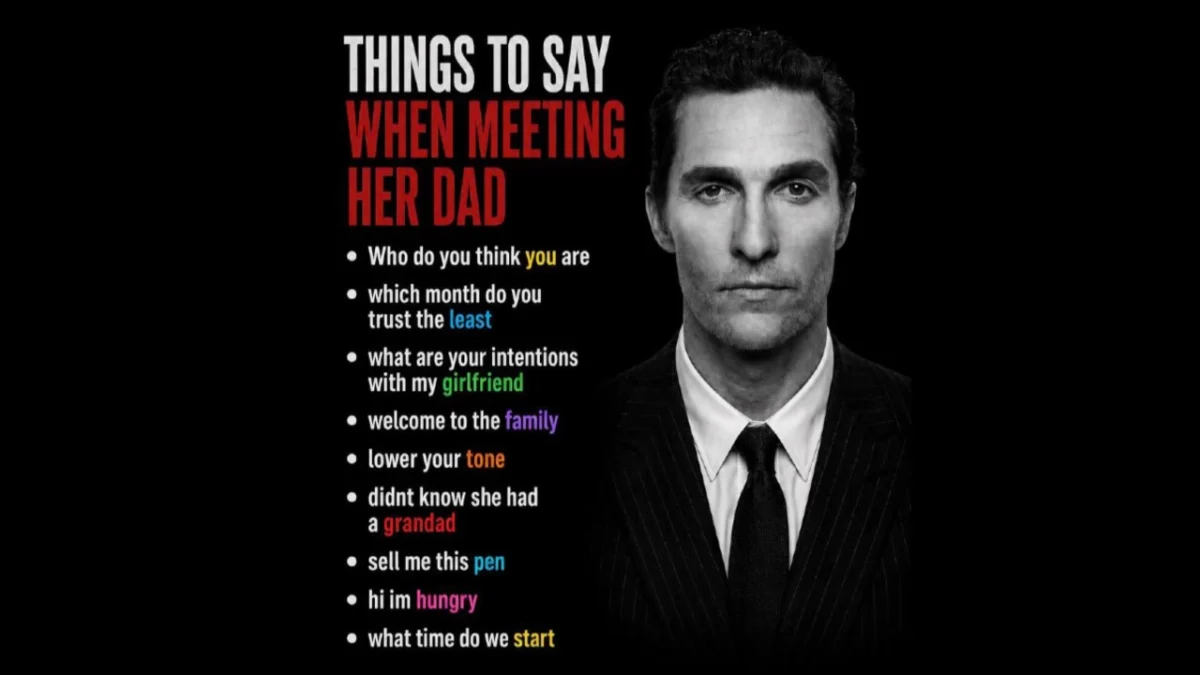
On August 30, 2026, the creator @therealuncle1 shifted the focus to familial introductions. His post, "Things to say when meeting her dad," featured an image of actor Matthew McConaughey—a common trope in "sigma" memes symbolizing stoic masculinity. The advice offered included asking the father for his "credentials" and suggesting he "lower his tone." This iteration amassed 1.1 million views in a single week, demonstrating the format’s versatility in lampooning traditional respect politics.
The momentum continued on August 31, 2026, when @richhomiethugger2867 applied the format to the professional sphere. The "Things to say during a job interview" variant achieved the highest engagement of the early wave, totaling 2.2 million views. The humor in this specific instance relied on the total abandonment of professional decorum, suggesting candidates ask interviewers if they "know who my uncle is" or demanding the interviewer "sell me this pen" in a reversal of the classic Wolf of Wall Street trope.
By early September 2026, the meme had fully migrated to Instagram. On September 5, user _thebayharborbutcher posted a medical-themed version featuring Hugh Laurie’s character from House M.D. The post, which suggested telling a doctor "I’m allergic to idiots" and "You have six seconds to live," received over 69,000 likes, illustrating how the meme had begun to incorporate specific pop-culture archetypes of arrogance to enhance its ironic messaging.
Analysis of the Sigma Grindset Aesthetic
To understand the "Things To Say" series, one must examine its predecessor: the "Sigma Grindset" or "Hustle Culture" meme. These earlier formats were characterized by a genuine—and later ironic—celebration of hyper-individualism, financial obsession, and emotional detachment. The "Things To Say" series takes this to its logical extreme by removing the "grind" and leaving only the "audacity."
The visual elements are standardized:
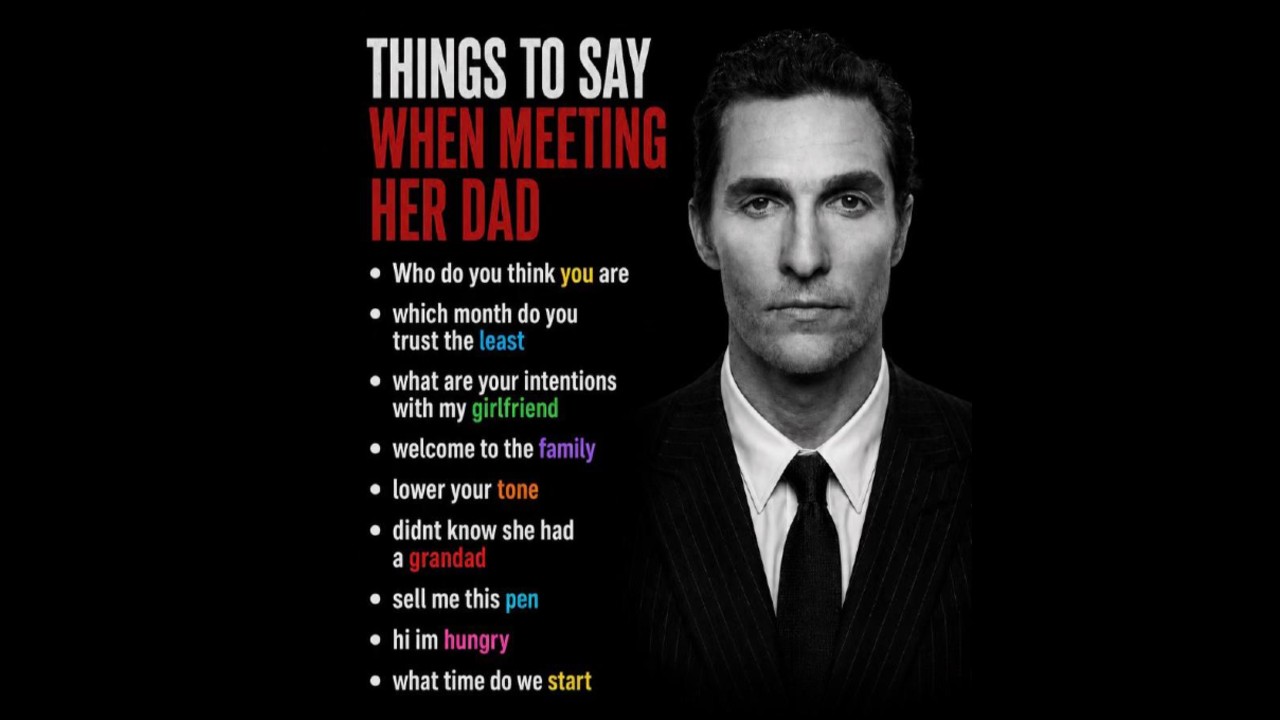
- The Header: A bold, often capitalized title such as "THINGS TO SAY ON A DATE" or "THINGS TO SAY TO YOUR DOCTOR."
- The Iconography: Images of wealthy, stoic, or "alpha" male figures, such as Patrick Bateman, Thomas Shelby, or various professional athletes.
- The List: A bulleted series of phrases that are increasingly aggressive or nonsensical.
- The Tone: A complete absence of irony within the text itself, which forces the viewer to provide the satirical context.
This format shares a lineage with the "Advice Dog" memes of the late 2000s, which featured a canine head on a colorful background offering terrible life advice. However, "Things To Say" is more sophisticated in its target; it specifically mocks the "Rare Fish Investment" and "Alpha Male" coaching industry that proliferated on social media between 2022 and 2025.
Linguistic Patterns and Recurring Motifs
A defining characteristic of these memes is the recurring mention of "The Uncle." In the "Things To Say" universe, the "Uncle" is a nebulous figure of immense power, wealth, and influence. Phrases like "My uncle is in control of finances" or "That’s my uncle’s seat" serve as a satirical take on nepotism and the desperate desire to appear "connected."
Additionally, the memes frequently utilize financial jargon in inappropriate contexts. Suggesting that a date’s outfit looks "like a liability" or telling a mother "your services are no longer required" applies the cold, analytical language of venture capitalism to human relationships. This linguistic displacement highlights the absurdity of modern "hustle" philosophy, which encourages individuals to view every human interaction as a transaction or a networking opportunity.
Statistical Impact and Audience Reception
The quantitative data surrounding the "Things To Say" series indicates a high level of "shareability." Unlike long-form video content, these memes are static images or short slideshows that can be consumed in seconds. According to internal social media tracking metrics, the "Things To Say" tag saw a 450% increase in search interest between August 20 and September 10, 2026.
Audience reception has been polarized along generational lines. Younger Gen Z and Gen Alpha users, who are more accustomed to "post-ironic" humor, have embraced the format as a critique of the unrealistic standards set by social media influencers. Conversely, older demographics often mistake the content for genuine, albeit rude, advice, which frequently leads to "rage-baiting" and further boosts the content’s reach through algorithmic engagement.
Broader Implications for Digital Culture
The "Things To Say" series signifies a broader trend in digital media where the "medium is the message." By using the visual template of a helpful infographic to deliver social poison, creators are expressing a profound skepticism toward the "expert" culture of the internet. In an era of misinformation and "influencer fatigue," these memes serve as a defense mechanism, allowing users to laugh at the very concept of "instructional" content.
Furthermore, the meme reflects a growing discomfort with the commodification of personality. In the world of "Things To Say," every word is a tactic and every conversation is a battle for dominance. By exaggerating these traits to the point of absurdity, the meme acts as a mirror to the hyper-competitive nature of modern social media ecosystems.
Conclusion and Future Outlook
As the "Things To Say" format continues to permeate various corners of the internet, its shelf life will likely depend on its ability to adapt to new social contexts. We are already seeing the emergence of meta-versions of the meme, such as "Things to say to someone making a ‘Things to Say’ meme," which suggests the format is entering its late-stage saturation phase.
Regardless of its longevity, the "Things To Say" series remains a landmark in the history of ironic digital content. It successfully dismantled the aesthetics of the "Sigma" movement, turning a symbol of perceived strength into a vehicle for high-level absurdity. For sociologists and digital historians, the series provides a clear window into the 2026 zeitgeist: a period defined by a rejection of traditional authority, a mastery of ironic subversion, and a deeply cynical view of the "hustle" that once dominated the digital landscape.

