
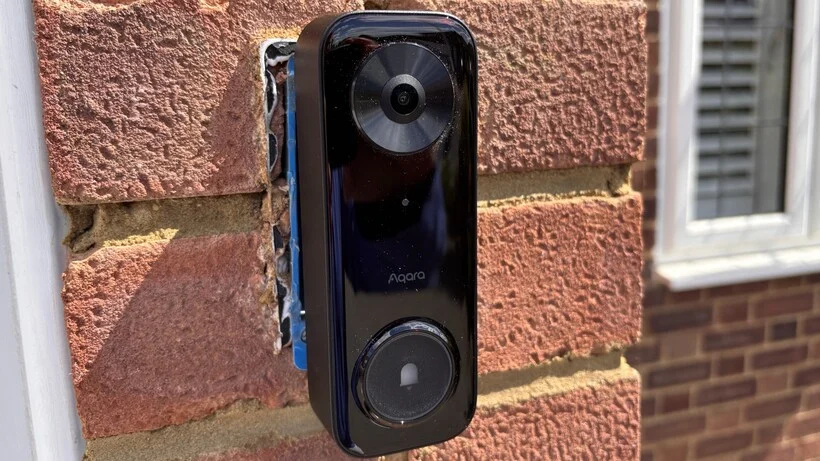
The Aqara Doorbell Camera G400 (Wired) has emerged as a compelling contender in the smart home security market, offering a robust set of features at a price point that challenges more established brands. This wired video doorbell focuses on delivering core functionalities with an emphasis on reliability, local storage, and broad smart home compatibility, eschewing the trend of integrating extensive hub features found in some of Aqara’s previous offerings. Priced competitively at under $100, the G400 presents a strong case for homeowners seeking a dependable and versatile solution for monitoring their front door.
A Strategic Shift in Aqara’s Smart Doorbell Strategy
Aqara, a company known for its expansive ecosystem of smart home devices, has demonstrated a strategic evolution in its product development. While the earlier Doorbell Camera Hub G410 embraced a multi-functional approach, acting as a video doorbell, Matter controller, Zigbee hub, and Thread border router, the G400 represents a deliberate pivot. Instead of embedding a plethora of smart home hub capabilities, Aqara has honed its focus on delivering a superior wired video doorbell experience. This allows for a more streamlined and potentially more stable core functionality, without the added complexity and cost associated with integrating multiple communication protocols and control features directly into the doorbell unit itself.

The G400’s primary objective is to provide an always-on, reliable smart doorbell solution. Key to this strategy is its commitment to local storage options, eliminating the mandatory subscription fees that plague many competitors for essential features. Furthermore, its extensive smart home compatibility, including support for Apple HomeKit Secure Video, Amazon Alexa, Google Home, Samsung SmartThings, and Home Assistant via RTSP, makes it a versatile addition to a wide range of existing smart home setups. The inclusion of Power over Ethernet (PoE) support further distinguishes the G400, offering a more stable and robust connectivity option than Wi-Fi alone, particularly in situations where wireless signal strength might be a concern.
Two versions of the G400 are available: the standard G400 (DB-C03E) and the G400 Select (DB-C03D). In practice, both models utilize the same underlying hardware. The "Select" designation primarily refers to the inclusion of a trial period for Aqara’s HomeGuardian subscription service in specific regions. For consumers who plan to rely heavily on Apple HomeKit Secure Video, the bundled subscription becomes less critical, as Apple’s ecosystem handles much of the AI processing locally through an Apple Home hub.
Design and Installation: Practicality Meets Durability
The Aqara Doorbell Camera G400 (Wired) presents a familiar aesthetic to those acquainted with Aqara’s previous video doorbell releases, yet it offers subtle but significant improvements in its physical design and installation process. Measuring 140.97 x 52.97 x 32.4mm, the G400 is notably slimmer than its predecessor, the G410, while still maintaining a substantial presence that suggests quality and durability when mounted by the front door.

The overall design leans towards practicality rather than overt luxury. The construction is predominantly plastic, which, while not offering the premium feel of metal-bodied competitors like the Nest Doorbell Pro or Ring Video Doorbell Elite, contributes to its affordability. The finish is also less of a soft matte compared to the G410, but the unit feels robust and well-constructed, surpassing the often flimsy feel of many lower-cost smart doorbells. This sturdy build quality instills confidence in its ability to withstand the rigors of long-term outdoor use.
Environmental resilience is further assured by the G400’s IP65 weather resistance rating, certifying its capability to endure rain, wind, and general outdoor exposure throughout the year. This is a crucial factor for any device intended for external mounting, ensuring longevity and consistent performance in varying climatic conditions.
Connectivity Evolution: Beyond the Chime Dependency
A significant departure from earlier Aqara doorbell models, such as the G4 and G410, lies in the G400’s connectivity architecture. Previously, the included chime unit served as an essential bridge between the doorbell and the home network. This meant that if the chime was misplaced or its connection was interrupted, the doorbell could lose its network link entirely. The G400 elegantly sidesteps this limitation.

The G400 establishes a direct connection to the network through either dual-band Wi-Fi 6 or, more significantly, Ethernet. This means the chime is now an optional component for indoor alerts, rather than a mandatory network intermediary. This shift dramatically enhances reliability, decoupling the doorbell’s internet access from the placement or operational status of the chime unit.
For users opting for an Ethernet connection, the G400 also supports Power over Ethernet (PoE). This feature allows for both data transmission and power delivery through a single Ethernet cable, provided a PoE power injector or a PoE-enabled network switch is available. This not only simplifies wiring but also guarantees a stable power supply, eliminating concerns about battery life or transformer compatibility.
Another practical design change is the relocation of the microSD card slot. Unlike previous models where the slot was housed within the chime unit, the G400 features an easily accessible microSD slot directly on the doorbell itself. This makes managing local storage, such as inserting or removing memory cards, a more straightforward process.
The doorbell unit incorporates a built-in speaker that emits an audible chime when the button is pressed, alerting individuals outside. For indoor notifications, users can opt for the included chime, compatible smart speakers, or even Aqara hubs like the Hub M3 or M1S, offering a flexible alert system tailored to individual home setups.

It is important to note a minor design quirk: while the G400 can leverage existing doorbell wiring for power, it cannot directly trigger traditional mechanical or digital chime boxes. The existing wiring is solely utilized for powering the doorbell unit. This is a common trend in newer smart doorbells, but it can be a point of frustration for users who have invested in established chime systems.
Powering Options: PoE as the Preferred Method
The G400 is exclusively a wired device, foregoing battery power for consistent operation. Users have two primary power options: a traditional 8-24V doorbell transformer or the aforementioned Power over Ethernet (PoE). The review unit was tested using PoE, and this method is strongly recommended for those whose infrastructure allows it.
PoE provides a demonstrably superior experience. It negates concerns about Wi-Fi signal strength at the front of the house, ensuring a consistent and stable connection. During the testing period, the PoE connection resulted in noticeably quicker response times for live view activation and prompt notification delivery, underscoring its reliability.

However, it is crucial to note that Aqara does not include an Ethernet cable or a PoE injector in the retail package. These essential components must be sourced separately by the consumer.
Installation Flexibility and Accessories
The G400 comes equipped with two distinct mounting plates: one for a flush installation and a 15-degree wedge mount for situations where an angled view of the entryway is desired. This flexibility allows users to optimize the camera’s field of view to capture the entire approach to their door, including the ground directly beneath the unit.
For those who prefer to avoid drilling, both mounting options include robust 3M adhesive backing. For a more permanent and secure installation, screws and even a small screwdriver are provided in the box. For PoE installations, Aqara includes a rubber sealing block designed to fit around the Ethernet cable connection, ensuring that the connection point remains protected from the elements and maintaining the doorbell’s weatherproofing.

The initial setup process, guided by the Aqara Home app, is designed to be user-friendly. The app recognizes the G400 automatically upon power-up and provides step-by-step instructions, including visual aids and voice prompts emanating directly from the doorbell unit. While direct integration into Apple Home is possible, the initial setup via the Aqara app is a prerequisite. A minor tip for setup: the Aqara and HomeKit QR codes are situated adjacent to each other on the back of the unit, so ensuring one is covered while scanning the other can prevent setup confusion.
Feature Set: Value Beyond the Price Tag
Despite its accessible price point, the Aqara G400 (Wired) boasts a surprisingly comprehensive suite of features. The camera records at a sharp 1536 x 2048 resolution, providing clear and detailed imagery. A standout feature is its 165-degree ultra-wide viewing angle, coupled with a deliberate 3:4 vertical aspect ratio. This orientation is a significant practical advantage, allowing users to clearly see packages or other items placed directly at the base of the door without the need for awkward downward camera tilting. This everyday usability enhancement sets it apart from many wider, more cinematic aspect ratio doorbells.
The G400 supports 24/7 continuous recording when paired with a microSD card, with compatibility for cards up to 512GB. Aqara’s commitment to offering core functionalities without mandatory subscriptions is a major selling point. Essential AI features, such as human and motion detection, are processed locally on the device, ensuring continued operation even during internet outages.

For users who prefer more advanced local surveillance setups, the G400 offers robust support for NAS backup, RTSP streaming, and ONVIF compatibility. This makes it an excellent choice for integration with popular Network Video Recorder (NVR) platforms like Home Assistant, Frigate, and Blue Iris, providing a high degree of customization and control for technically inclined users.
Compatibility with major smart home platforms is another strong suit. While not a Matter device at launch, the G400 integrates seamlessly with Apple HomeKit Secure Video, Amazon Alexa, Google Home, and SmartThings. Integration with Alexa and Google Home allows for live video streaming to compatible smart displays, while SmartThings users can also view the feed on supported Samsung televisions.
A subscription-based service, Aqara’s HomeGuardian, is available for users who desire advanced AI features. This optional service unlocks cloud-based facial recognition, package detection, pet and vehicle detection, flame alerts, AI-powered search tools, and 90 days of cloud storage. While it’s somewhat disappointing that some of the more sophisticated detection capabilities are locked behind a paywall, especially when HomeKit Secure Video offers similar functionalities locally for Apple users, the core functionality of the G400 remains fully accessible without any ongoing fees.
The Aqara app provides a familiar and intuitive interface for users of Aqara’s camera products. Live view streams load rapidly, snapshots are crisp, and the layout is logically organized, avoiding unnecessary complexity. The app also retains Aqara’s characteristic voice-changing effects for two-way audio conversations, adding a touch of playful interaction to remote communication.

Performance: Delivering on Day and Night
In practical, everyday use, the Aqara G400 (Wired) performs admirably, especially considering its competitive price point. Daytime video quality is consistently sharp and detailed, with a well-balanced exposure that renders faces clearly and makes package labels easily legible. The expanded 165-degree ultra-wide field of view, combined with the 3:4 vertical aspect ratio, effectively covers the entire entryway, providing a more comprehensive and useful view of activity than many older widescreen doorbell cameras. This practical framing is a significant advantage in real-world scenarios.
The benefits of PoE connectivity are immediately apparent. Live view streams initiate quickly, notifications are delivered promptly, and throughout the testing period, there was a noticeable absence of the connection instability that can sometimes plague battery-powered doorbells or those relying solely on weaker Wi-Fi signals. For users with existing Ethernet infrastructure near their front door, PoE is unequivocally the superior method for powering and connecting the G400.
However, low-light performance is an area where the G400 shows some limitations compared to higher-end competitors. While daytime image quality surpasses that of older models like the G4, nighttime footage can appear noticeably darker. Furthermore, the G400 does not offer color night vision. Despite these shortcomings, the infrared night vision is still perfectly functional for identifying individuals and activities in low-light conditions. This remains an area where more premium video doorbells typically hold an advantage. The integrated 940nm IR LEDs are subtle, meaning there is no visible red glow during nighttime operation, which can be preferable for discreet monitoring.

It is also important for users of Apple HomeKit Secure Video to be aware of Apple’s resolution limitations. While the G400 records at its full 2K resolution within the Aqara app, HomeKit streams are capped at 1200 x 1600. Although the image quality remains sharp within the Apple ecosystem, the full-resolution experience is exclusively available through Aqara’s own software.
Final Verdict: A Smart Investment for Reliable Security
The Aqara Doorbell Camera G400 (Wired) represents a thoughtful return to core functionality for Aqara, focusing on delivering a robust and reliable wired video doorbell experience rather than attempting to be an all-encompassing smart home hub. For an investment under $100, consumers gain access to a feature-rich device that includes essential capabilities such as 2K resolution, PoE support, local recording options, RTSP streaming, broad smart home integration, and flexible 24/7 recording capabilities.
While the night vision performance could be enhanced, and the plastic construction might not exude the same premium feel as more expensive alternatives, these trade-offs are justifiable given the G400’s competitive pricing. For existing Aqara users who might have considered the G410 for its integrated hub features, the G400 serves a different, equally valuable purpose.

Ultimately, if the primary objective is a dependable wired smart doorbell with extensive compatibility and the freedom from mandatory monthly subscription fees, the Aqara G400 (Wired) stands out as an excellent and highly recommended option. For those seeking even higher resolutions or superior night vision capabilities, a broader exploration of the best video doorbells on the market would be advisable.
Methodology: A Commitment to Long-Term Testing
Our reviews are built upon extensive, long-term "living with" testing protocols. Smart security cameras, by their nature, are integral components of interconnected smart home ecosystems. Therefore, a superficial week-long test is insufficient to provide a comprehensive verdict. Our team dedicates significant time to thoroughly evaluate these devices, understanding their performance within various smart home environments and their comparative standing against alternative products. This rigorous approach ensures that our reviews are objective, factual, and provide actionable insights for consumers making informed purchasing decisions. Our commitment to unbiased reporting means that devices are never directly paid for review, ensuring editorial independence. Further details on our comprehensive review process for smart security cameras can be found on our dedicated guide.

