
It has been a significant hiatus since Google last introduced a dedicated smart speaker to the market. The Google Home Speaker, launching nearly six years after its predecessor (or five, depending on whether smart displays are included in the count), arrives with considerable anticipation. This new device is engineered to support Google’s latest artificial intelligence endeavor, Gemini for Home. However, despite its polished design, capable audio performance, and integration as a Matter-compatible smart home hub, the overall user experience is significantly undermined by the limitations of its AI assistant. Gemini for Home proves to be slow, occasionally frustrating, and demonstrably lags behind competitors like Amazon Alexa+, making the Google Home Speaker a difficult product to recommend in its current iteration.
The smart speaker market has seen considerable evolution since Google’s last major hardware release in this category. While the company has consistently updated its Nest Hub line of smart displays, a standalone speaker designed to compete at the premium end of the market has been conspicuously absent. The Google Home Speaker enters this landscape priced at $99.99/£99.99, positioning it directly against established rivals such as the Amazon Echo Dot Max and the Apple HomePod mini. This price point signifies a shift away from the ultra-affordable, voice-only devices of yesteryear, reflecting an increased focus on richer feature sets and enhanced audio capabilities.
Design and Build Quality
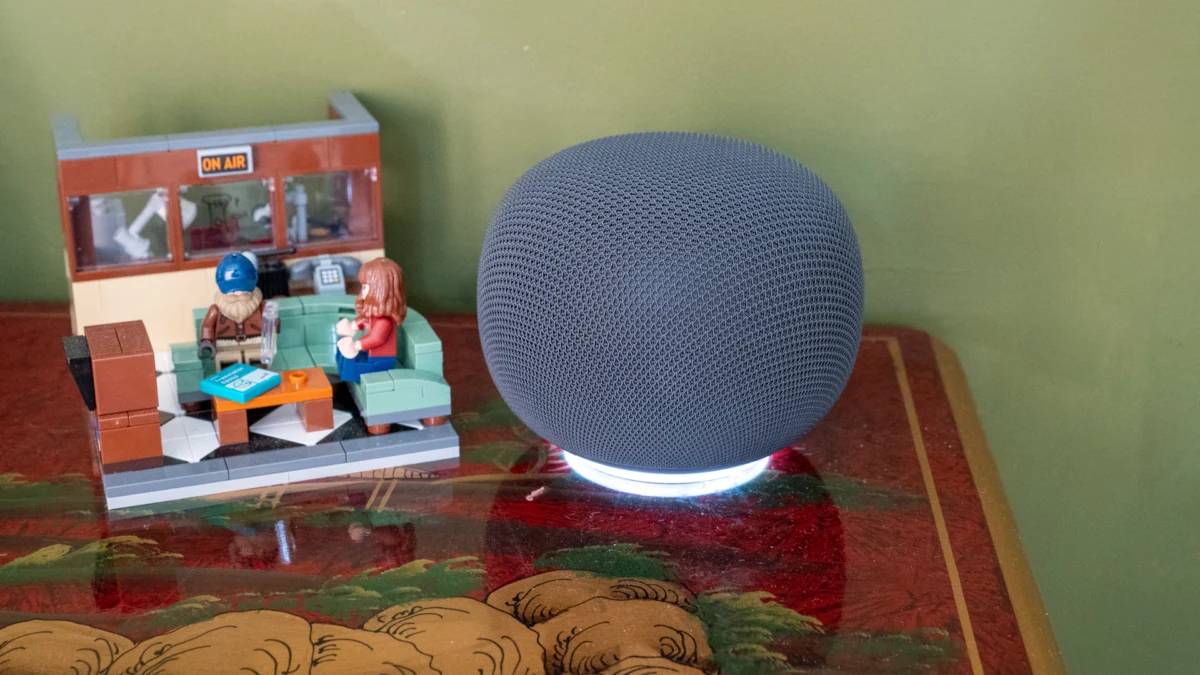
Google’s approach to the Home Speaker’s design is one of understated elegance. The device adopts a familiar mushroom-like silhouette, enveloped in a soft mesh fabric, a design choice that aligns it closely with its main competitors. Visually, it can be seen as an upscaled version of the Google Nest Mini, suggesting a clear evolutionary path in Google’s industrial design language. The choice to omit the "Nest" branding altogether, simply marketing it as the "Google Home Speaker," indicates a potential strategic shift for the company, moving away from brand sub-categories towards a more unified Google identity for its smart home products.
Available in a palette of four colors in the United States—red, green, white, and grey—the speaker offers a degree of personalization. However, the United Kingdom market receives a more restricted selection, limited to white and grey, which might be perceived as a less inspiring choice.
The speaker’s form factor is compact and unobtrusive, making it adaptable to various home environments. The soft mesh finish not only contributes to its aesthetic appeal but also helps in dispersing sound omnidirectionally. A notable design consideration is the captive power cable, which terminates in a USB-C connector. While USB-C is a ubiquitous standard, a replaceable cable would have offered greater flexibility for users who might prefer longer cords or different termination types.

Physical controls are minimal, adhering to a minimalist design ethos. The microphone mute switch is situated adjacent to the power button, and its placement can be somewhat fiddly to access, especially when contrasted with the more conveniently located privacy buttons on competing devices like the Amazon Echo Dot Max.
A distinctive light bar encircles the speaker’s base, providing visual feedback on its operational status. It illuminates in white when the device is listening for commands, transitions to blue when Gemini is processing and responding, and turns yellow when the microphones are muted, ensuring users are always aware of the speaker’s current state.
Beyond voice commands, the top surface of the speaker offers touch-sensitive controls. A tap can be used to stop a response, silence an alarm, or pause music playback. However, the absence of dedicated shortcut support for track skipping or rewinding using standard tap gestures (like double-tap for next, triple-tap for previous) represents a minor inconvenience.
Volume adjustments are managed via touch-sensitive areas on either side of the speaker’s top surface. Two small LEDs illuminate on the respective sides to indicate activation, with the right side controlling volume up and the left side controlling volume down. The main light ring’s brightness dynamically adjusts to reflect the current volume level, offering an intuitive visual cue.
Features and the Gemini for Home Experience
The core of the Google Home Speaker’s functionality lies in its integration with Gemini for Home, Google’s new generative AI-powered voice assistant. To facilitate adoption, the speaker is bundled with six months of Google Home Standard, a subscription service typically priced at $10/£8 per month or $100/£80 annually. This subscription tier includes benefits such as 30 days of Nest camera history, intelligent alerts, Gemini Live capabilities, and in-app assistance for creating routines. A higher tier, Google Home Advanced, is available for $20/£16 per month or $200/£160 per year, offering extended features like 60 days of event history, 24/7 recording for wired cameras, and AI-powered video search.
While the subscription tiers offer compelling features, the practical implementation of Gemini for Home within the speaker environment falls short of expectations. The assistant exhibits a tendency to require repeated activations of "Hey Google," even with the "Continued Conversation" feature enabled, which is designed to allow for follow-up questions without repeated wake words. This necessitates frequent vocal prompts, detracting from a fluid user experience.

A significant drawback identified during testing is Gemini’s lack of locale-specific tuning. For instance, when asked to perform a common task like setting a thermostat, the assistant suggested a temperature in Fahrenheit (72 degrees), which is incongruous for users operating in Celsius regions. This suggests a need for more sophisticated geographical context awareness.
The assistant’s memory recall also proved inconsistent. In a test scenario where a user informed Gemini about a family member’s vegetarian diet, the assistant initially remembered this information. However, when the Google Home Speaker was introduced weeks later, Gemini failed to retain this dietary preference, incorrectly recommending a chicken dish for both individuals. While the assistant eventually recalled the information upon re-querying its knowledge about the family member, the unpredictable nature of data access raises questions about the reliability of Gemini’s memory functions.
Furthermore, Gemini for Home demonstrates limitations in document handling capabilities, a feature that Amazon Alexa+ has successfully implemented. While Alexa+ can process PDFs and other documents, Gemini’s response was to suggest uploading the file into the chat, a functionality that it subsequently stated was not possible, instead recommending reading the PDF aloud. Such a response is far from ideal for a voice-controlled device. In one instance, the assistant even interrupted a query to prompt the user for feedback on the interaction, an intrusive action that highlighted its current shortcomings.
A test designed to expose potential AI flaws—asking how many letters are in a word—yielded a peculiar response. When asked about the number of "m"s in "mammal," the assistant responded with "three megaseconds," an answer that is both factually incorrect and nonsensical. Subsequent attempts to solicit clarification only resulted in further perplexing replies.
Despite these significant issues, Gemini for Home is not entirely devoid of utility. It can effectively retrieve information from the web. For example, a query about an upcoming football match was correctly answered with the opposing team, and the user was able to create a calendar event for it, albeit with an inaccurate duration of one hour instead of the typical two hours for a football match. However, it is important to note that only Google calendars are supported, and Workspace accounts are explicitly excluded, necessitating the creation of a separate Gmail account for certain functionalities.
For general knowledge questions, such as checking public transport status or identifying film cast members, Gemini performs adequately, leveraging Google’s established strength in web-based information retrieval.
Smart home control presents a mixed picture. Simple commands generally execute as expected. However, more complex, multi-step instructions can lead to errors. For instance, a request to turn on a light and then switch it off after five minutes resulted in the light being turned on, but Gemini instead set a five-minute timer. Breaking such requests into separate commands yielded better results. The assistant can, however, string together multiple actions, such as activating both a light and a fan simultaneously.

A vague command like "It’s hot in here" is intended to trigger an appropriate response. In one test, the speaker initially activated the wrong devices (air conditioning units in a different room) before correctly identifying the user’s office misting fan on a second attempt. The absence of voice-based routine creation is a significant oversight, particularly given that competitors like Alexa+ offer this functionality.
Speed is another pervasive issue. Gemini can exhibit significant delays, especially when cloud-based processing is required, leading to frustrating waits for responses. Google has acknowledged this performance lag and stated that it is actively working on improvements.
The speaker’s ability to search video history from compatible cameras is contingent on possessing the appropriate subscription tier. In testing, a request to find footage of a cat resulted in the information that Google Home Advanced was required, following a considerable pause. While subscribed users can view video footage on other devices, this functionality is still less seamless than that offered by dedicated smart displays.
In summary, the user experience with Gemini for Home is significantly inferior to that of Amazon Alexa+. While Siri, Apple’s assistant, may also struggle with complex requests, the Apple HomePod mini offers distinct advantages, including seamless "handoff" features and a more robust smart home app integration through Apple Home. The inclusion of Thread support in the Google Home Speaker is a positive development, enabling it to function as a Thread Border Router and facilitate direct connectivity for Matter devices to the user’s network.
Sound Quality
The Google Home Speaker is equipped with a 58mm full-range driver engineered for omnidirectional sound dispersion, aiming to fill a room evenly without a pronounced directional bias. In terms of audio performance, it aims to compete directly with the Amazon Echo Dot Max and the Apple HomePod mini. During testing, Spotify casting functioned without issue, though the audio quality was capped at "High," falling short of the "Lossless" audio support offered by the HomePod mini.
The omnidirectional tuning is effective, producing a sound that feels more immersive and less like it’s emanating from a single point source, a common characteristic of smaller speakers. For true stereo separation, users would need to purchase and pair two speakers. In tracks like Foo Fighters’ "Open Space," where guitar work should pan from left to right, the effect on the Google Home Speaker is more akin to a volume shift rather than distinct stereo movement. Both the HomePod mini and the Echo Dot Max offer a slightly better rendition of this spatial audio effect.

Bass response is commendable for a speaker of its size. Tracks such as Rage Against the Machine’s "Bombtrack" deliver a satisfying punch, and OK Go’s "This Too Shall Pass" maintains clarity and control without distortion. However, the speaker struggles with more nuanced audio material. Frank Sinatra’s "That’s Life" exhibits an overemphasis on the upper registers, and Hell Is for Heroes’ "You Drove Me To It" can become harsh at higher volumes.
Notably, the audio quality does not surpass that of the older Google Nest Audio, which was released without a direct successor in this new product line. This is a missed opportunity, especially considering that competitors like Apple offer both the HomePod mini and the full-sized HomePod, while Amazon provides a range of options including the Echo Dot Max and the Echo Studio.
Conclusion
The Google Home Speaker represents a long-awaited entry into the smart speaker market for Google, but its launch feels somewhat anticlimactic. While the hardware is well-designed and the sound quality is adequate for its class, the Gemini for Home assistant is a significant detractor. Its performance is marred by slowness, inconsistency, and a lack of crucial features readily available in competing products.
Currently, Amazon Alexa+ stands out as the premier smart assistant for home environments, bolstered by Amazon’s extensive hardware ecosystem, which includes a wide array of speakers and displays. For Apple users, the HomePod mini offers superior audio fidelity and integrates seamlessly with the iPhone ecosystem. Given that Gemini for Home is already accessible on existing Google smart speakers and displays, and with little evidence of substantial performance improvements in this new hardware, the Google Home Speaker struggles to justify its recommendation. The product’s potential is hindered by an AI assistant that has not yet reached the maturity and capability of its rivals, leaving it in a precarious position in a highly competitive market.
Review Methodology and Testing Process
The reviews published by this outlet are the result of extensive, long-term "living with" testing. Smart speakers, by their nature, are integral components of smart home ecosystems and are expected to interact harmoniously with a variety of connected products. Evaluating a smart speaker adequately requires more than a cursory week-long trial.

As dedicated testers of smart home technology, our team possesses a deep understanding of what truly matters in this domain and how specific devices compare against available alternatives. Our reviews are designed to be thorough, objective, and fair, with no direct financial compensation received for the reviews themselves. Readers can find further details on our comprehensive review process for smart speakers on our dedicated page.
Frequently Asked Questions
Do you get Google Gemini for Home with the speaker?
Yes, the Google Home Speaker comes equipped with the new Gemini for Home voice assistant, along with an included six-month subscription to Google Home Standard.
Full Product Name and Specifications
| Feature | Details |
|---|---|
| Type (Colours and style) | Red, Green, White, and Grey |
| UK RRP | £99.99 |
| US RRP | $99.99 |
| Size (Dimensions) | 107 x 107 x 86mm |
| Weight | 408g |
| Release Date | July 2026 |
| Smart Home Ecosystems | Google Home |
| Connectivity | Wi-Fi, Thread |
| Battery / Power | USB-C |
Score: 6/10

