
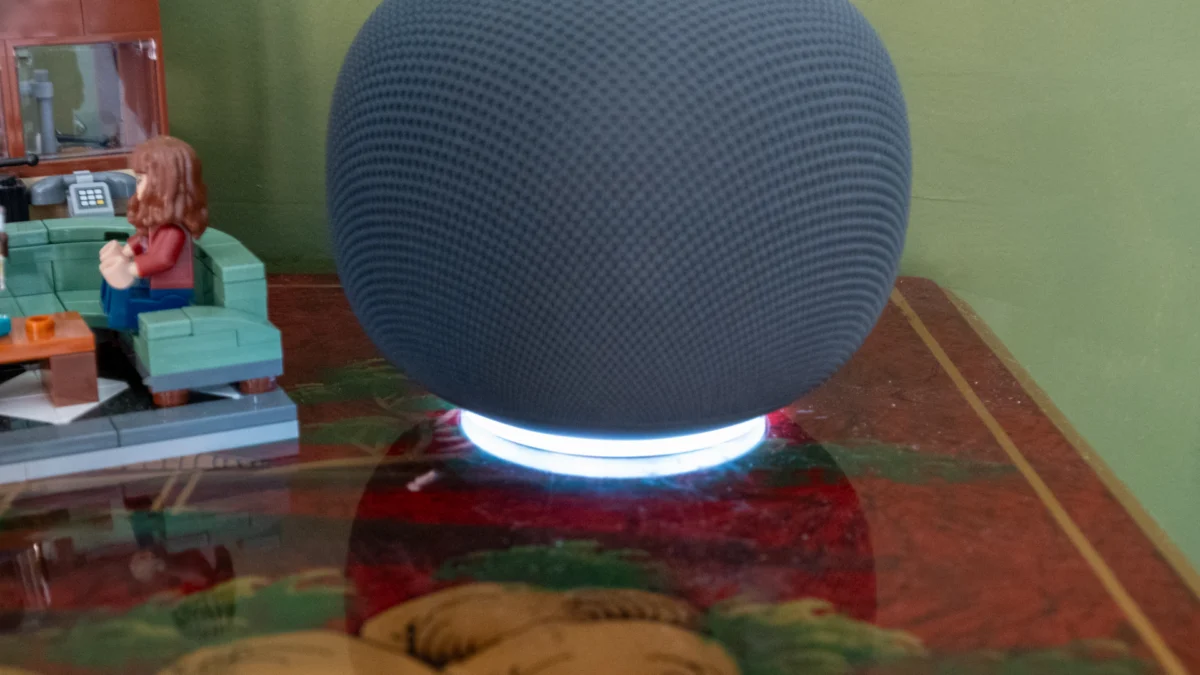
The landscape of voice assistants is undergoing a seismic shift, driven by the relentless advancement of generative artificial intelligence (GenAI). The era of rigid, command-specific interactions is rapidly receding, giving way to a future where natural, conversational language reigns supreme. In this evolving arena, Google’s Gemini for Home emerges as a significant contender, aiming to reclaim its position in the smart home market, particularly in the face of Amazon Alexa+’s established dominance. However, while Gemini for Home demonstrates impressive strides in understanding fluid human speech for general queries, its performance in more complex scenarios, especially within the smart home ecosystem, reveals a system still grappling with fundamental challenges.
The Promise of GenAI in the Smart Home
The integration of GenAI into voice assistants represents a pivotal moment for smart home technology. The ability to process and respond to natural language, akin to human conversation, promises a more intuitive and accessible user experience. This evolution is crucial for wider adoption, moving beyond tech-savvy early adopters to encompass a broader demographic. Google, with its vast data resources and AI prowess, is strategically positioned to leverage this technological leap. The introduction of Gemini for Home is a clear indication of this ambition, aiming to infuse its smart home devices with a more intelligent and adaptable conversational agent. The underlying technology, powered by Google’s sophisticated AI models, theoretically grants it unparalleled access to the company’s extensive search index, a potential wellspring of information for nuanced responses.
Availability and Pricing: A Phased Rollout and Tiered Subscriptions
Google Gemini for Home is currently being rolled out as an upgrade to users possessing compatible smart speakers and displays. This includes a range of Google’s recent hardware, such as the new Google Home Speaker, both generations of the Nest Hub, Nest Audio, Nest Mini, and the Nest Hub Max. This broad compatibility suggests a strategic effort by Google to reach a significant portion of its existing user base, spanning devices released over the past seven years.
Beyond the free upgrade, Google is also introducing a subscription-based model, effectively consolidating and rebranding its "Nest Aware" services under the "Google Home Premium" umbrella. This rebranding signals a deliberate move by Google to streamline its smart home product nomenclature. The tiered subscription structure offers varying levels of functionality:
- Google Home Premium Standard: Priced at $10/£8 per month or $100/£80 annually, this tier includes 30 days of video history, intelligent alerts, Gemini Live capabilities, and in-app assistance for creating automations.
- Google Home Premium Advanced: At $20/£16 per month or $200/£160 annually, this premium option extends video history to 60 days and incorporates 24/7 recording for wired devices, AI-powered video search, and descriptive notifications.
New purchasers of the Google Home Speaker will receive a six-month complimentary subscription to Google Home Premium Standard, offering an incentive to experience the enhanced features.

Conversational Prowess: Strengths in General Queries, Weaknesses in Nuance
In its core function of processing natural language for general information, Gemini for Home demonstrates a marked improvement over its predecessors. The ability to engage in fluid, multi-turn conversations without requiring exact phrasing is a significant leap forward. For everyday queries, such as identifying film casts, finding nearby restaurants, or checking public transport status, Gemini for Home performs admirably. Its access to Google’s vast search data allows it to provide relevant and timely answers to a wide array of general knowledge questions, including historical sports events and movie trivia.
The conversational flow is particularly noteworthy. Users can ask follow-up questions to refine search results without needing to restate the entire original query, mirroring natural human dialogue. This intuitive interaction style is a direct benefit of the GenAI integration, making the system feel more responsive and less like a rigid command-line interface.
However, this newfound conversational fluency falters when confronted with subtle contextual details or the need for consistent memory retention. A critical example cited involves a user informing Gemini that their wife is vegetarian. Initially, Gemini correctly incorporated this information when recommending dishes. Yet, after a period of disuse, the system appeared to "forget" this crucial detail, reverting to non-vegetarian suggestions. While a subsequent query about the wife’s dietary preferences would correctly surface the stored information, the inconsistency in its application during recipe recommendations highlights a significant memory management challenge. This is a stark contrast to the more robust and persistent memory capabilities demonstrated by Amazon Alexa+, which consistently fine-tunes its responses based on learned user preferences.
Furthermore, Gemini for Home has exhibited a perplexing tendency to misinterpret simple questions, leading to nonsensical responses. An instance where a user inquired about the number of "M"s in the word "mammal" resulted in Gemini defining "megasecond" as a unit of time and claiming there were three megaseconds in the word. This demonstrates a fundamental disconnect between linguistic parsing and semantic understanding, where the AI appears to be generating word associations rather than comprehending the literal meaning of the query. This can lead to frustrating exchanges where the AI offers irrelevant or factually incorrect information, requiring significant user effort to clarify or correct.
The smart display experience also leaves much to be desired. Instead of leveraging the visual real estate to provide rich, contextually relevant information or images, Gemini for Home often defaults to displaying the full text of its response on a plain white background. This minimalist approach feels underwhelming, particularly when compared to the more visually engaging interfaces offered by competitors.
Local Business Search: A Mixed Bag of Improvement and Location Woes
In the realm of local business searches, Gemini for Home shows pockets of improvement, though not without initial missteps. While competitors like Alexa+ have been known to recommend defunct establishments, Gemini for Home, when tasked with finding local French restaurants, initially misidentified the user’s location, leading to irrelevant suggestions. Upon correction, however, it successfully identified a highly-rated local establishment, indicating a potential for accurate local discovery.

Despite this localized success, the current iteration lacks direct integration for booking reservations. This means that once Gemini for Home provides the necessary information, users are still required to manually switch to their phones or laptops to complete the booking process. This limitation curtails the seamless end-to-end experience that many users expect from a smart assistant.
Document and Calendar Integration: Limited Scope and Missed Opportunities
Gemini for Home’s integration with calendars is functional but restricted. It successfully syncs with standard Gmail calendars, enabling users to create events or query their upcoming schedule. However, its compatibility does not extend to calendars from Google Workspace accounts, nor does it support third-party calendar services, which is a notable omission.
A more significant drawback is Gemini for Home’s inability to process data embedded within photos or PDF files. This capability is a key differentiator for competitors like Amazon Alexa+, which can, for instance, automatically extract information from school letters to create calendar events and reminders. When prompted about its PDF handling capabilities, Gemini for Home suggested uploading the document to a chat interface – an option not available on a smart speaker – or reading the PDF aloud, neither of which addresses the core need for data extraction and integration. This limitation significantly hampers its utility for users who rely on their smart assistants to manage information from diverse sources.
Smart Home Control: Progress Tempered by Lag and Inconsistency
The fundamental functionalities of smart home control – such as adjusting lights, thermostats, and smart plugs – largely operate as expected, mirroring the capabilities of previous Google Assistant iterations. However, the user experience is often marred by noticeable lag. Commands can take several seconds to execute, creating a sense of sluggishness that detracts from the perceived efficiency of the system.
Where Gemini for Home shines is in its ability to process chained commands, allowing users to string together multiple instructions into a single voice query, such as "turn on the light, set the AC to 21 degrees Celsius, and turn off the printer." This feature enhances the natural language interaction, enabling more complex requests to be handled in one go.
However, more intricate smart home scenarios reveal significant shortcomings. An attempt to schedule a light to turn off five minutes after being switched on resulted in Gemini for Home executing the "on" command but then triggering a simple chime timer instead of the intended subsequent "off" command. This indicates a lack of sophisticated automation capabilities.

Crucially, Gemini for Home currently lacks the ability to create voice-activated routines, a feature that is a cornerstone of Amazon Alexa+’s smart home ecosystem. The absence of this functionality is a significant oversight, as routines allow users to automate sequences of actions based on specific triggers, offering a powerful level of customization and convenience.
The random nature of some smart home responses is also a point of concern. In one instance, a user’s ambient statement, "it’s hot in here," which typically triggers the fan in a well-configured smart home system, resulted in Gemini for Home activating the air conditioning in a remote test lab. While a subsequent, identical command corrected the behavior, the initial erratic response raises questions about the reliability and predictability of its smart home command interpretation.
Final Verdict: A Promising Foundation Awaiting Refinement
Google Gemini for Home represents a significant stride towards a more natural and intuitive voice assistant experience. Its proficiency in handling general queries and engaging in fluid, multi-turn conversations is a testament to the advancements in GenAI. The broad device support and the introduction of tiered subscription services indicate a robust strategy for market penetration and feature enhancement.
However, the system’s performance in more nuanced applications, particularly within the smart home domain, falls short of expectations. Persistent issues with memory retention, the generation of nonsensical responses, a lackluster smart display interface, and a deficit in advanced smart home automation capabilities, such as routine creation, highlight areas requiring substantial improvement.
In its current state, Gemini for Home, while promising, lags considerably behind the benchmark set by Amazon Alexa+. The competition’s established reliability, superior memory management, and more comprehensive smart home ecosystem create a significant gap that Google must bridge. For users seeking a consistently intelligent and reliable smart home assistant, Alexa+ remains the more compelling choice. Gemini for Home possesses the foundational elements of a next-generation voice assistant, but it requires further development and refinement to truly fulfill its potential and challenge the existing market leader. The journey from a promising GenAI integration to a fully realized, seamless smart home experience is clearly still underway for Google.

