
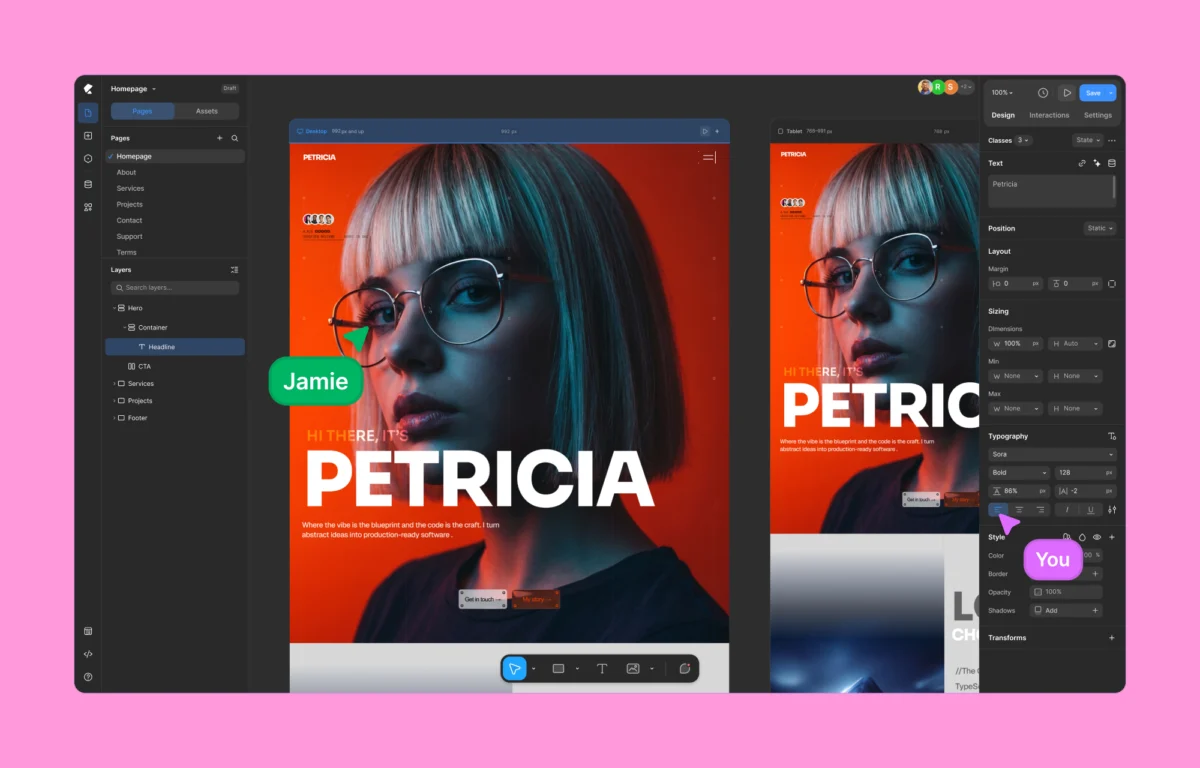
The WordPress ecosystem is currently witnessing a significant architectural shift with the emergence of Kirki, a visual website builder that introduces a freeform infinite canvas to a platform historically defined by rigid, box-based layouts. For nearly two decades, WordPress design has been governed by hierarchical containers—rows, columns, and sections—that often restricted creative expression and introduced significant technical overhead. Kirki’s arrival marks a departure from these conventions, offering a no-code solution that prioritizes design fluidity, performance optimization, and the elimination of third-party plugin dependencies. By integrating a centralized Content Management System (CMS) and a visual interaction builder directly into the core experience, Kirki aims to address the long-standing compromises of bloat and complexity that have characterized traditional page builders.

The Evolution of WordPress Site Building: From Shortcodes to Infinite Canvases
To understand the impact of Kirki, one must examine the chronology of WordPress development. In the early 2010s, website construction relied heavily on shortcodes and theme-specific settings. This evolved into the "page builder era," led by pioneers like Visual Composer, and later, the dominant forces of Elementor and Divi. While these tools democratized web design, they introduced the "div-wrapper" problem—a phenomenon where every element is encased in multiple layers of HTML code, leading to slower page loads and poor search engine optimization (SEO) performance.

The launch of Kirki represents the third generation of this evolution. Influenced by modern design tools such as Figma and Webflow, Kirki introduces an "infinite canvas" environment. This allows designers to zoom, pan, and place elements with pixel-level precision without being tethered to a traditional grid system. This technical leap is not merely aesthetic; it reflects a broader industry movement toward "freeform" web design, where the boundaries between design software and live web environments are increasingly blurred.

Performance Benchmarking: Kirki vs. Traditional Page Builders
In the modern digital economy, performance is a primary metric for success. Google’s 2021 Core Web Vitals update solidified the link between site speed and search engine rankings, placing immense pressure on website builders to produce clean code. In a series of standardized performance audits conducted under identical conditions—utilizing a clean WordPress installation and the default Twenty Twenty-Five theme—Kirki demonstrated a measurable advantage over industry incumbents like Elementor.

The data reveals that while traditional builders often struggle with Document Object Model (DOM) depth, Kirki generates a streamlined HTML structure. In Lighthouse performance audits, Kirki-built pages consistently achieved higher scores in "Largest Contentful Paint" (LCP) and "Total Blocking Time" (TBT). The discrepancy is largely attributed to Kirki’s "Zero Plugin Dependency" philosophy. While traditional builders often require additional extensions for forms, pop-ups, and dynamic content—each adding its own CSS and JavaScript payloads—Kirki incorporates these features natively. This integration ensures that only necessary scripts are loaded, resulting in a significantly reduced page weight and faster time-to-interactive for end-users.

Architectural Innovation: Concurrent Editing and Figma Integration
One of the most technically sophisticated features introduced by Kirki is its concurrent responsive editing system. Historically, responsive design in WordPress required a "toggle-and-test" approach, where developers would switch between desktop, tablet, and mobile views to make adjustments. Kirki’s infinite canvas allows all breakpoints to be visible and editable simultaneously. This side-by-side workflow enables designers to observe how a change on a desktop layout cascades down to mobile viewports in real-time, drastically reducing the margin for error and the time required for cross-device optimization.

Furthermore, Kirki bridges the gap between design and development through its native Figma import functionality. The "handoff" phase—where a static design is translated into a functional website—has traditionally been a bottleneck in the agency workflow. Kirki allows for the direct ingestion of Figma designs, maintaining layout fidelity while automatically applying responsive behaviors. This feature positions Kirki as a viable alternative for high-end design agencies that have previously avoided WordPress in favor of more specialized platforms like Framer or Webflow.

Centralized CMS and Dynamic Content Management
Beyond visual design, Kirki introduces a robust Dynamic Content Manager, effectively internalizing functions that previously required third-party plugins like Advanced Custom Fields (ACF). This native CMS integration allows users to create custom post types, define unique meta fields, and map dynamic data to design elements visually.

For enterprise-level projects, this centralized approach offers several advantages:

- Enhanced Security: By reducing the number of third-party plugins, the attack surface of the website is minimized.
- Simplified Maintenance: Updates to the WordPress core are less likely to cause "plugin conflicts" when the majority of site functionality is handled by a single, integrated builder.
- Data Integrity: The seamless link between the database and the visual editor ensures that dynamic content—such as real estate listings, portfolios, or team directories—can be scaled without manual layout adjustments.
Collaborative Workflows: Multi-User Co-Editing in WordPress
In a move that mirrors the collaborative features of Google Docs and Figma, Kirki has introduced the first true multi-user co-editing experience within the WordPress ecosystem. This feature addresses the needs of distributed teams and agencies, allowing multiple contributors to work on the same page simultaneously.

Live cursors and color-coded attributions provide real-time feedback on team activity, while a built-in commenting system allows for contextual feedback pinned directly to specific design elements. This level of collaboration represents a significant departure from the traditional WordPress "lock" system, where only one user could edit a page at a time. The implications for productivity are substantial, particularly for large-scale projects where designers, copywriters, and developers must work in tandem to meet tight deadlines.

Market Positioning and Economic Model
Kirki’s pricing strategy appears designed to disrupt the current market hierarchy. While many builders have moved toward increasingly expensive subscription models with tiered feature access, Kirki offers a feature-rich free version available via WordPress.org. The Pro version, priced at $59 per year for a single site or a $499 lifetime license, includes the entire suite of premium tools—including the pop-up builder, form manager, and the full template library—without additional upcharges.

This transparent pricing model is a direct response to "subscription fatigue" within the developer community. By offering a lifetime license and an all-inclusive feature set, Kirki is positioning itself as a cost-effective solution for freelancers and agencies who manage multiple client sites and require predictable overhead costs.

Industry Implications and the Future of No-Code
The launch of Kirki comes at a time when the "No-Code" movement is maturing. Industry analysts suggest that the demand for high-performance, visually sophisticated websites is outstripping the supply of traditional front-end developers. Tools like Kirki are filling this gap by providing professional-grade capabilities to designers who may not have extensive coding knowledge but require total control over the final output.

The broader impact on the WordPress ecosystem could be profound. As Kirki gains traction, it may force established competitors to re-evaluate their code-heavy architectures and move toward more streamlined, freeform environments. Furthermore, Kirki’s emphasis on technical quality control—facilitated by its built-in Page Audit tool—sets a new benchmark for what users should expect from a visual builder. By scanning for broken links, missing alt text, and SEO deficiencies before a site goes live, Kirki is shifting the responsibility of "quality assurance" from the user to the tool itself.

Conclusion: A New Standard for WordPress Design
Kirki represents more than just a new plugin; it is a fundamental rethinking of how websites are constructed within the WordPress framework. By prioritizing an infinite canvas, clean code output, and native functionality, it addresses the most persistent criticisms of the platform. For designers, it offers the freedom of a digital sketchbook; for developers, it provides the efficiency of a streamlined codebase; and for business owners, it delivers a high-performance asset that is easier to maintain.

As the digital landscape continues to prioritize speed, accessibility, and mobile-first design, the transition from "boxed" builders to freeform environments appears inevitable. Kirki is not only leading this transition but is also providing a comprehensive blueprint for the future of the WordPress site-building experience. Whether it will ultimately dethrone the current market leaders remains to be seen, but its technical achievements have undoubtedly raised the bar for the entire industry.

