
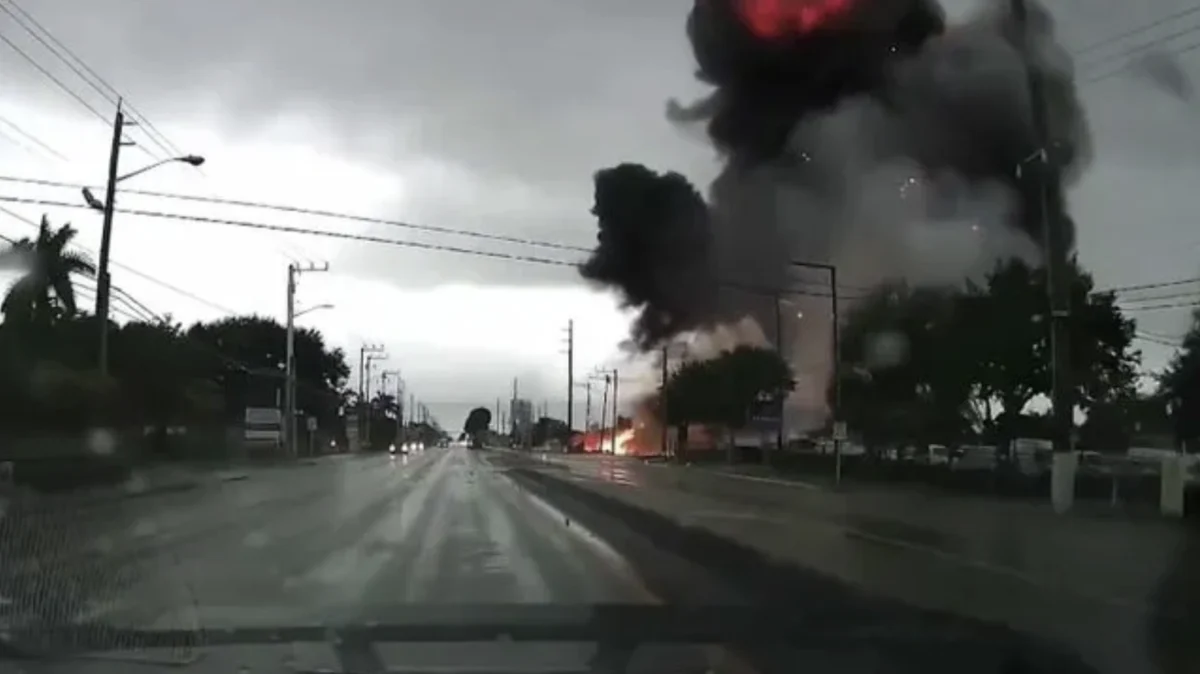
On November 1, 2026, a catastrophic aviation accident occurred in Palm Beach County, Florida, when a Bombardier Learjet 60 business jet crashed into a residential neighborhood, resulting in the deaths of all nine individuals on board. The incident, which took place shortly before 1:00 p.m. local time, has been characterized by aviation experts as the deadliest accident involving the Learjet 60 airframe to date. The tragedy claimed the lives of a prominent technology entrepreneur, his family, and a flight crew that included a veteran captain and a burgeoning young aviator. As federal investigators from the National Transportation Safety Board (NTSB) and the Federal Aviation Administration (FAA) begin their inquiry, the disaster has resonated globally due to harrowing dashcam footage and air traffic control (ATC) recordings that captured the aircraft’s final, violent moments.
Overview of the Disaster
The aircraft, a mid-size cabin Learjet 60 manufactured in 2004, was registered to a Delaware-based limited liability company and was frequently utilized for executive transport. On the day of the accident, the jet departed from Austin-Bergstrom International Airport in Texas, a primary hub for the United States’ growing technology sector. Its destination was the Bahamas, a common route for private business travel.
At approximately 12:50 p.m. ET, the flight encountered severe difficulties while transiting through the congested airspace of South Florida. According to preliminary flight data, the aircraft was cruising at an altitude of 35,000 feet—a standard flight level for transcontinental business jets—when the crew reported significant environmental hazards. Within minutes, the aircraft entered a terminal descent, striking the ground in a residential area near Military Trail, situated between Cresthaven Boulevard and 10th Avenue North. The impact site was located near the communities of Greenacres and Cresthaven, approximately seven miles southwest of West Palm Beach.
Flight Path and Technical Chronology
The flight from Austin began without incident, following a standard easterly trajectory across the Gulf of Mexico before crossing the Florida peninsula. As the Learjet 60 approached the Atlantic coast, it encountered a line of powerful thunderstorms characterized by high-altitude moisture and freezing temperatures.
Flight data monitors indicated that at 12:48 p.m., the crew engaged in communication with air traffic controllers regarding "moderate turbulence" and "icing conditions." Icing is a critical hazard for mid-sized jets, as it can accumulate on the leading edges of wings and stabilizers, disrupting the aerodynamic lift and increasing the aircraft’s total weight. One of the crew members reportedly informed ATC that they were "managing the ice" and requested a higher altitude to clear the weather system.
However, the climb never materialized. Instead, the aircraft underwent a sudden and unexplained loss of controlled flight. Radar telemetry showed the jet entered a rapid, vertical descent. In the span of approximately sixty seconds, the Learjet 60 plummeted roughly 27,000 feet. Investigative sources noted that the descent rates reached staggering figures of 10,000 to 30,000 feet per minute. Such speeds are well beyond the structural design limits of a civilian business jet, suggesting either a total aerodynamic stall or a catastrophic structural failure during the dive.
Meteorological Factors: The Role of Icing and Turbulence
The weather in Palm Beach County on November 1, 2026, played a central role in the initial assessment of the crash. Local meteorological stations reported a front moving through the region, producing localized but intense thunderstorms. These cells were capable of producing significant updrafts and downdrafts, as well as "supercooled" water droplets that freeze instantly upon contact with an aircraft’s surface.
Aviation analysts suggest that if the aircraft’s anti-icing systems—typically involving "weeping wings" or heated leading edges—were overwhelmed or failed, the aircraft would have become increasingly difficult to handle. At high altitudes, a "stall" occurs when the air can no longer flow smoothly over the wings. In a Learjet 60, which is known for its high-performance but sensitive handling characteristics, a stall at 35,000 feet requires precise recovery maneuvers. The combination of heavy icing and severe turbulence may have rendered such a recovery impossible for the crew.
Profiles of the Deceased
The tragedy resulted in the loss of nine lives, comprising seven passengers and two crew members. Among the victims was Adam Robinson, a 55-year-old tech entrepreneur known for his contributions to the software industry. Robinson was traveling with his family and close friends to the Bahamas for a private gathering. The loss of the Robinson family has prompted a wave of condolences from the Austin tech community and the broader business world.
The flight crew consisted of Captain Jeff Gregory, 55, and Copilot Nathalia Gadelha Filgueiras, 20. Captain Gregory was a veteran pilot with thousands of hours of experience in multi-engine jets. In contrast, Nathalia Gadelha was a rising star in the aviation community. Having earned her pilot’s license at the age of 17, Gadelha had frequently shared her passion for flying on social media, becoming an inspiration for young women entering the aerospace field. Her death, at such a young age and so early in her professional career, has been a focal point of public grief, with tributes appearing across various aviation forums and social media platforms.
Impact Site and Ground Response
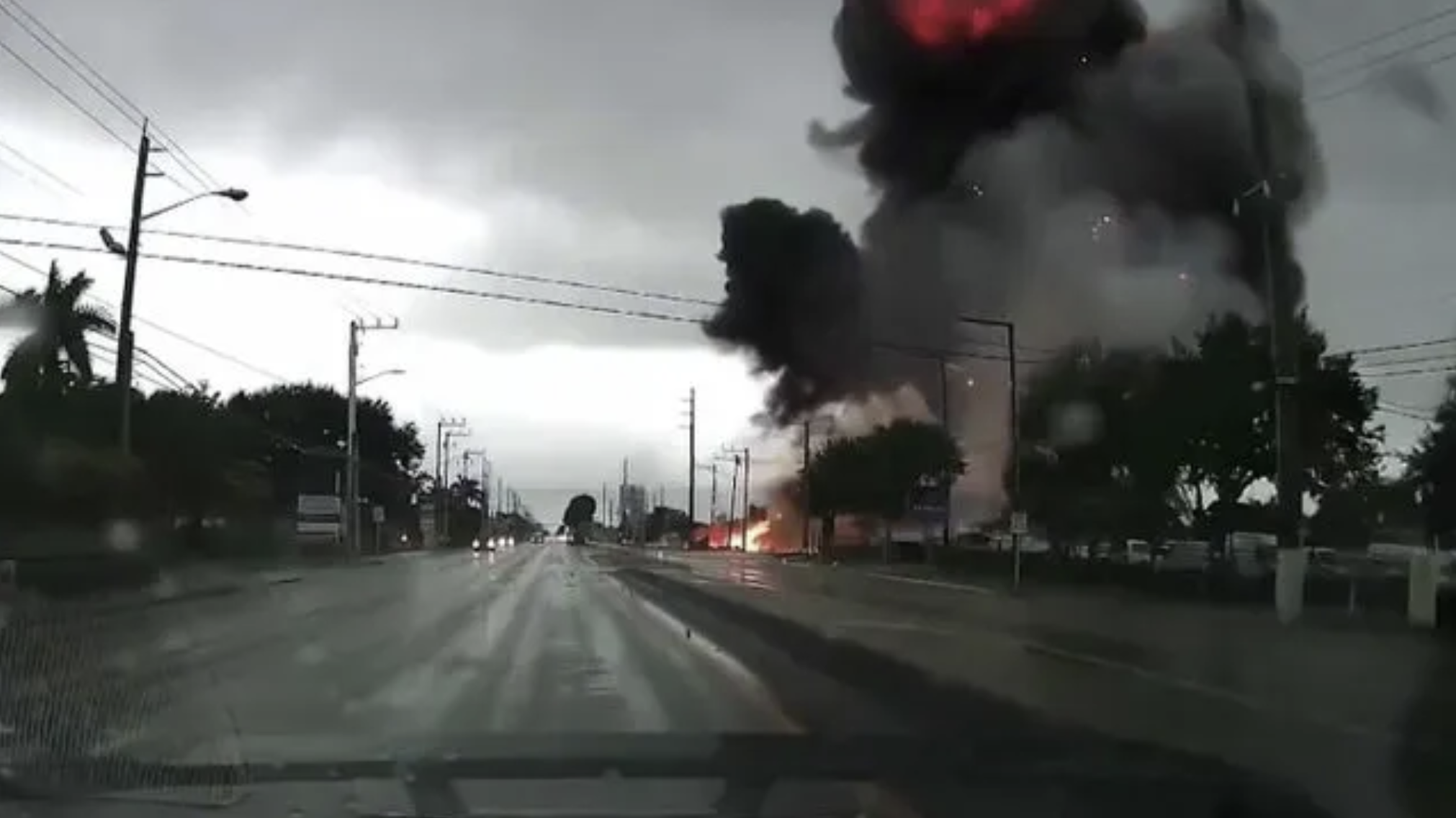
The crash occurred in a densely populated residential area, specifically striking near a mobile home park and a major roadway. Eyewitnesses described a sound "like a missile" followed by a massive explosion that shook homes for several blocks. The aircraft’s high-velocity impact created a significant crater and sent debris across a wide radius, severing power lines and destroying at least one residential structure.
Palm Beach County Fire Rescue and local law enforcement arrived on the scene within minutes. Despite the intensity of the post-impact fire, emergency responders were able to prevent the flames from spreading to adjacent homes. Remarkably, while the aircraft was completely destroyed and all on board perished, there were no reported fatalities on the ground. A vehicle captured on dashcam footage was seen narrowly avoiding the impact zone as the jet struck the earth just yards away. The occupants of the vehicle were reportedly treated for shock but remained physically unharmed.
Digital Echo: Social Media and ATC Recordings
The November 2026 Florida Private Jet Crash became a global news event almost instantaneously, driven by the digital footprint of the disaster. Within hours, dashcam footage from a vehicle traveling near Military Trail surfaced on X (formerly Twitter) and TikTok. The video showed the Learjet 60 in a near-vertical nose-dive, appearing as a dark streak against the grey clouds before disappearing behind a tree line, followed by a bright orange fireball and a column of black smoke.
Simultaneously, leaked ATC audio provided a chilling narrative of the flight’s final seconds. In the recordings, a female voice—believed to be Copilot Gadelha—is heard urgently reporting an "overspeed" condition. This suggests that during the descent, the aircraft was traveling so fast that it was at risk of breaking apart in mid-air. The recording ends with a "Mayday" call and a distressful scream, followed by silence. These recordings have been viewed tens of millions of times, leading to widespread public discourse regarding the terrors of the flight’s final minute.
Combatting Misinformation and Conspiracy Theories
As is increasingly common with high-profile disasters in the digital age, the Palm Beach crash became a magnet for online conspiracy theories. On platforms like TikTok and X, some users claimed the aircraft was shot down by a surface-to-air missile or that the footage of the crash was "digitally altered" due to the plane’s high speed, which some argued made it look like a missile rather than a business jet.
Aviation experts and "debunker" accounts quickly moved to counter these claims. Analysts pointed out that at a descent rate of 30,000 feet per minute, any aircraft would lose its traditional "airplane" silhouette to the naked eye and appear as a projectile. Furthermore, the lack of large debris at the site was explained by the high-energy impact; at such speeds, the aluminum airframe essentially disintegrates upon contact with the ground. Local authorities and the FAA have reiterated that there is no evidence of foul play or external interference, focusing the investigation squarely on mechanical failure and weather-related factors.
Investigative Focus and Aviation Safety Implications
The NTSB has recovered the "black boxes"—the Flight Data Recorder (FDR) and the Cockpit Voice Recorder (CVR)—from the wreckage. The investigation is expected to take between 12 and 24 months to reach a final conclusion. Key areas of focus will include:
- Anti-Ice Systems: Investigators will examine the wreckage for any signs of malfunction in the bleed-air systems that prevent ice buildup.
- Structural Integrity: The high descent rate raises questions about whether the tail or wings suffered a structural failure while at cruise altitude.
- Human Factors: The NTSB will look into the crew’s training and their response to the "overspeed" and "stall" warnings.
- Learjet 60 Safety Record: While the Learjet 60 is generally considered a reliable workhorse of the business aviation fleet, this incident will prompt a review of its stall-recovery characteristics in extreme weather.
The tragedy has already sparked calls for more robust weather-avoidance technology in private aviation and stricter requirements for icing-related training. As the community of West Palm Beach mourns the victims, the aviation world waits for answers that might prevent a similar catastrophe in the future. The Palm Beach County Learjet 60 Plane Crash remains a somber reminder of the unforgiving nature of high-altitude flight and the devastating impact of atmospheric hazards on even the most sophisticated modern machinery.

