
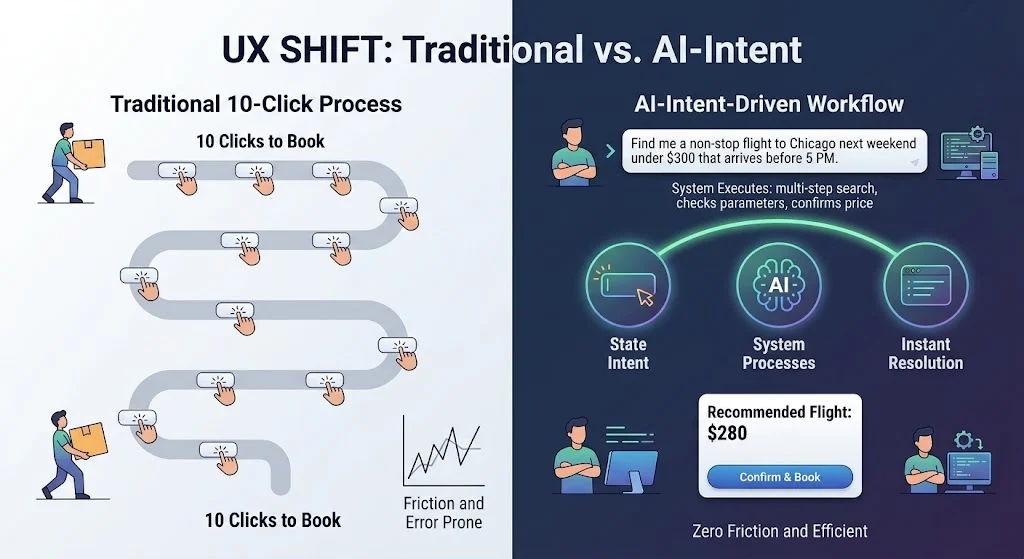
The digital landscape is undergoing its most significant structural transformation since the commercialization of the mouse and the desktop metaphor in the early 1980s. For over four decades, the primary contract between humans and software has been defined by the Graphical User Interface (GUI)—a system of menus, icons, and windows that requires users to learn the internal logic of a program to achieve a goal. However, a new paradigm known as Intent-Driven Design, powered by Large Language Models (LLMs) and generative artificial intelligence, is rapidly rendering these traditional visual elements obsolete. This shift represents a move away from "managing software" toward a future where technology anticipates and executes human intent with minimal manual intervention.
The Evolution of Interaction: From Commands to Intent
To understand the magnitude of this shift, one must look at the historical trajectory of human-computer interaction (HCI). In the 1970s, the Command Line Interface (CLI) required users to memorize specific syntax to communicate with machines. The 1981 release of the Xerox Star and the subsequent 1984 launch of the Apple Macintosh revolutionized this by introducing the GUI. This allowed users to point and click, making computing accessible to the masses but also introducing a new form of friction: the "mechanical workflow."

Under the GUI paradigm, a simple goal—such as booking a flight or researching a medical symptom—requires the user to navigate a labyrinth of sliders, checkboxes, cookie banners, and multi-step forms. Industry data suggests that the average online transaction now involves between 10 and 22 discrete clicks. Intent-Driven Design aims to collapse this "10-click process" into a single expression of intent. Instead of the user acting as the orchestrator of the software’s tools, the software becomes the orchestrator of the user’s goals.
A Chronology of the Interface Revolution
The transition from visible interfaces to invisible agents has occurred in distinct phases:
- 1981–2010: The GUI Era. Dominated by the WIMP (Windows, Icons, Menus, Pointers) paradigm. Success was measured by how intuitive the visual map of the software was.
- 2011–2022: The Mobile and App Era. Interaction moved to touch and gestures. Interfaces became more streamlined, but the underlying logic remained command-based.
- 2023–Present: The Generative AI Era. The introduction of ChatGPT and similar models shifted the focus to natural language. Interfaces began to "disappear" as users started communicating goals rather than clicking buttons.
- 2025 and Beyond: The Agentic Era (Projected). Systems will move from responding to prompts to autonomously executing tasks across multiple platforms using "Intent-Driven Design."
Analyzing the Friction of the Modern Web
Current web design is often characterized by "interaction bloat." A study on user behavior indicates that nearly 70% of e-commerce shoppers abandon their carts, often citing overly complex checkout processes and mandatory form fields as primary deterrents. The traditional workflow for a high-intent task, such as organizing a business trip, involves opening dozens of browser tabs to cross-reference prices, dates, and locations.
Intent-Driven Design flips this dynamic. When a user provides a high-level goal—for example, "Find me a non-stop flight to Chicago next Friday for under $400 that lands before my 6:00 PM meeting"—the AI agent performs the data scraping, comparison, and filtering in the background. The interface is no longer a static map of options; it is a dynamic resolution engine.
Market Leaders and the Move Toward Zero-Interface
Several platforms are already implementing these principles, providing a blueprint for the future of the web:
Perplexity AI and the Transformation of Search
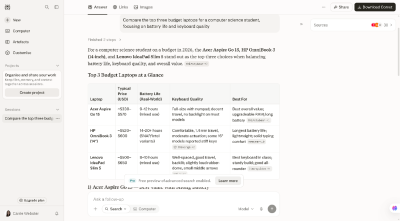
Traditional search engines like Google act as directories, providing a list of links that the user must then investigate individually. Perplexity AI utilizes intent-capturing systems to synthesize information. Instead of rewarding a query with "ten blue links," it provides a comprehensive, cited answer that aggregates data from across the web, effectively eliminating the need for the user to open multiple tabs.
Vercel v0 and Generative Development
In the realm of software development and design, Vercel v0 has introduced a "Generative UI" model. Historically, building a web component required manual manipulation of CSS, HTML, and design tools like Figma. With v0, a developer describes the intent—"Create a dark-themed dashboard for a financial app with a real-time stock ticker"—and the system generates the functional code and interface instantly. The designer’s role shifts from "drawing rectangles" to "refining intent."
Goblin.tools and Neuro-Inclusive Design
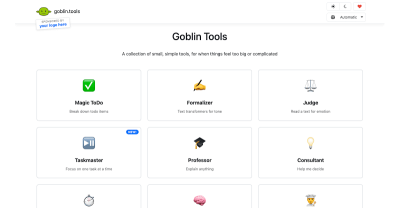
A notable example of intent-driven utility is Goblin.tools, a suite of AI tools designed to break down overwhelming tasks. For users with executive dysfunction or those facing complex projects, the tool takes a single high-level input (e.g., "Prepare for a job interview") and autonomously generates a detailed, manageable checklist. This removes the "blank page syndrome" and the cognitive load of manual task planning.
The Three Pillars of Intent-Driven UX
Designers and engineers are increasingly adhering to three core pillars to facilitate this transition:
- High-Level Goal Capture: Moving away from micro-actions (dropdowns and toggles) toward capturing natural language and contextual metadata (location, device state, and past habits).
- Generative UI: Rather than static layouts that look the same for every visitor, interfaces are rendered dynamically on the fly. If a user is searching for a flight, the UI becomes a flight comparison tool; once the flight is booked, the UI transforms into a boarding pass or a destination guide.
- Autonomous Execution: AI agents handle the "grunt work" of task execution. Following Jakob Nielsen’s usability heuristics, the focus shifts from preventing errors via confirmation pop-ups to ensuring "easy reversibility" through robust undo functions and transparent audit logs.
Supporting Data and Economic Implications
The shift toward Intent-Driven Design is not merely an aesthetic choice; it is driven by economic necessity and efficiency. According to a 2024 report by McKinsey & Company, generative AI has the potential to automate tasks that currently occupy 60% to 70% of employees’ time. In the context of UX design, this means a significant reduction in the "time-to-value" metric for consumers.
Furthermore, Gartner predicts that by 2026, 30% of new app interfaces will be generated by AI in real-time based on user behavior, up from less than 5% in 2023. Companies that fail to adapt to this "invisible interface" model risk losing users to platforms that offer faster, intent-based resolutions.
Ethical Challenges and the "Black Box" Problem
Despite the efficiency gains, the removal of visual controls introduces significant risks. Industry experts and organizations like the Center for Humane Technology have raised concerns regarding:
- The Illusion of Control: When software makes decisions on behalf of a user, it can lead to a loss of agency. Designers must determine which actions require explicit "high-stakes" confirmation (such as financial transactions) and which can be automated.
- The Black Box Problem: In a traditional UI, a user can see why a search failed (e.g., a filter was set incorrectly). In an intent-driven system, the reasoning is often hidden. The Google PAIR (People + AI Research) Guidebook emphasizes the need for "explainability," where the AI explicitly states its interpretation of the user’s intent to build trust.
- Algorithmic Bias: Intent-driven systems rely on inferred data. If the underlying model is biased, the "invisible" execution could lead to discriminatory outcomes without the user’s knowledge.
Professional Responses and the Future of the Designer
The design community has reacted to these changes with a mixture of apprehension and optimism. Leading HCI theorists, including Don Norman, have long advocated for human-centered design that prioritizes the user’s needs over the machine’s requirements. The current shift is seen as the ultimate realization of Golden Krishna’s "The Best Interface Is No Interface" philosophy.
For UX professionals, the job description is evolving. The focus is shifting from "visual design" (the aesthetics of buttons and cards) to "experience orchestration." Designers are now tasked with mapping complex intent flows, training AI models on brand-specific logic, and ensuring that generative UIs remain accessible and ethical.
Conclusion: Redefining Success Metrics
For decades, the digital industry has evaluated success through engagement metrics: time spent in-app, click-through rates, and page views. These metrics incentivized "friction"—keeping users on a site for as long as possible. Intent-Driven Design represents a total inversion of this philosophy.
In the new era of the web, the ultimate test of a digital product is no longer how visually captivating its interface is, but how effectively it solves a problem and "gets out of the way." Success will be measured by "time saved" rather than "time spent." As the web moves toward seamless, invisible completion, the "death of the button" marks the birth of a more human-centric, intent-aligned digital future. The best design is no longer a prettier button; it is the total elimination of the need to click one.

