
The current trajectory of artificial intelligence adoption within the corporate sector is increasingly being characterized by industry analysts as a repetition of the structural errors observed during the digital transformation era of the early 2010s. Despite the rapid advancement of generative AI technologies, many organizations are treating the integration of these tools as a purely technological hurdle, overlooking the critical human and cultural shifts required for sustainable success. This phenomenon, which echoes the "farcical" implementation strategies of a decade ago, suggests that leadership teams have failed to internalize the lessons documented during the first major wave of digital adaptation.
In 2014, the publication of Digital Adaptation by Paul Boag highlighted a fundamental disconnect between executive intent and operational reality. At that time, organizations were heavily investing in Content Management Systems (CMS), Customer Relationship Management (CRM) platforms, and internal intranets, yet they faced significant resistance and underutilization. Today, a similar pattern is emerging with the rollout of AI assistants and large language model (LLM) integrations. By focusing on license procurement rather than workflow integration, companies risk replicating a decade-old failure on a significantly more expensive and volatile scale.
The Technological Iceberg: Beyond Implementation
The primary misconception hindering modern AI adoption is the belief that the challenge is solved once the technology is deployed. In the digital transformation era, IT departments focused on the "tip of the iceberg"—the software itself—while ignoring the submerged mass of user experience, process redesign, and cultural readiness. Modern AI rollouts, such as the company-wide deployment of Microsoft Copilot or Google Gemini, are currently following this flawed blueprint.
Data from the digital transformation era indicates that nearly 70% of initiatives failed to reach their stated goals, primarily due to employee resistance and lack of management support. In the current landscape, the stakes are higher. While 2014-era digital tools were designed to streamline communication, 2024-era AI is perceived as a direct threat to cognitive labor. According to a 2023 report by Goldman Sachs, generative AI could potentially automate the equivalent of 300 million full-time jobs globally. This environmental factor creates a psychological barrier that did not exist during the previous digital wave: a profound fear for job security.
A Chronology of Adoption Errors (2014–2024)
To understand the current crisis, it is necessary to examine the timeline of organizational technology adoption over the last decade:
- 2014–2016: The Infrastructure Era. Organizations focused on moving to the cloud and digitizing physical records. The mistake was building "digital silos" where different departments used incompatible tools, leading to fragmented data.
- 2017–2020: The Data-Driven Pivot. Companies began prioritizing Big Data and analytics. However, without a cultural shift toward data literacy, these tools often sat idle, or produced "vanity metrics" that failed to inform strategy.
- 2021–2022: The Remote Work Catalyst. The pandemic forced a rapid, unplanned digital adoption. While successful in maintaining operations, it left many organizations with "technical debt" and a workforce exhausted by "zoom fatigue" and constant digital connectivity.
- 2023–Present: The Generative AI Explosion. Following the release of ChatGPT, organizations rushed to adopt AI. The current error is a "top-down" mandate that ignores the procedural knowledge of the staff who are expected to use these tools daily.
The Productivity Paradox and Employee Motivation
A central tension in AI adoption is the "Productivity Paradox." From a management perspective, AI is a tool for hyper-efficiency, allowing a company to produce more output with fewer resources. However, for the average employee, this increased productivity rarely translates into personal benefit.
Under traditional 9-to-5 working structures, an employee who uses AI to complete their tasks in half the time is often rewarded with a doubled workload rather than increased compensation or reduced hours. This misalignment of incentives is a major deterrent to adoption. Journalistic analysis of corporate sentiment suggests that without clear "Value Propositions for the Individual," staff will continue to view AI as a burden rather than an opportunity. To mitigate this, some forward-thinking firms are experimenting with four-day work weeks or "AI bonuses" to incentivize the mastery of new tools, yet these remain outliers in a landscape dominated by rigid performance metrics.
The "Safe to Fail" Requirement
Organizational psychology suggests that innovation cannot flourish in a culture of fear. During the digital transformation era, employees were often penalized for errors made while learning new systems, leading to a "play it safe" mentality. This same culture is stifling AI experimentation today.
Reports have surfaced of employees being reprimanded for "token wastage" or minor hallucinations in AI-generated drafts, despite being told to "embrace the future." When Key Performance Indicators (KPIs) remain tethered to traditional output metrics, employees lack the "cognitive surplus" required to experiment with AI prompts and workflows. Experts argue that for AI to be successfully integrated, management must provide a "sandbox" period—a specific timeframe where mistakes are expected and KPIs are adjusted to account for the learning curve.
Governance vs. Innovation: The Rise of Shadow AI
One of the most dangerous parallels to the 2014 era is the emergence of "Shadow AI." A decade ago, "Shadow IT" saw employees using personal Dropbox accounts or unauthorized messaging apps because official corporate tools were too cumbersome. Today, the same phenomenon is occurring with AI.
When IT departments implement overly restrictive governance policies—often out of a legitimate fear of data leaks—they inadvertently drive employees to use personal ChatGPT or Claude accounts on mobile devices. This creates a massive security vacuum. According to a 2024 Work Trend Index by Microsoft and LinkedIn, 75% of knowledge workers are already using AI at work, and many are doing so without official oversight.

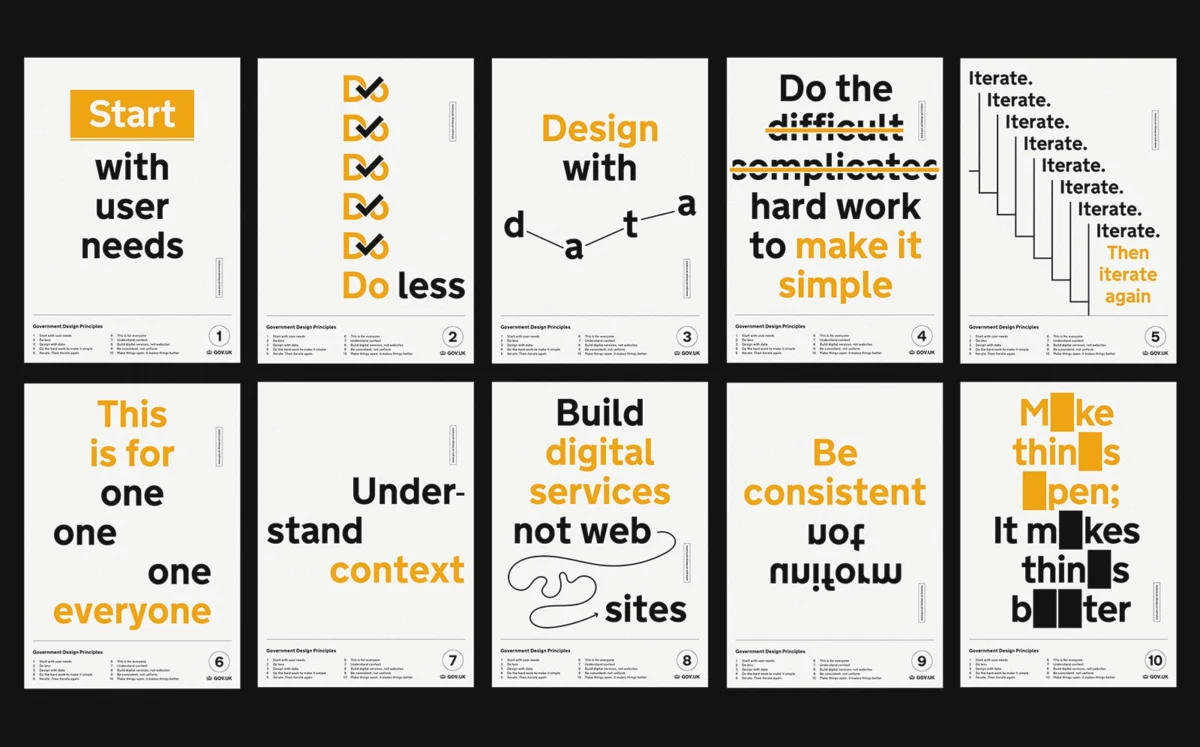
The solution, as suggested by the GOV.UK design principles, is not more bureaucracy but clearer, simpler guidelines. A "handful of principles" that emphasize common sense and data privacy is more effective than a 50-page compliance manual that no one reads. By trusting staff and providing flexible, approved toolsets, organizations can bring AI usage out of the shadows and into a controlled, productive environment.
Supporting Data and Market Reactions
Market analysts have noted that the "honeymoon phase" of AI is ending, and investors are beginning to demand evidence of ROI. A recent Gartner study predicted that by 2025, growth in generative AI will slow as organizations realize the high costs and complexities of implementation.
Furthermore, the "enthusiast-led" model of adoption is proving more effective than top-down mandates. In organizations where "AI Champions"—regular staff members who are naturally interested in the tech—are given the platform to teach their peers, adoption rates are 40% higher than in companies using traditional corporate training modules. This "social proof" is a powerful psychological tool; employees are more likely to trust a colleague’s shortcut than a CEO’s memo.
Broader Impact and Strategic Implications
The failure to properly adapt to AI has implications beyond individual corporate balance sheets. It affects national productivity and global competitiveness. If the Western corporate world continues to treat AI as a "plug-and-play" software update rather than a fundamental restructuring of work, it risks losing ground to more agile, technologically integrated economies.
In conclusion, the path forward requires a shift in focus from the "artificial" to the "intelligence" of the human workforce. Organizations must prioritize:
- Role-Specific Training: Moving away from generic webinars toward hands-on workshops tailored to specific departments, such as UX design or financial auditing.
- Incentivized Adoption: Aligning AI proficiency with career progression and tangible rewards.
- Adaptive Governance: Creating a "living" tech stack that allows for the exploration of new tools as the AI field evolves, rather than locking into a single vendor.
The lessons of 2014 are clear: technology does not transform organizations; people do. Those who continue to ignore the human element of the AI revolution are destined to repeat the costly mistakes of the past, likely with even more devastating consequences for their long-term viability in an increasingly automated world.

