
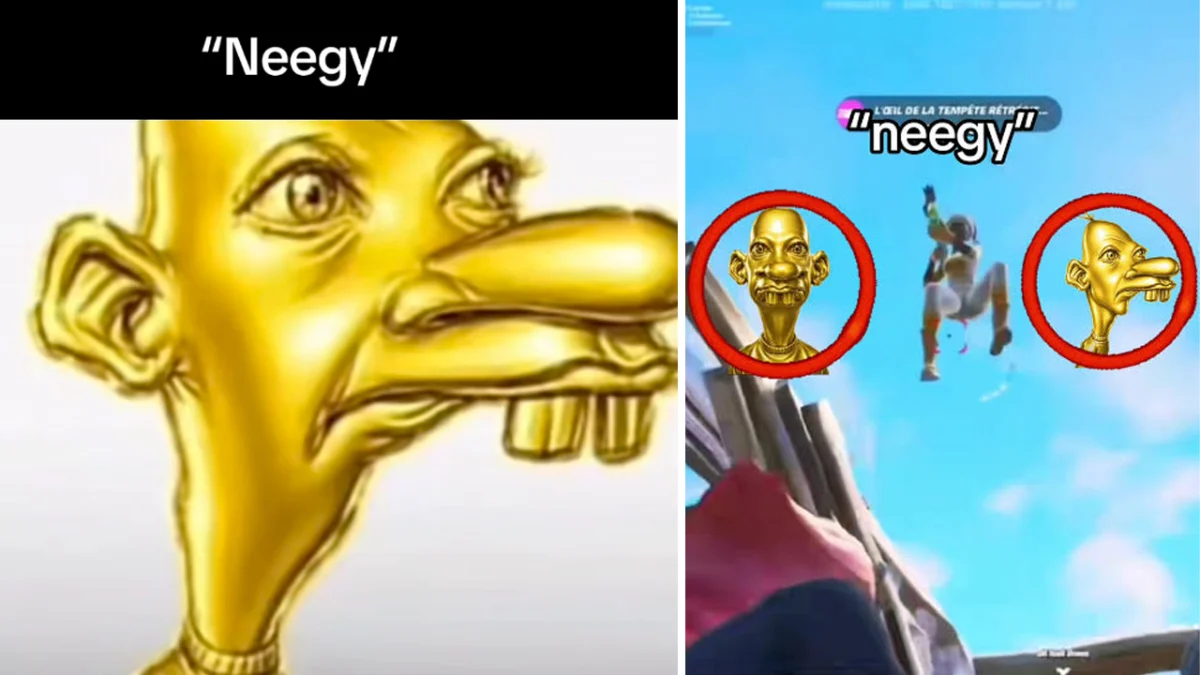
The digital landscape of 2026 has witnessed the rapid ascent of a new linguistic trend known as "neegy," a term that has transitioned from the niche corridors of online gaming lobbies to the forefront of mainstream social media. Characterized by its repetitive use in short-form video content, the "neegy" meme represents a complex intersection of gaming culture, regional dialects, and the evolving "brainrot" aesthetic prevalent on platforms like TikTok and Instagram. At its core, the trend revolves around a specific audio clip derived from a Fortnite voice chat, paired with a distinct visual mascot—a gold-colored caricature that has become the face of the movement.
The Linguistic Foundations of the Neegy Phenomenon
To understand the proliferation of the "neegy" meme, one must first deconstruct the primary catchphrase associated with it: "Man, SYFBAU neegy!" The acronym "SYFBAU" stands for "Shut your f—ing b—h a– up," a common aggressive refrain found in competitive gaming environments. However, it is the final word, "neegy," that has sparked the most significant curiosity and debate among digital linguists and casual observers alike.
Linguistic analysis suggests that "neegy" is not a nonsensical creation but rather a phonetic evolution of existing slang. Within the comments sections of viral videos and across community forums, many users have pointed toward its origins in Mexican-American and Californian regional dialects. Specifically, the term is frequently associated with the "Edgar" subculture—a youth stereotype characterized by specific fashion choices and a distinct manner of speaking. In this context, "neegy" is widely understood to be a phonetic variation of a racial slur (specifically the version ending in "a"), altered by heavy accents or a deliberate stylistic pronunciation common in certain West Coast urban communities.
While the term may have existed in localized slang for years, its transformation into a global meme was facilitated by the high-friction environment of Fortnite’s voice chat. The aggressive, high-pitched delivery of the word in the original viral clip provided the "sonic hook" necessary for the TikTok algorithm to identify and amplify the content.
Chronology of the Trend’s Ascent
The viral trajectory of the "neegy" meme can be traced back to early July 2026. On July 9, 2026, a TikTok user under the handle @1104yyh uploaded what is now considered the "patient zero" of the trend. The video featured standard Fortnite gameplay footage, but it was the audio—a recording of a young player shouting the phrase—that captured the public’s attention. The video was succinctly captioned "new slang," a move that successfully signaled to the platform’s younger demographic that a new piece of "brainrot" vocabulary was available for adoption.
Within 48 hours of the initial post, the video garnered millions of views. By July 12, 2026, the audio had been "stripped" and repurposed by thousands of other creators. These early adopters began integrating the sound into "reaction" videos, where creators would film themselves listening to the outburst, often with exaggerated facial expressions.
A significant turning point occurred on July 14, 2026, when a front-facing version of the "gold character"—the meme’s unofficial mascot—was introduced in a high-engagement repost. This visual update gave the meme a tangible identity beyond the audio clip. By mid-July, the slang had migrated from TikTok to X (formerly Twitter) and Instagram Reels, marking its transition from a platform-specific joke to a broader cultural moment. By late July 2026, the term had been used in over a million unique video creations, ranging from dance remixes to high-effort 3D animations.
Visual Iconography and the "Gold Character"
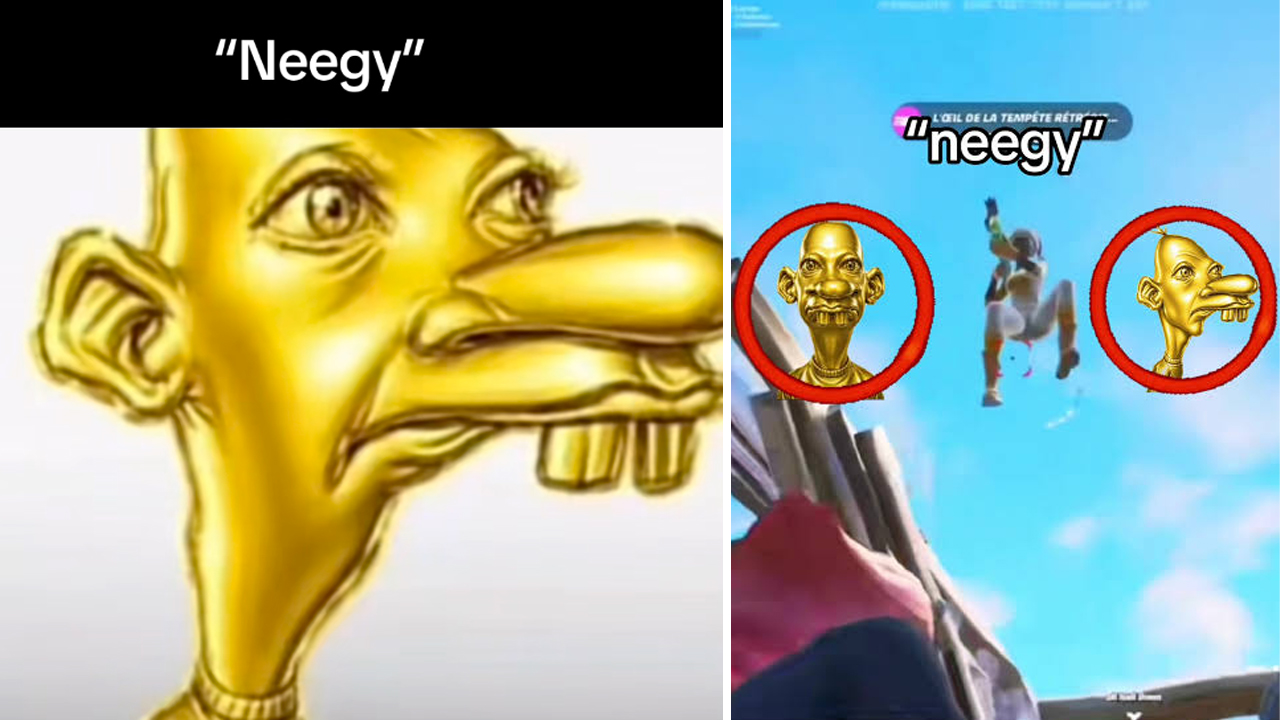
A defining feature of the "neegy" meme is its reliance on a specific visual motif. The most common image associated with the trend is a gold-colored, caricature-style character with exaggerated facial features. Observers have noted the character’s striking resemblance to Manny Heffley, a character from the Diary of a Wimpy Kid book series, though modified with a metallic texture and distorted proportions.
The use of this character serves several functions within the meme’s ecosystem:
- Brand Recognition: The gold character acts as a thumbnail "hook." Users scrolling through their feeds can immediately identify a "neegy" video by the presence of the character, even before the audio plays.
- The "Red Circle" Trope: Many iterations of the meme feature the gold character circled in red, often with an arrow pointing toward it. This is a satirical nod to "clickbait" YouTube thumbnails from the late 2010s, adding a layer of meta-irony that appeals to Gen Z and Gen Alpha audiences.
- AI Integration: As the trend peaked in late July 2026, creators began using generative AI tools to create variants of the character, placing it in various historical or cinematic settings, further extending the meme’s lifespan through sheer visual novelty.
Data and Engagement Metrics
The "neegy" trend is a textbook example of "engagement bait" success. On TikTok, the original audio clip has been used in hundreds of thousands of videos, with the top ten most popular videos collectively amassing over 150 million views. Data from social listening tools indicates that the term "neegy" saw a 4,000% increase in search volume during the second week of July 2026.
Demographic data suggests the meme is most popular among users aged 13 to 24, with a significant concentration of engagement in the United States, particularly in regions with high Hispanic populations such as California, Texas, and Arizona. This geographic data supports the theory that the term originated in Mexican-American slang before being popularized by the broader gaming community.
The "brainrot" nature of the content—defined by its repetitive, nonsensical, and high-energy qualities—ensures high retention rates. Platforms favor this type of content because it encourages "looping," where a user watches a 5-to-10-second clip multiple times to process the chaotic audio and visuals.
Sociocultural Implications and Community Reactions
The rise of "neegy" has not been without controversy. Because the term is widely recognized as a phonetic variation of a racial slur, its use by non-Black creators has sparked discussions regarding linguistic appropriation and the boundaries of "internet slang."
Members of the Mexican-American community have offered mixed reactions. Some view the meme as a humorous reflection of a specific cultural dialect, while others criticize the way the term has been stripped of its context and turned into a "brainrot" joke for a global audience that may not understand its origins.
Furthermore, the "neegy" phenomenon highlights the increasing influence of gaming lobbies as the primary "foundry" for modern English slang. Much like "rizz," "gyatt," and "skibidi" before it, "neegy" began as an organic interaction between players in a digital space before being commodified by short-form video algorithms. This process demonstrates a shift in how language evolves: rather than moving from literature or film to the public, language now moves from spontaneous, recorded digital outbursts to global ubiquity in a matter of days.
Analysis of the "Brainrot" Content Model
The "neegy" meme is a cornerstone of what is colloquially termed "brainrot" culture. This genre of internet content prioritizes sensory overload and absurdist humor over traditional narrative or logic. In the case of "neegy," the humor is derived from the sheer aggression of the audio contrasted with the bizarre, golden mascot.
From a psychological perspective, these memes function as "pattern interrupts." In a sea of polished, high-production social media content, a distorted, loud, and nonsensical "neegy" edit stands out, forcing the viewer to pause. This pause is enough to signal to the algorithm that the content is engaging, leading to further distribution.
The "neegy" trend also benefits from the "remixability" of its components. The audio is easily layered over different gameplay clips, and the gold character is easily photoshopped into different backgrounds. This low barrier to entry for content creation allows the meme to stay relevant as thousands of creators put their own "spin" on the format daily.
Future Outlook and Conclusion
As with most viral slang, the "neegy" meme is expected to follow a standard lifecycle of peak popularity followed by a gradual decline into "ironic" usage. However, its impact on the digital lexicon remains significant. It has successfully bridged the gap between niche regional slang and the global "gaming-to-TikTok" pipeline.
The "neegy" phenomenon serves as a case study in modern digital communication. It illustrates how a single 10-second interaction in a virtual world like Fortnite can, through the power of algorithmic amplification and visual branding, redefine the vocabulary of an entire generation. Whether viewed as a harmless piece of internet nonsense or a complex linguistic artifact, "neegy" has secured its place in the history of 2026’s digital culture, proving once again that in the age of social media, the most unexpected sounds can become the loudest voices in the room.

