
This week’s comprehensive review of new services for merchants highlights a significant surge in technological advancements aimed at optimizing every facet of the online retail experience. From AI-driven customer engagement tools to streamlined cross-border logistics and sophisticated affiliate marketing platforms, the e-commerce ecosystem is rapidly evolving to meet the demands of both businesses and consumers. The releases underscore a broader trend toward leveraging artificial intelligence, data analytics, and platform integrations to enhance product discovery, personalize customer interactions, and simplify complex operational challenges. This report delves into the key innovations, exploring their functionalities, potential impacts, and the strategic reasoning behind their development.
AI-Powered Tools Revolutionize Merchant Operations
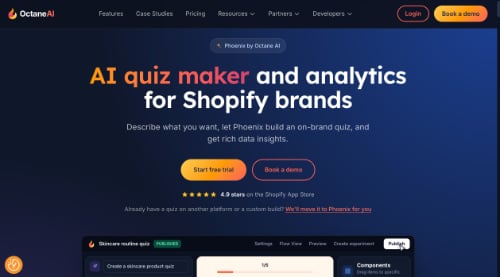
The integration of artificial intelligence into e-commerce solutions continues to accelerate, offering merchants unprecedented capabilities in customer engagement and content creation. A prime example is the launch of Octane AI’s Phoenix, an AI quiz builder designed specifically for Shopify merchants. This innovative tool moves beyond basic quiz creation by automating the process of building, checking, personalizing, and continuously improving quizzes. Merchants can now generate complex quiz logic, email opt-in flows, and tailored result pages from simple prompts or existing content in a matter of minutes. The platform’s ability to autonomously experiment and refine quiz performance suggests a future where personalized customer data collection becomes significantly more efficient and effective. The growing demand for zero-party data – information willingly shared by consumers – makes tools like Phoenix invaluable for building deeper customer relationships and driving targeted marketing campaigns. Industry analysts note that such AI-driven personalization can lead to a substantial increase in conversion rates and customer loyalty, as consumers feel more understood and catered to.
In a similar vein, Btab Ecommerce Group has introduced Btab.app, an AI-powered platform designed to connect manufacturers and entrepreneurs. This solution empowers entrepreneurs to establish branded online stores and offer supplier products without the burden of upfront inventory investment. The platform’s user-friendly interface allows for rapid store creation and personalization, enabling merchants to present a cohesive brand identity while accessing a vast catalog of products. The "free to start" model with no monthly subscription fees lowers the barrier to entry for aspiring e-commerce entrepreneurs, fostering a more inclusive and dynamic market. This approach aligns with the growing trend of dropshipping and print-on-demand models, which rely heavily on efficient supplier integration and streamlined storefront management. The platform’s potential to democratize e-commerce by reducing initial capital requirements is a significant development for the industry.

The realm of AI-generated advertising is also seeing rapid innovation. Cuttable has secured $20 million in funding to automate ad creative generation for Meta platforms. By analyzing a brand’s existing photos, videos, and Shopify order data, Cuttable leverages AI to produce tailored advertisements. The platform’s unique capability to track messaging nuances, such as promotional offers or product origin stories, and ensure human approval before publishing, strikes a balance between AI efficiency and brand control. This approach addresses a critical pain point for many businesses: the time-consuming and resource-intensive process of creating effective ad creatives. With the average cost of customer acquisition rising, the ability to rapidly generate high-performing ads can offer a significant competitive advantage. The investment in Cuttable signals strong investor confidence in AI’s ability to revolutionize advertising workflows.
Furthermore, AdFury has launched a self-service, AI-native rich media tool designed for retail media and digital shelf optimization. This tool generates compliant rich media or expanded content directly from a brand’s product page, initially available on Walmart.com with plans for Amazon and other retailers. Rich media, which often includes interactive elements or enhanced visuals, has been shown to significantly improve user engagement and conversion rates compared to standard product listings. By automating the creation of such content, AdFury enables brands to enhance their presence on increasingly important retail media networks without requiring extensive technical expertise or creative resources. This capability is particularly crucial as retailers continue to expand their advertising platforms, offering brands new avenues to reach consumers at the point of purchase.
Bridging Gaps: Cross-Border Commerce and Logistics Enhancements
Global e-commerce continues its upward trajectory, and with it comes a growing need for efficient and reliable cross-border solutions. Blue Dart, an India-based logistics provider, has launched its International Parcel Connect service, facilitating U.S. shipping for Indian online sellers. This service, powered by DHL eCommerce and Blue Dart’s network, supports B2C parcels within a specified weight range and aims to expand to other key international markets like the U.K., E.U., Canada, and Australia. This development is critical for small and medium-sized enterprises (SMEs) in India looking to tap into the lucrative U.S. market. The complexities of international shipping, including customs, duties, and differing regulatory landscapes, can be a significant barrier. By offering a dedicated service, Blue Dart is simplifying this process, potentially unlocking new revenue streams for Indian businesses and increasing the availability of Indian products to global consumers.
In a similar vein, Klarna Group has introduced Consumer FX, a service enabling shoppers to purchase from participating Klarna merchants worldwide and pay in their local currency without incurring exchange fees. This initiative eliminates a significant friction point in cross-border shopping, where currency conversion costs and complexities can deter consumers. For merchants, it means seamless access to Klarna’s extensive global consumer base across 26 countries without the need for new integrations, local entities, or foreign bank accounts. Klarna’s handling of foreign exchange disclosure, consent, and compliance further simplifies the international selling process for businesses. This move is expected to boost cross-border sales for merchants and enhance the shopping experience for consumers, making global e-commerce more accessible and user-friendly.
The logistics sector is also witnessing consolidation and expansion. Stord, a prominent supply chain and logistics company, has acquired AMS Fulfillment. This acquisition significantly expands Stord’s operational footprint, adding over one million square feet of warehousing space across key U.S. hubs, including the East and West Coasts. AMS Fulfillment’s existing capacity to process over 10 million orders annually for direct-to-consumer (D2C) brands will now be integrated into Stord’s expansive network, which spans more than 100 global locations. This strategic move enhances Stord’s ability to provide end-to-end supply chain solutions, from warehousing and fulfillment to transportation, for a larger number of D2C brands. The combined entity is better positioned to handle the increasing demands of e-commerce logistics, offering greater scalability and efficiency to its clients.
Enhancing Product Discovery and Customer Insights
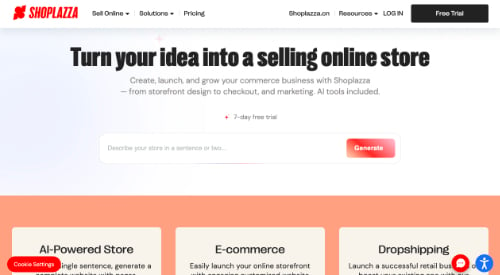
The way consumers discover and interact with products online is undergoing a profound transformation, driven by AI and platform integrations. Shoplazza, an AI-native commerce operating system, is collaborating with TikTok to enhance agentic commerce shopping experiences. This partnership integrates Shoplazza’s capabilities with TikTok’s new "Buy Direct" and "Shopping Assistant" features. "Buy Direct" allows consumers to purchase items directly within the TikTok app, shortening the path from discovery to purchase. The "Shopping Assistant," powered by merchant-supplied information, answers product-related queries within TikTok’s in-app browser. Shoplazza’s existing support for catalog syncing, TikTok Pixel, and Events API setup further streamlines this integration, enabling brands to leverage TikTok’s massive user base for direct sales and enhanced product engagement. This synergy between social media platforms and e-commerce infrastructure is a key trend, transforming passive browsing into active shopping opportunities.
Similarly, Glance and Google are partnering to bring an AI-powered commerce experience to Android TV. This collaboration aims to transform smart TVs into interactive shopping portals. Leveraging hundreds of retailer integrations, the AI shopping agent acts as a personal concierge, offering curated product recommendations and contextual lifestyle simulations, including virtual try-on visualizations. This innovative approach extends the e-commerce frontier into the living room, offering a novel way for consumers to discover and engage with products in a more immersive and personalized manner. The potential for impulse purchases and enhanced product exploration through such integrated experiences is significant.
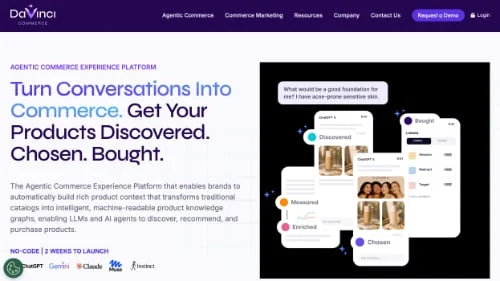
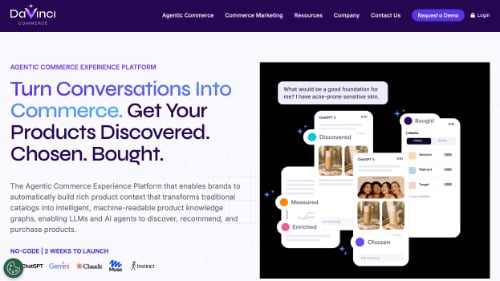
In the realm of customer reviews, a crucial element of online trust and product validation, Bazaarvoice and DaVinci Commerce are joining forces. This partnership will integrate Bazaarvoice’s extensive network of ratings and review data into DaVinci Commerce’s shopping architecture, including its Brand Agent and Product Context Memory technology. This integration will power shopping applications within OpenAI and other agentic storefront destinations, ensuring that user-generated content is readily available where AI-driven product discovery occurs. The ability for AI shopping agents to access authentic shopper reviews can dramatically influence purchasing decisions, providing consumers with reliable social proof directly within their AI-assisted shopping journeys. This move signals a growing recognition of the importance of authentic feedback in the age of AI-powered commerce.
VerifiedViews has launched Verified Purchaser Intelligence (VPI), a suite of AI analytics tools designed to analyze product ratings, reviews, and customer feedback. Utilizing AI-powered narrative analytics, VPI organizes this feedback into a continuously updated dashboard, identifying recurring themes and emerging issues related to product performance, packaging, messaging, and perceived value. For brands, this offers a powerful way to gain actionable insights from customer sentiment, enabling them to proactively address product development concerns, refine marketing messages, and enhance overall customer satisfaction. The ability to derive meaningful intelligence from unstructured feedback data is becoming increasingly critical for competitive product management.
The Rise of Agentic Commerce and Digital Wallets
The concept of "agentic commerce," where AI agents assist or perform shopping tasks on behalf of consumers, is gaining significant traction. Commerce.com, in partnership with Cloudflare, is bringing AI shopping assistants to BigCommerce merchants’ online stores through WebMCP. This initiative empowers AI agents within shoppers’ web browsers to search, compare, and shop directly on BigCommerce merchant sites. By leveraging the BigCommerce MCP Toolkit, which provides agents access to real-world task functions, WebMCP enables these agents to interact with storefronts and perform shopping actions. This development signifies a shift towards a more automated and intelligent shopping experience, where AI plays a more active role in navigating the online retail landscape for consumers.
The integration of cryptocurrencies and stablecoins into mainstream payment systems is also accelerating. Mesh has partnered with Visa to enable stablecoin and crypto balances to be spendable across Visa’s vast global acceptance network. This collaboration bridges the gap between the burgeoning world of digital assets and traditional payment infrastructure. Consumers can now use their cryptocurrency holdings to make purchases in-store and online, while merchants receive standard payments without any changes to their existing checkout workflows or hardware. This development could significantly increase the utility and adoption of cryptocurrencies for everyday transactions, making them more accessible to a broader consumer base.
Affiliate Marketing and Creator Economy Integration
The creator economy continues to be a significant driver of e-commerce growth, with new partnerships emerging to facilitate influencer marketing. AliExpress has announced a global strategic affiliate partnership with YouTube. This collaboration brings AliExpress’s extensive product catalog directly into YouTube’s creator ecosystem, providing creators with products to feature in their content and offering them commission-earning opportunities. Following an initial launch in South Korea, the partnership is set to expand to the U.S., Brazil, the U.K., and Germany. This alliance leverages the immense reach and engagement of YouTube creators to drive product discovery and sales for AliExpress, creating a powerful symbiotic relationship between content creation and commerce.
Roster, a platform for ambassador, affiliate, and creator programs, has enhanced its offerings with the addition of TikTok Spark Ads and Creator Discovery. This feature allows brands to search the TikTok Creator Marketplace and transform a creator’s top organic posts into Spark Ads, with all permissions meticulously tracked within Roster. Brands can now manage creator marketing campaigns across Instagram, Facebook, and TikTok from a single, integrated platform. The inclusion of Meta’s Creator Discovery tool and partnership ads further solidifies Roster’s position as a comprehensive solution for brands seeking to harness the power of the creator economy across multiple social media channels.
Digital Payments and Transaction Intelligence
The digital payments landscape is continually evolving with innovations aimed at enhancing security and customer recognition. TransUnion, a credit rating company, has introduced Transaction Matching to help merchants better identify and understand their customers. This offering utilizes Fiserv’s Unknown Shopper tool to connect transaction activity with customer identities. It enables merchants to recognize customers who may have paid with a new card, used tap-to-pay, or opted for a mobile wallet. By enriching pseudonymized customer profiles with demographic and lifestyle insights, merchants can gain a deeper understanding of purchasing behavior, leading to more relevant offers and improved customer segmentation. This is particularly important in an era where data privacy concerns are paramount and merchants strive to personalize experiences while respecting consumer anonymity.
Livestream Commerce and B2B Innovations
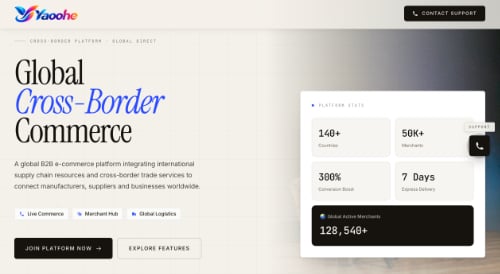
Yaoohe, a global B2B e-commerce and digital supply chain platform, has debuted its virtual livestream commerce technology. This innovative solution combines a unified commerce experience with AI-generated virtual presenters, intelligent product demonstrations, and automated livestream operations. The technology aims to allow merchants to continuously showcase products, reach customers across different time zones, and reduce the operational complexities associated with traditional livestream commerce. By leveraging AI presenters and automated processes, Yaoohe is pushing the boundaries of B2B engagement, offering a scalable and efficient way for businesses to connect with potential clients and demonstrate their offerings in a dynamic, interactive format.
Strategic Acquisitions and Market Expansion
Significant strategic moves in the e-commerce technology sector include Salesforce’s planned acquisition of Braze for $5.66 billion. Braze is a customer engagement platform specializing in real-time and mobile communications. This acquisition is poised to significantly enhance Salesforce’s marketing capabilities, enabling more immediate and personalized customer interactions across a wide array of channels, including mobile apps, web, email, SMS, and messaging platforms. Braze’s expertise in real-time engagement and AI optimization will complement Salesforce’s existing suite of offerings, such as Data 360, Customer 360, and Slack, creating a more robust and integrated customer relationship management ecosystem.
In the competitive Indian market, Flipkart, owned by Walmart, is reportedly testing a food delivery service. The company is internally evaluating the venture and has deployed a dedicated fleet of riders through its logistics arm, Ekart, separate from its quick-commerce operations. This move signals Flipkart’s ambition to expand its reach beyond traditional e-commerce and enter the burgeoning food delivery sector in India, aiming for a wider city rollout by the end of the year. This strategic expansion into a new vertical demonstrates a commitment to capturing a larger share of the Indian consumer market by diversifying its service offerings.
This week’s releases underscore a dynamic period of innovation in e-commerce. Merchants are being equipped with increasingly sophisticated tools to personalize customer journeys, optimize operations, and expand their global reach. The pervasive integration of AI, coupled with strategic partnerships and acquisitions, indicates a future where e-commerce is not only more efficient but also more intuitive, personalized, and accessible than ever before.

