
The evolution of digital product design has reached a critical juncture where the complexity of multi-platform ecosystems requires a more sophisticated approach to nomenclature than ever before. In the early stages of web development, naming conventions were often an afterthought, relegated to individual developers’ preferences or localized style guides. However, as design systems have become the backbone of corporate identity and functional scalability, the industry is recognizing that naming is not merely a linguistic exercise but a fundamental engineering challenge. The process of naming UI components, design tokens, and features directly impacts developer velocity, cross-functional communication, and user adoption.

The Linguistic Foundation of Design Systems
Phil Karlton famously remarked that there are only two hard things in Computer Science: cache invalidation and naming things. In the context of modern user interface (UI) design, this difficulty stems from the need to balance human readability with machine-executable logic. When naming structures are too generic, they fail to convey intent, leading to "code rot" where developers are afraid to modify elements because their purpose is unclear. Conversely, when names are too specific, they inhibit the reuse of components, leading to a bloated codebase and fragmented user experiences.
Industry experts suggest that the language used within a design system shapes the mental models of the creators. If a designer calls a component a "pop-up" while a developer labels it a "modal" and a product manager refers to it as an "interstitial," the resulting friction can lead to significant delays and technical debt. To address this, organizations are increasingly turning to centralized taxonomies and standardized naming conventions to ensure a "single source of truth."

Strategic Resources for Semantic Naming
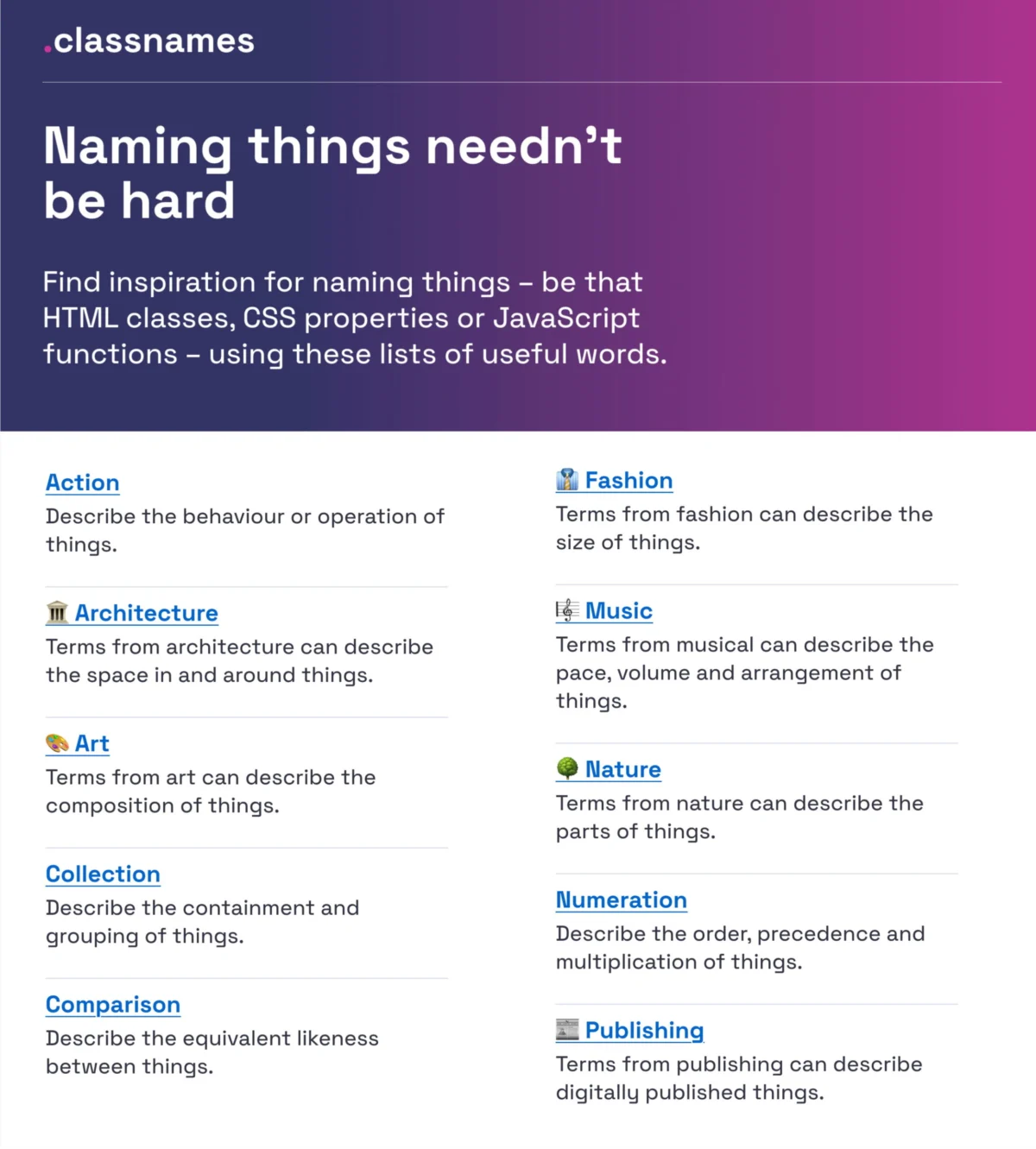
To mitigate the ambiguity inherent in naming, several industry leaders have developed specialized tools designed to broaden the linguistic horizons of technical teams. One prominent example is the Classnames repository, maintained by Paul Robert Lloyd. This resource encourages developers to think beyond traditional technical descriptors by providing thematically grouped lists of words. By drawing inspiration from nature, architecture, fashion, and the arts, teams can create more evocative and descriptive classes that improve the clarity of HTML and CSS.
The shift toward semantic naming is particularly evident in the realm of color theory. Traditionally, colors were identified by hexadecimal codes or simple descriptors like "light blue." However, in a system supporting 30,000 unique color names—as documented in David Aerne’s comprehensive color name repository—the need for precision is paramount. These repositories allow teams to move away from visual descriptions toward functional or evocative names that can remain consistent even if the underlying hex code is adjusted for accessibility or brand refreshes.

The Case for Scalable Taxonomy: Insights from Intuit and Vodafone
The transition from a single-brand entity to a multi-product powerhouse requires a radical rethinking of design token taxonomy. A case study involving Intuit—the parent company of Mailchimp, QuickBooks, and TurboTax—illustrates the challenges of scaling design language across diverse product lines. Under the leadership of Nate Baldwin, Intuit developed a flexible design token system that transcends individual brand themes.
The primary challenge in such systems is creating a hierarchy that is robust enough to handle different visual identities while remaining simple enough for daily use. Baldwin’s work emphasizes the necessity of a tiered approach:

- Primitives: The raw values (e.g., Blue-500).
- Semantic Tokens: The purpose of the value (e.g., Action-Primary-Background).
- Component Tokens: The specific application (e.g., Button-Submit-Color).
Similarly, the Vodafone UK Design System team has introduced a "Variables Taxonomy Map" to manage the complexities of a multi-brand environment. Their approach breaks down the anatomy of a design token into orchestrated collections that connect brand primitives to specific page elements. This systematic mapping ensures that any stakeholder can infer the use and representation of a token simply by reading its name, thereby reducing the cognitive load required to navigate the system.
Principles of Effective Component Naming
Javier Cuello, a leading voice in design system architecture, posits that a "good" name must possess four key characteristics: it must be logical, short, meaningful, and independent of visual properties. The insistence on visual independence is crucial for future-proofing. For example, naming a button btn-red is considered poor practice because a brand update might change that button to blue, rendering the name inaccurate. A more effective name would be btn-primary or btn-danger, which describes the function rather than the aesthetic.

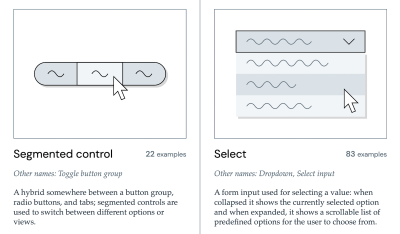
The Component Gallery, curated by Iain Bean, serves as a vital reference point for teams struggling with component nomenclature. By indexing real-world design systems, the gallery highlights how different organizations solve the same naming problems. For instance, an "Accordion" might be called a "Collapse" or an "Expandable Section" depending on the system’s internal logic. Having a visual dictionary of these common components allows teams to align their internal language with industry standards, improving the onboarding process for new hires.
Feature Naming and the Psychology of Adoption
The impact of naming extends beyond the codebase and directly into the user experience. Erin Gannon, a specialist in UX writing and feature adoption, argues that many new features fail not because of poor functionality, but because of poor discoverability caused by confusing names. Feature adoption is a multi-stage process: discovery, understanding, trial, and eventually integration into a workflow. If the name of a feature does not align with the user’s mental model, the process breaks down at the "understanding" phase.
Gannon’s research suggests that the most successful names are those driven by user needs and "jobs-to-be-done." Rather than using internal jargon or "creative" marketing terms, product teams should observe how users describe the problem the feature solves. By adopting the user’s own language, companies can lower the barrier to entry and increase the likelihood of long-term feature retention.
Chronology of Naming Methodologies
The history of naming in web development reflects the broader shift from static pages to dynamic applications:

- The Early Web (1990s): Names were largely functional and tied to HTML tags (e.g.,
table1,header_text). - The CSS Revolution (2000s): The rise of external stylesheets led to descriptive naming, but often resulted in "divitis" and unmanageable global scopes.
- The Modular Era (2010s): Methodologies like BEM (Block, Element, Modifier) and SMACSS (Scalable and Modular Architecture for CSS) introduced strict structural rules for naming to prevent style leakage in large projects.
- The Design Token Era (2020s): Naming has become an abstraction layer, where design tokens act as variables that store visual design attributes, allowing for seamless updates across platforms (iOS, Android, Web).
Broader Implications for Industry Standardization
The move toward standardized naming conventions has significant implications for the future of the tech industry, particularly regarding accessibility and Artificial Intelligence (AI). Semantic naming is a prerequisite for accessible web design; screen readers and assistive technologies rely on clear, standard-compliant naming to navigate digital interfaces. When components are named correctly, the underlying accessibility tree is more accurate, providing a better experience for users with disabilities.
Furthermore, as AI-driven development tools become more prevalent, the quality of a codebase’s naming convention will determine the effectiveness of AI assistance. Large Language Models (LLMs) are trained on existing code; therefore, a project that follows logical, standard naming patterns will be easier for an AI to analyze, refactor, and augment. In this context, naming is no longer just a human-to-human communication tool but a human-to-machine instruction set.

Conclusion: The Economics of Clarity
Ultimately, the investment in a robust naming strategy is an economic decision. Organizations that ignore the importance of taxonomy often face higher maintenance costs, slower release cycles, and increased employee burnout due to the frustration of working with "spaghetti" code and ambiguous designs. By utilizing tools like Romina Kavcic’s Design Token Naming Guide or the Onym repository for product naming, companies can build a foundation that supports growth rather than hindering it.
As digital products continue to integrate more deeply into every facet of human life, the clarity of the language used to build them will remain a defining factor in their success. Clear naming reduces friction, fosters collaboration, and ensures that the digital world remains navigable for creators and users alike. The collective effort of the global design and development community to share these resources and methodologies marks a significant step toward a more mature and standardized professional landscape.

