
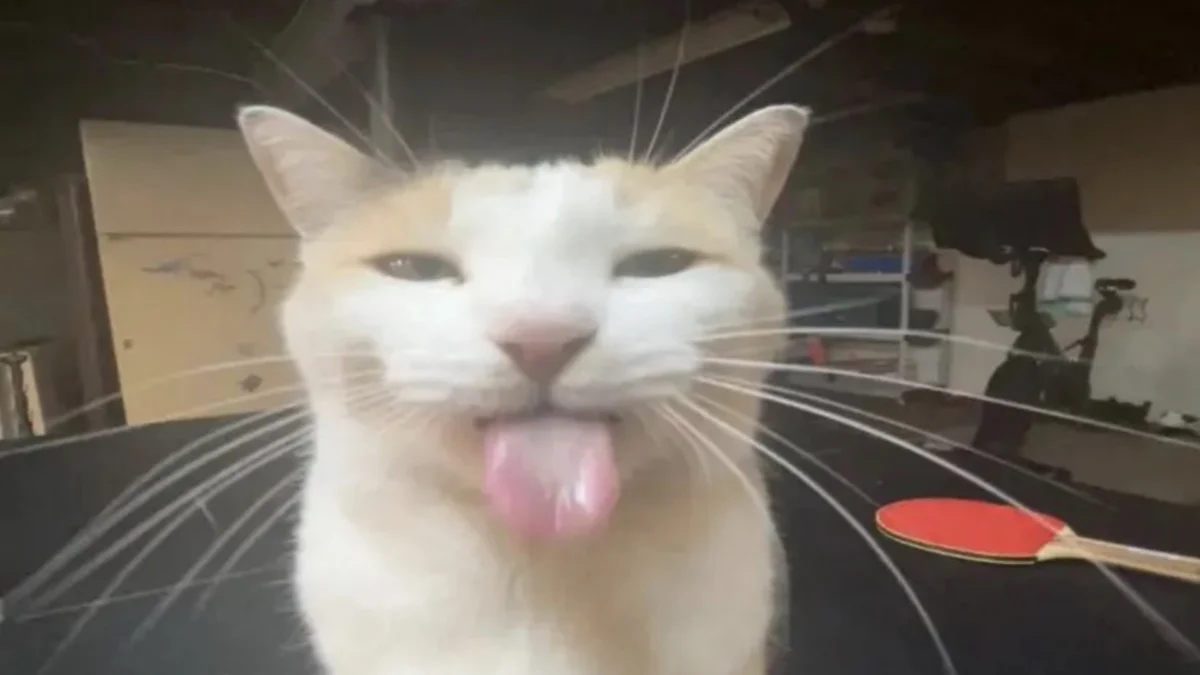
The Genesis of Milly: From Pet Photo to Viral Artifact
The origin of the "BLEHHHHH 😛 Cat" can be traced to July 23, 2022, when the Instagram account fatfatmillycat uploaded a series of six images featuring a domestic cat named Milly. Among these images was a particular shot of Milly facing the camera directly with its tongue protruding—a behavior often referred to in feline enthusiast circles as a "blep." This initial post, while successful within the niche community of cat lovers, garnered approximately 6,500 likes in its first month.
The transformation of the image into a self-aware meme began on August 5, 2022, when the same Instagram account posted the photograph with the caption, "i can act rather silly at times." This specific iteration served as a precursor to the "Silly Cats" movement, garnering over 32,900 likes and indicating a growing appetite for content that prioritized harmless absurdity over the more polished, "influencer-style" pet content that had dominated the previous decade.
The Twitter Pivot and the "I Am Not Doing That" Framework
While the image originated on Instagram, its true viral potential was unlocked through Twitter’s decentralized and text-heavy environment. On August 23, 2022, a Twitter user identified as @vampiric_shirin posted a modified, slightly stretched version of the Milly photograph. The visual distortion, a common trope in modern "shitposting," was accompanied by a dialogue-based caption that would define the meme’s future trajectory.
The caption depicted a hypothetical exchange: "teacher: do your homework now!!!! / me: BLEHHHHH 😛 i am NOT doing that u can’t make me!!!!!!!!!!!!!!!!!! :P" This post struck a chord with the platform’s demographic, amassing over 48,000 likes and 7,600 retweets within a week. The success of this format lay in its relatable depiction of low-stakes rebellion. By pairing a high-pressure demand (homework) with a visually infantile and harmless refusal (the cat’s tongue), the meme provided a template for users to vent frustrations through a lens of extreme "silliness."
Chronological Expansion and Diversification
Following the success of the homework-themed post, the "BLEHHHHH :P" template saw rapid diversification throughout late August 2022. The linguistic structure remained consistent: a demand followed by the cat’s signature refusal. Notable examples included:
- Interpersonal Relations: On August 26, user @iwuvboobsfr adapted the meme to romantic or social interactions, receiving 25,200 likes.
- High-Stakes Absurdity: On the same day, user @elFars applied the template to a hostage negotiation scenario involving the FBI, highlighting the meme’s effectiveness when used in "anti-climax" humor. This post gained 44,600 likes.
- Pop Culture Integration: By August 31, the meme crossed into television fandom, with a Breaking Bad parody featuring characters Walter White and Jesse Pinkman, garnering significant engagement.
- Medical and Mental Health Commentary: Users also applied the format to interactions with psychologists or medical professionals regarding medication or emergency situations, using the "BLEHHHHH" response to satirize their own avoidant behaviors or the gravity of certain situations.
The Silly Cats Archetype: A Contextual Analysis
The "BLEHHHHH 😛 Cat" is not an isolated incident but rather a cornerstone of the "Silly Cats" subculture. This trend, which gained momentum throughout 2022, represents a shift in how cats are portrayed online. Unlike the "Lolcats" of the 2000s, which relied on broken English (l33tspeak) and situational irony, or the "Grumpy Cat" era of the 2010s, which focused on relatable cynicism, "Silly Cats" emphasize mischief, tomfoolery, and "unserious" behavior.
This movement is closely linked to the "Being Silly / Too Silly" meme archetype, which champions a rejection of productivity and logic in favor of playful absurdity. Other memes in this category, such as "Me in My Silly Little Bed," share a similar DNA with Milly the Cat. They all function as a digital coping mechanism, allowing users to acknowledge the stresses of the world while choosing to respond with a performative lack of gravity.

Supporting Data and Digital Metrics
The impact of the "BLEHHHHH 😛 Cat" can be quantified through its search interest and engagement metrics. Data from the late summer of 2022 shows a sharp spike in queries related to "bleh cat," "tongue out cat meme," and "i am not doing that cat."
- Engagement Density: The meme maintained a high "like-to-retweet" ratio, suggesting that while many found it funny enough to endorse, its primary value was in its visual relatability.
- Platform Cross-Pollination: The meme successfully transitioned from Instagram (visual origin) to Twitter (linguistic framework) and eventually to TikTok, where users utilized "green screen" effects to place the "BLEHHHHH" cat in various chaotic backgrounds, often accompanied by high-pitched or distorted audio tracks.
Psychological and Sociological Implications
The popularity of the "I Am Not Doing That Cat" offers insight into the collective psyche of younger internet users during the post-pandemic era. The act of sticking one’s tongue out is a universal sign of childish defiance. By adopting this persona via a cat, users participate in a form of "digital regression."
Sociologically, the meme serves as a critique of authority and expectation. Whether the "demander" in the meme is a teacher, a boss, a government agency, or a doctor, the response is always the same: a refusal to engage on the terms of the authority figure. The "BLEHHHHH" is a linguistic barrier that prevents the stressor from being taken seriously. This "weaponized silliness" allows for a momentary escape from the pressures of adult responsibility.
The Role of Visual Distortion in Modern Humor
An essential element of the meme’s spread was the "stretched" or "liquefied" versions of the original photograph. In contemporary internet culture, visual fidelity is often sacrificed for comedic effect. A high-resolution photo of a cat is "cute," but a low-resolution, oddly proportioned photo is "funny." This aesthetic choice aligns with the "post-irony" movement, where the "brokenness" of the media itself contributes to the humor. The distorted Milly looks more "silly" than the original, making it a more effective vessel for the exaggerated "BLEHHHHH" caption.
Digital Legacy and Comparative Analysis
In the pantheon of internet cats, Milly occupies a space similar to that of "Smudge the Cat" (the cat at the dinner table in the "Woman Yelling at a Cat" meme). Both cats are defined by their facial expressions—Smudge by his confusion/disgust and Milly by her defiance. However, Milly’s meme is more participatory; it requires the user to fill in a "prompt" and a "response," making it a more versatile tool for personal expression than many static image memes.
As of late 2023 and early 2024, the "BLEHHHHH 😛 Cat" continues to appear in various forms, often as a reaction image in comment sections. It has paved the way for other "silly" animal memes, cementing the idea that in an increasingly complex digital world, sometimes the most profound response to a demand is a simple, protruding tongue.
Conclusion: The Endurance of the Unserious
The "BLEHHHHH 😛 Cat" or "I Am Not Doing That Cat" stands as a testament to the power of simplicity in viral communication. By capturing a single, relatable moment of feline behavior and pairing it with a universal sentiment of defiance, the creators and participants of this meme created a lasting cultural shorthand. It serves as a reminder that the internet, despite its capacity for toxicity and misinformation, remains a space where a "silly" cat can provide a moment of collective levity and a much-needed outlet for the simple urge to say, "I am NOT doing that."

