
The rapid integration of Large Language Models (LLMs) into the product design lifecycle has introduced a significant paradox: while AI can generate high-fidelity mockups in seconds, the resulting prototypes often suffer from "design drift," characterized by inconsistent spacing, hard-coded values, and a fundamental lack of adherence to established design systems. As organizations increasingly rely on generative AI to accelerate front-end development and prototyping, the necessity for "AI-ready" design systems has become a critical priority for Design Operations (DesignOps) teams worldwide. Recent insights from industry leaders, including Hardik Pandya of Atlassian and Vitaly Friedman of Smashing Magazine, suggest that the solution lies not in more powerful AI models, but in the rigorous transformation of design decisions into machine-readable infrastructure.
The Problem of Design Drift in Generative Workflows
Design drift occurs when an AI model, tasked with creating a user interface, makes autonomous decisions that deviate from a company’s brand guidelines or technical constraints. These inconsistencies are rarely the result of a single catastrophic failure; rather, they are the accumulation of "tiny inconsistencies" scattered across a design system. When design decisions—such as the specific border-radius for a secondary button or the padding of a modal header—are documented only in visual mockups or buried in unstructured notes, AI models are forced to "hallucinate" or guess the correct values.
The current landscape of AI-generated design reveals a heavy reliance on the model’s ability to decode patterns from visual screenshots or Figma files. However, LLMs are fundamentally text-based engines. Relying on them to interpret complex visual hierarchies without explicit guidance leads to technical debt. Common issues include the use of arbitrary hex codes instead of designated color tokens, the detachment of component instances, and a total disregard for accessibility standards like WCAG 2.1 compliance. To mitigate these risks, the industry is shifting toward a model where design systems act as the primary source of truth for both human designers and artificial intelligence.
Chronology of the Shift Toward AI-Ready Design
The evolution of design systems has moved through several distinct phases over the last decade, culminating in the current push for LLM-readability.
- The Component Era (2014–2018): Following the rise of Atomic Design principles, organizations focused on building reusable UI components in tools like Sketch and early Figma. The primary goal was visual consistency for human designers.
- The Tokenization Era (2019–2021): The industry saw a widespread adoption of design tokens—platform-agnostic variables (e.g.,
color-brand-primary) that allowed design systems to scale across web, iOS, and Android. This established a bridge between design and code. - The Documentation Explosion (2022–2023): With the release of GPT-4 and similar models, designers began using AI to write documentation and generate boilerplate code. However, the disconnect between "what is documented" and "what the AI understands" became apparent.
- The Infrastructure Era (2024–Present): Current best practices now dictate that design systems must be structured specifically for machine consumption. This involves the use of "spec files," automated auditing scripts, and context engineering to ensure AI outputs remain within the "guardrails" of the design system.
Design Decisions as Infrastructure: The New Mandate
The foundational shift in modern DesignOps is the treatment of design decisions as infrastructure. In a traditional workflow, a designer might decide to change the global corner radius from 4px to 8px. In an AI-ready workflow, this decision is not merely updated in a Figma file; it is committed to a structured "spec file"—typically in Markdown or JSON format—that serves as the configuration layer for the AI.

Treating design as infrastructure means that every decision regarding accessibility, priority, and component usage must find a path into a machine-readable file. This approach minimizes the "reasoning" the AI has to do. Instead of asking the AI to "design a login page," the prompt architecture directs the AI to "assemble a login page using the components and spacing rules defined in specs/auth-flow.md." This reduces the cognitive load on the model and ensures that the output is technically viable and brand-compliant.
Technical Implementation: The Three-Layer Framework
To ensure the quality of AI-generated prototypes, experts recommend a tripartite structure consisting of Spec Files, a Token Layer, and an Auditing Layer.
1. The Spec File Layer
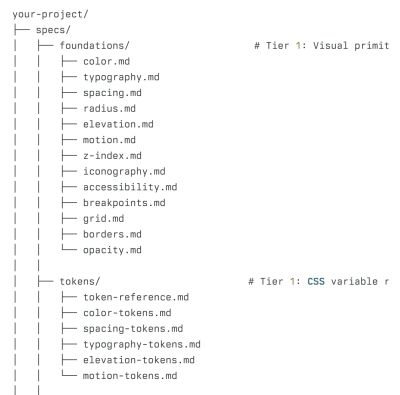
Spec files are structured Markdown documents that outline the "rules of the road." These files include design principles, component usage guidelines, and specific "do’s and don’ts." For example, a spec file for a data table might explicitly state that "Action buttons must always be right-aligned" or "Empty states must include a primary Call to Action (CTA)." Because these are text-based, they are significantly more cost-effective for LLMs to process than high-resolution image data, leading to faster and more accurate code generation.

2. The Token Layer
The token layer serves as the vocabulary of the design system. By providing the AI with a closed set of named variables, designers prevent the model from inventing plausible but incorrect values. If the AI knows only the variable token.spacing.medium exists, it will not attempt to hard-code a value like margin: 17px. This layer ensures that the generated CSS or React code is "clean" and ready for integration into the production codebase.
3. The Auditing and Validation Layer
Even with clear specs and tokens, AI can make errors. The auditing layer acts as a quality control filter. Tools like FigmaLint, a free plugin, have become essential for this process. FigmaLint allows teams to audit tokens, states, and accessibility bindings automatically. It detects detached instances and missing interactive states—common pitfalls in AI-generated work. By running an audit script post-generation, teams can flag hard-coded values and force the AI to iterate until the prototype meets the system’s requirements.
Context Engineering and the Five Levels of Guidance
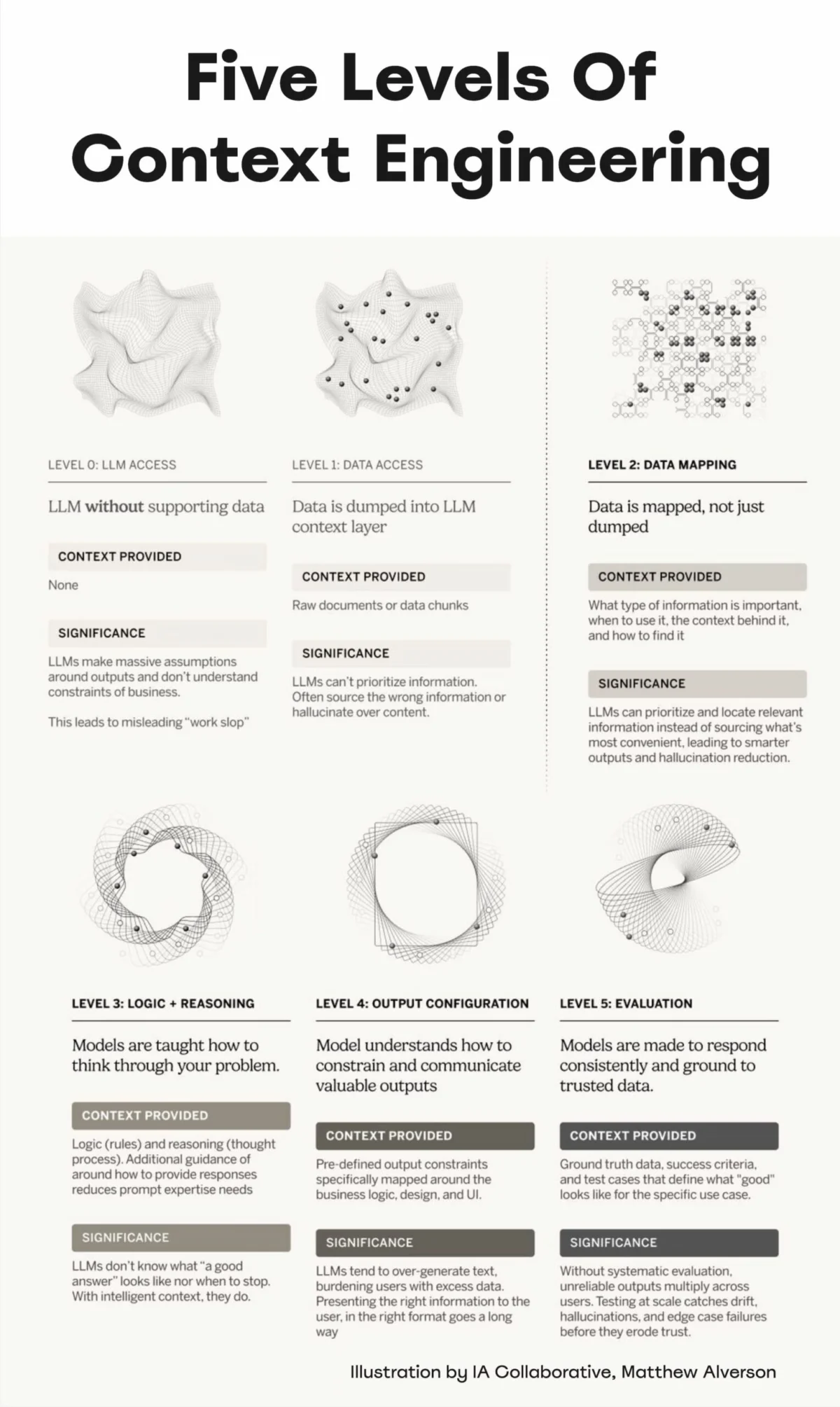
The success of AI in design is heavily dependent on "Context Engineering." Drawing from frameworks popularized by Matthew Alverson and Addy Osmani, context engineering involves providing the AI with the right level of information at the right time.
- Level 1: Zero Context. The AI relies on its general training data, leading to generic and often unusable designs.
- Level 2: Project Context. The AI is given basic information about the specific project or brand.
- Level 3: Design System Context. The AI is provided with access to component libraries and style guides.
- Level 4: Decision Infrastructure. The AI is given the "why" behind the design—the principles and priorities that guide human decision-making.
- Level 5: Real-time Feedback Loop. The AI generates an output, an audit script provides feedback, and the AI corrects its own mistakes in a closed loop.
By moving toward Level 5, organizations can achieve a level of prototype quality that was previously impossible, significantly reducing the time from ideation to functional code.
Industry Reactions and Economic Impact
The shift toward AI-ready design systems has drawn reactions from across the tech sector. Atlassian, a leader in the space, has integrated these principles into their internal workflows to manage their massive "Atlaskit" design system. Hardik Pandya, a principal designer at Atlassian, emphasizes that "AI needs better guidance that minimizes assumptions and reduces ambiguity."
From an economic perspective, the implications are profound. A study by the Design Management Institute (DMI) suggests that design-led companies outperform the S&P 500 by 211%. By automating the "grunt work" of prototyping through AI, designers can focus on high-level strategy and user research. However, this transition requires an initial investment in "cleaning up" design debt. Organizations that fail to document their design decisions in a machine-readable format risk falling behind as their competitors leverage AI to ship products at 5x or 10x the current speed.

Furthermore, the role of the designer is evolving. The traditional "pixel pusher" is being replaced by the "Design Systems Architect"—a professional who manages the data, tokens, and spec files that fuel the AI. This shift is reflected in the emergence of new educational resources, such as Vitaly Friedman’s "Design Patterns for AI Interfaces," which focuses on the UX guidelines necessary to build functional AI-driven features.
Broader Implications for the Software Development Lifecycle
The integration of AI-ready design systems is not just a UI/UX concern; it is a transformation of the entire Software Development Lifecycle (SDLC). When design systems are machine-readable, the "handoff" between design and engineering is effectively eliminated. The AI generates code that already uses the correct tokens and components, meaning developers spend less time fixing CSS and more time on core logic and performance.
However, this future requires a cultural shift. Designers must become more disciplined in their documentation, and engineers must collaborate on the creation of the auditing scripts that validate AI output. The "Technical Debt" of a messy Figma file is no longer just an annoyance for a colleague; it is a direct blocker for AI efficiency.

Conclusion: The Future of Deliberate Design
Ultimately, AI cannot magically resolve technical or design debt. It is a mirror that reflects the quality of the data it is fed. The more deliberate and precise designers are in guiding AI through structured infrastructure, the better the outcomes will be. The industry is entering a phase where the maintenance of Markdown files and token libraries will be just as important as the visual craft of UI design. As we look toward the future, the goal is clear: to build design systems that are not just beautiful for humans to look at, but logical for AI to understand. This transition will likely keep DesignOps teams busy for years to come, but the result will be a more efficient, consistent, and accessible digital landscape.

