

A groundbreaking exploratory user research study conducted in collaboration between accessibility platform Fable and the University of California, Irvine, has revealed that participants with cognitive disabilities identify nearly double the number of usability issues compared to general population participants. The findings, documented through a series of rigorous user interviews and quantitative analysis, suggest that integrating neurodivergent perspectives into the design process is not merely a matter of compliance, but a strategic advantage for creating more efficient and user-friendly digital products.
The study, led by researchers including VP of Innovation at Fable and Syed Fatiul Huq of UC Irvine, underscores a significant shift in how digital accessibility should be approached. While many organizations focus on physical or sensory disabilities, cognitive disability remains the most prevalent form of disability in the United States. According to the Centers for Disease Control and Prevention (CDC), approximately 13.9% of U.S. adults report significant cognitive challenges related to memory, focus, or learning. Furthermore, research from Yale University indicates that these numbers are increasing rapidly as the population ages and diagnostic criteria for neurodivergent conditions evolve.
Chronology of the Research Initiative
The initiative began in the summer of 2024, when a working group of expert researchers convened to establish standardized protocols for accessibility testing with individuals with cognitive disabilities. The project was structured across three distinct phases to ensure the validity and replicability of the results.
In the initial phase, the team established four core goals: identifying effective recruitment strategies, determining best practices for facilitated interviews, creating quantitative metrics for cognitive experience, and documenting a repeatable framework for future researchers. This phase included an extensive review of existing academic literature to synthesize historical best practices with modern digital requirements.
The second phase involved a pilot study with 25 testers. This stage was critical for "fine-tuning" the research instruments. Researchers iteratively refined a specialized screener designed to identify participants with self-identified challenges in memory, focus, and learning. From this pilot, the team developed a guide for running user interviews and adapted the Accessible Usability Scale (AUS) to quantify user experiences.
The final phase, conducted in late 2024 and early 2025, was the formal Cognitive Usability Study. This joint effort between Fable and UC Irvine involved 30 facilitated user interviews. The research team, which included Pranav Pidathala, Ali Brown, and Michael Fagan, utilized AI-generated prototypes to create three distinct web environments for testing. This approach allowed the researchers to maintain control over the design variables while simulating real-world user tasks.
Methodology and Comparative Framework
To validate the hypothesis that cognitive testers uncover more profound usability insights, the researchers split 30 participants into two equal groups: 15 individuals who self-identified as having cognitive challenges (including ADHD, Autism, and Dyslexia) and 15 participants representing the general population (gen pop).
The study utilized three websites, each designed with different aesthetic and functional goals:
- Strong Snacks: A high-protein recipe site featuring a "brutalist" design with bright colors and heavy imagery. Tasks included filtering by category and newsletter subscription.
- Turning Pages: A sophisticated bookstore site with a dark, "moody" aesthetic. It featured complex functionalities such as a book-swiping profile builder, custom lists, and a full checkout flow.
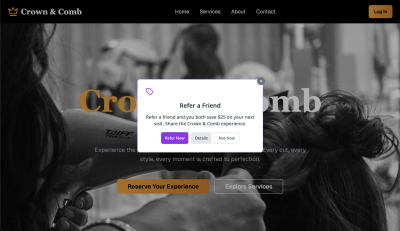
- Crown & Comb: A clean, high-contrast hair salon website designed for appointment booking. This site featured a purposefully difficult task—finding a specific "bridal package" hidden within complex navigation.
Researchers utilized the Accessible Usability Scale (AUS), a 10-question survey licensed under Creative Commons, to evaluate the perceived usability of each site. Scores on the AUS range from 0 to 100, providing a standardized metric for comparison.

Quantitative Findings: The 1.8x Insight Multiplier
The data analysis revealed a stark contrast between the two groups. Across all three websites, participants with cognitive disabilities identified 197 unique usability issues, while the general population group identified 113. Similarly, the cognitive group provided 93 suggestions for improvement, compared to 54 from the gen pop group.
Statistically, this represents a 1.8-fold increase in both issue identification and constructive feedback. The breakdown by website further illustrated how design complexity impacts cognitive load:
Strong Snacks (Simple Design)
Despite being the most straightforward site, cognitive participants identified 3.4 times more issues than their gen pop counterparts. The average AUS score for the cognitive group was 76.8, significantly lower than the gen pop average of 90.5. This discrepancy suggests that even "simple" designs contain hidden frictions that neurodivergent users are more likely to encounter.
Turning Pages (Complex Functionality)
As the site with the most varied functionality, it generated the highest volume of issues. Cognitive participants identified an average of 17 issues per session, compared to 11 for the gen pop group. The AUS scores dropped to 60.8 for cognitive users, while remaining relatively high at 78.0 for the general population.
Crown & Comb (Complex Navigation)
In a surprising twist, cognitive participants actually rated this site higher (AUS 63.8) than the general population (AUS 49.5), despite finding more issues (12 vs. 5). Researchers hypothesized that the "muddling through" experience of the general population led to higher frustration levels, whereas cognitive users, accustomed to navigating digital barriers, were more clinical in their assessment of specific faults.

Qualitative Analysis of User Barriers
The study categorized issues into five primary areas: Content, Navigation, Buttons and Links, Icons and Visuals, and Media. Cognitive participants consistently surfaced more concerns regarding "affordances"—the visual cues that suggest how an element should be used.
For instance, on the Turning Pages site, cognitive users expressed significant confusion over the "Add to book bag" interaction. While gen pop users eventually completed the task, cognitive users highlighted that the lack of immediate, predictable feedback decreased their trust in the system. On the Crown & Comb site, the cognitive group pointed out that the use of inconsistent icons and "thin" content descriptions created a mental drain that made them feel "less able to focus."
A poignant comparison of participant quotes highlighted the difference in impact. A general population participant described a difficult booking process as "frustrating" and "not engaging." In contrast, a participant from the cognitive group described the same experience as "feeling drained," noting that the excessive options and pop-ups depleted their "mental energy."
Broader Implications for the Tech Industry
The findings of this study have profound implications for the future of UX research and product development. By focusing on the "extremes" of cognitive load, designers can create products that are more resilient and easier for everyone to use.
The Aging Demographic
The research is particularly timely given the shifting demographics in the United States. U.S. Census data projects that by 2060, one in four Americans will be aged 65 or older. This demographic shift implies a massive increase in the number of users experiencing age-related cognitive decline. Products that fail to account for memory and focus challenges today will face a shrinking viable market in the coming decades.
The "On-Ramp" Theory of Accessibility
The researchers argue that cognitive accessibility serves as a "natural starting point" for inclusive research. Unlike testing for screen reader compatibility, which requires specialized technical knowledge, testing for cognitive load addresses universal design principles such as clarity, predictability, and simplicity. UX managers, such as those at Bell Media, have noted that just a few sessions with cognitive users can provide a volume of insights equivalent to hundreds of standard sessions.
Business Outcomes and Risk Mitigation
From a business perspective, the study suggests that excluding cognitive participants leads to "leaky" conversion funnels. When users cannot predict how a button will behave or find navigation confusing, they are more likely to abandon the task. For e-commerce sites like the bookstore prototype, this translates directly into lost revenue and weakened customer loyalty.
Conclusion and Future Research
While the study was limited by a relatively small sample size and the use of two different research platforms (Fable Engage and UserFeel), the consistency of the 1.8x multiplier across three different website archetypes provides a compelling case for a change in industry standards.
The researchers conclude that cognitive inclusion in UX research is no longer an optional "extra" for social responsibility. It is a rigorous methodology for uncovering the subtle frictions that hinder all users. As digital environments become increasingly saturated with AI-generated content and complex interactions, the ability to design for low cognitive load will become a primary differentiator for successful products.
The working group plans to continue its efforts by expanding the pilot guide into a comprehensive industry framework, encouraging UX teams to adopt cognitive testing as a standard phase in their research cycles. By addressing the needs of the most cognitively taxed users, companies can ensure their products remain accessible, trustworthy, and efficient for the entire global population.

