
Google Search Console has rolled out a significant update to its Performance report, introducing new AI-powered filters designed to simplify the identification and analysis of branded queries. This enhancement allows users to precisely isolate search queries containing brand names or, conversely, to exclude them entirely from their data, offering a more granular view of organic search performance. While the functionality of filtering branded queries existed previously through more complex methods like regular expressions and AI prompts, this new, user-friendly interface aims to democratize access to this critical data for a wider range of SEO professionals and website owners.
The new filters leverage Google’s artificial intelligence to classify queries. However, Google acknowledges that AI classification is not infallible and can occasionally lead to misclassifications. Branded queries, in the context of Search Console, are generally understood to encompass searches that directly mention a company’s name, its products, services, or individuals closely associated with the brand. This could include variations like the company name itself, specific product names, slogans, executive names, and even names of key spokespeople or prominent figures within the organization.
In initial testing, the new filter has demonstrated its ability to identify common brand name variations, such as direct mentions of brand names, as well as specific product lines and even the names of key personnel. For instance, searches for a founder’s name are likely to be flagged as branded. However, the AI’s current capabilities appear to have limitations. The article notes instances where the filter correctly identified a founder’s name but failed to recognize the title of a book authored by that same founder, suggesting a nuanced understanding of what constitutes a "brand" element is still evolving within the AI. Furthermore, the filter has occasionally included queries for unrelated executives and products, competitor names, and even client case studies. These inclusions might be a reflection of Google’s broad definition of a "brand" search, potentially encompassing entities that are closely associated with or have a significant relationship to a primary brand, even if not directly part of it.
The Evolution of Query Filtering in Search Console
Prior to this update, SEO professionals relied on more technical approaches to segment branded and non-branded traffic. Regular expressions (regex) offered a powerful, albeit complex, method to define patterns within search queries, allowing for the creation of custom filters that could capture a wide array of branded terms. This required a deeper understanding of regex syntax and a significant time investment to construct effective filters.

Simultaneously, Google has been exploring the integration of AI prompts within Search Console. These prompts, designed to be more natural language-based, offered another avenue for users to refine their search data. While these methods provided advanced control, they presented a steeper learning curve and were less accessible to users without specialized technical skills. The introduction of the dedicated "Branded Queries" filter signifies a strategic move by Google to streamline these capabilities, making them more intuitive and readily available within the standard interface.
The implications of this shift are significant. By simplifying the process, Google is empowering a broader spectrum of website owners to gain deeper insights into their organic search performance. This can lead to more informed strategic decisions, particularly in areas such as brand protection, competitive analysis, and campaign effectiveness.
Strategic Applications of the New Branded Query Filters
The enhanced filtering capabilities in Google Search Console unlock several strategic use cases for businesses and marketers. These applications can provide invaluable insights into brand perception, market positioning, and the effectiveness of marketing efforts.
Identifying Competitive Threats and Customer Loss
One of the most immediate benefits of the branded query filter is its utility in identifying competitive encroachment. Competitors often target branded search terms through various strategies, including bidding on brand keywords in Google Ads or creating content explicitly positioned as "Alternatives to [Your Brand]." When a website’s average position for its own branded terms is not number one, or if the click-through rate (CTR) falls below a certain threshold (e.g., 50%), it can be a strong indicator that competitors are either outranking the brand for its own name or actively advertising against it.
By analyzing these branded terms, businesses can pinpoint specific instances where they are losing visibility or traffic to competitors. This allows for the development of targeted strategies to improve branded search rankings. Such strategies might include optimizing existing content for brand terms, creating dedicated landing pages for competitive comparisons, or adjusting paid search strategies to defend brand visibility. For instance, if a company notices a significant portion of traffic for its brand name is clicking on competitor ads or listings, it signals an urgent need to reinforce its own presence and potentially engage in direct competitive counter-messaging.
Measuring the Impact of Marketing Campaigns
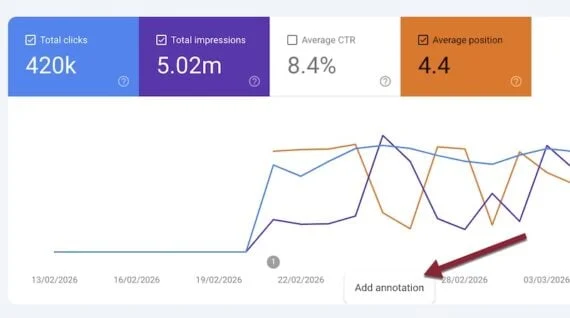
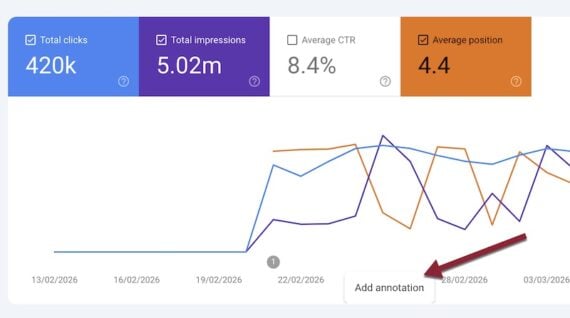
The branded query filter offers a powerful tool for tracking the effectiveness of marketing campaigns. Any promotional activity, whether it involves advertising, email marketing, public relations, or content outreach, is likely to influence branded search volume and intent. By annotating these campaigns within Search Console’s Performance reports, users can more effectively track their impact on branded traffic, even when direct attribution is challenging.
The new filters provide data from February 21st onwards, allowing for retrospective analysis of campaigns launched around that date. Annotations can be added by right-clicking on any performance chart in Search Console, providing a visual marker for when a campaign began. This allows marketers to correlate spikes or dips in branded search performance with specific marketing initiatives, offering a data-driven approach to campaign evaluation and optimization. For example, a significant increase in branded searches following a major advertising push can validate the campaign’s success in raising brand awareness and driving direct interest. Conversely, a lack of impact might prompt a review of the campaign’s messaging or channel selection.
Global Brand Recognition Analysis by Region
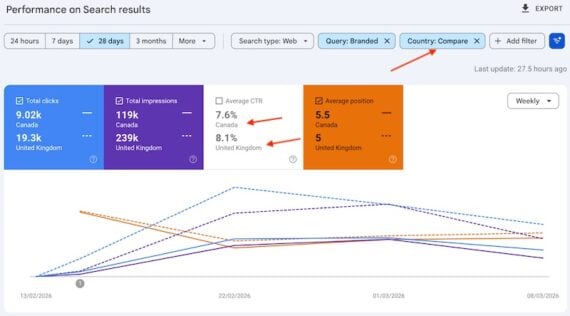
For businesses operating on a global scale, understanding regional brand recognition is crucial. The branded query filter, when combined with geographical segmentation, allows for a detailed comparison of brand searches across different countries. This enables global sellers to assess how effectively their brand resonates in various markets.
By applying the branded query filter and then selecting specific countries, businesses can isolate branded search performance on a per-region basis. This can reveal significant disparities in brand awareness or interest across different territories. Furthermore, the ability to compare two countries side-by-side, such as branded traffic in Canada versus the United Kingdom, offers a direct visual and data-driven comparison of brand strength in those specific markets. This type of analysis can inform regional marketing strategies, resource allocation, and localization efforts. For example, a lower volume of branded searches in a key market might indicate a need for increased localized marketing investment or a re-evaluation of the brand’s positioning in that region.
The AI Behind the Filters: Context and Nuance
The introduction of AI-powered filters is part of Google’s broader strategy to enhance the intelligence and usability of its webmaster tools. This move reflects a growing trend across the digital landscape where AI is increasingly being employed to automate complex data analysis and provide more actionable insights. The classification of queries into branded and non-branded categories is a sophisticated task that requires understanding semantic relationships, contextual cues, and user intent.
While Google’s AI has made significant strides, its occasional misclassifications highlight the inherent complexities of natural language processing and the ever-evolving nature of online search behavior. The "mistakes" noted in testing—such as identifying a founder’s name but not their book title, or including unrelated entities—underscore that the AI operates based on patterns and statistical probabilities. It may not always grasp the subtle nuances of human relationships or the associative power of creative works like books unless explicitly trained on such connections.
The inclusion of competitor names and client case studies within the "branded" category also raises questions about Google’s operational definition of a brand in this context. It’s possible that Google’s AI categorizes any term that exhibits a strong association with a primary brand—even if that association is competitive or transactional—as "branded." This broad interpretation, while potentially leading to some data noise, could also provide a more comprehensive view of the brand’s digital footprint and how it interacts with its ecosystem of related entities.
Broader Implications for SEO and Digital Marketing
The enhanced branded query filters in Search Console have several broader implications for the SEO and digital marketing industries:
- Democratization of Advanced Analytics: By simplifying complex filtering, Google is making advanced data analysis more accessible to a wider audience. This can help small and medium-sized businesses, which may not have dedicated SEO teams, gain critical insights into their performance.
- Increased Focus on Brand Protection: The ability to easily monitor branded search terms empowers businesses to proactively identify and address potential issues related to brand dilution, cybersquatting, or competitive advertising against their brand.
- Refined Campaign Measurement: The integration with campaign annotations offers a more robust method for measuring the impact of marketing efforts on brand awareness and direct search interest, moving beyond simple attribution models.
- Evolving Role of AI in SEO Tools: This update is a clear indicator of Google’s commitment to integrating AI into its suite of tools. It suggests future enhancements will likely involve more sophisticated AI capabilities for data analysis, content optimization, and competitive intelligence.
- Potential for Data Interpretation Challenges: While the filters are beneficial, users will still need to exercise critical judgment in interpreting the data. Understanding the potential for AI misclassifications and the breadth of Google’s "brand" definition will be key to deriving accurate conclusions.
In conclusion, the introduction of AI-powered branded query filters in Google Search Console represents a significant step forward in empowering website owners with actionable insights. While the technology is still evolving and prone to occasional inaccuracies, the new features streamline previously complex analysis, offering tangible benefits for brand protection, campaign measurement, and regional market understanding. As Google continues to refine its AI capabilities, we can anticipate further enhancements that will undoubtedly shape the future of SEO and digital marketing strategy.

