
The integration of generative artificial intelligence into the product design lifecycle has transitioned from a speculative luxury to an operational necessity. As organizations increasingly rely on Large Language Models (LLMs) to generate code, prototypes, and documentation, a critical bottleneck has emerged: the inability of AI to interpret the nuanced, often undocumented decisions embedded within traditional design systems. To address these inconsistencies, industry leaders are advocating for a fundamental shift in how design systems are structured, moving away from purely visual repositories toward "AI-ready" infrastructure. This transition is essential for reducing "design drift"—the incremental divergence between intended design standards and AI-generated outputs—and ensuring that automated workflows maintain the high fidelity required for production-ready software.
The Emergence of Generative UI and the Challenge of Drift
The current landscape of UI/UX design is being reshaped by tools that promise to transform text prompts or low-fidelity wireframes into functional code. However, these AI-generated prototypes frequently fall short of professional standards. The root cause is rarely the AI’s lack of creative potential; rather, it is the fragmentation of the design systems it is asked to utilize. Tiny inconsistencies, such as hard-coded hex values, detached component instances, or missing interactive states, act as "noise" that confuses the LLM.
When an AI encounters a design system that lacks explicit documentation of its underlying logic, it is forced to make assumptions. These assumptions lead to drift—a phenomenon where the AI chooses the "nearest neighbor" component or color rather than the architecturally correct one. To solve this, experts like Hardik Pandya of Atlassian and Vitaly Friedman of Smashing Magazine suggest that design decisions must be treated as infrastructure rather than mere aesthetics.
Chronology of Design System Evolution
To understand the current shift toward AI-readiness, it is necessary to examine the evolution of design documentation over the past decade:
- The Era of Static Guidelines (2010–2014): Design systems were largely presented as static PDF style guides or internal wikis. They focused on brand colors and typography but were disconnected from the actual codebase.
- The Rise of Atomic Design and Component Libraries (2015–2019): Led by frameworks like Brad Frost’s Atomic Design, systems became modular. Tools like Figma and Sketch allowed for the creation of reusable component libraries, though documentation remained human-centric.
- The Tokenization Phase (2020–2022): The industry adopted "design tokens"—agnostic variables (e.g.,
$brand-primary-500) that allowed design decisions to be synced across platforms. This was the first step toward machine-readable design. - The AI-Ready Transition (2023–Present): With the explosion of LLMs, the focus has shifted to "context engineering." Design systems are now being restructured into structured Markdown files and "spec files" that provide the semantic layer an AI needs to understand the why behind the what.
Technical Framework for AI-Ready Systems
The transition to an AI-ready design system requires a three-layered approach that prioritizes machine readability and automated auditing.

Layer 1: The Spec File Architecture
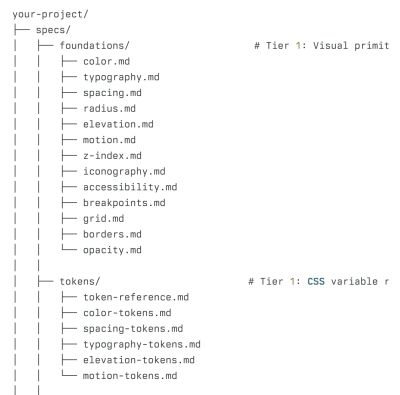
Traditional design documentation is often buried in Figma comments or Slack threads. An AI-ready system centralizes these decisions into structured Markdown files, known as "spec files." These files act as the source of truth for the LLM. Unlike visual mockups, which the AI must "de-code" through computer vision (a process prone to error), Markdown is text-based and highly token-efficient.
A robust spec file includes:
- Component Usage Guidelines: Explicit rules on when to use a primary button versus a ghost button.
- Spacing and Layout Logic: Defined grids and padding rules that prevent the AI from defaulting to arbitrary pixel values.
- Accessibility Requirements: Documentation on ARIA labels, contrast ratios, and keyboard navigation that the AI must implement by default.
- Design Principles: High-level priorities (e.g., "Performance over Visual Flourish") that guide the AI’s decision-making in ambiguous scenarios.
Layer 2: The Token Layer and Constraint Management
The token layer serves as the vocabulary for the AI. By using a closed set of named variables, organizations can prevent "hallucinations"—where the AI invents a color or spacing value that does not exist in the brand palette. When an AI is restricted to a tokenized environment, its output becomes predictable. For instance, instead of the AI generating color: #3b82f6;, it is instructed to only use var(--ds-color-action-primary).

Layer 3: Automated Auditing via FigmaLint
To maintain the integrity of these systems, manual oversight is insufficient. Tools like FigmaLint have emerged as critical components of the design workflow. FigmaLint acts as a "linter" for designers, scanning files for:
- Detached instances that break the connection to the master component.
- Hard-coded values that should be replaced by tokens.
- Missing interactive states (hover, focus, disabled) that are essential for functional prototypes.
- Accessibility violations in the design phase.
By automating the audit process, teams ensure that the data fed into an AI model is clean. As the industry adage suggests, "garbage in, garbage out"; a clean design system is the only way to achieve high-quality AI output.
Supporting Data and Industry Analysis
Recent industry reports highlight the growing gap between AI adoption and infrastructure readiness. According to data from the 2024 State of Design Systems report, while over 65% of enterprise design teams are experimenting with AI-generated code, fewer than 15% have documented their design decisions in a format that is easily consumable by an LLM.
Furthermore, a study on developer productivity found that AI-generated front-end code requires 30% less refactoring when the AI is provided with a structured Markdown spec file compared to when it is provided with only a visual Figma URL. This data suggests that the "text-first" approach to design documentation is not just a theoretical preference but a significant driver of technical efficiency.
The Role of Context Engineering
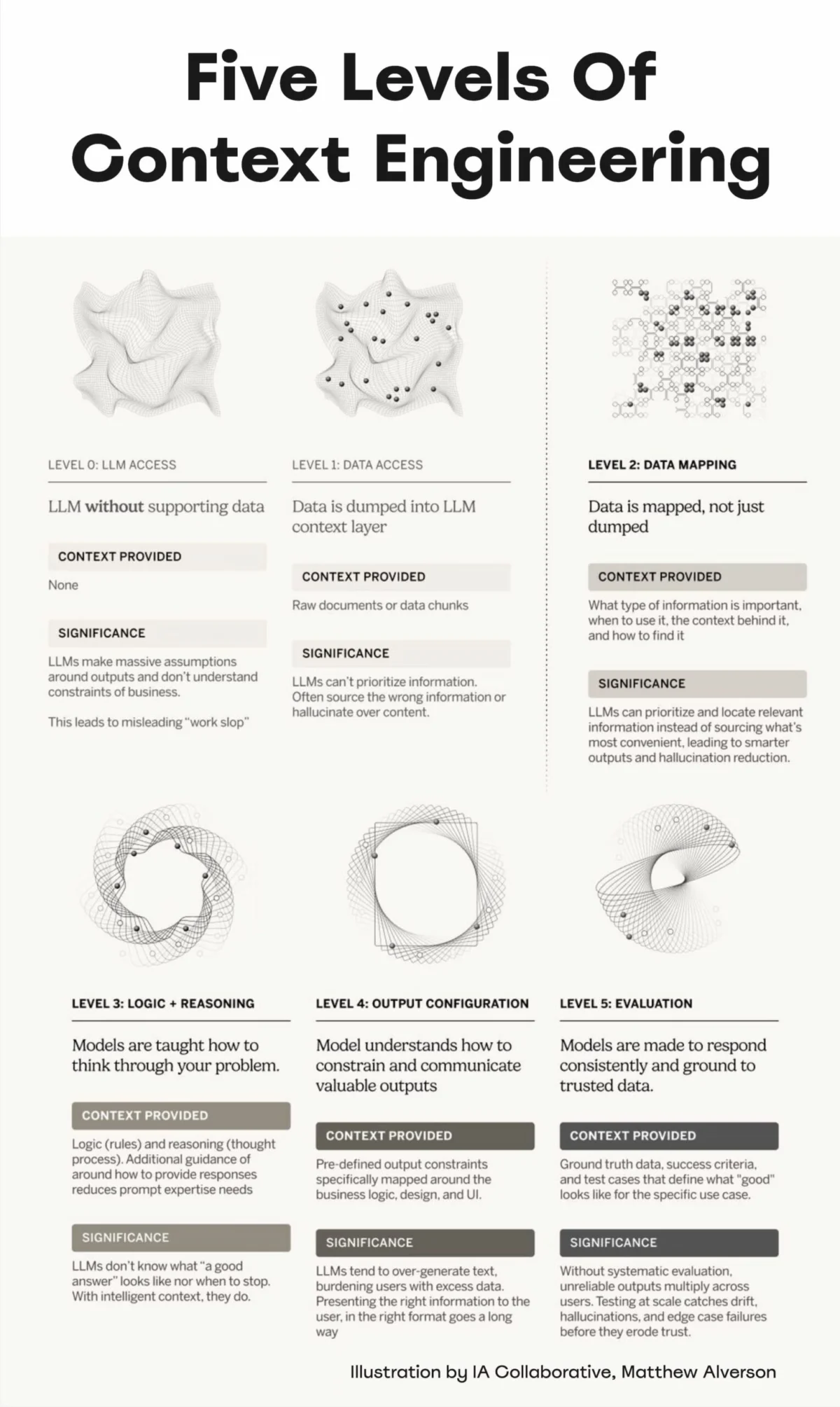
The effectiveness of an AI-ready design system is ultimately determined by "context engineering." Matthew Alverson and Addy Osmani have identified five levels of context that influence how an AI interprets a design task:
- System Prompts: The foundational instructions given to the AI.
- Project Context: The specific goals of the current design task.
- System Specs: The Markdown files and token sets defined in the design system.
- Retrieval Augmented Generation (RAG): The process of the AI "looking up" relevant components from a library in real-time.
- Fine-tuning: Training a custom model on a specific organization’s design history.
By focusing on Level 3 (System Specs), design teams provide the AI with the constraints it needs to operate autonomously without deviating from brand standards.

Official Responses and Strategic Implications
The shift toward AI-ready systems has prompted responses from major design tool providers. Figma, for instance, has recently integrated AI features that rely heavily on the organization of layers and the use of variables, signaling that "tidiness" is now a functional requirement for designers.
Hardik Pandya of Atlassian emphasizes that this evolution changes the role of the design systems designer. "We are no longer just building components; we are building the intelligence that allows those components to be assembled correctly by machines," Pandya noted in his recent guide. This sentiment is echoed by Vitaly Friedman, who suggests that the "technical debt" of the past—undocumented decisions and messy files—is the greatest hurdle to the AI-driven future.
Broader Impact and Future Outlook
The implications of AI-ready design systems extend beyond the design department. For engineering teams, this means receiving code that is more consistent with existing patterns, reducing the time spent on "pixel-pushing" during the handoff phase. For the business, it means a faster time-to-market for new features and the ability to rapidly prototype ideas with a high degree of accuracy.

However, this transition also presents challenges. Maintaining an AI-ready system requires a high level of discipline. Every time a design decision is made, it must be reflected in the spec files. If the documentation lags behind the design, the AI will continue to generate outdated patterns.
In conclusion, the path to successful AI integration in design is paved with documentation, standardization, and automated auditing. By treating design decisions as infrastructure and leveraging tools like FigmaLint and structured Markdown, organizations can bridge the gap between human intent and machine execution. The designers of the future will not just be judged by the interfaces they create, but by the robustness of the systems they build to guide the AI that builds those interfaces. The era of the "AI-ready" design system has arrived, and those who fail to adapt risk being left behind in a sea of inconsistent, drifted prototypes.

