
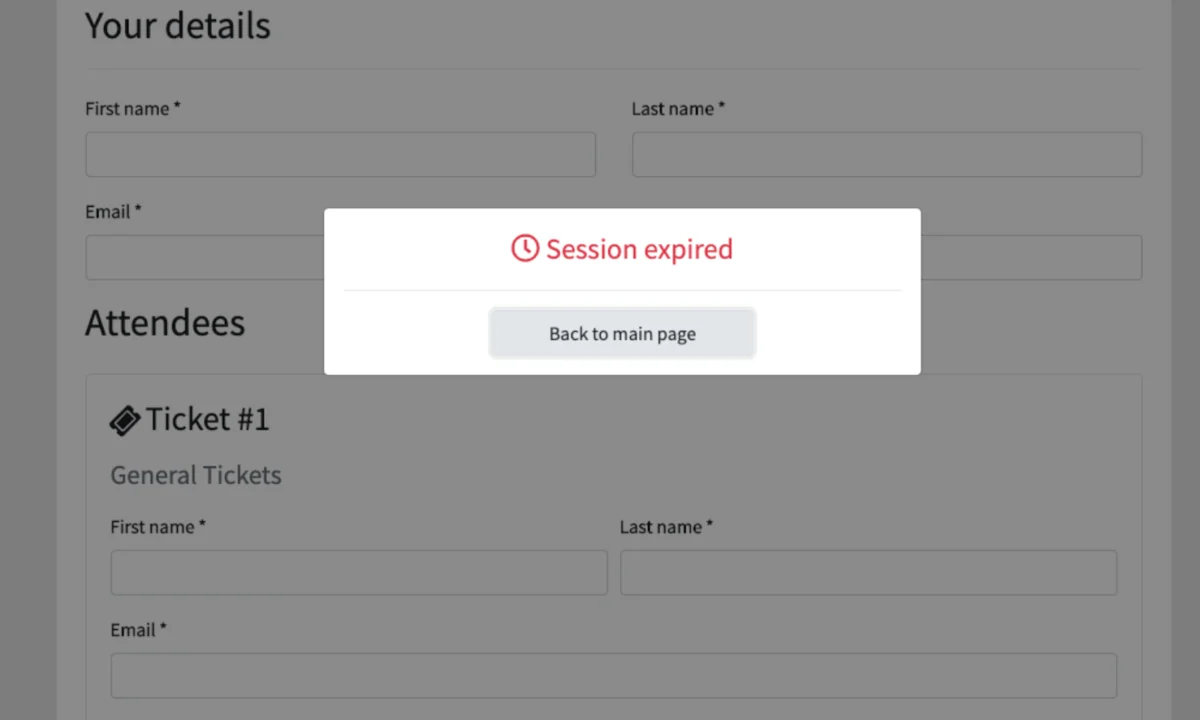
The digital landscape is currently grappling with a fundamental tension between cybersecurity protocols and universal accessibility, as poorly managed session timeouts emerge as a primary barrier for millions of internet users. While session management is traditionally viewed by web developers as a technical necessity to safeguard user data and manage server resources, for individuals with disabilities, these invisible countdowns often manifest as insurmountable hurdles. The impact of these timeouts extends far beyond mere inconvenience, frequently resulting in the total abandonment of essential services, including digital banking, government applications, and healthcare portals. As global regulatory bodies tighten accessibility standards, the industry is facing a reckoning: security can no longer be used as a justification for the exclusion of the approximately 1.3 billion people worldwide living with significant disabilities.
The Technical Evolution and Chronology of Web Session Management
To understand the current crisis in session timeout accessibility, it is necessary to examine the historical trajectory of web session management. In the early days of the World Wide Web, the Hypertext Transfer Protocol (HTTP) was entirely stateless. Each request from a browser to a server was independent, meaning the concept of a "session" did not exist. This changed in the mid-1990s with the introduction of cookies, which allowed servers to recognize returning users.
As the internet evolved from static pages to interactive applications in the early 2000s, "session state" became critical for security, particularly for the burgeoning e-commerce and online banking sectors. The industry-standard response to security threats—such as session hijacking or unauthorized access on shared terminals—was the implementation of strict, time-limited sessions. If a user remained "inactive" for a set period (typically 15 to 30 minutes), the server would terminate the connection.
The introduction of the Web Content Accessibility Guidelines (WCAG) 1.0 in 1999 and the more robust WCAG 2.0 in 2008 began to highlight the problems these timers caused. However, for much of the last two decades, session management remained a secondary concern for accessibility compared to screen reader compatibility or color contrast. It was only with the rise of complex, multi-page Single Page Applications (SPAs) and the passage of stricter digital rights laws—such as the European Accessibility Act and the updated Section 508 in the United States—that the disproportionate impact of timeouts on disabled users moved to the forefront of web development discourse.
Analyzing the Human Cost of Inaccessible Design
The barriers created by session timeouts are not uniform; they intersect with various types of impairments in distinct and often devastating ways. For many users, a timeout is not just a request to log back in; it is an erasure of labor.
Motor Impairments and the Speed Gap
Individuals with motor impairments, such as cerebral palsy, Parkinson’s disease, or multiple sclerosis, often face significant challenges with input speed. For these users, navigating a complex form requires a high degree of physical effort and coordination. Adaptive technologies, such as mouth sticks, eye-tracking software, or switch access, are inherently slower than a standard mouse or keyboard.
According to the UK’s Department for Work and Pensions (DWP) Accessibility Manual, it can take multiple attempts for adaptive technology to register a single input. When a website implements a 20-minute timeout without an easy extension mechanism, it effectively creates a "speed test" that many users cannot pass. A user with muscle stiffness may take 45 minutes to fill out a loan application that a non-disabled user completes in ten. If the session expires at the 30-minute mark, the user is penalized for their disability, often losing hours of work in a single second.
Cognitive Diversity and Processing Time
Cognitive impairments represent perhaps the most overlooked demographic in the timeout debate. Approximately 20% of the global population is estimated to be neurodivergent, including individuals with ADHD, autism, dyslexia, and various learning disabilities. These users often require more time to process complex instructions or read long blocks of text.
A specific phenomenon known as "time blindness," frequently associated with ADHD, makes it difficult for individuals to estimate the passage of time. When a website relies on a user’s internal clock to anticipate a timeout, it creates an exclusionary environment. Furthermore, the pressure of a visible, ticking countdown timer can induce "task paralysis" or high levels of anxiety for neurodivergent users, causing them to make errors or abandon the task entirely.
Visual Impairments and Screen Reader Latency
For the 43 million people globally who are blind and the 295 million with moderate to severe vision impairment, navigating a website is a linear process. A screen reader user cannot "scan" a page for a warning message; they must listen to the content in the order it is presented.
The developer community has noted significant failures in how timeout warnings interact with assistive technology. In some instances, countdown timers that update every second are coded as "live regions," causing a screen reader to announce the remaining time constantly. This "status message spam" makes it impossible for the user to hear the actual form fields they are trying to fill out. Conversely, if the warning is not coded as a live region, the user may never know the session is about to expire until they are abruptly redirected to a login screen.

Supporting Data: The Scale of Digital Exclusion
The urgency of addressing session timeout accessibility is underscored by recent demographic and economic data. Research from the Pew Research Center indicates that 62% of adults with disabilities in the United States own a desktop or laptop computer, and 72% have high-speed internet access at home. These figures demonstrate that the disabled community is as digitally active as the non-disabled population, yet they face significantly higher friction in completing online transactions.
| Demographic Group | Estimated Global Population | Key Accessibility Requirement |
|---|---|---|
| Significant Disabilities | 1.3 Billion | Extended/Adjustable Timers |
| Neurodivergent Users | 20% of Population | Clear Warnings/No Pressure |
| Blind/Low Vision | 338 Million | ARIA-Compliant Notifications |
| Motor Impaired | Variable (Millions) | Slow Input Compatibility |
The economic implications are also substantial. The "Purple Pound"—the spending power of disabled households—is estimated at £274 billion per year in the UK alone. Globally, this market represents trillions of dollars. Inaccessible session management leads to "click-away" behavior, where users take their business to competitors with more inclusive interfaces.
Official Standards and Regulatory Responses
The primary arbiter of these standards is the World Wide Web Consortium (W3C), which publishes the WCAG. Success Criterion 2.2.1 (Timing Adjustable) specifically addresses session timeouts. To be compliant at Level A, a website must allow users to turn off the time limit, adjust the limit to at least ten times the default, or be warned at least 20 seconds before the limit expires and be allowed to extend it with a simple action.
In recent years, government agencies have begun to set a higher bar. The UK government’s design system, for instance, requires that users be warned at least two minutes before a session ends. Similarly, the U.S. Access Board’s 508 Standards require that when a timed response is required, the user must be alerted and given sufficient time to indicate that more time is required.
Industry experts argue that these standards are the bare minimum. "Session timeout accessibility is not only an industry best practice but an ethical web development standard," notes recent analysis from digital advocacy groups. The consensus is shifting toward "functional accessibility," where the focus is not just on passing a checklist but on ensuring the user can actually complete the task.
Strategic Solutions for Inclusive Session Management
Web professionals are now encouraged to adopt a "privacy and accessibility by design" framework. Several technical strategies have emerged to balance security with inclusivity:

- Advance Warning Systems: Instead of silent timeouts, websites should implement modal dialogs that appear well in advance (minimum 2–5 minutes). These modals must be keyboard-accessible and announced correctly by screen readers.
- Activity-Based vs. Absolute Timeouts: While absolute timeouts (logging out after X hours regardless of activity) are useful for high-security environments, activity-based timeouts should be generous. Developers are increasingly using "heartbeat" scripts that reset the timer whenever a user interacts with a form field.
- Progress Preservation (Auto-Save): The most effective way to mitigate the damage of a timeout is to ensure no data is lost. By utilizing
localStorageor temporary server-side saves, developers can allow users to resume exactly where they left off after re-authenticating. - The "Inertia" Method: Some modern interfaces allow a session to "soft-expire." The user is prompted to re-enter their password in a pop-up overlay without leaving the current page, preserving the state of the application and all unsaved data.
Broader Impact and the Future of the Accessible Web
The move toward more accessible session management reflects a broader shift in how society views digital rights. As essential services—from voting registration to social security benefits—move exclusively online, an inaccessible session timeout ceases to be a technical glitch and becomes a violation of civil rights.
The legal landscape is already reflecting this. Recent lawsuits under the Americans with Disabilities Act (ADA) have increasingly cited "timing barriers" as a form of discrimination. For corporations, the risk of litigation is becoming a powerful motivator for change, alongside the desire to capture a wider market share.
Ultimately, the goal of session timeout accessibility is to build a "considerate internet." A website that respects a user’s time, regardless of their physical or cognitive abilities, fosters trust and loyalty. By implementing thoughtful, adjustable, and transparent session management, web developers can dismantle one of the most persistent invisible barriers on the modern web, ensuring that the digital world remains open to everyone, regardless of the pace at which they navigate it.

