
The discipline of digital product design is undergoing a fundamental shift from the arrangement of pixels and patterns to the strategic orchestration of pacing and human emotion. As software becomes increasingly integrated into the daily lives of global users, designers are looking beyond traditional utility to borrow techniques from cinematography and narrative storytelling. Alan Cohen, a prominent voice in the design community, recently explored the dichotomy between "Emotion in Flow" and "Emotion in Conflict," illustrating how modern media—specifically the anime series Dan Da Dan and James Gunn’s upcoming Superman film—serves as a blueprint for either maintaining or disrupting user immersion. By analyzing these entertainment models, design professionals are identifying practical patterns to ensure that digital products guide users through complex emotional arcs without inducing cognitive whiplash.
The Dichotomy of Emotional Pacing: Flow versus Conflict
In the context of modern user experience (UX), "Emotion in Flow" refers to a design state where emotional transitions are earned, telegraphed, and timed to resolve prior psychological beats. This allows the user to remain immersed in the task at hand, moving seamlessly from uncertainty to relief or from anticipation to achievement. Conversely, "Emotion in Conflict" occurs when a product undercuts its own narrative or functional momentum with ill-timed humor, intrusive pop-ups, or jarring transitions. This phenomenon is frequently observed in digital products where the brand’s "voice" clashes with the user’s immediate needs, such as a playful error message appearing during a high-stakes financial transaction.
Industry analysts suggest that the difference between these two states is often the deciding factor in long-term user retention. While a functional app might solve a problem, a "directed" experience creates a lasting psychological bond. The clarity of this distinction is best illustrated by comparing the narrative structures of high-stakes entertainment, where tonal shifts are either masterfully bridged or abruptly severed.
Case Study in Narrative Synthesis: The Success of Dan Da Dan
The anime series Dan Da Dan, currently featured on global streaming platforms like Netflix, serves as a primary example of Emotion in Flow. Despite a narrative that oscillates wildly between absurdist comedy, body horror, and profound tenderness, the series maintains a coherent emotional legibility. In one specific arc, the protagonists transition from a comedic quest involving supernatural elements to a devastatingly grounded subplot involving a mother and a kidnapped child.
On a structural level, this shift succeeds because the creators utilize three specific techniques:

- Preparation: The audience is given visual and auditory cues that the tone is shifting.
- Transition: The "camera" lingers on quiet moments, allowing the previous humor to dissipate before the tragedy is introduced.
- Resolution: Each emotional beat is allowed to reach its natural conclusion before the next begins.
In UX terms, this translates to products that prepare users for a shift in state—such as moving from a browsing mode to a checkout mode—through subtle changes in color, haptic feedback, or motion. When these transitions are telegraphed, the user remains in a state of "flow," even as the complexity of the task increases.
The Perils of Tonal Dissonance: James Gunn’s Superman and Product Friction
In contrast to the seamless transitions of anime, big-budget superhero films often struggle with Emotion in Conflict. A notable example cited by Cohen involves a scene in James Gunn’s Superman, where a heartfelt, intimate conversation between Lois Lane and Clark Kent is visually interrupted by a background gag involving a monster being struck with a giant baseball bat.
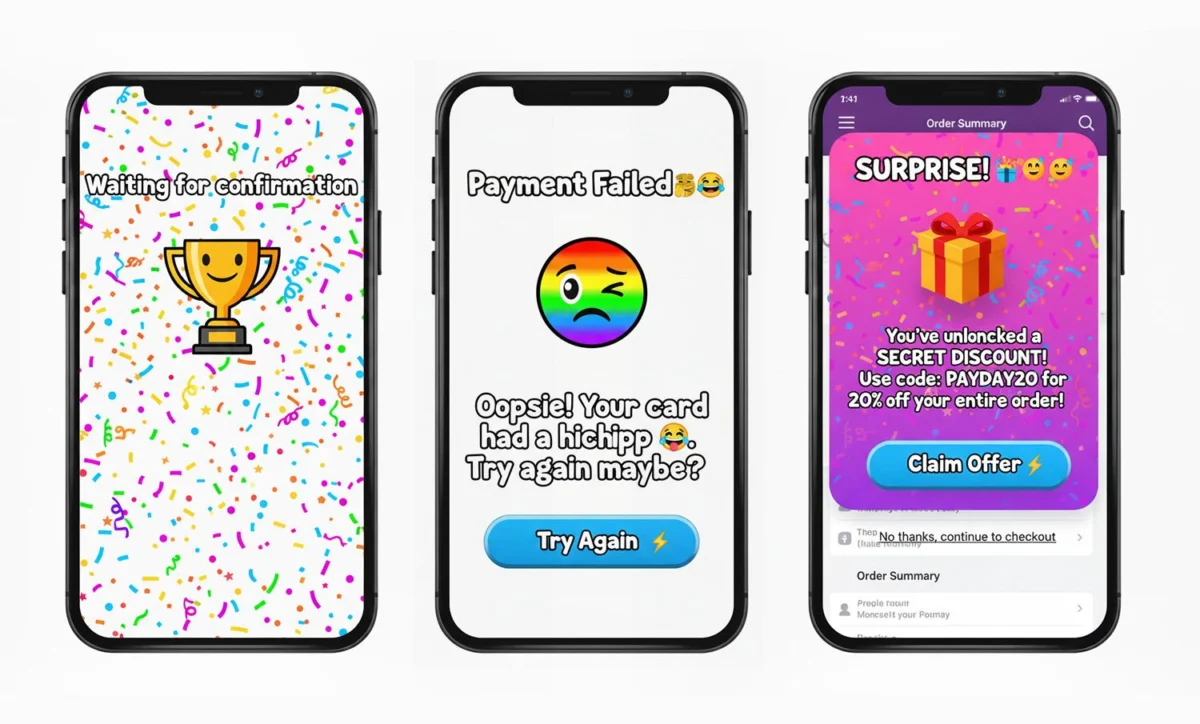
This creates a "punctured" emotional beat. The audience is asked to feel a deep, human connection while simultaneously being distracted by slapstick humor. This collision does not release tension; rather, it confuses the viewer’s emotional response. In digital design, this is mirrored in the "confetti-before-confirmation" problem. When a user completes a stressful task, such as filing a tax return or confirming a medical appointment, an over-exuberant animation or a "cheeky" confirmation message can feel dismissive of the user’s actual state of mind. This spikes cognitive load, as the user must process the brand’s attempt at humor while still managing the lingering stress of the task.

The Evolution of Emotional Design: A Chronological Perspective
The integration of emotion into design is not a new concept, but its application has evolved significantly over the last three decades.
- The Utility Era (1990s–Early 2000s): Design focused almost exclusively on functionality and "ease of use." Emotion was considered secondary to the speed of task completion.
- The Aesthetic Era (Mid-2000s–2010s): Following the success of the iPhone, "delight" became a buzzword. Designers began adding animations and micro-interactions, often without considering the narrative context.
- The Narrative Era (2020–Present): Influenced by the work of Don Norman and the rise of "storytelling in UX," designers now view the user journey as a hero’s journey. This era prioritizes emotional continuity and the "Peak-End Rule," a psychological principle stating that humans judge an experience largely based on how they felt at its peak and its end.
The Psychological Framework: Don Norman’s Three Layers
To bridge the gap between media theory and product design, experts point to Donald Norman’s seminal work on emotional design. Norman identifies three distinct layers of experience that must be aligned to achieve Emotion in Flow:
- Visceral Level: The immediate, subconscious reaction to sensory input. This is the "look and feel" of the app—the initial impression of calm or chaos.
- Behavioral Level: The feeling of control during interaction. If a transition is jumpy or an animation is laggy, the behavioral layer is disrupted, leading to frustration.
- Reflective Level: The long-term memory of the experience. This is where the user decides if the product is "for them" based on how it made them feel overall.
When a product experiences Emotion in Conflict, it usually occurs because these three levels are misaligned. For instance, a visceral layer that is bright and playful might clash with a behavioral layer that is slow and high-risk, leading to a negative reflective outcome.

Technical Implementation: The Emotional Beat Sheet
To avoid accidental conflict, design teams are increasingly adopting "Emotional Beat Sheets," a tool borrowed directly from screenwriting. Instead of merely mapping user steps (e.g., "User clicks button"), designers map the intended emotional state for each step.
A standard beat sheet for a payment flow might look like this:
- Step 1: Review Order: Uncertainty → Clarity (Clean layout, no distractions).
- Step 2: Processing: Anticipation (Subtle progress indicator, no "jokes").
- Step 3: Success: Achievement → Calm (Clear checkmark, haptic feedback, receipt).
By explicitly naming the emotion for each beat, designers can ensure that micro-interactions serve as "bridges" rather than "spotlights." A micro-interaction should guide the user to the next state, not demand attention for its own sake.

Data-Driven Insights: The Impact of Emotional Continuity
Recent studies in the field of neuro-design suggest that emotional conflict has a measurable impact on business metrics. According to data from various UX research firms, products that exhibit high tonal consistency see a 15–20% increase in user task completion rates. Furthermore, cognitive load studies using eye-tracking and skin conductance tests show that "playful" errors in high-stakes environments increase user cortisol levels, leading to a higher likelihood of the user abandoning the app entirely.
Designers are also observing the "Recovery State" as a critical narrative beat. When an error occurs, it is an obstacle in the user’s journey. A well-designed recovery state acknowledges the setback with a calm, solution-oriented tone. Data shows that users who experience a "clean" error recovery are often more loyal to a brand than those who never encountered an error at all, as the brand has proven it can handle stress with poise.
Industry Reactions and the Future of Directed Experiences
The design community’s reaction to these ideas has been largely positive, with many senior designers advocating for a "less is more" approach to delight. "Great emotional design doesn’t need decoration to compensate for confusion," notes one industry veteran. The consensus is that as products mature, they often drift into emotional conflict by adding "delightful" elements by habit rather than intent.

The future of digital product design likely lies in AI-driven personalization of these emotional flows. Imagine a banking app that detects a user’s hurried pace or repeated errors and automatically shifts its tone from "friendly assistant" to "efficient professional," removing animations to reduce cognitive load in real-time.
Broader Implications for Product Strategy
The shift toward Emotion in Flow suggests that the role of the designer is evolving into that of a "director." To succeed in this new landscape, product teams must:
- Align Tone with Task Risk: Playfulness should be reserved for low-risk environments (onboarding, social sharing), while high-risk tasks (banking, health, security) require a calm, plain-spoken approach.
- Engineer the Peak and the End: Every flow must have one clear moment of success and a clean conclusion.
- Audit for Accidental Conflict: Regular "emotional audits" can help teams identify where celebratory elements might be masking functional friction.
In conclusion, the lessons from Dan Da Dan and Superman are clear: a great experience is a directed experience. By mapping emotional beats and ensuring that transitions are bridges rather than disruptions, designers can create products that are not just usable, but deeply resonant. As the digital landscape becomes more crowded, the ability to manage a user’s feelings with the same precision as their data will become the ultimate competitive advantage.

