
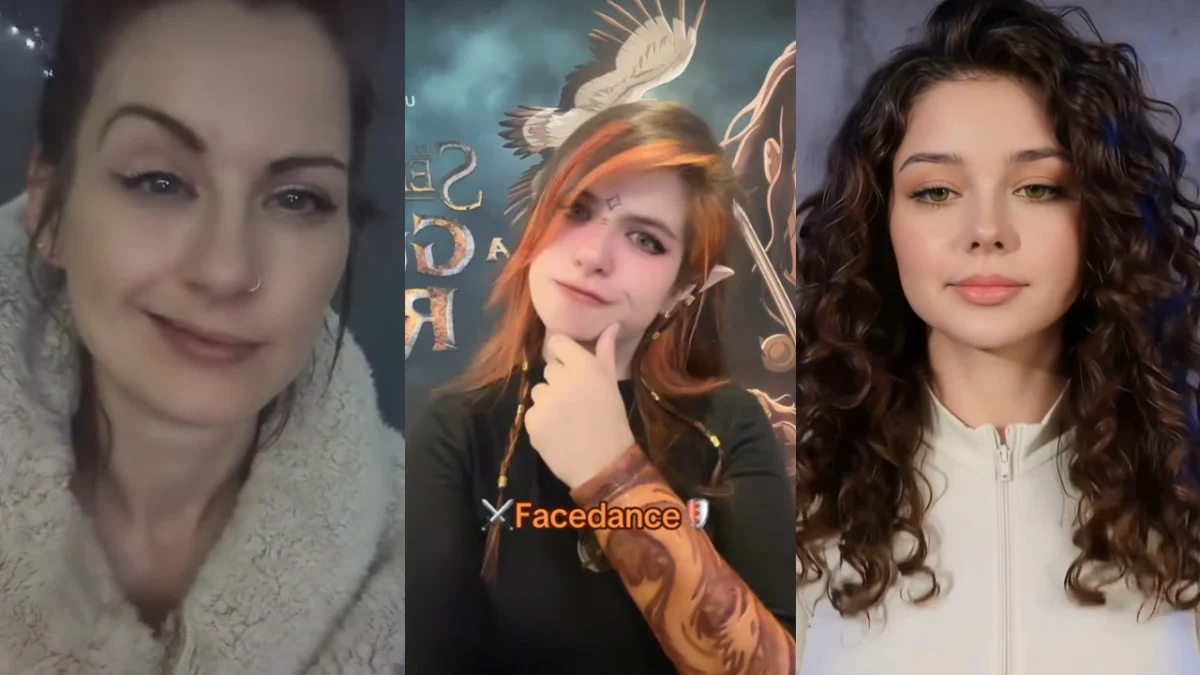
The digital landscape of the 2020s has been defined by the rapid evolution of short-form video content, giving rise to specialized performance niches that challenge traditional definitions of entertainment. Among these, "Face Dancing"—also referred to as "Facedancing"—has emerged as a prominent and polarizing trend. Characterized by the rhythmic, highly exaggerated movement of facial muscles in synchronization with musical beats or lyrical cues, the practice has transitioned from a niche gaming mechanic to a cornerstone of influencer culture. While often dismissed by critics as a fleeting "cringe" trend, the technical proficiency required and the massive engagement metrics associated with the genre suggest a more complex intersection of technology, human expression, and algorithmic amplification.
Defining the Mechanics of Face Dancing and Wordchewing
At its core, face dancing is a form of kinetic performance art limited to the head and neck. Unlike traditional dance, which utilizes the entire body to convey rhythm, face dancing relies on micro-expressions, eyebrow manipulation, nostril flaring, and jaw movements. These actions are typically performed in a "lip-dub" format, where the creator synchronizes their movements to a specific audio track.
A closely related subset of this trend is "wordchewing." This specific technique involves exaggerating the mouth’s movements during lip-syncing to such a degree that the performer appears to be "chewing" the words. This style often draws inspiration from Western animation tropes, particularly the "rubber-hose" animation style of the early 20th century or modern anime aesthetics, where facial expressions are amplified for comedic or emotional emphasis. The objective is often to achieve a "kawaii" (cute) or "waifu" (anime-style female character) aesthetic, which has proven highly successful in capturing the attention of global audiences on platforms like TikTok and Instagram.
The Chronological Ascent: 2017 to 2020
The origins of face dancing as a formalized digital activity can be traced back to late 2017 with the release of the "Face Dance Challenge" app. Developed by the Vietnamese studio DiffCat, the app utilized front-facing camera technology and facial recognition software to create a rhythm game. Users were required to mimic specific facial icons—such as winking, smiling, or sticking out their tongues—in time with the music. The app quickly became a viral sensation across Southeast Asia, particularly in Vietnam and Thailand, before migrating to Western social media markets. During this period, face dancing was viewed primarily as a gaming novelty rather than a standalone performance style.
The transition from a gamified activity to a mainstream social media trend occurred during the global lockdowns of 2020. As millions of users turned to TikTok for entertainment, the barriers to entry for content creation lowered, favoring high-energy, visually stimulating performances that could be filmed in a domestic setting. On May 22, 2020, a TikToker known as @reitergrace posted one of the earliest viral examples of non-gaming face dancing, utilizing a Mario-themed sound effect to punctuate rhythmic facial movements.
However, the definitive turning point for the genre arrived in August 2020, when influencer Bella Poarch uploaded her "M to the B" video. Utilizing a track by British grime artist Millie B, Poarch performed a series of rhythmic head bobs and facial twitches synchronized to the beat. The video became a cultural phenomenon, purportedly amassing over 500 million views and becoming the most-liked TikTok video of all time before its eventual deletion. Poarch’s success demonstrated that face dancing could serve as a primary vehicle for digital stardom, paving the way for a new generation of "face-centric" creators.
The Expansion of the Genre: 2022–2026
Following the template set by Poarch, other creators began to refine and specialize the art form. One of the most notable figures in this space is Miny Naranja, a creator whose content frequently leans into the "kawaii" aesthetic. In October 2022, Naranja posted a video that garnered over 43 million views, solidifying her position as a leader in the face-dancing community. Her content often features a high degree of muscle control, allowing her to transition between complex expressions with a speed and precision that mirrors digital animation.
By 2025 and 2026, face dancing had expanded beyond simple lip-syncing. Creators like Abby Vatterott began incorporating face dancing into broader choreographic trends, treating the face as a primary instrument within a multi-layered dance routine. This period also saw the rise of the /r/Wordchewing subreddit, established in 2022, which served as both a hub for fans and a forum for critics. The community’s growth highlighted a growing divide in internet culture: while many found the exaggerated movements impressive or endearing, others labeled the content as "uncanny" or "uncomfortable."
The August 2026 Controversy and Public Discourse
The tension between face-dancing enthusiasts and critics reached a boiling point in late August 2026. On August 24, a video surfaced on X (formerly Twitter) showing Miny Naranja performing face dancing live at a social gathering. The clip, shared by user @ElMichalito, was captioned with a statement expressing profound discomfort: "For God’s sake, how UNCOMFORTABLE this video makes me feel, I don’t understand how there are people who dedicate themselves to doing this." The post quickly went viral, generating over 18,000 likes and sparking a heated debate regarding the nature of digital performance.
Critics of the video argued that face dancing, when removed from the curated environment of a smartphone screen, loses its "magic" and enters the "uncanny valley"—a psychological phenomenon where a near-human object or performance triggers feelings of revulsion. However, defenders of the trend were quick to respond. On August 25, X user @DTM_Woodworks defended Naranja, noting that she was performing for a group of children and had amassed a following of over 1.6 million on Instagram. "I don’t understand the hate for this girl," the user wrote. "Apparently ‘face dancing’ is a thing now and she is really good at it… If it’s not your thing, don’t watch it."
This discourse highlighted a significant shift in how "talent" is perceived in the digital age. While traditionalists may view face dancing as a low-effort or bizarre activity, the level of physical discipline and the ability to command the attention of millions suggests a new form of specialized virtuosity tailored for the attention economy.
Psychological and Technical Analysis
From a technical perspective, successful face dancing requires a high degree of neuromuscular coordination. Performers must isolate specific facial muscles—such as the frontalis (forehead), orbicularis oculi (eyes), and zygomaticus major (cheeks)—while maintaining a consistent rhythm. The "wordchewing" aspect adds a layer of phonetic exaggeration that requires the performer to deconstruct the sounds of a song into visual components.
Psychologically, the appeal of face dancing may lie in its proximity to animation. By mimicking the exaggerated expressions of cartoons, creators tap into a visual language that is globally understood and inherently attention-grabbing. The "uncanny valley" effect mentioned by critics occurs when these movements are perceived as "too human yet not human enough," creating a sense of cognitive dissonance. However, for the younger demographic that makes up the bulk of the audience for this content, these movements are often viewed through the lens of "meme aesthetics," where the boundary between the real and the digital is intentionally blurred.
Broader Impact and the Future of Digital Expression
The rise of face dancing has significant implications for the future of the creator economy. It represents the ultimate distillation of the "short-form" philosophy: maximum visual impact with minimal resource requirements. Unlike traditional dance or filmmaking, which require space, equipment, and often a team, face dancing can be produced by a single individual with a smartphone and a ring light.
Furthermore, the monetization of this niche is becoming increasingly sophisticated. Top-tier face dancers like Naranja and Poarch have successfully leveraged their viral moments into brand partnerships, music careers, and live appearances. The fact that Naranja was booked for a live performance in 2026 suggests that the trend has moved beyond the screen and into the realm of professional entertainment.
As AI and deepfake technology continue to advance, the value of "authentic" human performance—even performance that mimics animation—may increase. Face dancing stands as a testament to the human face’s versatility as a medium for communication and entertainment. Whether it remains a dominant trend or evolves into a different form of digital mime, face dancing has undeniably carved out a permanent space in the history of social media.
In conclusion, face dancing is more than a fleeting internet fad; it is a manifestation of how digital platforms reshape human expression. From its roots in a 2017 mobile game to its status as a multi-million-view industry in 2026, the trend illustrates the power of the human face to captivate, repel, and ultimately dominate the global digital discourse. As the line between digital and physical performance continues to thin, the "face dancers" of today may well be seen as the pioneers of a new, hyper-visual era of entertainment.

