
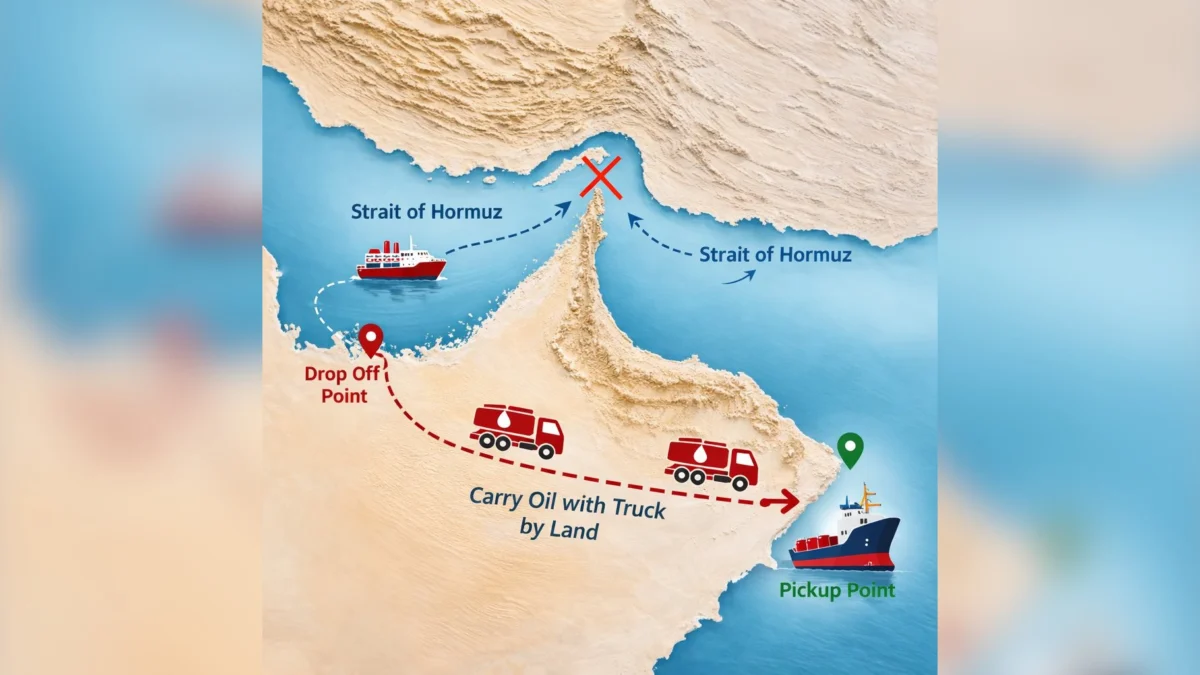
The digital trend began not as a coordinated propaganda campaign, but as a singular, albeit logically flawed, proposal to circumvent the blockade. This proposal, visualized through an AI-generated map, sparked a wave of "exploitable" memes across X (formerly Twitter), Reddit, and Instagram. While the initial post was presented with an air of earnest problem-solving, the subsequent reaction from the global online community highlighted the profound disconnect between simplistic digital solutions and the grueling realities of international logistics and desert geography.
The Origin and Anatomy of the Bypass Proposal
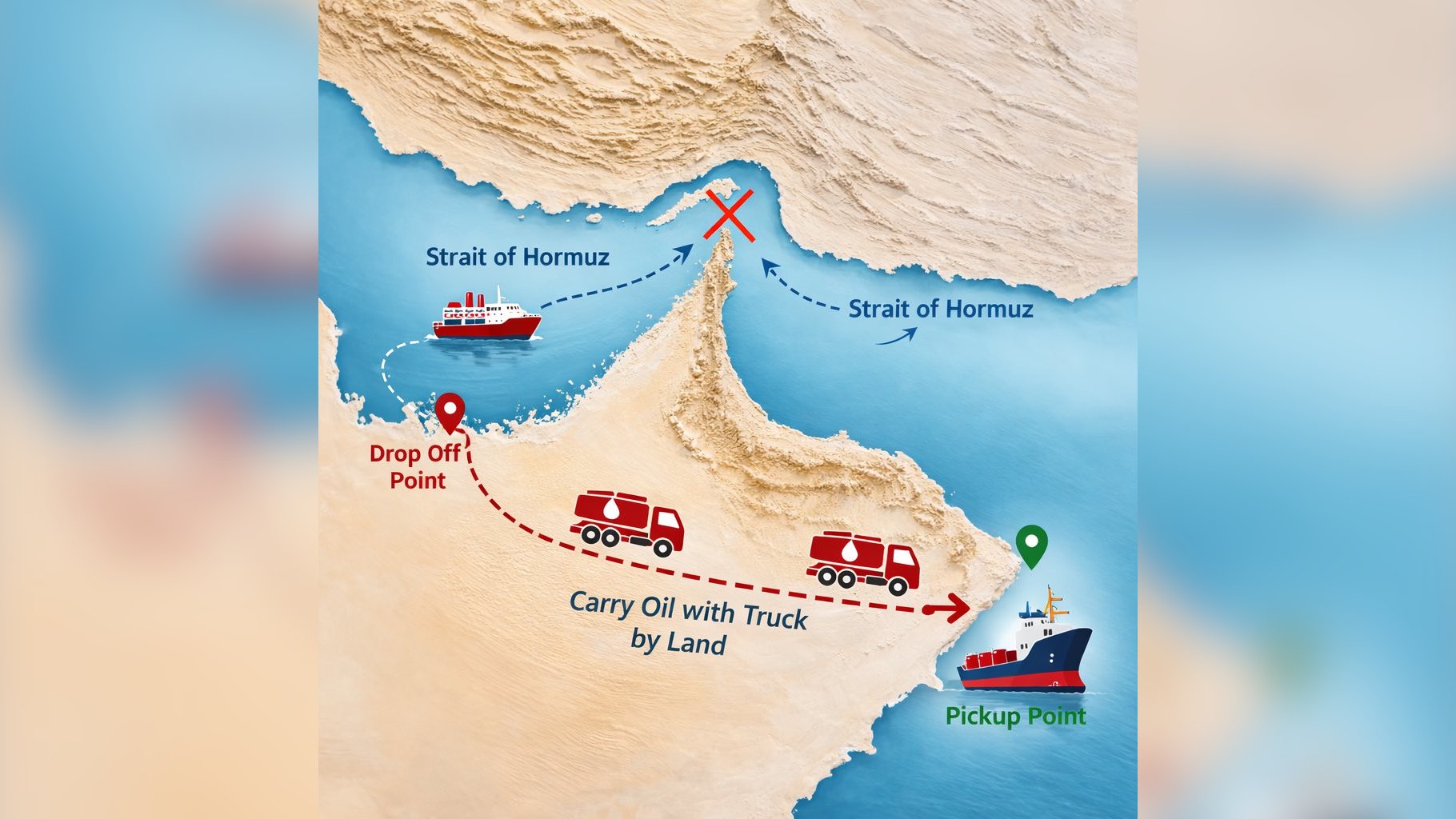
The catalyst for the trend occurred on March 11, 2026, when X user hvgoenka shared an AI-generated map of the Arabian Peninsula and the Persian Gulf. The map illustrated a proposed logistical "workaround" for the Iranian blockade: oil tankers would dock at a "Drop Off Point" on the Omani coast of the Gulf of Oman, unload their crude oil into trucks, which would then transport the cargo across the rugged terrain of the Musandam Peninsula to a "Pickup Point" on the other side of the blockade.
The post, captioned with the query "Can this be a solution?", rapidly achieved viral status, garnering over 37 million views and 23,000 likes within less than a week. However, the engagement was overwhelmingly critical. Industry experts and casual observers alike immediately noted the logistical absurdity of the suggestion. A standard Very Large Crude Carrier (VLCC) can carry approximately 2 million barrels of oil. To transport the contents of a single ship by land would require roughly 8,000 to 10,000 tanker trucks, creating a logistical bottleneck that would be impossible to manage in the harsh desert environment of Oman and the United Arab Emirates.
Chronology of Digital Escalation
The timeline of the "Strait of Hormuz Bypass Solutions" meme reflects a rapid transition from genuine criticism to surrealist humor.
- March 11, 2026: The original AI-generated map is posted. Within hours, users such as @buckadeath began mocking the logistical scale, famously stating, "Bro thinks they can just Mad Max a couple million barrels of crude through the deserts of Oman every day." This specific critique, referencing the post-apocalyptic film franchise, received 8.7 million views and became a cornerstone of the subsequent meme culture.
- March 11, 2026 (Evening): User @TheMaineWonk quoted the post, describing the era as "the dumbest fucking timeline in human history," a sentiment that resonated with a public increasingly fatigued by AI-generated misinformation and geopolitical instability.
- March 12, 2026: The trend migrated to the subreddit /r/mapporncirclejerk, a community dedicated to satirical cartography. Redditor Hazel_Transport introduced the "Gay of Hormuz" as a fictional geographical counter-measure to the "Strait" (playing on the word’s heteronormative homonym). This sparked a sub-trend of increasingly nonsensical map edits.
- March 12–14, 2026: The meme reached mainstream platforms like Instagram, where the page "memezar" summarized the controversy for a wider audience. Concurrently, video-based edits appeared, including a Bollywood clip shared by user @misterpiyush showing a ship flying over an obstacle, captioned, "Sir why not this?"
- March 15, 2026: The "solutions" reached a peak of absurdity, with users proposing the use of giant trampolines, hot air balloons to lift tankers, and the literal "erasing" of the Iranian coastline in Photoshop to remove the physical strait entirely.
Logistical and Economic Context
To understand why the "Bypass Solutions" meme resonated so deeply, one must consider the gravity of the 2026 American-Iranian conflict. The Strait of Hormuz is widely considered the world’s most important oil transit chokepoint. Because of the shallow depth of the strait and its narrow shipping lanes—only two miles wide in each direction—it is highly susceptible to disruption.
Historically, various bypass pipelines have been constructed to mitigate this risk. The Habshan–Fujairah oil pipeline in the United Arab Emirates and the Petroline (East-West Pipeline) in Saudi Arabia were designed for this purpose. However, these existing infrastructures have a combined capacity of approximately 6.5 million barrels per day, far short of the 21 million barrels that would be displaced by a total blockade.
The suggestion that a fleet of trucks could serve as a viable alternative was not only a logistical impossibility but also an economic fantasy. The cost of "double handling"—unloading, trucking, and reloading—would add significant premiums to the price of oil, which had already spiked to record highs during the 2026 conflict. The internet’s mockery of the "trucking solution" served as a populist critique of simplistic thinking in the face of systemic global crises.
Public and Analytical Reactions
The reactions to the meme can be categorized into three distinct groups: logistical experts, digital culture analysts, and the general public.
Logistical experts pointed out that the infrastructure required to support tens of thousands of trucks daily—including roads, fuel stations, and maintenance hubs—does not exist in the region. Furthermore, the environmental impact of such a massive land-based transport operation would be catastrophic.
Digital culture analysts viewed the event as a case study in the "hallucination" of AI. The map used in the original post was clearly AI-generated, containing distorted text and geographical inaccuracies. This led to discussions about how AI can be used to give a "professional" appearance to fundamentally flawed or dangerous ideas. "We are seeing the birth of ‘AI-Propagated Nonsense,’" noted one digital media researcher. "An idea that would have been dismissed as a napkin sketch now looks like a legitimate strategic brief because an algorithm drew it."
The general public’s reaction, characterized by the "Mad Max" and "Bollywood" memes, indicated a form of "gallows humor." Amid the genuine fear of a global energy crisis and potential war, the absurdity of the "bypass solutions" provided a brief, satirical reprieve.
Broader Impact and Implications
The Strait of Hormuz Bypass Solutions phenomenon has several long-term implications for both digital discourse and geopolitical communication.
First, it highlights the danger of AI-generated content in the realm of strategic planning. While the hvgoenka post may have been intended as a "thought experiment," its rapid spread demonstrates how easily misinformation can be packaged as a viable solution during a crisis. In a high-tension environment, such posts can influence market sentiment or public perception before they are debunked.
Second, the meme underscores the role of satirical communities like /r/mapporncirclejerk in acting as a "fact-checking" mechanism. By pushing an absurd idea to its logical extreme—such as the "Gay of Hormuz" or "tanker trampolines"—these communities expose the underlying flaws of the original proposal more effectively than a standard news report might.
Finally, the event serves as a reminder of the strategic vulnerability of global energy supply chains. While the world laughed at the idea of trucking oil across the desert, the underlying reality—that there is no easy way to bypass the Strait of Hormuz—remains a sobering fact of modern geopolitics. The 2026 conflict forced a realization that global stability is often dependent on narrow corridors of water, and when those corridors are closed, the "solutions" available to the international community are often as limited as they are desperate.
As of late March 2026, while the military situation in the Gulf remains fluid, the "Bypass Solutions" have entered the lexicon of digital history as a quintessential example of how the internet responds to crisis: with a mixture of scathing skepticism, creative absurdity, and a refusal to accept simplistic answers to complex global problems.

